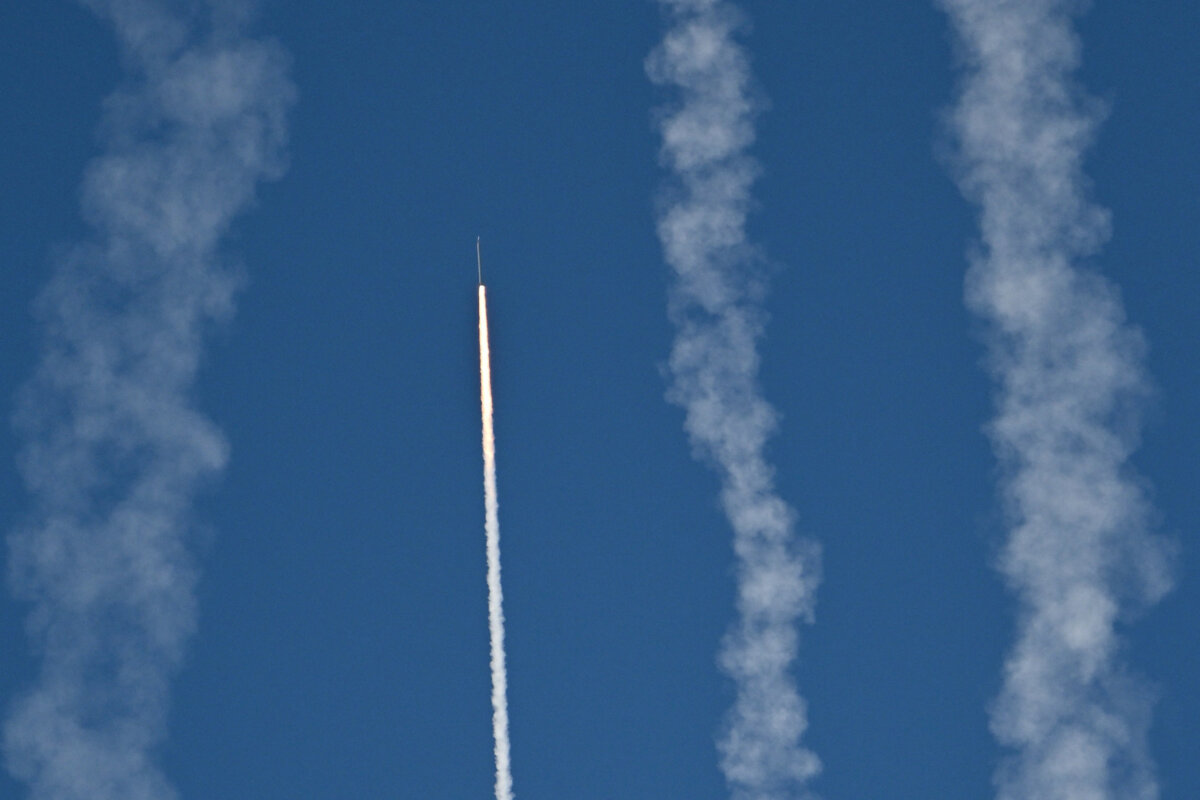

Beijing’s latest military encirclement demonstrates a growing capability to choke off Taiwan, a move experts say is backfiring by pushing the United States to offer the island nation stronger security guarantees.
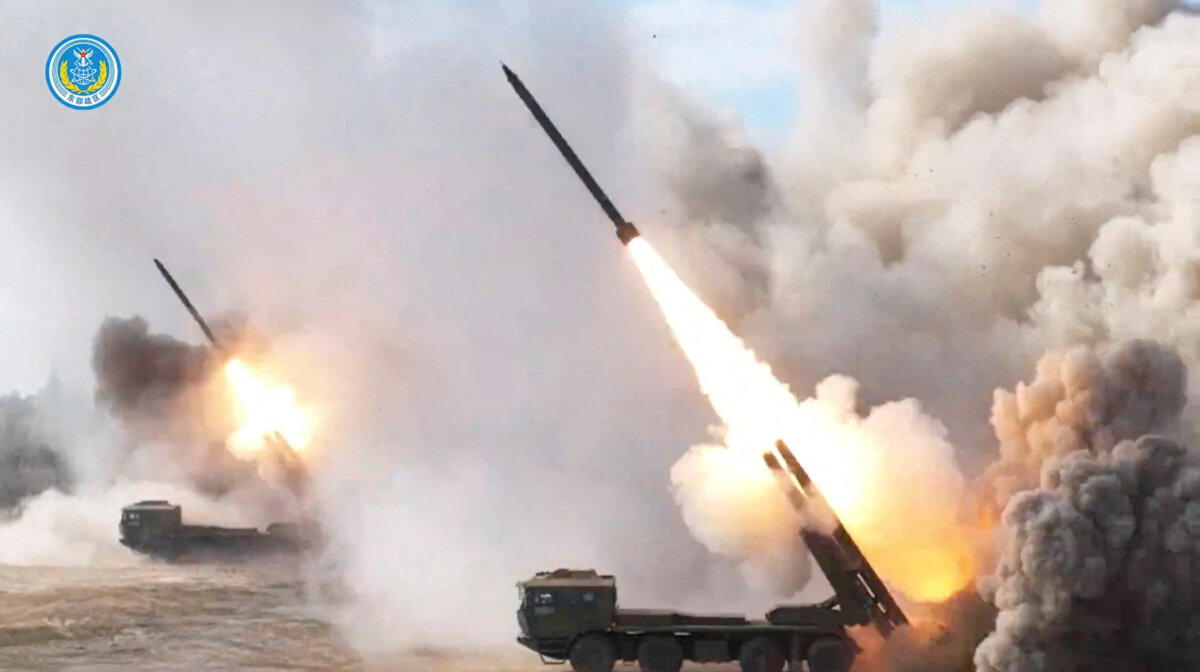
China’s Ministry of National Defense said it had completed its drills surrounding the island, describing them as a test of the troops’ integrated joint operations capabilities, in a statement released on Dec. 31.
The exercises began on Dec. 29 with coordinated operations across five zones encircling Taiwan, involving units from the army, navy, air force, and rocket force, and were followed by long-range live-fire drills on Dec. 30.
While the Chinese regime on Dec. 29 claimed the drills aim to curb forces that “endanger peace and stability” across the Taiwan Strait, the operation drew sharp rebuke from Taiwan and key international partners who identified the maneuvers as the true source of instability.
Taiwan’s Presidential Office condemned the Chinese military exercises as “a blatant challenge” to international law and order that undermines the security status quo across the Taiwan Strait and the Indo-Pacific region.
The European Union voiced concerns regarding the maneuvers, and opposed any unilateral actions to change the status quo by force or coercion, while Japan communicated to Beijing that cross-strait disputes must be settled via peaceful discussion.
From Drills to War
Arthur Wang Zhin-sheng, secretary general of Taiwan’s Asia-Pacific Elite Interchange Association, said the drills were clearly a response to Washington’s recent arms deal with Taiwan, with the live-fire component showing Beijing’s increasing aggression toward the self-governed democracy, which the Chinese Communist Party (CCP) has frequently threatened to seize by force.
“The CCP may be evaluating encirclement and blockades as the primary means for a future military attack, meaning that if they attack Taiwan, they might first adopt an anti-access or area denial strategy,” Wang told The Epoch Times.
The Chinese anti-access or area denial strategy is aimed at keeping U.S. forces away during a potential conflict over Taiwan.
Wang noted that China’s exclusion zones have moved progressively closer to Taiwan in recent drills, pointing to published air and maritime warning maps that show the exercises reaching the edges of the 12-nautical-mile territorial sea and airspace baselines.
“This aligns with the U.S. claims that China is conducting an ‘anaconda strategy’ against Taiwan, and we need to pay close attention to whether such tightening circumstances could suddenly shift from exercises to warfare or other more aggressive actions,” said Wang.
The “anaconda strategy” refers to Beijing’s multipronged pressure campaign that gradually constricts Taiwan, according to the American Enterprise Institute, a public policy think tank.
China–Russia–North Korea Axis
During China’s drills around Taiwan, Russia announced it will hold military exercises at the Kuril Islands, known as the Northern Territories in Japan, from Jan. 1 to March 1.
Wang said the timing is no coincidence, signaling that China and Russia are working together to destabilize the region.
“Judging by Russia’s drills, we can boldly say China and Russia are forming an axis of evil, and while China wages united front warfare against Taiwan, it coordinates militarily with Russia to have Moscow constrain Japan through exercises.
“It’s a response to Japanese Prime Minister Sanae Takaichi’s earlier Taiwan remarks and the U.S.–Japan Security Treaty’s expansion to cover regional security,” Wang said.
Arthur Ding, professor emeritus at National Chengchi University in Taiwan, agreed but went further, saying China is also enlisting North Korea alongside Russia to intimidate external powers that support Taiwan.
“Russia is seeking to curry favor with Beijing by pressuring Japan to ensure continued Chinese backing for its war against Ukraine, and since Pyongyang’s 2016 nuclear tests, the three have built a strategic alliance reshaping Northeast Asian security,” Ding told The Epoch Times.
Complacency and Division
With the latest maneuvers, Beijing has now conducted a total of six major rounds of war games around Taiwan since the landmark 2022 visit by then-U.S. House Speaker Nancy Pelosi (D-Calif.).
Wang cautioned that the normalization of Chinese military maneuvers has dulled the public’s perception of danger, creating a psychological fatigue that masks the reality of the threat.
“This complacency is particularly perilous because it may lead Beijing to calculate that Taiwan’s guard is down, encouraging them to seize the opportunity for a real attack,” he said.
Wang added that figures within Taiwan’s main opposition Kuomintang (KMT) party have blamed the drills on government provocation, while online disinformation campaigns amplify Beijing’s cognitive warfare to further divide Taiwanese society.
“This divisiveness stokes fears of war and fosters a dangerous atmosphere where some wrongly blame Taiwan’s ruling Democratic Progressive Party (DPP) while believing that reconciliation with China would eliminate the threats,” Wang said.
However, Ding noted that Beijing’s expanded military drills appear to be backfiring, as decades of polling data from the Election Study Center at Taiwan’s National Chengchi University show a sharp rise in respondents identifying exclusively as Taiwanese, though he stressed that this political alienation has not stopped the PLA from advancing its strategic goals.
“The drills only push Taiwan further from China, but Beijing’s military buildup undeniably pressures our defense capabilities,” Ding said.
Strengthened US Support
Meanwhile, U.S. President Donald Trump expressed little concern about the drills when asked by reporters on Dec. 29; saying he’s “not worried” about Beijing’s actions.
“I have a great relationship with President Xi, and he hasn’t told me anything about [the drills] … And [I] don’t believe he’s going to be doing it,” Trump said, referring to Chinese regime leader Xi Jinping.
Wang interpreted Trump’s remarks as a tactical move to de-escalate immediate tensions, predicting that despite this calm response, the drills will ultimately provide Washington with the justification to strengthen its security stance.
“There will be high-level meetings before the two leaders meet, and after these drills, Washington will be emboldened to push back harder against Beijing’s actions toward Taiwan while providing stronger commitments and guarantees to Taipei, which could undermine China’s strategy,” Wang said.
Ding said that while Xi will hold the advantage of hosting the April summit in Beijing and may offer economic concessions to secure political wins, the Chinese leader faces an uphill battle in trying to use those offers to compromise Taiwan’s status.
“The U.S. National Security Strategy released earlier makes Taiwan’s importance crystal clear, and Trump is handling Taiwan separately from broader China relations, which makes it impossible for him to accept Xi’s claim that Taiwan belongs to China or to fundamentally shift U.S. policy on the island,” said Ding.
 Friends Read Free
Copy
Facebook
Tweet
Friends Read Free
Copy
Facebook
Tweet