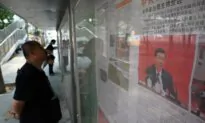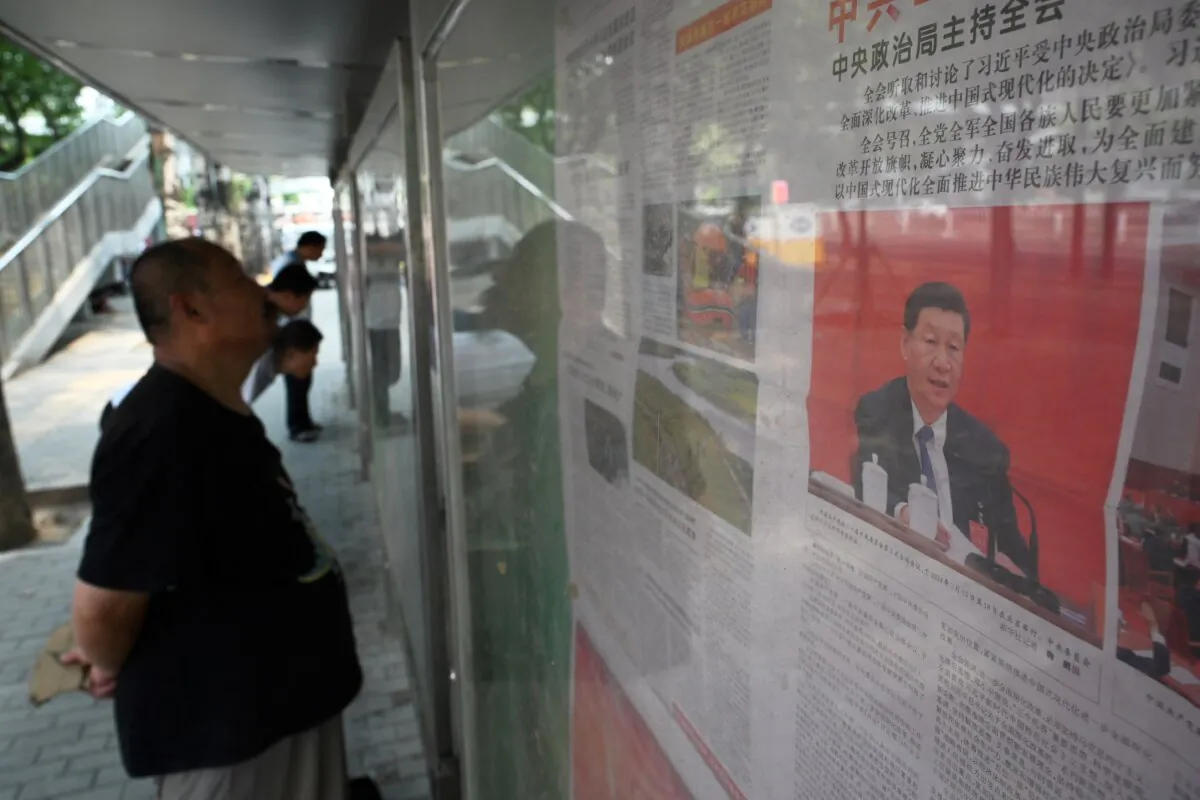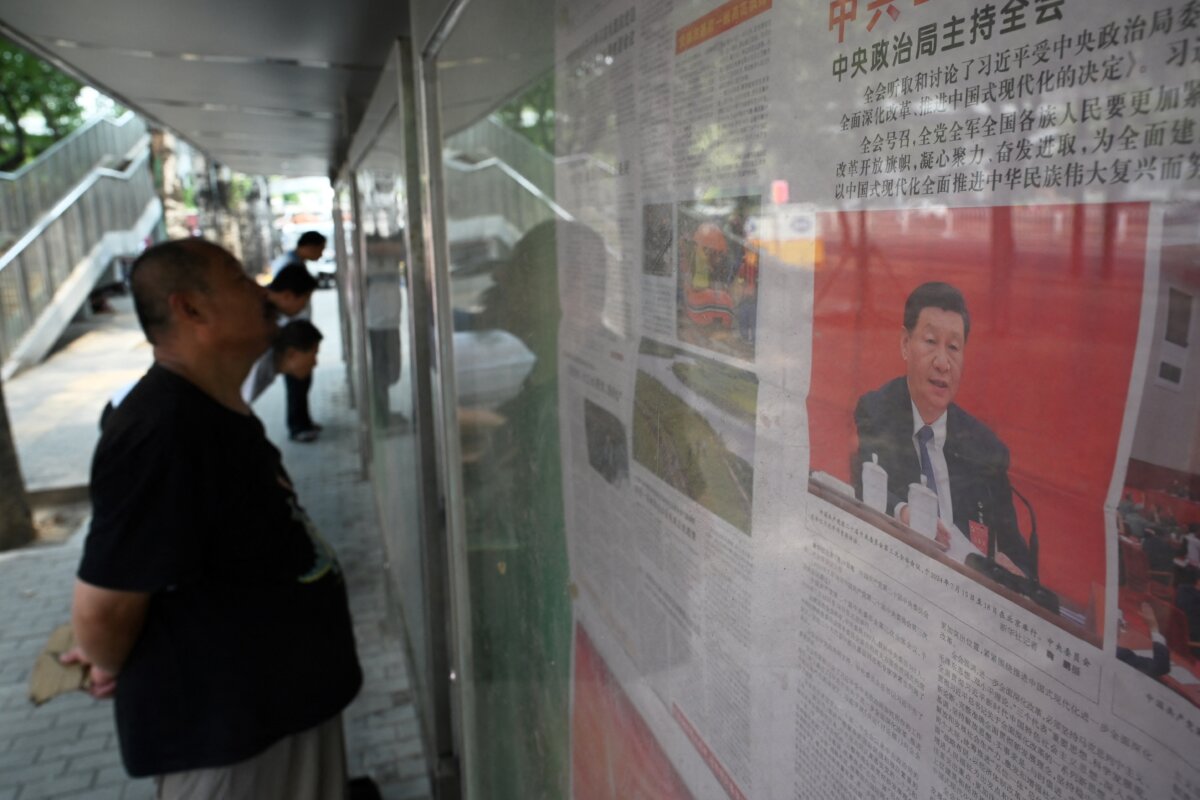

The Chinese regime’s expulsion of a New York Times reporter signals a severe clampdown on foreign press freedoms in China and will prompt Washington to launch tougher countermeasures against Beijing, analysts say.
China’s Foreign Ministry on June 1 accused the journalist of tricking people into unknowingly taking interviews, and said that led to the revocation of her residence permit.
The ministry offered no evidence to support its claim of deceptive reporting tactics.
The remarks came in response to a New York Times report on May 29 confirming that its China correspondent Vivian Wang had been ordered out of the country in February.
The New York Times said the expulsion was prompted by a video appearance of Taiwan’s President Lai Ching-te at the media outlet’s DealBook summit in December as tensions remain high between mainland China and Taiwan. The Chinese Communist Party (CCP) has never controlled the self-governing island nation but has not ruled out taking control of it by force.
Although Wang had no involvement in the event, Chinese officials had grown increasingly unhappy with her reporting on certain topics, including censorship and Beijing’s COVID-19 pandemic response, according to the newspaper.
Joseph Kahn, executive editor of The New York Times, said Beijing’s decision was wrong.
Wang’s expulsion will make it harder for the newspaper’s audience to get “reporting about the world’s second-largest economy at a critical time,” Kahn said.
According to a report on media freedom released by the Foreign Correspondents’ Club of China in August, 38 percent of respondents said they had been pressured by Chinese authorities into canceling reporting trips or interviews.
“[Chinese] state controls on independent reporting are being institutionalized amid economic pressures and heightened geopolitical tensions,” the club said.
‘Weighing the Risks’
Alex, an independent journalist previously based in China, who uses a pseudonym out of fear of reprisal, said foreign outlets have not been shut out of the country entirely, but the expulsion shows that reporting from there is “getting harder and harder.”
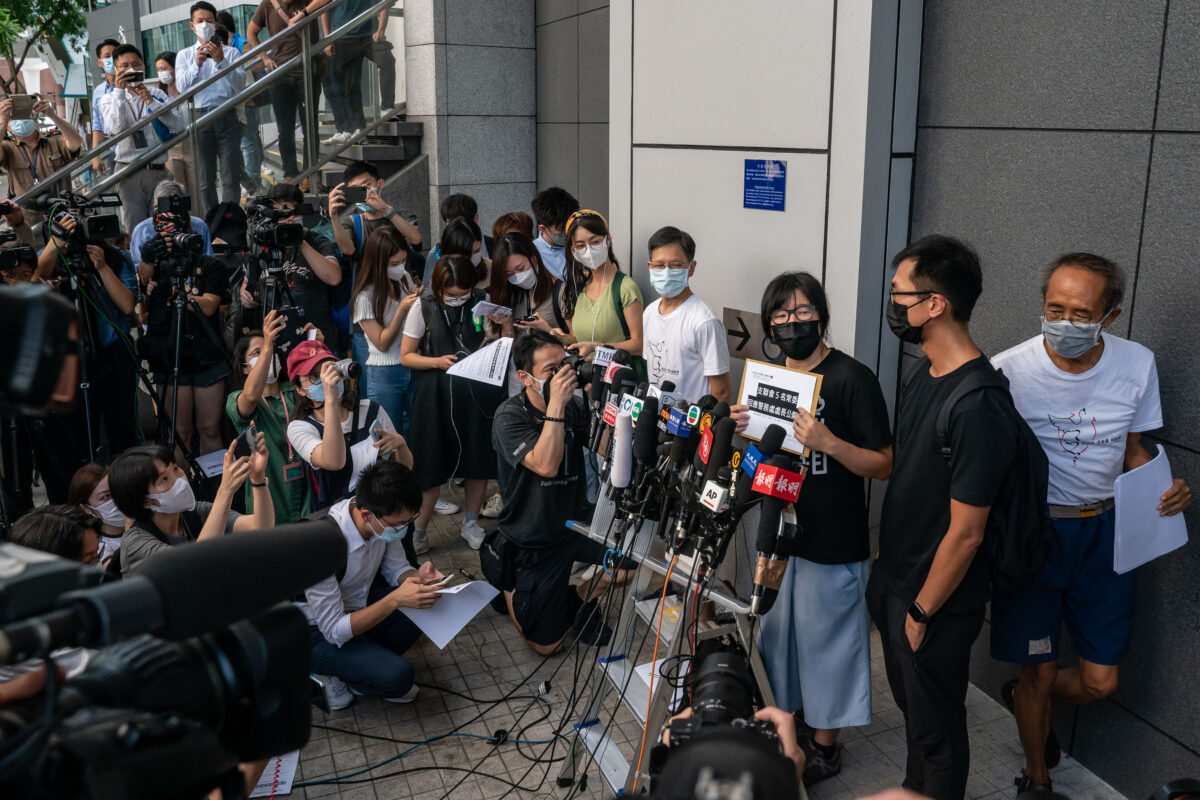
“Foreign reporters in China can still go out into the field and file stories, but every daily task now requires weighing the risks,” Alex told The Epoch Times.
“You have to consider whether you can actually secure a meeting with an interviewee or if a published piece will invite retaliation.”
Alex said Wang’s forced departure was particularly notable given that she had no involvement in The New York Times DealBook summit, and that reporting constraints will increasingly shape how correspondents operate.
“This shows the Chinese regime has long been dissatisfied with coverage by The New York Times and other foreign outlets and sends a clear warning to the foreign press corps in China,” Alex said.
“It means if you touch certain topics, your visa, press credentials, and residency status could all be jeopardized down the line.”
Frank Tian Xie, the John M. Olin Palmetto chair professor in business and marketing at the University of South Carolina–Aiken, concurred, saying Beijing aims to rein in foreign media and potentially expel those who refuse to conform to the CCP narrative in future reports.
“The regime is using this tactic to intimidate the international community and global media, signaling that reporting in China is impossible without yielding to its demands,” Xie told The Epoch Times.
“Such arbitrary and overbearing tactics severely curtail the reporting freedom of journalists on the ground.”
Chilling Effect
While Beijing rarely issues explicit directives to foreign media, the regime’s red lines are universally understood, according to Alex.
“Topics like Taiwan, Xinjiang, Tibet, Hong Kong, human rights, economic turbulence, and social unrest are immediate tripwires,” Alex said.
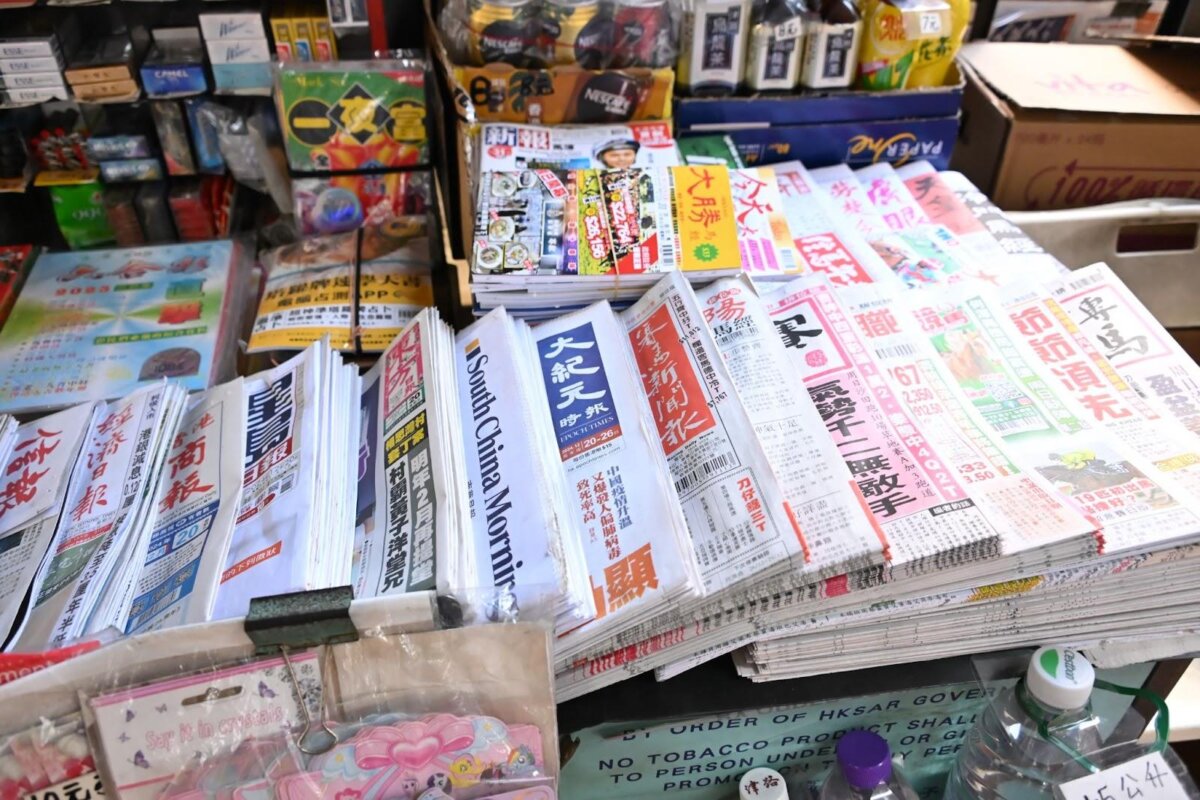
“The blowback ranges from questioning by authorities and blocked access to visa denials or outright expulsion.”
Alex said the sustained pressure could foster self-censorship among foreign correspondents, potentially skewing the international community’s understanding of China.
“When reporting the truth carries severe consequences, the version of China presented to the world will increasingly mirror the regime’s official narrative,” Alex said.
“The realities of political suppression, human rights abuses, and rising social discontent, along with the daily struggles of ordinary citizens, will be pushed further into the shadows.”
Xie said the push to bring foreign coverage in line with CCP narratives poses a direct threat to newsroom independence.
“International outlets operating in China may be strong-armed into burying specific stories,” he said.
“But a far bleaker scenario is a wholesale exodus of foreign news bureaus, driven out because they simply cannot compromise their editorial integrity to appease the regime.”
While Beijing’s heavy-handed measures might temporarily stifle negative headlines, the strategy will ultimately inflict long-term damage on China’s global standing, Xie said.
“This trajectory is pushing the regime toward self-imposed isolation.”
US Countering CCP Propaganda
The U.S. government has revoked the visa of a Chinese national working for Beijing’s state-run news agency Xinhua.
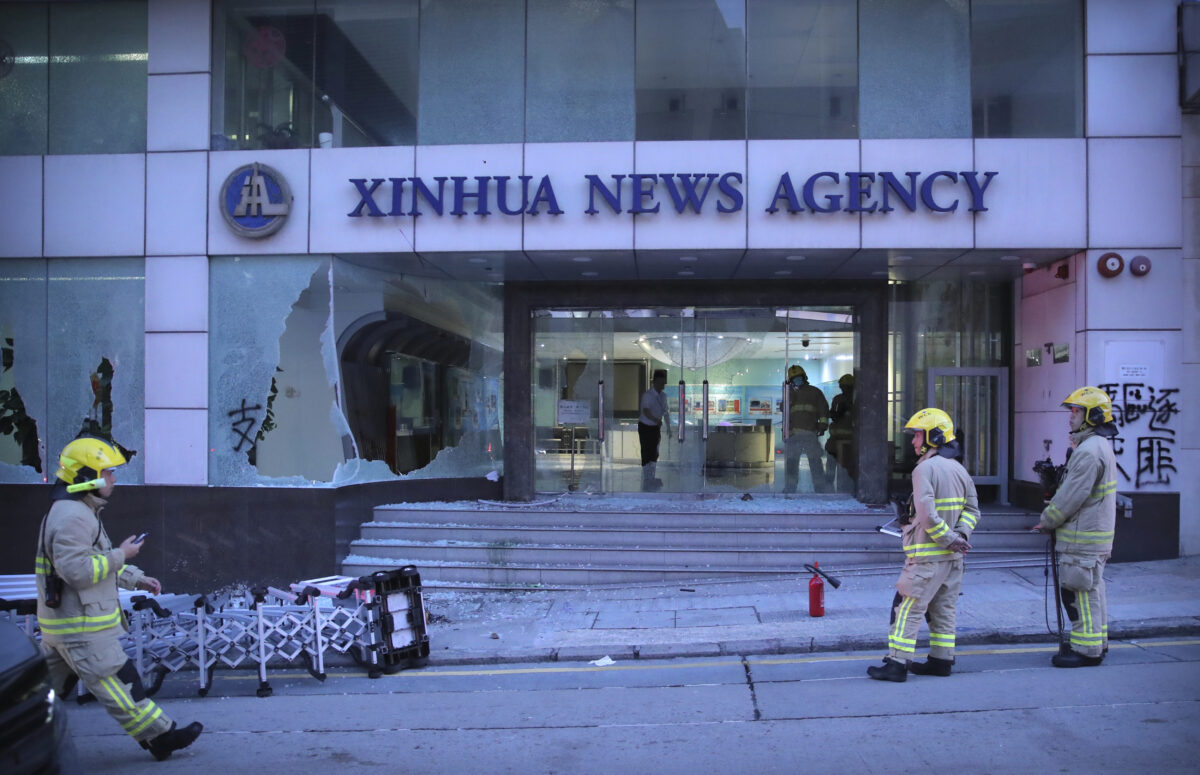
The State Department said in a statement to The Epoch Times on June 1 that the administration “has the strongest commitment to the freedom of expression.”
While the United States didn’t present the move as a tit-for-tat response to Wang’s expulsion, Alex said the visa revocation signals a shift from verbal protests to concrete reciprocal action.
“The U.S. may not vet every Chinese state media report, but it will tighten restrictions on their visas, personnel credentials, and operational scope,” Alex said.
“The goal is to prevent CCP propaganda outlets’ personnel from engaging in activities incompatible with their journalistic status.”
When comparing the two cases, Alex said they are driven by fundamentally different motives.
“One side is suppressing independent journalism, while the other is restricting a state machine from conducting propaganda operations abroad.”
Xie said that despite Washington’s history of expelling Chinese diplomats, the expulsion of journalists remains relatively rare.
“This indicates the U.S. will likely adopt a tougher stance on the Chinese regime moving forward, particularly after U.S. President Donald Trump’s recent visit to China yielded no major breakthroughs,” Xie said.
Trump traveled to Beijing in May for a two-day summit with Chinese leader Xi Jinping, marking his first trip to China since returning to office.
Ahead of Trump’s arrival, the Chinese regime denied visas to journalists from The Epoch Times and its sister outlet NTD who planned to travel with the White House press corps to cover his visit.
Xie said that with structural conflicts remaining largely unresolved following the high-level talks, the two sides are headed toward a more adversarial dynamic.
“Such visa revocations and restrictions will grow more frequent, signaling that journalist access has become a new battleground in the broader U.S.-China rivalry,” he said.
 Friends Read Free
Copy
Facebook
Tweet
Friends Read Free
Copy
Facebook
Tweet