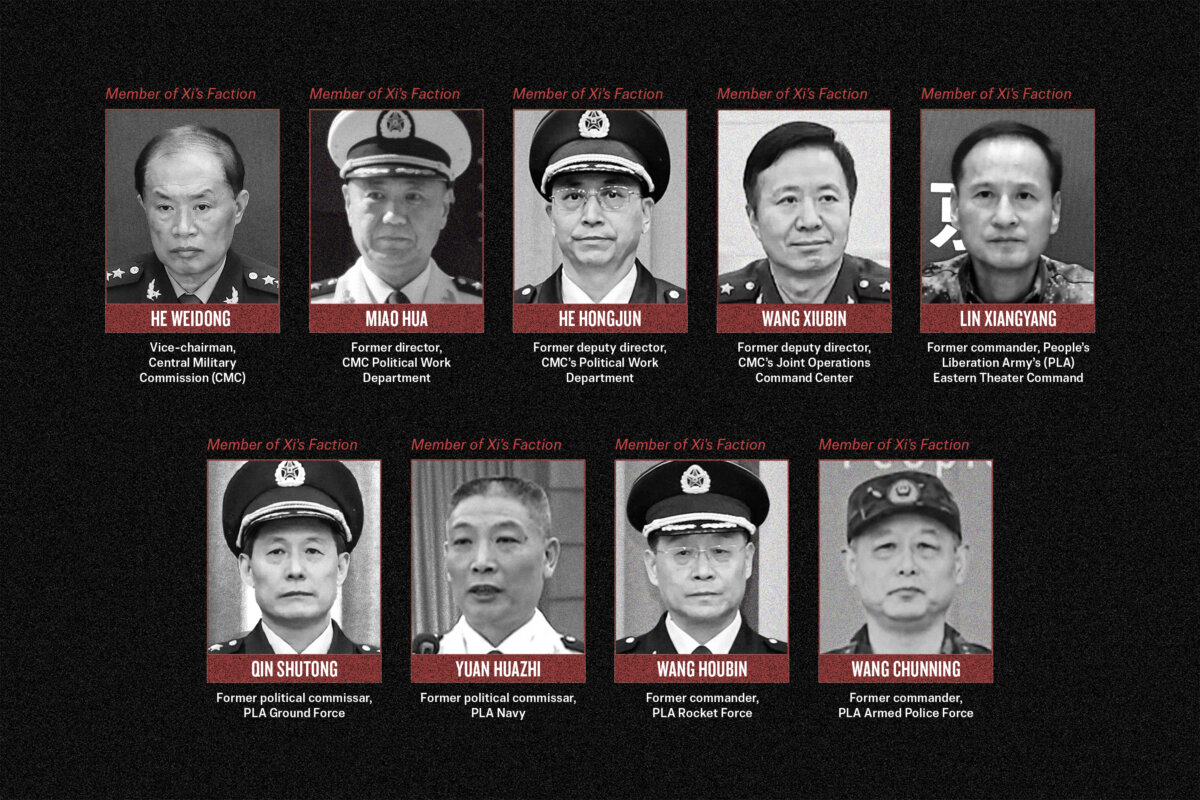

In a dramatic move on Oct. 17, the Chinese Communist Party (CCP) expelled nine high-ranking military leaders and handed them over for investigations on accusations related to corruption and abuse of power, including a top general considered to be a close ally of Party chief Xi Jinping.
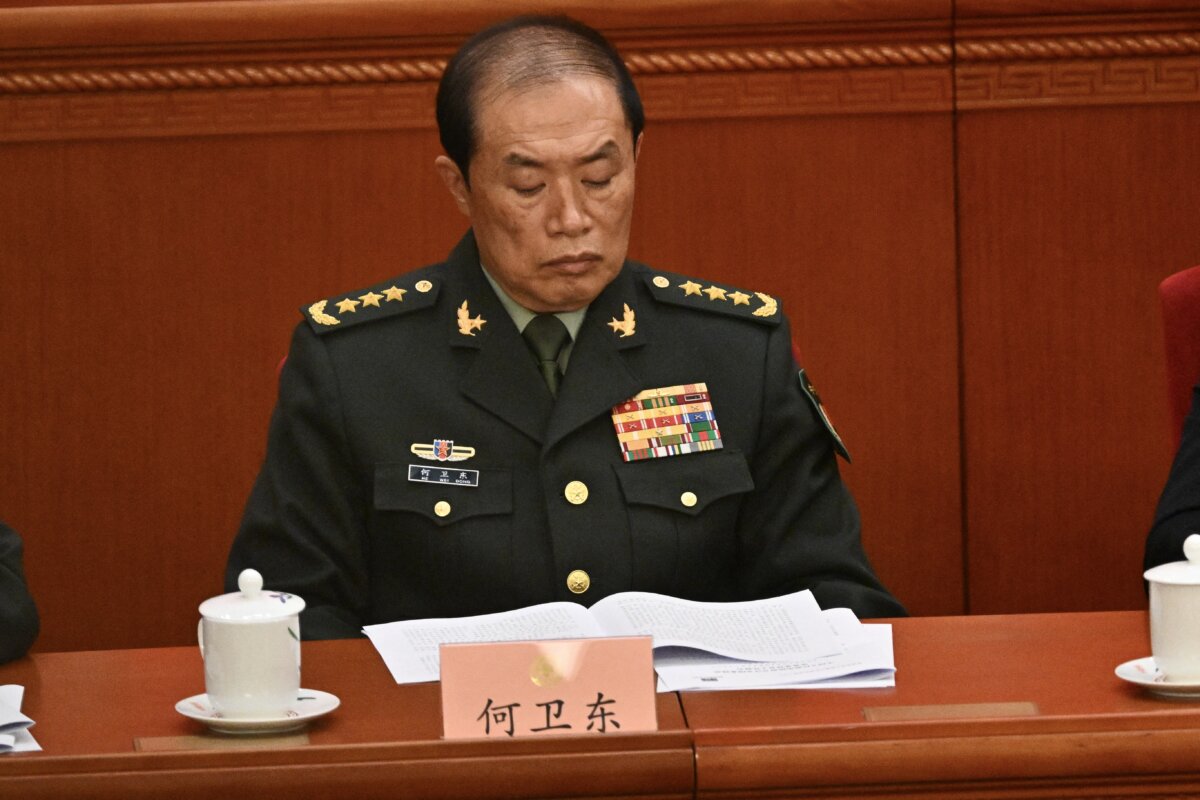
He Weidong, a member of the Politburo—the CCP’s second-highest decision-making body—and a vice chairman of the Central Military Commission (CMC), which exercises the CCP’s control over the armed forces, was stripped of his Party membership and taken down from the People’s Liberation Army (PLA), according to a spokesperson for China’s defense ministry.
Tune in to China Watch, a podcast on Chinese politics, technology, and business.
The announcement makes He the most prominent military figure brought down in the CCP’s decade-long campaign against so-called corruption.
Launched by Xi shortly after he took power in late 2012, the anti-graft campaign initially targeted officers loyal to factions opposing Xi’s rule. The latest purges, however, have increasingly targeted Xi’s protégés and longtime associates, sparking speculation about power struggles behind the scenes.
Aside from He, another general close to Xi, Miao Hua, was also expelled from the military and the CCP, according to the defense ministry. Miao had overseen the PLA’s political loyalty until his abrupt suspension in November 2024, when Beijing placed him under investigation for suspected corruption. He lost his position in the CMC in June this year.
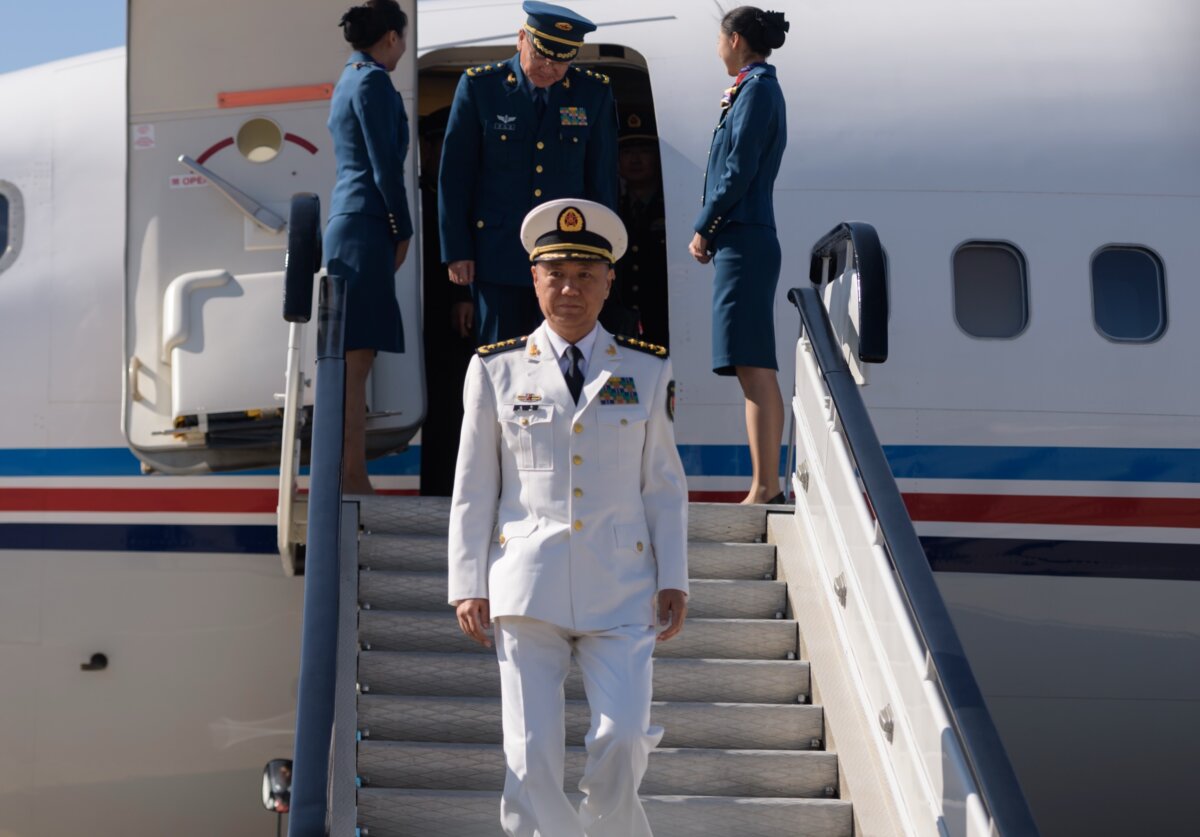
The defense ministry revealed on Oct. 17 that Miao’s deputy, He Hongjun, executive deputy director of the CMC’s Political Work Department, was also ensnared in the anti-graft drive.
These individuals “seriously violated Party discipline” and are “suspected of serious duty-related misconduct, involving an extremely large amount of money,” Zhang Xiaogang, a spokesperson for the defense ministry, said at a briefing in Beijing.
Their offences were “of a grave nature, with extremely detrimental consequences,” Zhang said, according to the official transcript.
All nine had already been expelled from the army, and their cases will be handed to military prosecutors, he added.
The generals named by Beijing include Wang Xiubin, former executive deputy director of the CMC Joint Operations Command Center; Lin Xiangyang, former commander of the Eastern Theater Command; Qin Shutong, former political commissar of the army; and Yuan Huazhi, former political commissar of the navy.
Wang Chunning, former commander of the armed police force, and Wang Houbin, former head of the Rocket Force, which commands the country’s nuclear missiles, were also expelled, according to the ministry.
Xi Facing Pressure
The announcement came just three days before a key conclave that will gather the CCP’s most senior officials in Beijing.
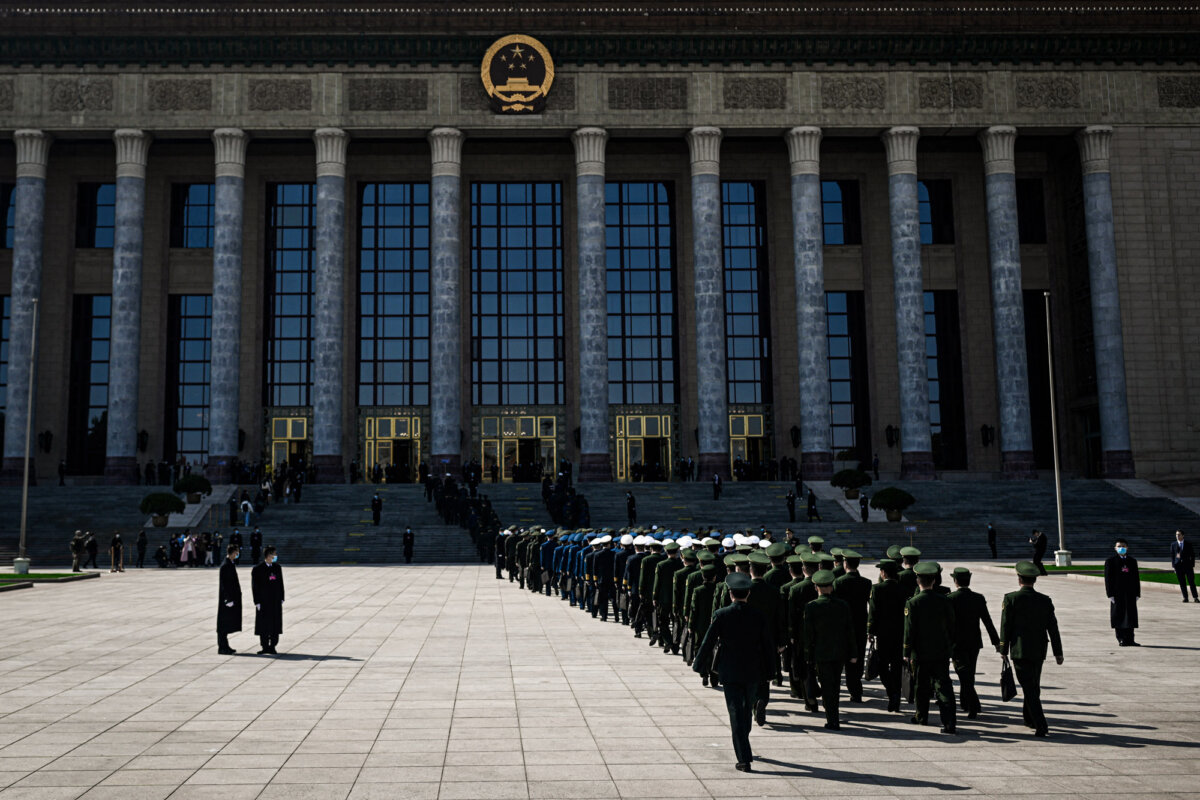
The focus of the closed-door meeting will be the 15th five-year plan, a blueprint outlining social, economic, and political objectives for the next five years, according to Chinese state media. Personnel reshuffles are also expected to be on the agenda.
The conclave, known as the fourth plenum, will be closely watched by political analysts who are monitoring any signs of a potential power transfer. The unprecedented purges of top officials of the CCP and its controlled armed forces have raised questions about the stability of the regime’s leadership.
Some analysts connected to Beijing’s political elite say Xi’s hold on power may have waned due to ongoing struggles with Party elders.
The latest announcement “further indicates that Xi Jinping could face a loss of power at the upcoming Fourth Plenum,” said Shen Ming-shih, a research fellow at the Institute for National Defense and Security Research, a think tank funded by the Taiwanese government.
If further purges of Xi’s appointees are announced before the conclave, it may suggest increasing pressure for him to step down, Shen, who has been closely monitoring China’s military and political landscape, told The Epoch Times.
“Even if Xi Jinping himself was unaffected, the downfall of so many generals he chose indicates a lack of judgment in personnel decisions,” he noted.
When the military leaders Xi elevated are accused of corruption, Shen said, “the responsibility ultimately lies with Xi Jinping.”
More Purges Behind the Scenes
The nine dismissed generals may represent only a fraction of the senior commanders and defense leaders currently under investigation, analysts noted.
The Chinese military, which does not publicize personnel changes, has become increasingly tight-lipped in recent years, particularly amid numerous graft investigations into military leaders that have raised questions about the effectiveness of its fighting forces.
Before the defense ministry made its announcement, He Weidong had skipped multiple political events at which his presence was expected, including the grand military parade on Sept. 3.
His fate was a huge topic of discussion among China observers, largely due to his connections with Xi, dating back two decades to Fujian, a coastal province in southeastern China.
He’s last public appearance was in mid-March during the annual gathering of the country’s rubber-stamp legislature, the National People’s Congress. The regime’s defense ministry previously said that it was “not aware” of reports that He was under scrutiny.
Taiwan’s intelligence chief told a parliamentary hearing earlier this week that 16 of the PLA’s 32 active generals have not been seen in public since last December.
That tally suggests “the purge and investigation of PLA leadership is far from over,” Hung Tzu-chieh, an expert on the Chinese military at the Institute for National Defense and Security Research, told The Epoch Times.
By making public the ousting of the nine generals, Beijing appears to be sending a message: it is ready to “handle and arrange subsequent personnel issues,” Hung said.
CCP’s Struggle to Invade Taiwan
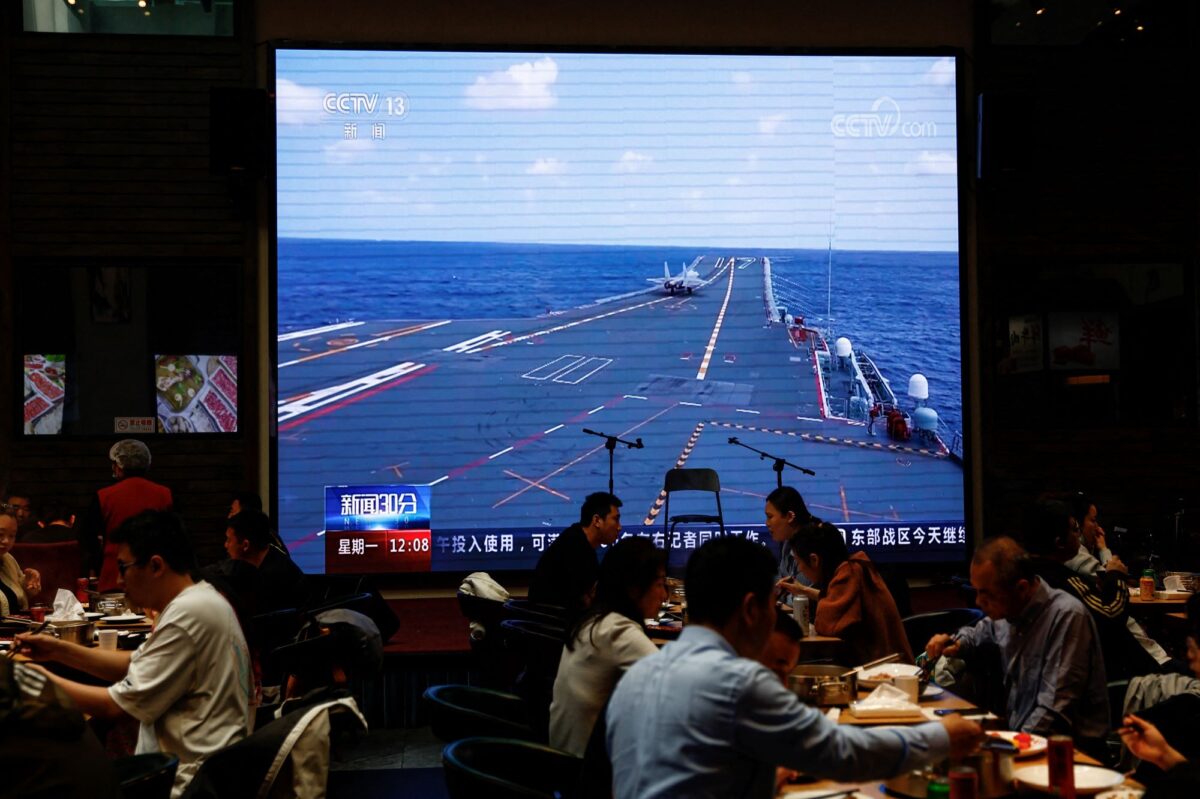
The ongoing purges within the top ranks of the PLA cast doubt on the CCP’s ability to wage a war against Taiwan, according to Kung Shan-son, a researcher focusing on cross-strait relations at the same Taipei-based think tank.
U.S. intelligence and military officials say the deadline Xi set for the PLA to be ready to invade Taiwan was 2027.
The CCP views the self-ruled Island nation as a breakaway province, and Xi says the CCP would never rule out the use of force to bring the island under communist rule.
Anxiety about a Chinese invasion has escalated in recent years as the CCP has ramped up military pressure on Taiwan. That includes flying warplanes near Taiwan on a near-daily basis and carrying out large-scale military drills in the Taiwan Strait in an effort to demonstrate the regime’s might and wear down Taiwan’s defense.
He Weidong, who served in the CMC’s Joint Operations Command Center before being promoted to vice chairman of the elite body in October 2022, was believed to have been involved in crafting Beijing’s strategy regarding Taiwan.
According to the Pentagon’s assessment, He “played a key role” in planning the live fire drills around Taiwan following a brief visit by then-U.S. House Speaker Nancy Pelosi (D-Calif.) to the island in August 2022.
With the sweeping purges continuing across the Chinese military leadership, Kung told The Epoch Times that the immediate threats from the CCP may not be as severe as some have feared.
“Those newly appointed generals will need time to adapt to their new jobs,” he said.
Luo Ya contributed to this report.
Correction: An earlier version of this article misspelled the name of Kung Shan-son in one instance. The Epoch Times regrets the error.
 Friends Read Free
Copy
Facebook
Tweet
Friends Read Free
Copy
Facebook
Tweet