
The theft of American artificial intelligence (AI) systems by China-based entities could trigger sweeping restrictions from Washington, with experts saying the move would widen the U.S.–China technology gap by years.
The White House said in an internal memo dated April 23 that foreign entities, principally based in China, are engaged in “deliberate, industrial-scale campaigns to distill U.S. frontier AI systems.”
“These coordinated campaigns systematically extract capabilities from American AI models, exploiting American expertise and innovation,” it said.
Michael Kratsios, director of the White House Office of Science and Technology Policy, wrote that industrial distillation activities—tactics used to produce smaller models from more advanced systems—aim to systematically undermine American research and development.
These activities are unacceptable, and the U.S. government will address this threat, he said.
Kratsios said that the Trump administration would share information on unauthorized, industrial-scale distillation with U.S. AI companies and enable the private sector to better coordinate against such attacks.
He also said Washington will work with private industry to build strong defenses against such activities and explore measures to hold foreign actors accountable.
In response, on April 24, the Chinese Foreign Ministry called the allegations “groundless” and “deliberate attacks on China’s development and progress in the AI industry.”
However, this is not the first time China-based actors have faced such accusations.
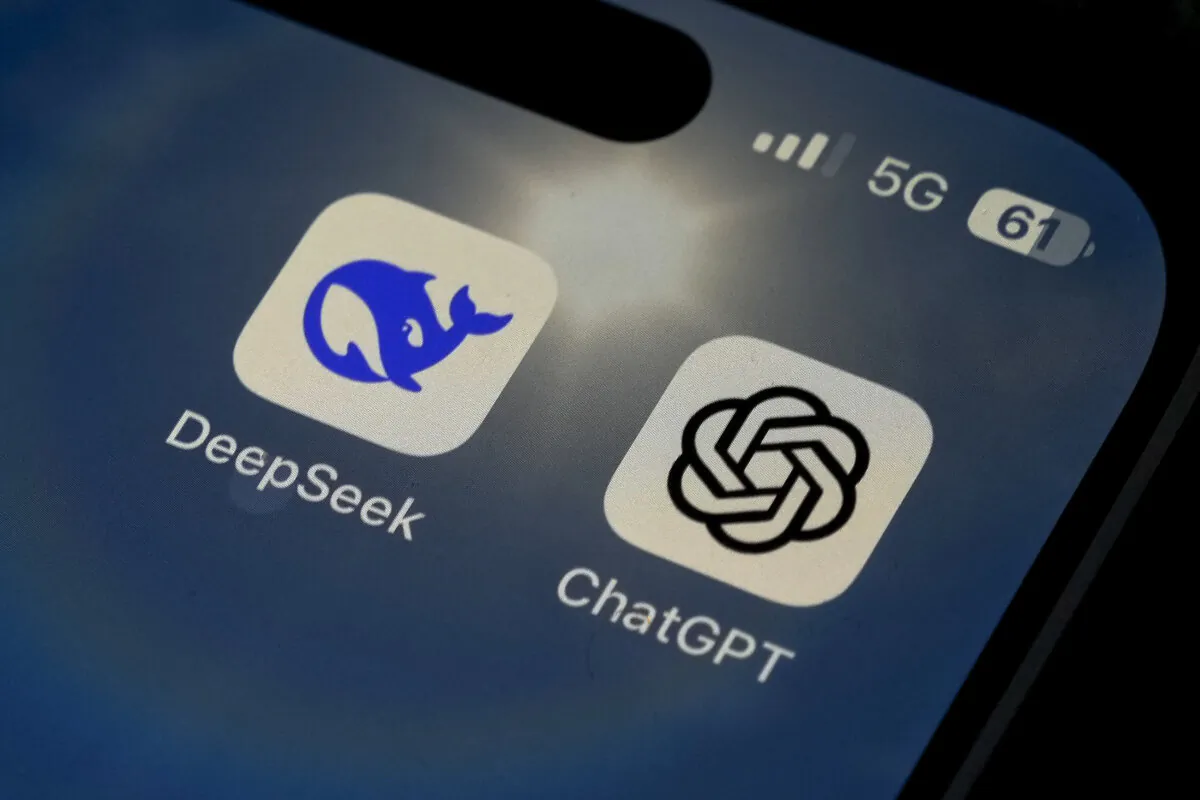
On Feb. 23, Claude chatbot maker Anthropic accused three Chinese AI firms—DeepSeek, Moonshot AI, and MiniMax—of carrying out “distillation” attacks to copy its models.
On Jan. 29, ChatGPT creator OpenAI said that DeepSeek might have “inappropriately distilled” its models.
National Security Issue
Sun Kuo-hsiang, a professor of international affairs and business at Taiwan’s Nanhua University, said the warning is significant, reflecting Washington’s decision to treat China-based entities’ theft of AI technology as a national security issue.
“The memo makes clear that the U.S. concern goes beyond individual copyright violations,” Sun told The Epoch Times.
“What it fears is that Chinese technology companies could undermine U.S. AI firms and the global market by building AI capabilities illegally at low cost and massive scale.”
Sun said the memo lays policy groundwork for potential follow-on measures.
“These [measures] include Application Programming Interface (API) controls, cloud computing oversight, corporate sanctions, allied coordination, and security reviews of Chinese AI tools,” Sun said.
“They show that China-linked theft of U.S. AI technology has reached a critical level.”
Daphne Shiow-wen Wang, an assistant research fellow at National Defense and Security Research (INDSR) in Taiwan, said the document corroborates prior accusations against Chinese AI firms while exposing that their advantages, whether in efficiency or cost, are built “entirely on the back of distilled U.S. large-scale models.”
“The White House is sending a direct message to Chinese companies that boast about AI superiority while still relying heavily on U.S. models,” she said.
“It also warns Chinese firms not to push their luck by stealing foreign technology and claiming it as their own,” Wang said.
Widening US Lead
Sun said the memo indicates U.S. restrictions will extend beyond technical firewalls into diplomatic and industrial channels, meaning the divide, regarding frontier AI models between the two nations, could be far greater.
“If [the countermeasures] are effectively enforced, Chinese AI firms will find it costlier to access U.S. frontier model capabilities and high-end computing power, slowing their ability to catch up,” Sun said.
“Were China to be completely cut off from advanced computing and frontier model capabilities, it could fall two to three years or more behind the U.S.”
Wang said Chinese firms’ large-scale AI models trail American counterparts significantly, yet these entities are leveraging U.S. technology to gain ground, highlighting a key battleground in the U.S.–China AI competition.
“The U.S. will take robust countermeasures to ensure the AI gap between the two countries only widens,” Wang said.
“Restricting Chinese access or cracking down on illegal ‘distillation’ should extend the American lead in AI technology by at least six months to a year.”
Human Rights at Risk
Sun said the Chinese regime could weaponize the stolen AI technology to expand domestic repression.
“Beijing already has a vast digital surveillance infrastructure built on facial recognition and internet censorship,” Sun said. “Feeding more powerful generative AI into its system could turn it into an instrument of political control.”
That means moving from merely collecting data to using the technology to predict behavior, analyze intentions, and automatically censor content—making an already dire human rights situation worse, according to Sun.
China scored 9 out of 100 and was rated “not free” in the Freedom in the World 2026 report by Freedom House, a nongovernmental organization based in Washington.
The Chinese regime continued to “exert significant control over people’s political rights and civil liberties in China, prosecuting journalists, cracking down on small but multiplying protests, and constraining international travel,” the report said.
Trump–Xi Talks
Sun said the mass AI theft will likely be on the agenda for the upcoming summit between U.S. President Donald Trump and Chinese leader Xi Jinping—scheduled for May 14 to 15 in Beijing.
“By defining China-based entities’ tactics as ‘industrial-scale campaigns,’ Washington is elevating this issue from a commercial dispute to a diplomatic priority,” Sun said.
“It will likely be factored into the negotiations, potentially becoming a key area where the U.S. demands binding commitments from Beijing to halt these activities.”
Sun said raising the topic would likely increase tensions during the meeting, making a consensus difficult to reach.
“These accusations directly challenge the legitimacy of China’s technological rise, making it highly unlikely that Beijing will offer immediate, substantive concessions at the summit,” Sun said.
Sun said the United States could use the evidence of theft as leverage when negotiating broader topics with its counterpart.
“In other words, Washington might integrate the AI theft problem into a larger framework involving technology, trade, and national security,” Sun said.
“If China is willing to compromise on certain economic or security fronts, the U.S. might adjust the pacing of its restrictions.”
Sun said the Chinese Communist Party (CCP) will likely deny the allegations, but the strategy could backfire by triggering stricter U.S. counter-pressure.
“The CCP will predictably accuse Washington of suppressing it under the guise of national security,” Sun said.
“In response, the U.S. could easily impose heavier restrictions on Chinese AI firms and their supply chains after the summit.”
 Friends Read Free
Copy
Facebook
Tweet
Friends Read Free
Copy
Facebook
Tweet