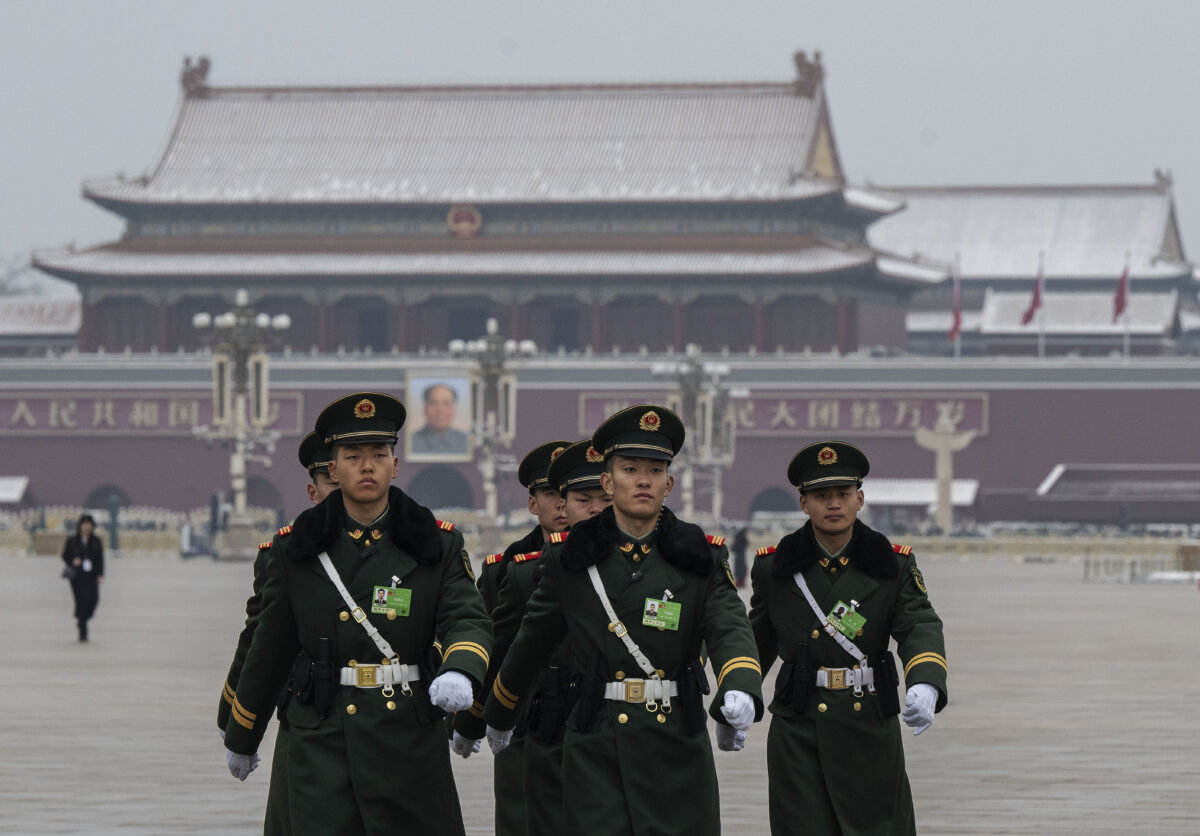

Following a growing wave of protests and indiscriminate attacks in China, Beijing will likely respond with even harsher “stability maintenance” to prevent any challenge to its rule, experts say.
On April 4, a man allegedly stabbed multiple people in Shenyang, the capital of China’s Liaoning Province, according to footage circulating online.
The X account “Teacher Li Is Not Your Teacher”—run by a Chinese dissident who shares real-time updates on events that would be censored inside China—posted video clips appearing to show two victims on the ground, one of them motionless.
The Epoch Times could not independently verify the incident.
Chinese authorities have not publicly addressed the alleged stabbings as of publication time, and related information was seemingly scrubbed from Chinese search engines and social media platforms, including Baidu, Weibo, and Douyin.
Twelve indiscriminate attacks have been documented across China since the start of 2026, with incidents reported in major cities including Beijing, Guangzhou, and Shenzhen, according to the “Teacher Li Is Not Your Teacher” account.
A report published in February by Freedom House’s China Dissent Monitor tallied 5,343 protest events across China in 2025, marking a 44 percent increase from the 3,704 incidents tracked in 2024.
Evading Accountability
Arthur Zhin-sheng Wang, secretary general of the Asia-Pacific Elite Interchange Association in Taiwan, said the spread of such incidents highlights how authoritarian governance pushes desperate citizens to the breaking point.
“Democratic countries have systems that hold governments accountable to the public, but nothing comparable exists in one-party systems like China,” Wang told The Epoch Times.
“Without effective checks on power, Beijing relies on high-pressure social control, leaving ordinary citizens cornered and driving them toward violent backlash.”
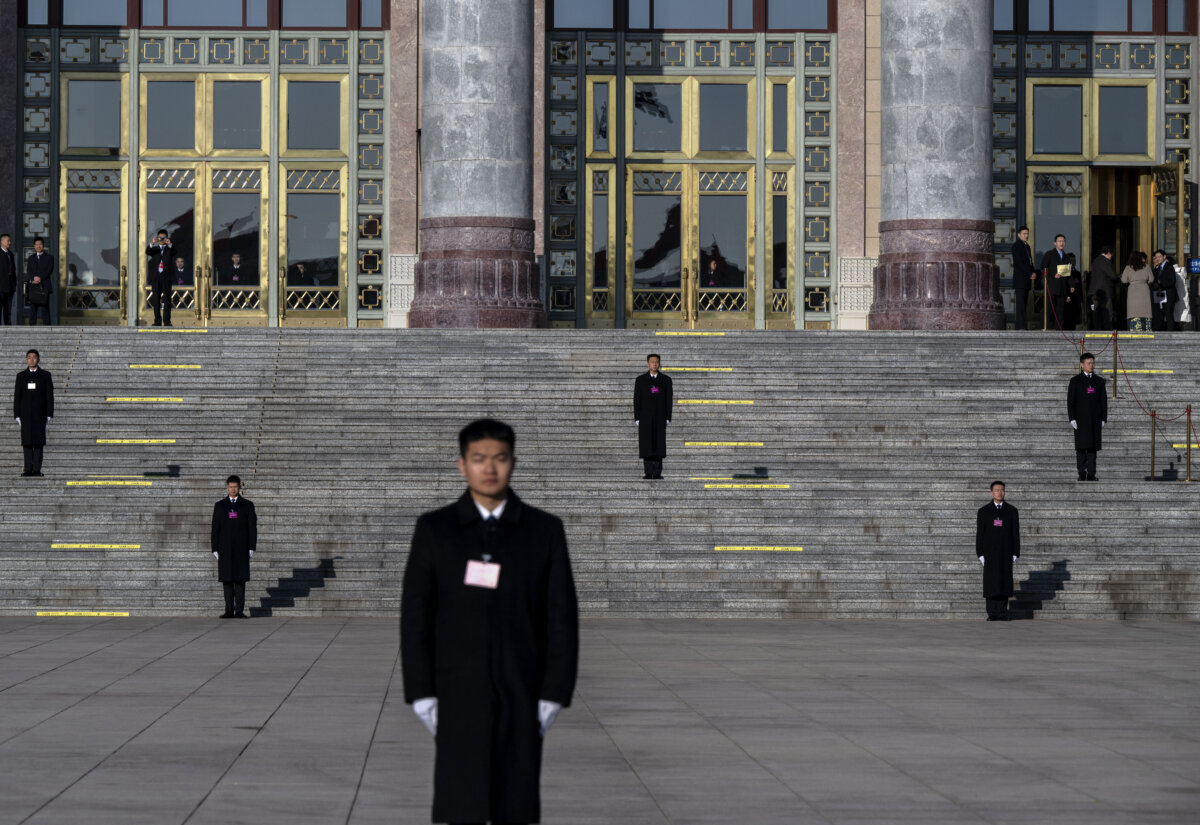
Wang said the swift online censorship enforced by the Chinese Communist Party (CCP) exposes its fear that such acts could spread and destabilize its grip on power.
“This kind of contagious venting directly challenges the regime. That is why Beijing must block all information in the shortest time possible,” Wang said.
Echoing Wang’s assessment, Jing Yuan-chou, an adjunct professor at the Department of Diplomacy and International Relations at Taiwan’s Tamkang University, said the absence of any official account, even as casualty figures circulating online varied widely, reflects the Chinese regime’s determination to prevent public scrutiny.
“Suppressing information has always been part of its approach to maintaining stability,” Jing said.
“The priority is to minimize visibility, prevent discussion, curb sentiment from spreading, and evade accountability for local governance.”
Stability at All Costs
Chinese state-run media outlet Xinhua reported on April 3 that Chen Wenqing, the CCP’s top political and legal affairs official, vowed to “dynamically monitor” specific populations and “strictly prevent extreme cases.”
Chen’s remarks came just days after a bulldozer plowed into a crowd at a rural market in Beijing’s Fangshan District on March 29, in what witness accounts and social media posts suggest was a mass casualty attack.
As with the Shenyang attack, authorities offered no public account of the incident.
Jing said Chen’s statement makes clear that with each new extreme incident, the Chinese regime’s response will be to double down on monitoring and control rather than conduct an open investigation and administer justice.
“The CCP’s nature is like tightening a screw—clamping down further, never easing, in the name of stability,” Jing said.
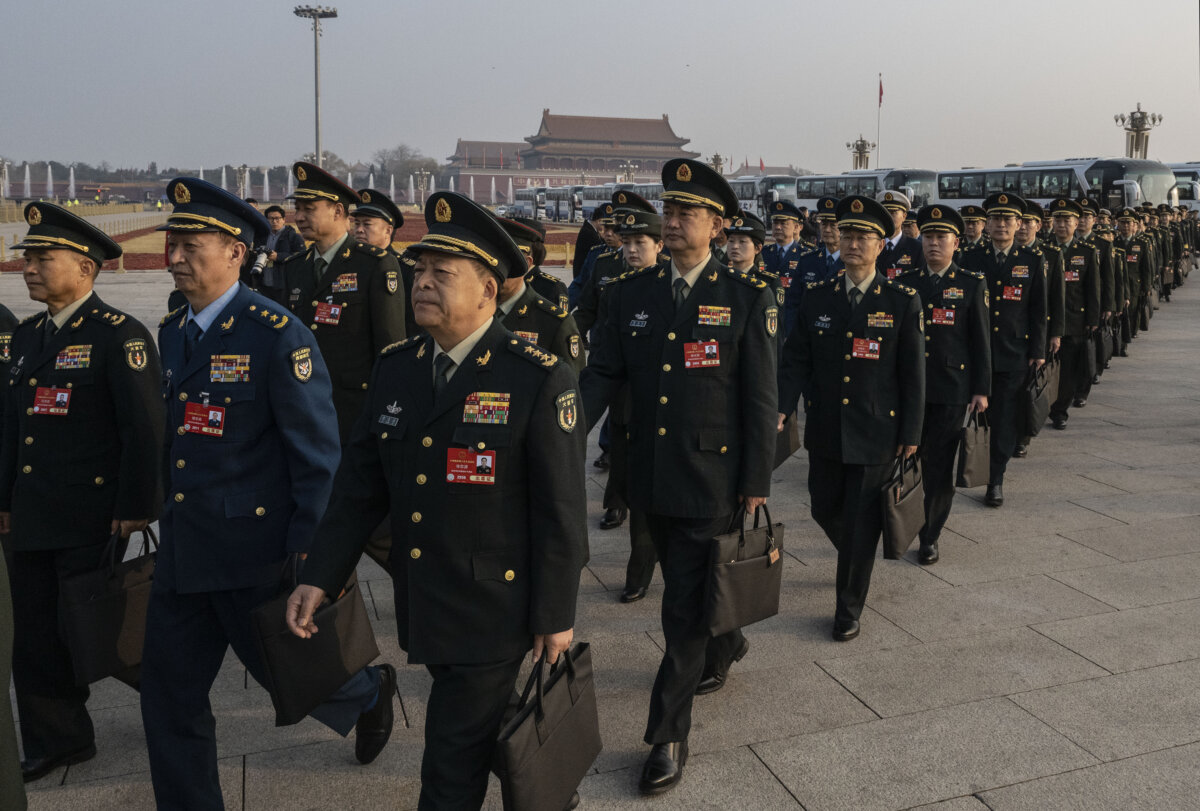
“As indiscriminate attacks continue, its only calculation will be to intervene earlier, monitor more broadly, and lock down more strictly.”
Jing said this trend is evident in China’s 2026 draft central and local budget report, where public security spending—often viewed by observers as a key barometer for stability maintenance—rose 5.9 percent to 258.26 billion yuan ($37.8 billion).
Wang said China will enforce “preemptive stability maintenance,” intensifying social media controls and surveillance before unrest can emerge, in response to the growing wave of indiscriminate attacks.
“Beijing has rolled out a series of internet regulations since 2025 to extend ‘online stability maintenance’ across cyberspace, social media, and artificial intelligence (AI). This trend will only continue,” Wang said.
Beyond those measures, Wang warned that authorities will likely use these attacks as justification to further restrict physical protests and public assemblies, closing off yet another outlet for citizens already pushed to the edge.
“China’s petitioning system has already collapsed entirely. Going forward, police, military, and paramilitary forces tasked with stability maintenance will likely resort to forcible crackdowns at any given moment,” Wang said.
 Friends Read Free
Copy
Facebook
Tweet
Friends Read Free
Copy
Facebook
Tweet