
Amid the U.S.–Israel conflict with Iran, Chinese military analysts have turned their attention to the real-world performance of American-made weapons, according to multiple insiders in China familiar with internal discussions.
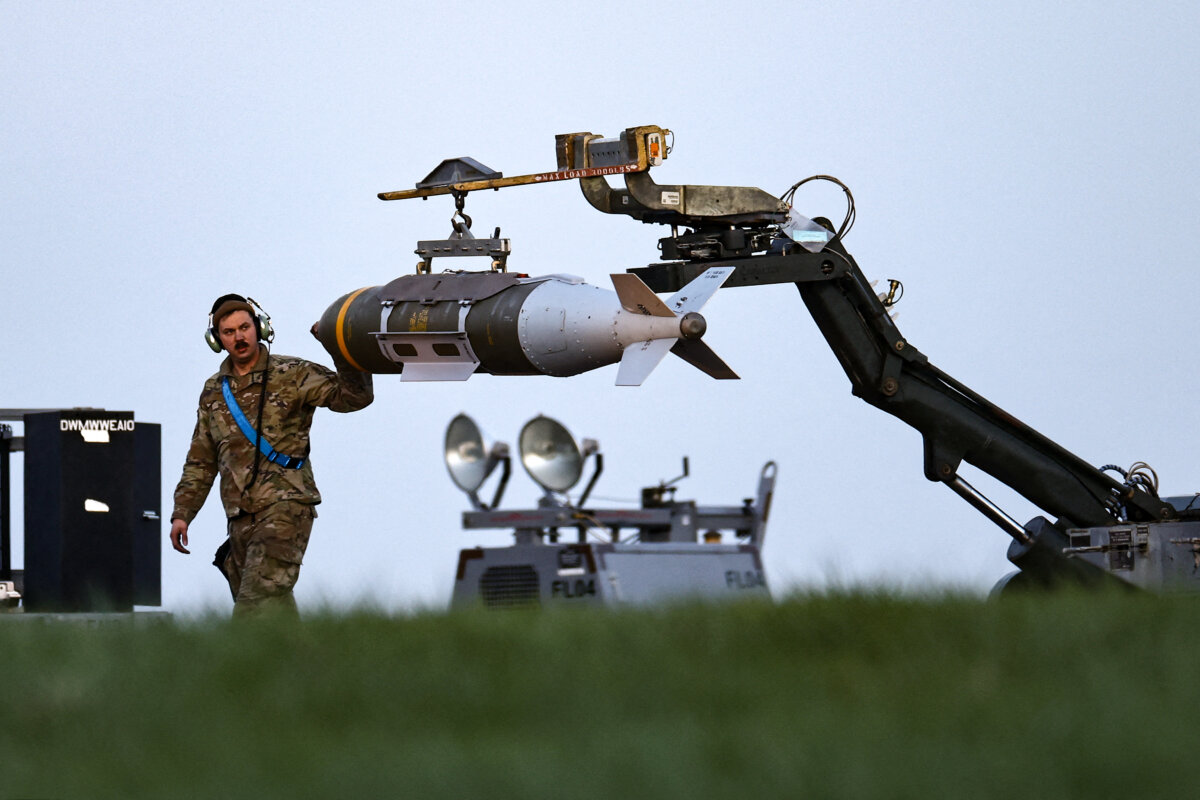
The Chinese military analysts’ focus is reportedly on missile flight data, strike accuracy, and the internal structure of unexploded munitions recovered from the battlefield.
The effort underscores how modern conflicts can double as intelligence opportunities for rival powers, offering rare access to operational data that are otherwise tightly guarded.
Several China-based insiders spoke to The Epoch Times on April 28, on the condition of anonymity out of fear of reprisal, about the subject.
Unexploded Missiles
A person close to the Chinese military told The Epoch Times that interest in the performance of American-made weapons surged after the latest round of strikes on Iran by the United States and Israel.
“The priority is understanding the internal structure of unexploded missiles, how their navigation systems functioned, their flight data, and why they failed to detonate,” the person said.
Such information is difficult to obtain under normal circumstances, making battlefield remnants particularly valuable. This person cautioned that Iran is unlikely to share core technical data outright.
“From what we hear, Iran’s position is ambiguous,” the person said. “They won’t fully open up access, but they won’t completely shut it off either. There may be limited exchanges, possibly tied to trade-offs involving military-industrial goods or other needs.”
A China-based military technology analyst told The Epoch Times that U.S. missile systems remain ahead in guidance and precision, areas that Beijing has long sought to improve.
“China’s high-end military technology likely lags the United States by 10 to 20 years,” the analyst said. “If the gap is within a decade, imitation can help close it over time. However, beyond that—approaching 20 years—many systems are difficult to fully understand, even when you have access.”
In such cases, the analyst said, cooperation with partners such as Russia might be necessary, although such relationships are constrained by mutual suspicion.
“Neither Iran nor Russia readily shares core military technologies,” the analyst said. “At the end of the day, they are still competitors.”
Quiet Engagement, Public Neutrality
According to an insider from within the Chinese Communist Party who spoke to The Epoch Times, Chinese military representatives contacted their Iranian counterparts early in the conflict, signaling a willingness to provide technical support. Iran expressed interest in equipment such as smart naval mines, drones, and radar systems, but Beijing did not respond directly.
The insider said it remains possible that China could provide assistance indirectly through third-party channels.
Publicly, Beijing has struck a markedly different tone, calling for restraint, urging dialogue, and avoiding any indication of direct involvement.
The insider said the Chinese military is focused on any and all battlefield data on U.S. weaponry.
“These are things you normally can’t get your hands on,” the person said. “Now they’re effectively laid out in front of you. Tracking weapon performance without directly entering the conflict has become a key priority.”
Wang Yibo contributed to this report.
 Friends Read Free
Copy
Facebook
Tweet
Friends Read Free
Copy
Facebook
Tweet