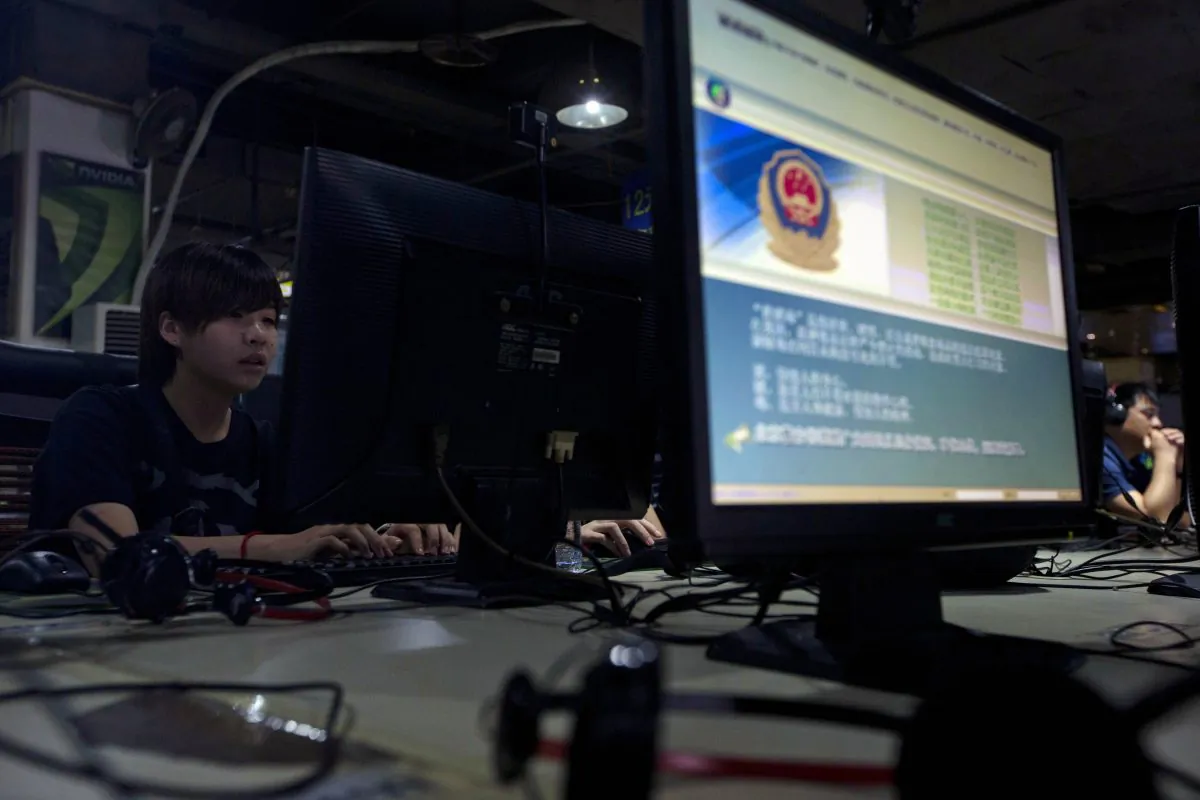
The Chinese Communist Party (CCP) has stepped up its efforts to block virtual private networks (VPNs), tightening control over tools that allow internet users to bypass its broad censorship. The CCP has begun targeting both service providers and individual users, escalating fears of deepening surveillance inside China.
Under the CCP, major platforms such as Google, Meta, and X are blocked, along with foreign news sites critical of the regime. VPNs are often the only way for Chinese users to access uncensored information from the outside world.
But even as local users face increased scrutiny and technical roadblocks, some foreign travelers report being welcomed with “custom VPN access” upon arrival, which some experts say is used by the regime as a surveillance tool.
Starting in May, Chinese social media users and cybersecurity observers began reporting a wave of intensified enforcement measures against VPN use across mainland China. Insiders familiar with the campaign told The Epoch Times that the Cyberspace Administration of China has deployed new, proactive tactics, obtaining VPN products on the open market so it can then trace their IP addresses and identify service providers. Authorities can then coordinate with domestic internet service providers to block the servers and investigate users.
“If a server is flagged as being used to bypass the firewall, its access point is shut down immediately,” said a Chinese data analyst who spoke to The Epoch Times on condition of anonymity because of fear of reprisal. “And users can expect to be investigated.”
Underground VPN providers in China are also under mounting pressure.
“It’s like a daily explosion,” one anonymous operator told The Epoch Times. “The Great Firewall is now cutting off outbound IPs in bulk every day at 4 p.m.—like flipping a switch. If this continues, domestic proxy tunnels could be completely wiped out.”
The effort to suppress VPN users has become so sophisticated that even next-generation VPN protocols remain stuck in testing, fueling an ongoing game of cat and mouse between underground tech developers and the CCP’s censors.
Different Standard for Foreigners
Despite the growing restrictions on Chinese users, foreign nationals appear to be subject to a different policy.
Ms. Chen, a South Korean citizen of Chinese descent, said she was surprised by the reception she received when she landed at Shanghai Pudong International Airport in China.
“When I arrived in Shanghai last week, as soon as I cleared customs, staff members were enthusiastically promoting local SIM cards and even offered to install a VPN for me,” she told The Epoch Times on July 25. “When I asked, ‘Isn’t VPN use illegal in China?,’ they said that it’s OK for foreigners, and for Hong Kong, Macau, and Taiwanese visitors, too. They even promised smooth access to overseas websites.”
Such selective access policies have stirred resentment among Chinese netizens, and some have turned to YouTube to share their frustrations. There are videos with masked Chinese YouTubers sharing the few VPNs that can still function stably and at high speeds behind China’s firewall, showing the performance of these tools in real time.
Behind the CCP’s convenient offers to foreign visitors, experts warn that these VPNs, whether sold openly or installed at the airport, may not be safe.
Li Wen (who used a pseudonym for safety reasons), a software engineer at a Chinese tech company, told The Epoch Times that VPN providers in China must obtain approval from the Ministry of Public Security and register with the Cyberspace Administration of China.
“Many so-called VPNs are actually surveillance tools,” he said. “They harvest data from your device—your browser history, personal information—and upload it to the developer for analysis. If you access [politically] sensitive content, the consequences can be severe.”
According to Li, massive datasets collected by these domestic VPN companies—some of which are headquartered overseas—are funneled daily into government-run systems in Beijing for analysis. They prioritize two key areas: political dissent, such as protests, petitions, or criticism of CCP leaders, and sensitive commercial intel, such as developments in the chip industry, foreign business operations, or joint ventures with international firms.
Mr. He, a Chinese current affairs analyst and commentator based in Australia, said he believes that the CCP is increasingly using digital tools to monitor Chinese society.
“Human informants can lie, but data captured through VPNs offers a complete behavioral picture,” he told The Epoch Times. “It’s more convincing than anything a human spy could say.”
Xing Du contributed to this report.
 Friends Read Free
Copy
Facebook
Tweet
Friends Read Free
Copy
Facebook
Tweet