
China’s effort to expand its maritime reach into the Arctic is facing new obstacles as the United States, Denmark, and Greenland strengthen security arrangements that restrict non-NATO military activity and give Washington a greater role in screening foreign investment in sensitive sectors.
A new agreement signed by President Donald Trump, Danish Prime Minister Mette Frederiksen, and Greenlandic Prime Minister Jens-Frederik Nielsen on Sept. 22 allows the United States to expand its activities at Pituffik Space Base and establish additional defense areas at Narsarsuaq and Mestersvig. It also bars non-NATO countries from establishing military installations or maintaining a persistent military presence in Greenland unless the parties agree otherwise.
The agreement further restricts investors from countries outside NATO, NATO partner states, and the European Union from obtaining control, significant influence, or access to nonpublic information in sensitive sectors such as critical infrastructure and resource extraction, unless the United States, Denmark, and Greenland determine that the activity does not pose a national security or public-order threat.
The provisions could complicate Beijing’s long-running effort to gain a foothold in the Arctic through commercial investment, resource development, and shipping infrastructure.
The Chinese Communist Party (CCP) has increasingly incorporated the Arctic into a broader strategy to expand its maritime capabilities. Its 2026–30 five-year plan calls for building “maritime power” and specifically includes deep-sea and polar exploration, modern shipping, ocean technology, long-distance navigation and the ability to enter, explore, develop, and operate safely in deep-sea environments.
The strategy extends beyond naval power. China has portrayed the Arctic as an emerging economic and transportation frontier that could provide access to natural resources and alternative shipping routes between Asia and Europe.
“The CCP wants to ensure China’s ‘lifeline at sea,’” Mike Li, a U.S.-based investment consultant and China expert, told The Epoch Times. “[It] cannot allow its economic lifeline to be completely controlled by other maritime powers.”
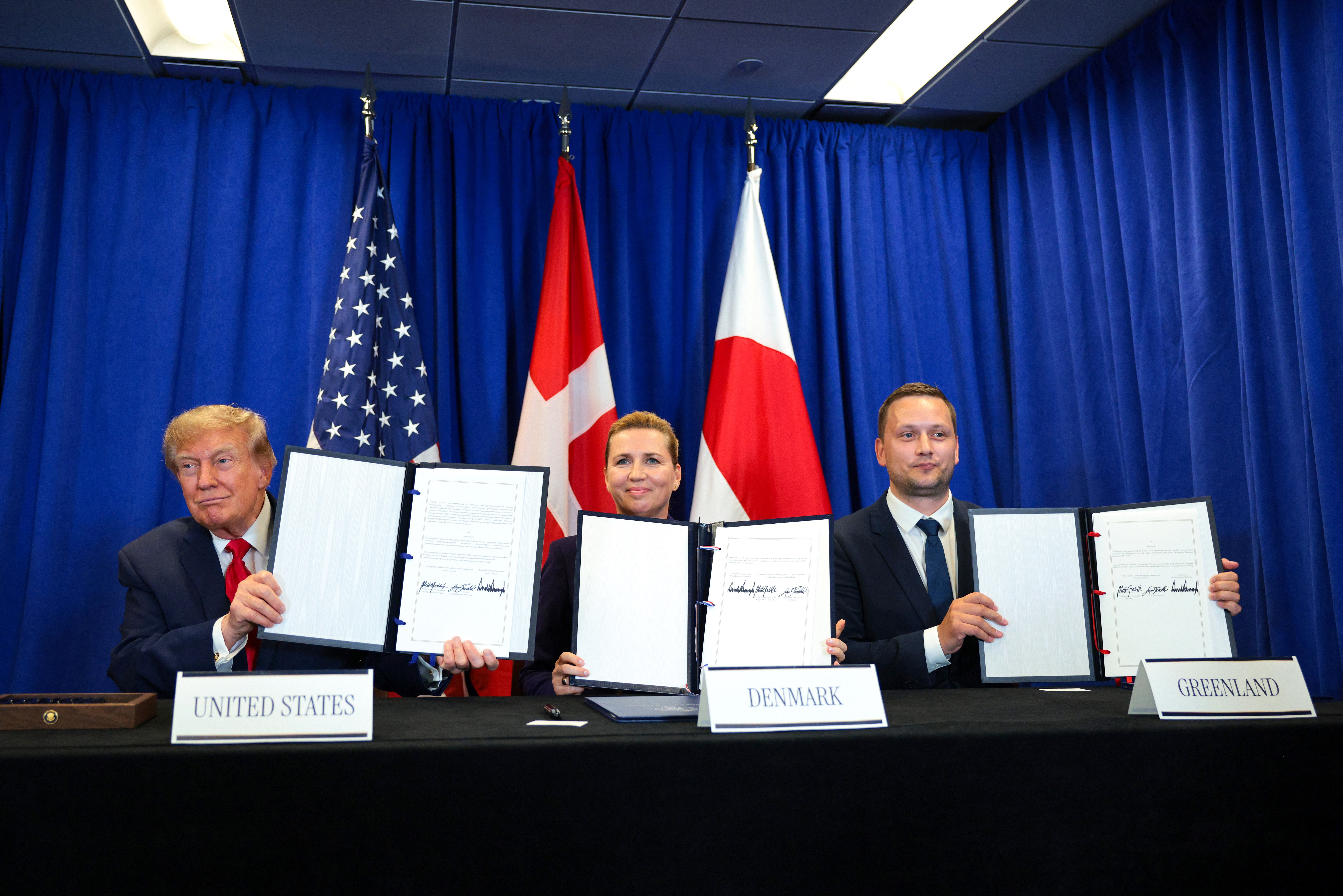 President Donald Trump, Prime Minister of Denmark Mette Frederiksen, and Prime Minister of Greenland Jens-Frederik Nielsen during the signing of a joint security pact during the U.N. General Assembly in New York City on Sept. 22, 2026. (Chip Somodevilla/Getty Images)
Beijing’s Push Toward the Arctic
Beijing formally outlined its Arctic ambitions in 2018, when it published its first Arctic policy white paper and described China as a “near-Arctic state.”
The document said China hoped to work with other countries to build a “Polar Silk Road” by developing Arctic shipping routes. It encouraged Chinese companies to participate in infrastructure construction, conduct commercial trial voyages and participate in the development of oil, gas and mineral resources.
The policy was part of the broader Belt and Road Initiative and was closely tied to cooperation with Russia along the Northern Sea Route, which runs along Russia’s Arctic coast.
China’s interest has grown as melting Arctic ice has opened the possibility of shorter shipping routes between Asia and Europe. The U.S. Department of Defense, however, has warned that Beijing’s Arctic activities have security implications.
The Pentagon’s 2024 Arctic Strategy said China, despite not being an Arctic nation, was seeking greater influence and access in the region while taking advantage of Arctic resources and changing environmental conditions. It also said China operates three icebreakers that support research efforts with potential dual civilian and military applications.
The CCP’s 2026 five-year plan now places polar activity within a much broader maritime development framework. The plan calls for strengthening support for deep-sea and polar expeditions, developing long-distance meteorological and navigation services, and improving capabilities for deep-sea access, exploration, development and security.
The regime has also highlighted the economic importance of the maritime sector. Official figures cited by Chinese state media Xinhua News Agency put the country’s marine economy at more than 11 trillion yuan ($1.64 trillion) in 2025.
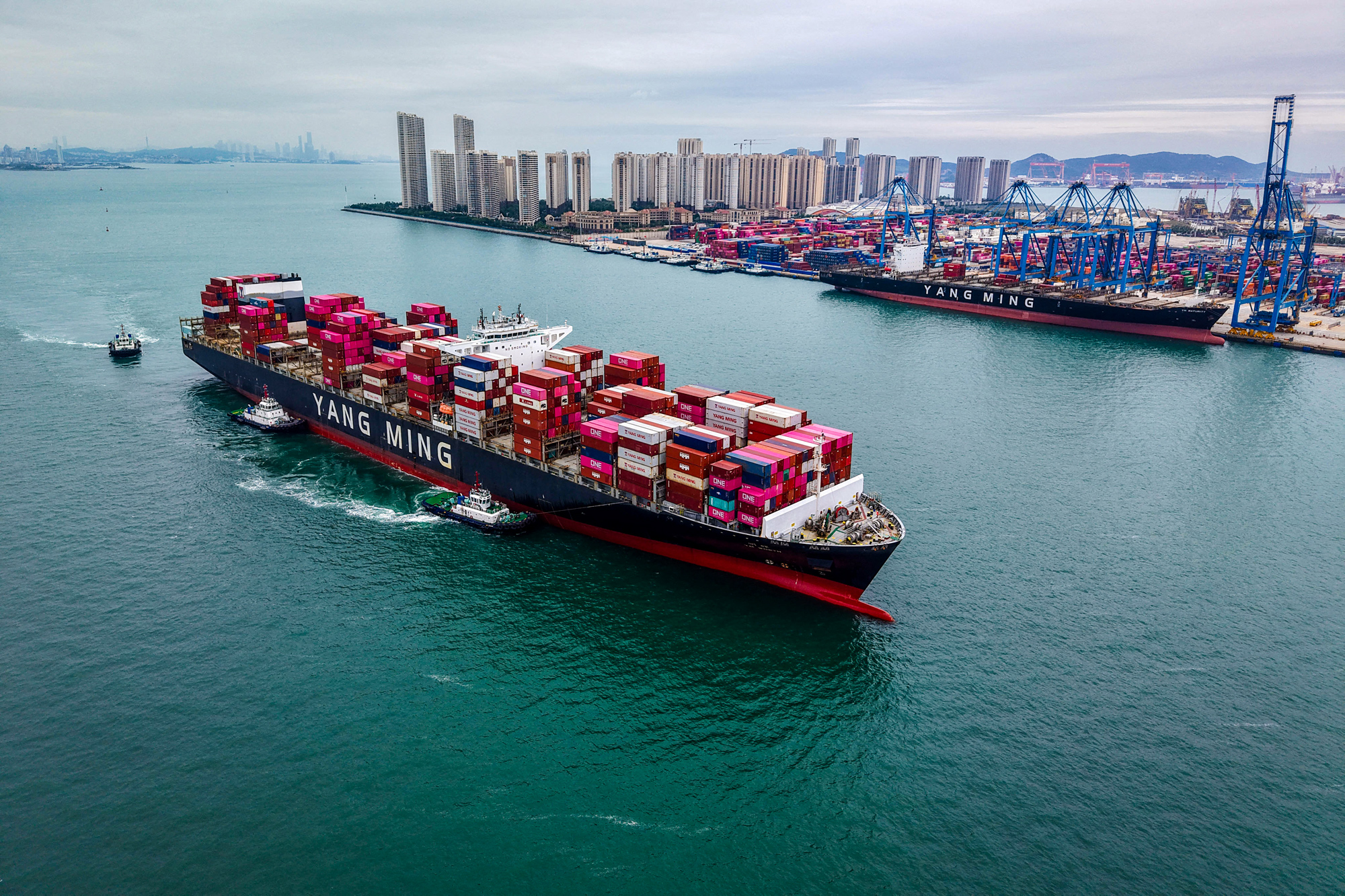 A cargo ship sails into the port in Qingdao, Shandong province, China, on Oct. 13, 2025. ( -/AFP via Getty Images)
Greenland as a Strategic Barrier
Greenland occupies a strategically important position between the Arctic and North Atlantic.
Under the new U.S.–Denmark–Greenland agreement, Washington will be permitted to establish additional defense areas at Narsarsuaq and Mestersvig. The agreement also calls for stronger NATO engagement in Arctic planning, military presence, exercises, and intelligence gathering.
Mestersvig, on Greenland’s east coast, is particularly significant because of its position near the Greenland–Iceland–United Kingdom (GIUK) Gap, a strategically important passage linking the North Atlantic and the Arctic.
The agreement’s investment provisions could be equally important for China.
According to Connor McPartland, an associate director at the Atlantic Council, the agreement requires the United States, Denmark, and Greenland to approve investments by non-NATO, non-NATO-partner, or non-EU countries in particularly sensitive sectors such as mining and infrastructure.
The arrangement gives Washington a new role in determining whether foreign investment could pose a national security threat, McPartland wrote in an online article.
The provision that allows the United States to reject non-NATO and non-EU investments on national security grounds is significant because China has previously sought commercial opportunities in Greenland involving both infrastructure and mineral resources.
Chinese companies have explored Greenland’s mineral wealth for more than a decade.
One of the most closely watched cases involved the Isua iron ore project in southern Greenland. In 2015, Chinese company General Nice Group became involved in the project after acquiring the rights to develop the mine.
The same company had also sought to acquire the former naval base at Grønnedal in 2016. The Danish government rejected the proposal on national security grounds and decided to reopen the facility.
The Isua mining license was ultimately revoked in 2021 after the project remained undeveloped and payments were not made.
Chinese companies have also shown interest in Greenland’s rare-earth resources.
A January report by the D.C.-based think tank Center for Strategic and International Studies said Shenghe Resources, a Chinese rare earth company with state ties, was the second-largest shareholder in the Kvanefjeld rare earth and uranium project. Shenghe signed a memorandum of understanding in 2018 to take a leading role in processing and marketing minerals from the project.
The Kvanefjeld project has not entered production. Greenland adopted legislation in 2021 banning the exploration and mining of deposits containing uranium above a specified concentration, effectively preventing the project from proceeding.
Greenland’s mineral potential nevertheless remains strategically important. The CSIS report said the island possesses deposits of rare earths as well as graphite, tungsten, vanadium, copper, and uranium.
The report also noted that Greenland faces major infrastructure challenges, including limited roads, ports, and energy capacity, meaning that developing its mineral resources would require substantial investment.
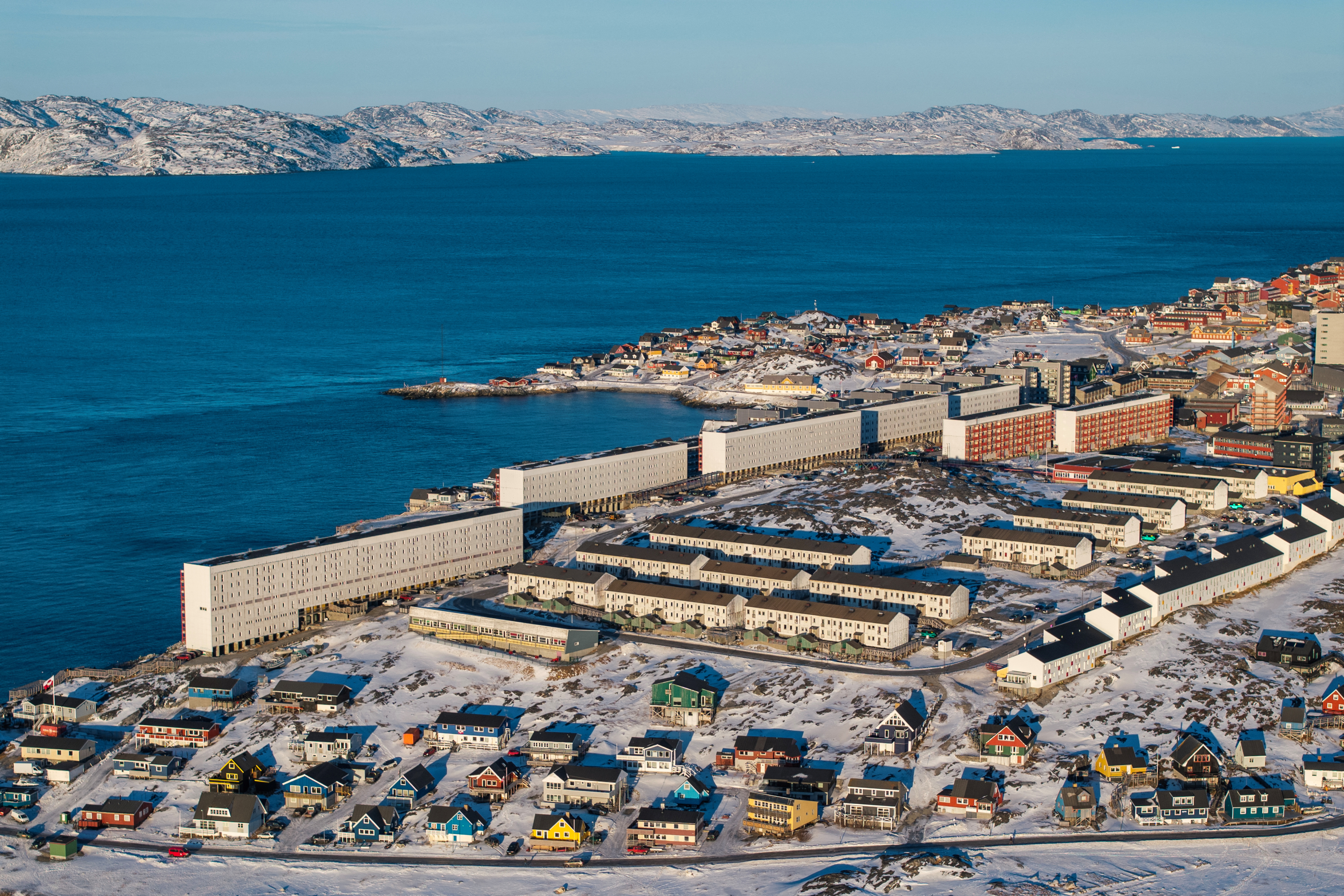 A drone view of Nuuk, Greenland, on Jan. 25, 2026. (Marko Djurica/Reuters)
Maritime Vulnerability
Beijing’s interest in Arctic shipping is also tied to concerns about its dependence on traditional maritime routes.
China relies heavily on maritime transportation for energy imports, foreign trade and manufacturing supply chains. One of its most important chokepoints is the Strait of Malacca, which connects the Indian and Pacific oceans.
A July report by the Center for Strategic and International Studies estimated that nearly $963 billion of Chinese trade passed through the Strait of Malacca in 2024, representing 21 percent of China’s imports and 14 percent of its exports.
U.S. Energy Information Administration data show that an average of 23.2 million barrels of oil per day passed through the strait in the first half of 2025. China accounted for 48 percent of the import volumes passing through the waterway.
The dependence has long been associated with what Chinese strategists call the “Malacca Dilemma,” referring to the vulnerability created by China’s reliance on a narrow maritime chokepoint which could be blockaded or disrupted by the U.S. Navy in a crisis.
Li said this vulnerability helps explain Beijing’s interest in developing alternative routes.
China’s traditional maritime transportation routes through the Suez Canal, Red Sea, Indian Ocean, Malacca Strait, and South China Sea, he said, “have actually been constrained” by the United States and allied maritime deployments.
A northern route through the Arctic could reduce China’s reliance on some of those traditional pathways, although the Northern Sea Route is not a simple substitute.
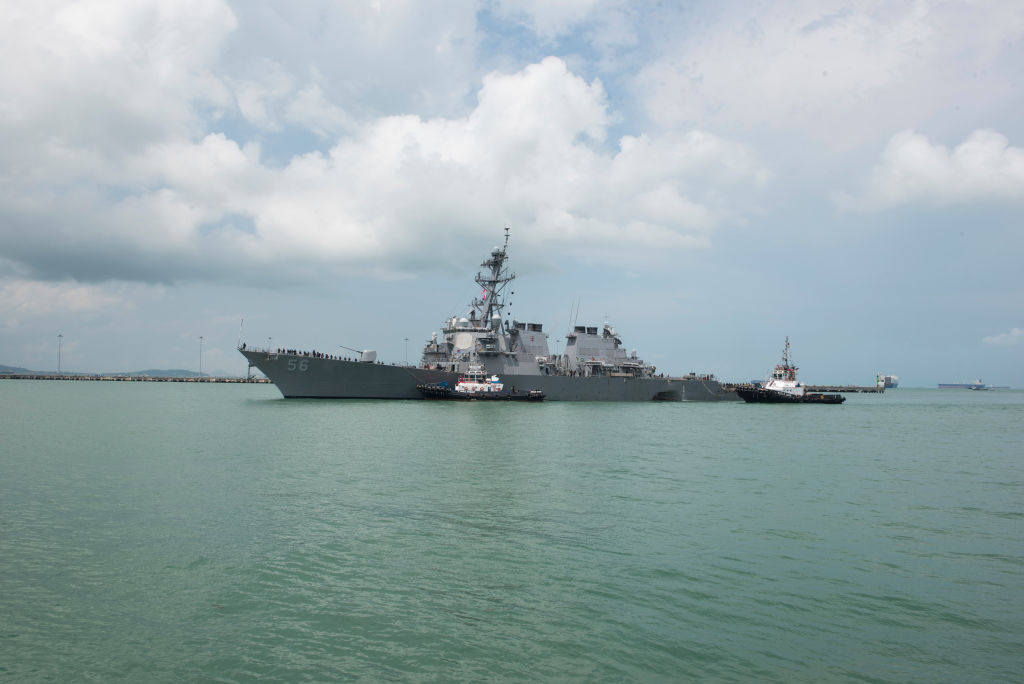 The guided-missile destroyer USS John S. McCain and tugboats from Singapore steer toward the Changi Naval Base in Singapore on Aug. 21, 2017. (Joshua Fulton/U.S. Navy via Getty Images)
Russia Still Key
For now, much of China’s Arctic shipping strategy depends on Russia.
The Northern Sea Route runs along Russia’s northern coast before connecting with waters leading toward the North Atlantic. Russia controls much of the infrastructure and provides geographic access, while China has supplied capital, technology and equipment in various Arctic projects.
China’s 2018 Arctic policy explicitly called for cooperation with Russia and other countries to develop the “Polar Silk Road.”
However, reaching Europe through the Northern Sea Route still requires ships to pass through waters and strategic approaches where Western military and surveillance capabilities are expanding.
The new Greenland agreement does not prohibit commercial Chinese shipping through Arctic waters. Nor does it eliminate China’s existing cooperation with Russia.
Instead, it creates additional security and investment barriers around one of the Arctic’s most strategically important territories.
The Pentagon has similarly described China–Russia Arctic cooperation as a growing security concern. Its 2024 Arctic strategy said Beijing and Moscow were expanding their commercial and military cooperation in the region.
For China, the result is a more complicated operating environment. The Northern Sea Route may offer an alternative maritime corridor, but access to the wider North Atlantic remains subject to an increasingly dense network of U.S. and allied security capabilities.
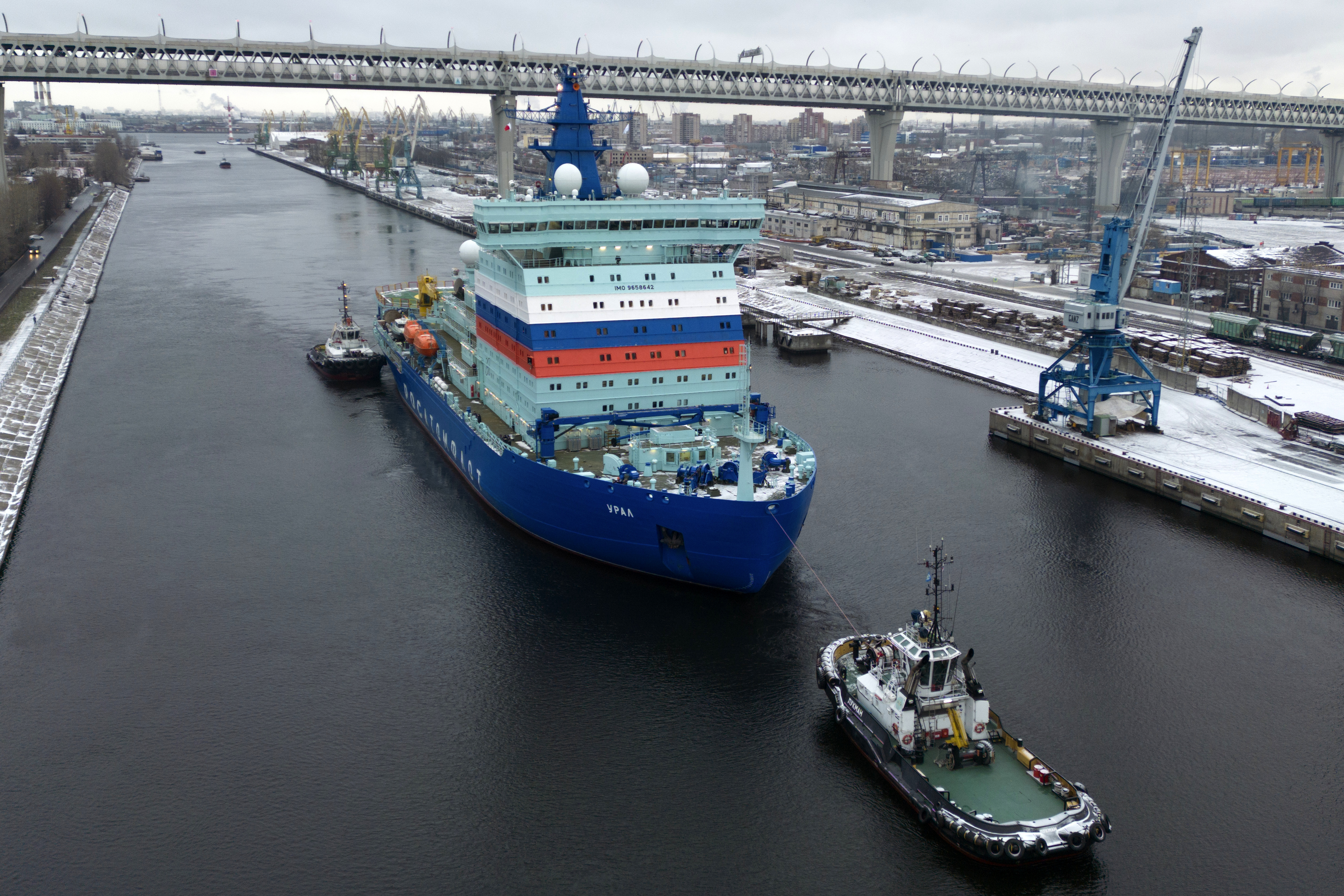 The newly built nuclear-powered icebreaker Ural begins its passage from the Baltic Shipyard in St. Petersburg to the northern city of Murmansk, Russia, on Nov. 23, 2022. (Dmitri Lovetsky/AP Photo)
Economic Pressure
China’s Arctic ambitions are also unfolding as its overseas investment patterns change.
Chinese companies’ nonfinancial direct investment in Belt and Road countries fell 11.3 percent year over year in the first eight months of 2026, according to China’s Ministry of Commerce. Overall nonfinancial outbound direct investment by Chinese domestic investors fell 14.4 percent during the same period.
At the same time, Chinese companies continued to expand overseas contracting and supply-chain operations.
The shift reflects a broader change in China’s overseas economic strategy. Rather than relying entirely on direct equity investment, Chinese companies have increasingly used exports, engineering contracts and overseas production and supply chains to expand internationally.
For Arctic projects, however, the tighter investment environment in Greenland creates a particular challenge because the island’s strategic assets, including ports, airfields, communications infrastructure, and mineral deposits, are increasingly being treated as security-sensitive.
 A bike rider passes an installation of the Belt and Road Forum logo along a Beijing street on Oct. 15, 2023. (Jade Gao/ AFP via Getty Images)
A More Contested Arctic
China’s maritime strategy is therefore entering a more contested phase.
Beijing has spent years expanding its Arctic scientific presence, developing ties with Russia, pursuing mineral opportunities and promoting the Polar Silk Road as part of its broader Belt and Road strategy.
The United States and its allies, meanwhile, are placing greater emphasis on Arctic surveillance, military access, critical minerals and investment screening.
The Greenland agreement is an important part of that shift. It expands U.S. access to the world’s largest island, reinforces NATO’s role in Arctic security, and establishes new restrictions on military and economic activity by countries that are not U.S. allies.
For Beijing, the agreement does not close the Arctic to Chinese commercial activity. However, it narrows the avenues through which Chinese companies could obtain strategic infrastructure, mineral assets, or a persistent security presence in Greenland.
As China seeks to reduce its dependence on vulnerable maritime chokepoints farther south, its attempt to develop an alternative northern pathway is increasingly unfolding in an Arctic where security competition, resource development, and shipping are becoming closely intertwined.
Cheng Mulan contributed to this report.
 Friends Read Free
Copy
Facebook
Tweet
Friends Read Free
Copy
Facebook
Tweet