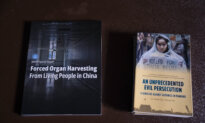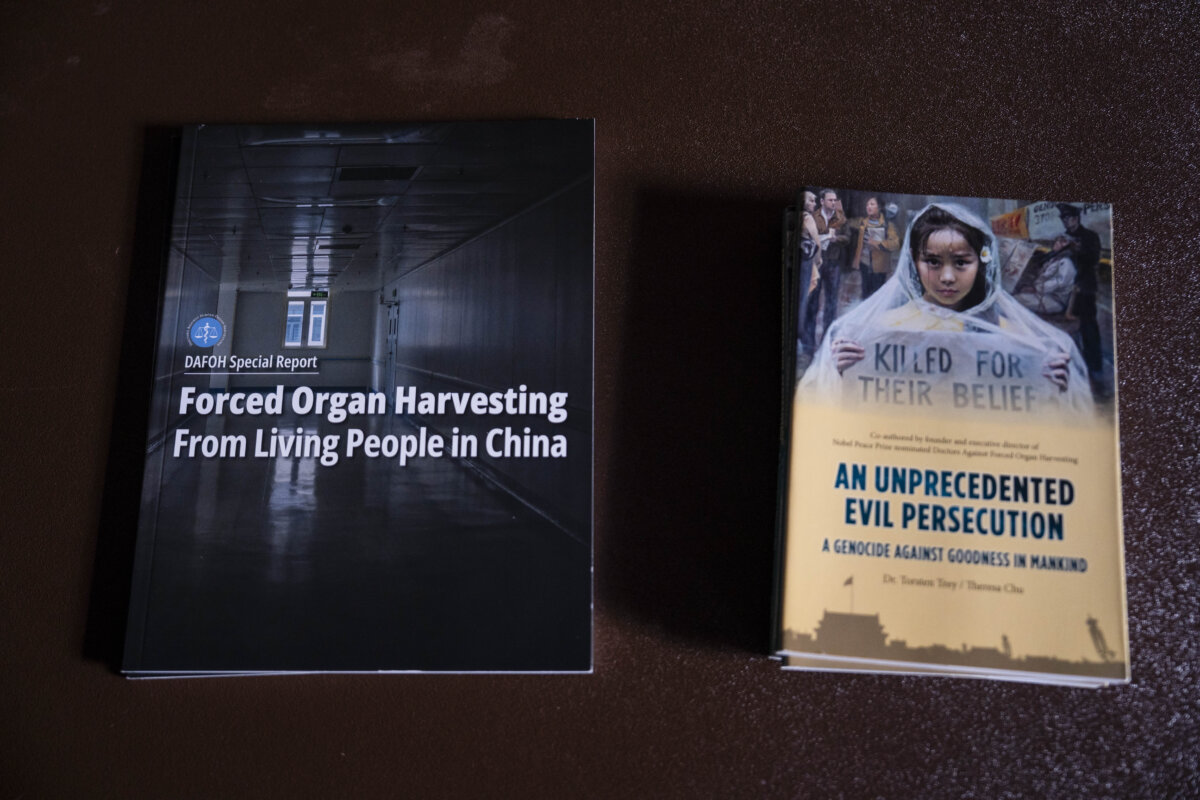

A bill tackling systematic forced organ harvesting in China is now headed to the House after getting the Senate green light on Sept. 28.
S.4009, with support from 12 bipartisan sponsors, passed the Senate with unanimous consent.
Dubbed the Falun Gong and Victims of Forced Organ Harvesting Protection Act, the bill addresses an issue that is gaining growing attention in the United States.
Here are the key things to know about the legislation and why Americans should care—in the words of those behind the bill.
‘On Demand System’
Forced organ harvesting refers to the involuntary extraction of organs, often resulting in the victims’ death.
As early as 2006, whistleblowers raised the alarm about the abuses taking place in China under Beijing’s auspices.
In 2019, the London-based China Tribunal concluded a year-long investigation into the issue. Forced organ harvesting, it found, had taken place in the country for years “on a significant scale.” A major victim group is practitioners of Falun Gong, according to the tribunal ruling. It also said Uyghur Muslims were at risk while being detained in “re-education camps” in China’s Xinjiang region.
Falun Gong, a spiritual practice with meditative exercises based on the principles of truthfulness, compassion, and tolerance, was first introduced to the public in China in 1992. By the end of the decade, an estimated 70 million to 100 million people in China had taken up the practice. The Chinese Communist Party, considering Falun Gong’s popularity a threat to the regime’s power, initiated a nationwide campaign in 1999 to wipe it out, and practitioners in China have faced harsh suppression since then.
Survivors from both campaigns have recounted arbitrary arrests, forced labor, and grueling torture in prison.
Meanwhile, China’s organ transplant industry continues to grow, drawing patients from all over the world with waiting times as short as days to weeks—compared to possibly years in the West.
“We call it an ‘on-demand system,’” Torsten Trey, executive director for Doctors Against Forced Organ Harvesting, told The Epoch Times.
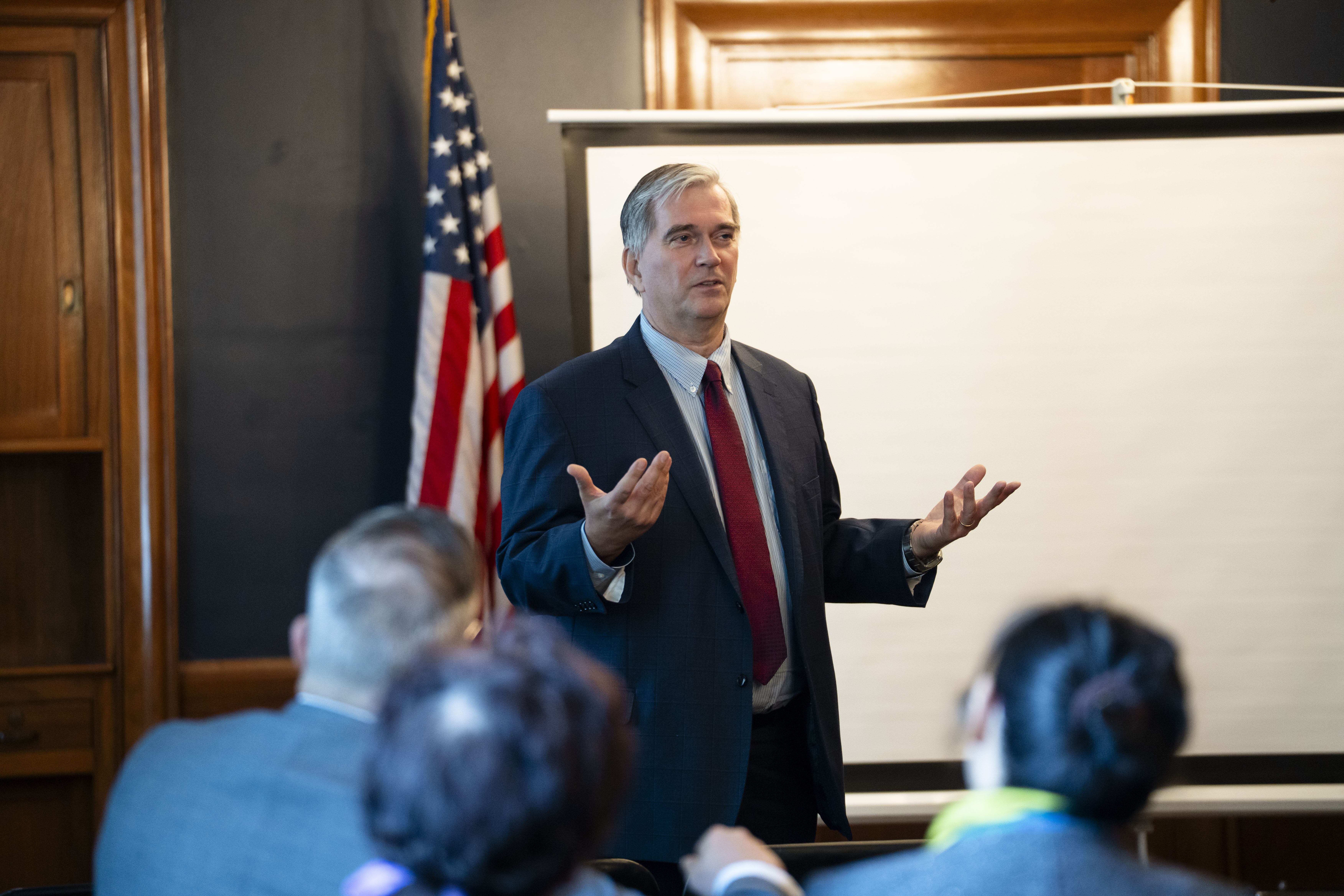 Torsten Trey, executive director of Doctors Against Forced Organ Harvesting, speaks after the screening of the documentary “Silent Harvest: The Courage to Speak Up” at the Senate Dirksen building in Washington on May 15, 2026. (Madalina Kilroy/The Epoch Times)
He likened it to “a living pool of non-consenting donors who will be slaughtered like cattle.”
A Complicity Concern
This is why the bill matters, said Trey, whose medical ethics group has for years been pushing for legislative change.
The legislation can help “protect U.S. citizens from being lured to China for transplants,” Trey said. By going to China, he said, they might become complicit in the “killing of an innocent prisoner of conscience.”
The legislation, led by Sens. Ted Cruz (R-Texas) and Jeff Merkley (D-Ore.), noted persistent concerns regarding allegations of forced organ harvesting of the Chinese regime’s targets on the basis of religious beliefs and ethnic background.
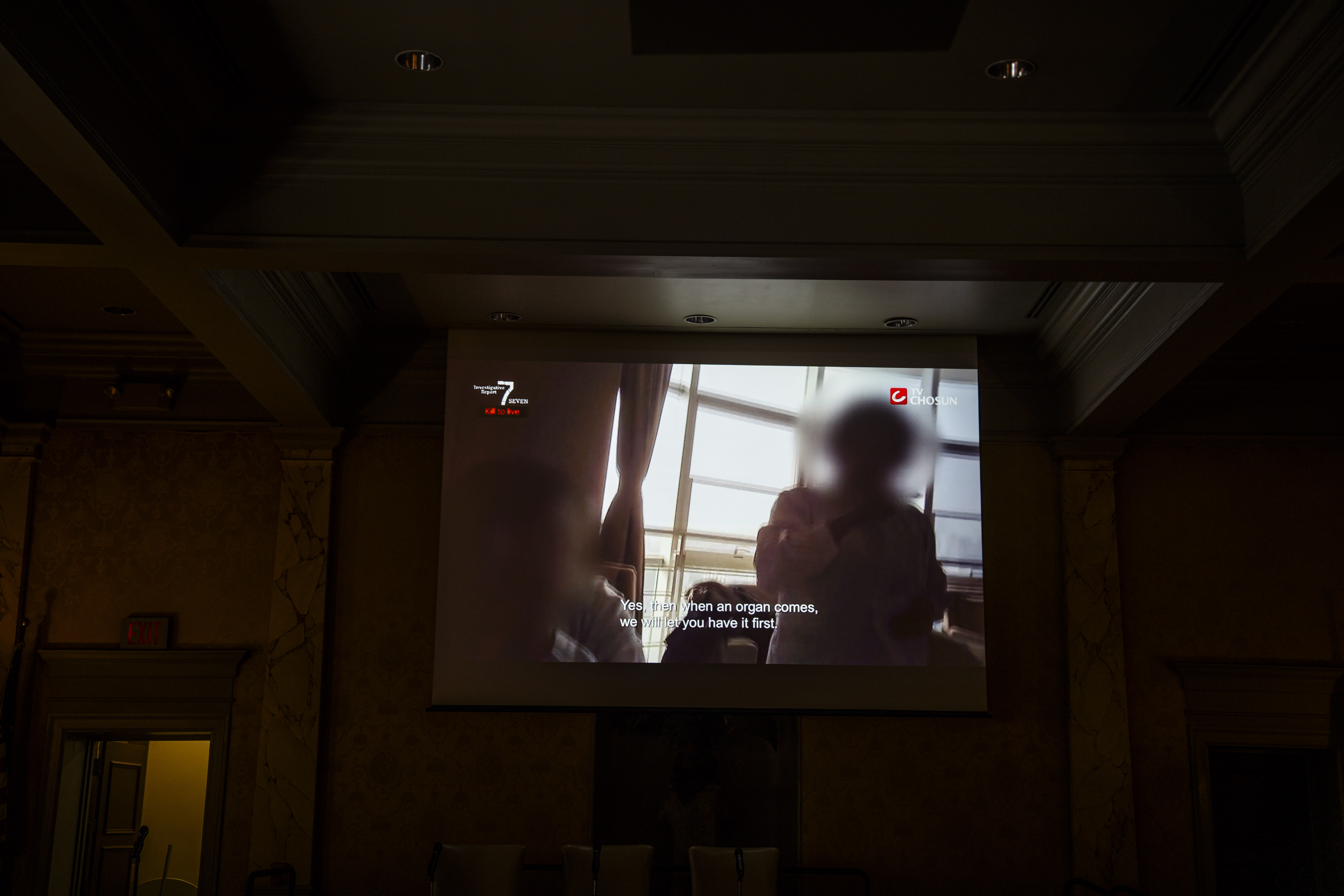 The screening of the documentary “Silent Harvest: The Courage to Speak Up” in Washington on May 16, 2026. (Madalina Kilroy/The Epoch Times)
It calls for the U.S. government to condemn “illegal, coercive, non-consensual, or non-transparent organ procurement and transplantation practices, including forced organ harvesting from prisoners of conscience.”
What the Bill Does
The bill would sanction foreign individuals for carrying out or facilitating the abuse, barring them from entering the United States and blocking them from having U.S. transactions. Those violating the sanctions risk facing up to $250,000 for a civil offense, or $1 million and 20 years in prison in criminal penalties.
It also directs the State Department to conduct an investigation with input from the secretary of Health and Human Services, the director of the National Institutes of Health, and the relevant heads of the intelligence community.
Within a year of the bill’s passage, the secretary of state would report to Congress about China’s organ transplantation practices and policies. The report would assess whether the Chinese regime conducts systematic forced organ harvesting and look into where the organs are from, how fast they are obtained, and whether that timetable is practical in the country.
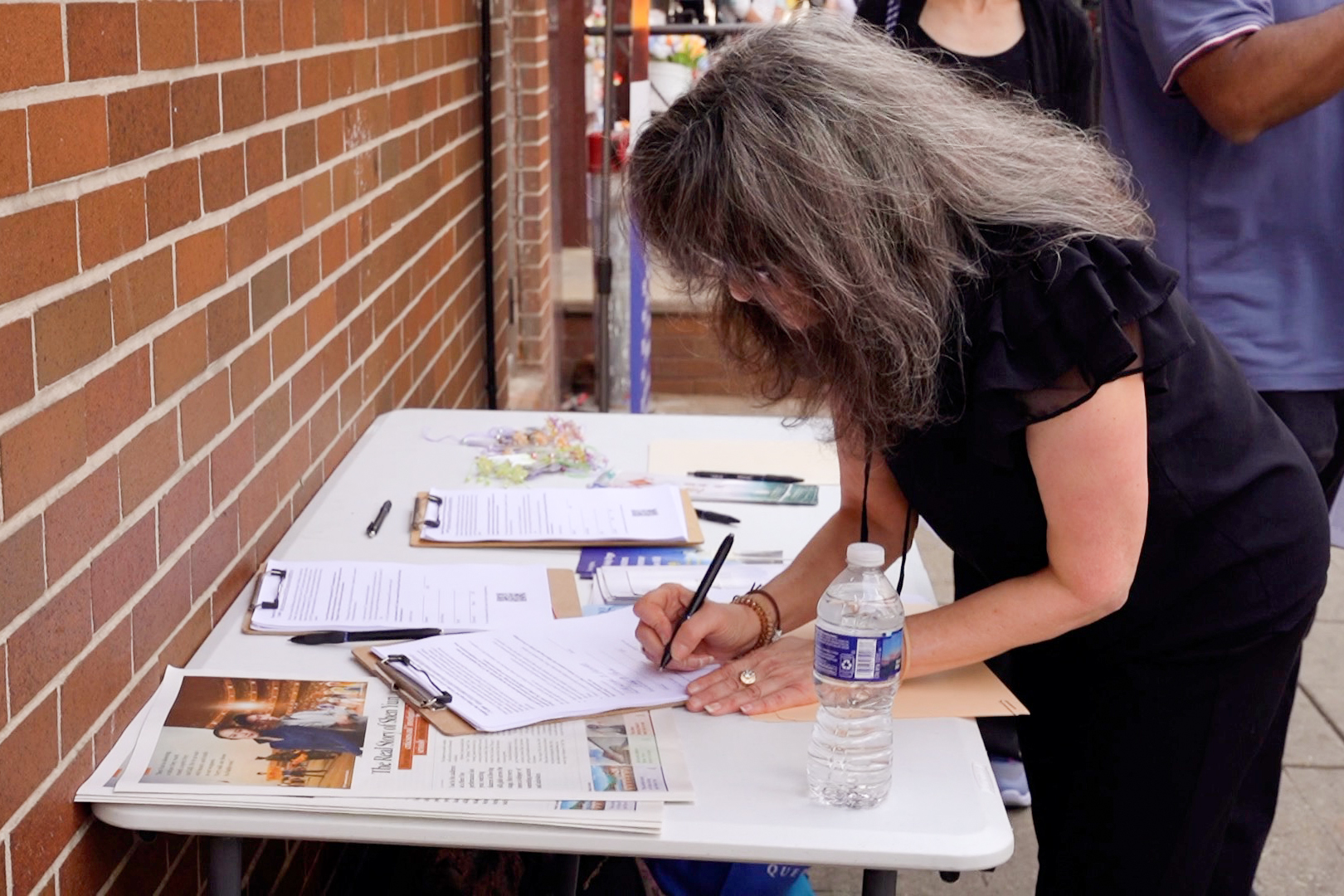 Christine Flowers, a Philadelphia immigration lawyer and syndicated columnist, signed a petition supporting Falun Gong and Victims of Forced Organ Harvesting Protection Act at a rally in Philadelphia on Sept. 19, 2026. (Steve Wen/The Epoch Times)
A version of the bill passed the House in May 2025.
“The Chinese Communist Party continues to target Falun Gong practitioners through its brutal, state-sponsored organ harvesting industry,” Cruz told The Epoch Times. “These atrocities are an assault on religious liberty and fundamental human rights.
Other lawmakers on the bill concurred.
Sen. Todd Young (R-Ind.) said the bill’s passage is “an important step in defending religious freedom and human dignity in the face of the CCP’s ongoing abuses.”
Sen. James Lankford (R-Okla.) described the taking of organs from prisoners of conscience as “evil.”
“America should plainly say this is wrong and back it up with consequences,” he said in a media statement, adding he wants to “stand up for the victims the CCP wants the world to ignore.”
Voices From the Ground
Falun Gong practitioner Alisa Zhou, a Maryland accountant and U.S. citizen, has been rallying support for the Senate bill since June.
By September, she and a group of friends had collected around 12,000 signatures.
Many were hearing about the issue for the first time, and the response was overwhelmingly positive, she said.
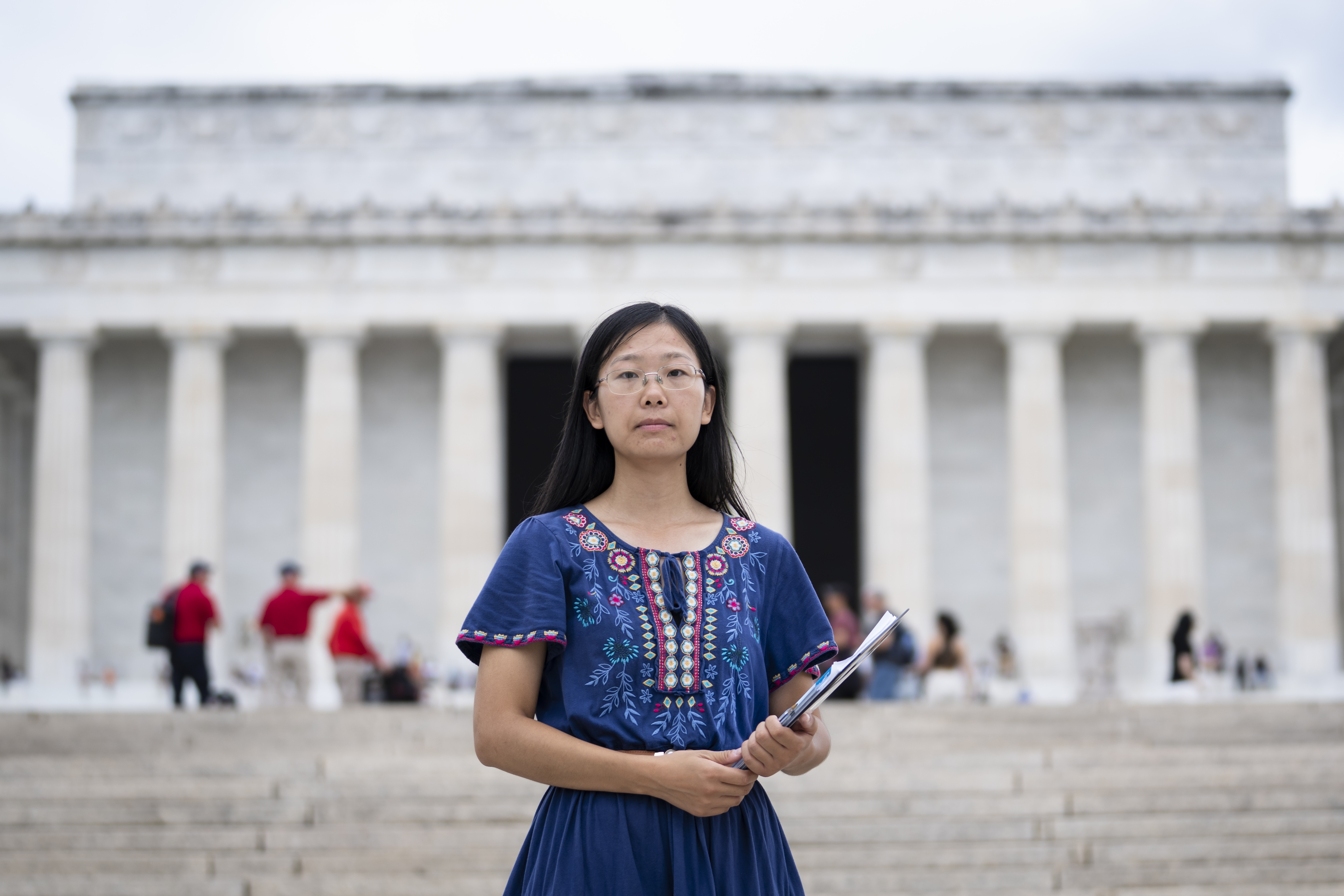 Falun Gong practitioner Alisa Zhou passes out flyers raising awareness about the Chinese Communist Party’s ongoing persecution of her faith in China at the Lincoln Memorial in Washington on Sept. 19, 2026. Zhou’s mother Wang Youmei has been detained since April in Wuhan, China, because of her faith. (Madalina Kilroy/The Epoch Times)
She shared a public letter by her boss, who called the regime’s abuse “the most despicable act” he has “ever heard about or could imagine,” and urged the United States to be the leader in condemning the act.
If a survey is run across U.S. citizens, he said, “100 percent would agree.”
 Friends Read Free
Copy
Facebook
Tweet
Friends Read Free
Copy
Facebook
Tweet