

U.S. President Donald Trump singled out Canada among a number of countries that he says are taking advantage of his country.
His remarks on Sept. 30 come amid an escalating trade dispute with Canada, while Ottawa charges that Washington is to blame for a lack of trade deal between the two countries.
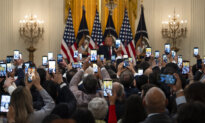
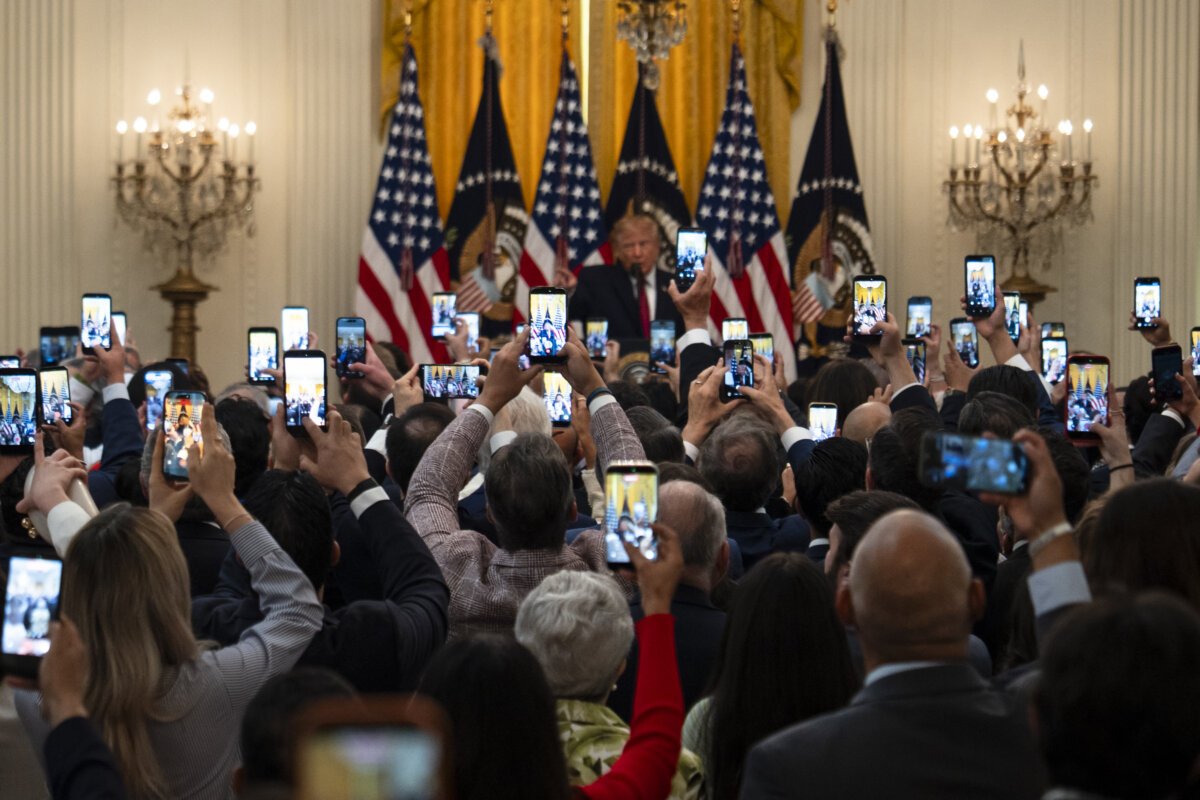
Speaking at a White House event celebrating Hispanic Heritage Month, Trump charged that Canada “took advantage” of the United States economically for years and is now being “taught a little lesson.”
He said his administration is reversing policies made by past U.S. administrations that allowed “other countries to make our cars and sell them to us.”
He listed some of the countries in which he says this practice took place, including South Korea, Mexico, Japan, and Canada, but said Canada is “the worst of any country.” Trade talks between the two nations collapsed on Aug. 21, with each side blaming the other for making last-minute demands that the other wasn’t willing to accept.
“I love the Canadian people—so many friends—Wayne Gretzky—I love the Great One,” Trump said.
“But their leaders have taken advantage of our stupid leadership for many, many years. They felt emboldened,” he added, while also citing Canada’s tariffs on dairy products as part of supply management as another point of contention.
U.S. Trade Representative Jamieson Greer told CBC News in August that Canada made a very “savvy” and “Trumpian” move in the 1960s when it told the Big Three American auto makers, General Motors, Ford, and Chrysler (Stellantis), “if you’re going to sell in Canada, you have to build factories here.”
“At the time, the Big Three had a lot of influence. They said, ‘fine, we’ll do this, we think maybe we can do some things cheaper up there,’” Greer said. “Now, after many years of the Auto Pact, NAFTA, USMCA, we have been able to see … we have a big gap in our manufacturing employment here, and autos is a big part of that.”
Prior to Canada and the United States entering a free-trade agreement in 1989, a precursor to the trilateral NAFTA of 1994, the two countries signed an auto pact in 1965 to remove tariffs on vehicles and parts shipped across the border. The pact effectively mandated U.S. car companies to “increase their production in Canada in order to sell their vehicles duty-free in its domestic market,” reads a case study published by the World Trade Organization.
Japan and South Korea were among the countries that the United States aided in rebuilding in the aftermath of World War II and amid the Cold War rivalry, with the United States not necessarily reciprocating their tariffs historically. The movement of auto plants to Mexico was part of a broader globalization trend in search of cheaper production.
The auto industry is one of several industries on which the Trump administration has imposed sectoral tariffs.
Late last year, Stellantis announced that it’s moving production of its Jeep Compass from Brampton, Ont., to Illinois, as part of a larger expansion of its production in the United States.
Ottawa says Washington’s tariffs on autos violate the Canada-United States-Mexico Agreement (CUSMA/USMCA), and has reciprocated with its own counter-tariffs.
Ottawa also cited Washington’s refusal to provide tariff relief on medium- and heavy-duty trucks as one of the reasons it would not agree to a proposed trade deal on Aug. 21, after which the United States went ahead with an additional 50 percent tariff on US$20 billion worth of Canadian products. Ottawa has since reciprocated with tariffs ranging from 15 to 50 percent on an equal volume of U.S. exports. In further escalation, Washington has since banned the import of certain Canadian products.
Trump said earlier this week that he expects Canada to approach the United States and remove its trade measures to secure a deal, adding that it’s likely the two countries will reach a deal.
Peter Navarro, senior counselor to the president for trade and manufacturing, also charged that Canadian government officials are the “most difficult and arrogant” when it comes to trade. “The Canadian people are wonderful, but they cheat us on just about everything they can,” he said. He added that Canadian lobbyists shouldn’t bother trying to influence American politicians, and should get out of the country.
Dominic LeBlanc, the minister responsible for Canada-U.S. trade, says that it’s Washington that is violating trade rules, adding that his government doesn’t “apologize for standing up for Canadian workers, Canadian businesses.”
“The American government decided to apply a series of tariffs that violated the trade agreement that this particular administration signed six years ago,” LeBlanc said on Sept. 30, referring to CUSMA being signed in the first Trump administration. “We’re going to do what’s necessary to support the Canadian economy, Canadian workers.”
Prime Minister Mark Carney said on Sept. 29 that he is ready to negotiate a trade deal with the United States that benefits both sides.
“Canada stands ready to negotiate in good faith,” Carney said, adding that he wants a “mutually advantageous trade arrangement that respects both our countries’ sovereignty.”
 Friends Read Free
Copy
Facebook
Tweet
Friends Read Free
Copy
Facebook
Tweet