
U.S. President Donald Trump said he believes Canada will agree to remove its tariffs and attempt to make a deal with Washington in less than a month, as a U.S. import ban on several Canadian products is set to take effect on Sept. 29. He added that he thinks a trade deal with Canada is likely.
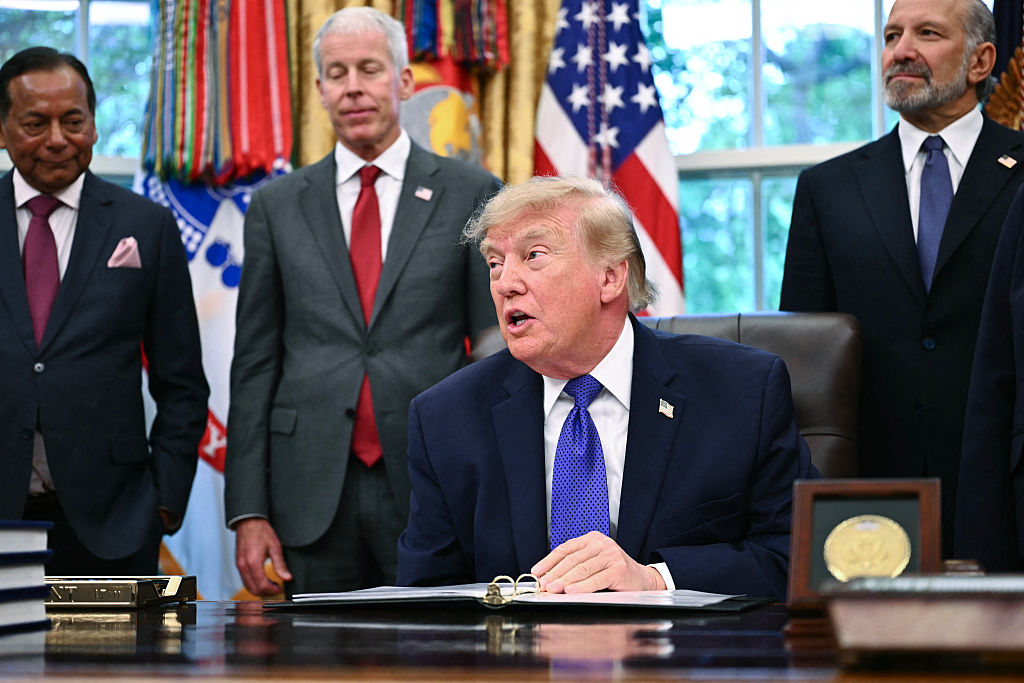
“I think what’s going to happen is over the next three or four weeks, they’re going to come to us and they’re going to say, ‘We’re going to get rid of all the tariffs.’” Trump told reporters in the White House on Sept. 28.
“I think a deal will be made, but it’s going to be a fair deal.”
Trump said that while the Canadian government wanted a trade deal and “call us all the time,” Ottawa had “treated the United States very unfairly” over the last few decades.
Peter Navarro, senior counselor to the president for trade and manufacturing, charged that Canadian government officials had been the “most difficult and arrogant,” when it came to trade, specifically on lumber, steel, aluminum, and dairy. “The Canadian people are wonderful, but they cheat us on just about everything they can,” he said.
U.S. Trade Representative Jamieson Greer said on Sept. 25 that while Ottawa was periodically contacting Washington about trade negotiations, there was “no urgency” on the U.S. side to reach an agreement.
Canada-U.S. Trade Minister Dominic LeBlanc’s office said on Sept. 28 that Ottawa takes “note of the coming into force of the Administration’s previously announced trade measures.”
“As has been the case for the last 18 months, our first priority remains on protecting and supporting Canadian workers, farmers, families, and businesses from these unjustified actions,” LeBlanc’s office said.
Prime Minister Mark Carney has said that the United States has acted in violation of the Canada-United States-Mexico Agreement by imposing tariffs on certain Canadian imports, and that Ottawa is ready to negotiate with Washington to reach a deal.
Trade negotiations between Canada and the United States broke down on Aug. 21, which led to Washington imposing 50 percent tariffs on $27.6 billion of Canadian goods the following day. Ottawa responded on Sept. 8 with 15, 25, and 50 percent counter-tariffs on around $27.6 billion of U.S. imports.
Carney had said the United States introduced “new terms that were uneconomic, unfair, and undermined the net benefits to Canada” when it came to automobiles, lumber, and provisions that he said would erode French-language protections. The U.S. government disputes Carney’s account of the negotiations, blaming the Canadian side for introducing last-minute demands, while saying it doesn’t have an issue with Canada’s French-language protection measures.
The Trump administration also announced it would impose import prohibitions on most Canadian alcoholic beverages, some dairy-related products, and motorcycles, beginning on Sept. 29.
Washington has also directed officials to take steps to remove Canadian-origin goods from the U.S. federal civil procurement system where permitted by law, and Trump has said he would ban the sales of Bombardier products unless the Canadian aerospace company builds its products in the United States.
After Trump became president in early 2025, the United States has also imposed tariffs on Canada steel, aluminum, lumber, automobiles, and copper.
 Friends Read Free
Copy
Facebook
Tweet
Friends Read Free
Copy
Facebook
Tweet