The Trump administration took steps to revoke the visas of 27 Latin American authorities and former officials, including Bolivia’s attorney general, over alleged corruption Sept. 28.
The foreign nationals—from Bolivia, Colombia, Ecuador, and Peru—and their families were barred from entering the United States under the Immigration and Nationality Act.
The State Department also designated Bolivia’s Attorney General Roger Mariaca for his alleged involvement in corruption. The action renders Mariaca and his immediate family members generally ineligible for entry into the United States.
“Under the Trump administration, corrupt foreign officials can no longer freely enter the United States,” the State Department’s spokesman Thomas Pigott said in a statement.
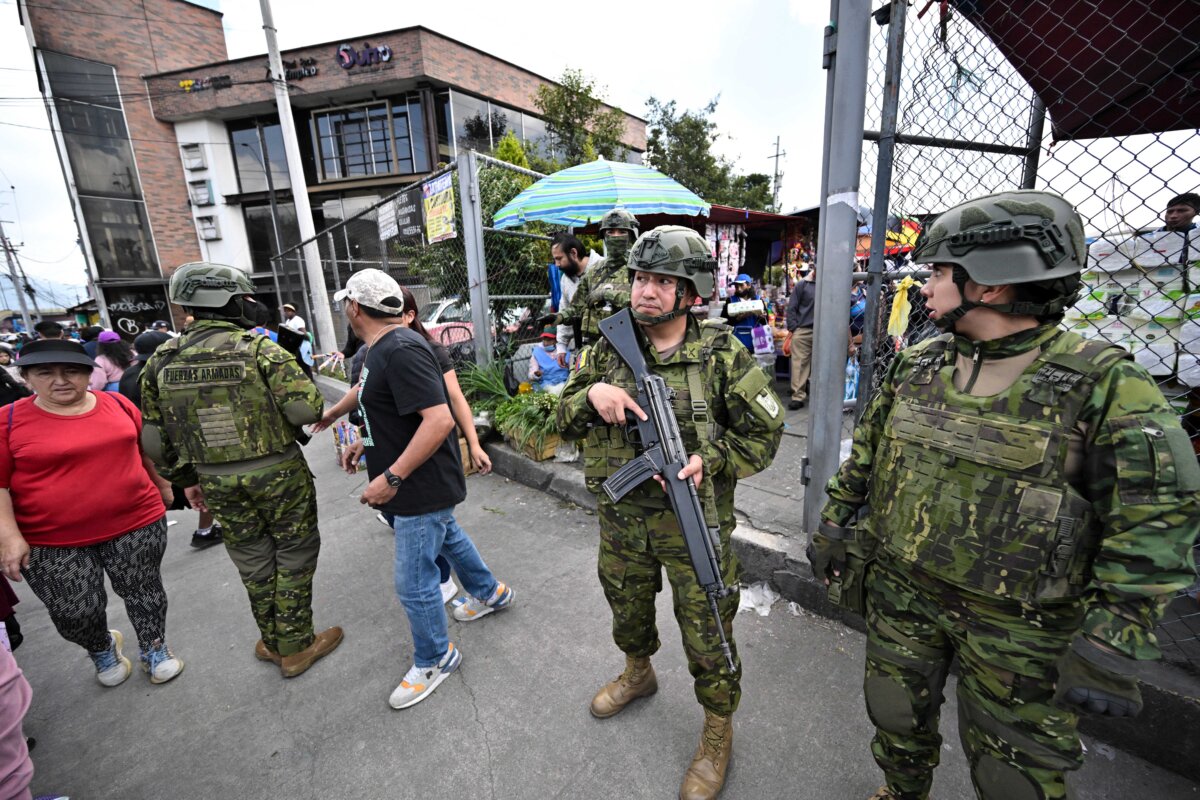
U.S. Secretary of State Marco Rubio visited Colombia, Ecuador, and Peru earlier this month, pledging to work with newly elected democratic leaders in the countries who promised to fight transnational crime and drug trafficking and restore the rule of law after years of corruption.
Mariaca was elected in 2024 to a six-year term in Bolivia. Pigott said Mariaca had allegedly taken bribes to facilitate narco-trafficking and help criminals escape capture.
The department also took steps to impose visa restrictions on 12 other Bolivian officials and their families, which included senior prosecutors, judges, a police official, a businessman, and others.
Nine other Bolivian nationals who don’t have visas, and their families, were also restricted from entering the United States.
A request for comment about the visa restrictions for Mariaca and the others was not immediately returned by the Bolivian government.
Two Colombian nationals—energy businessman Euclides Antonio Torres Romero and Sen. Martha Isabel Peralta Epieyú—were banned from entering the United States.
Visas were revoked for two unnamed Ecuadorian nationals and their families.
In Peru, the department revoked existing visas for Juan Carlos Nuñez Matos, a judge in Lima, and his family.
The joint statement by the leaders of countries that make up the Shield of the Americas, signed Sept. 22, vows to defend democratic governance against armed narco-terrorist networks.
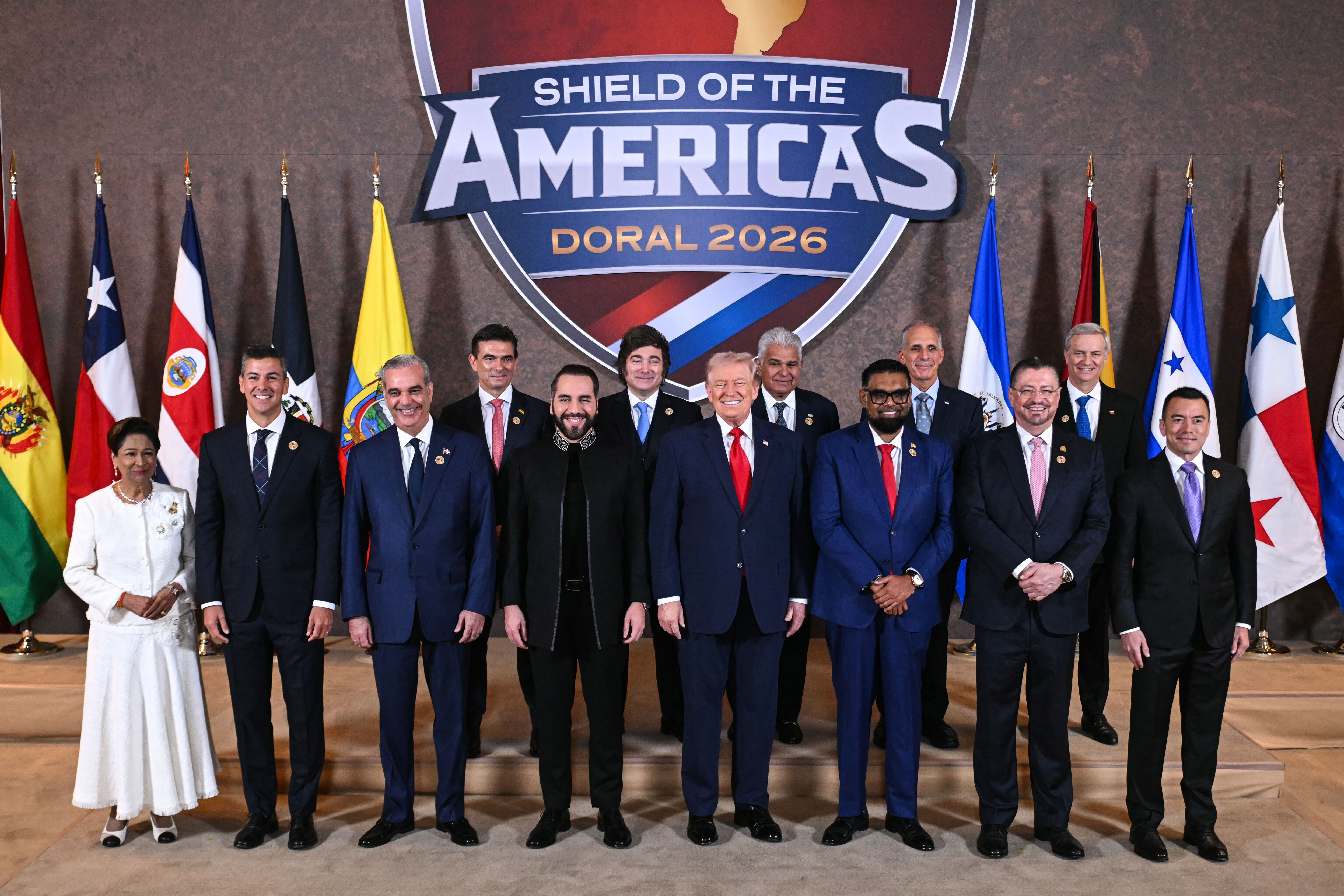 U.S. President Donald Trump (C) stands with, (L-R), Trinidad and Tobago’s Prime Minister Kamla Persad-Bissessar, President of the Republic of Paraguay Santiago Peña, President of the Dominican Republic Luis Abinader, President of Bolivia Rodrigo Paz Pereira, President of El Salvador Nayib Bukele, President of Argentina Javier Milei, President of Panama José Raúl Mulino, President of Guyana Mohamed Irfaan Ali, President of Honduras Nasry “Tito” Asfura, President of Costa Rica Rodrigo Chaves Robles, President-elect of Chile José Antonio Kast, and President of Ecuador Daniel Roy Gilchrist Noboa Azín during a group photograph at the start of the “Shield of the Americas” Summit at Trump National Doral in Miami on March 7, 2026. (Saul Loeb/AFP via Getty Images)
The Shield of the Americas includes the United States, Argentina, Bolivia, Chile, Colombia, Costa Rica, the Dominican Republic, Ecuador, El Salvador, Guyana, Honduras, Panama, Paraguay, Peru, and Trinidad and Tobago.
The first action taken by the joint effort was to declare their intention to impose asset freezes; immigration and visa restrictions for members, associates, and supporters of organizations; and criminal liability for those who provide support for the groups listed on the organization’s terrorist list of 24 groups.
 Friends Read Free
Copy
Facebook
Tweet
Friends Read Free
Copy
Facebook
Tweet