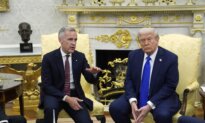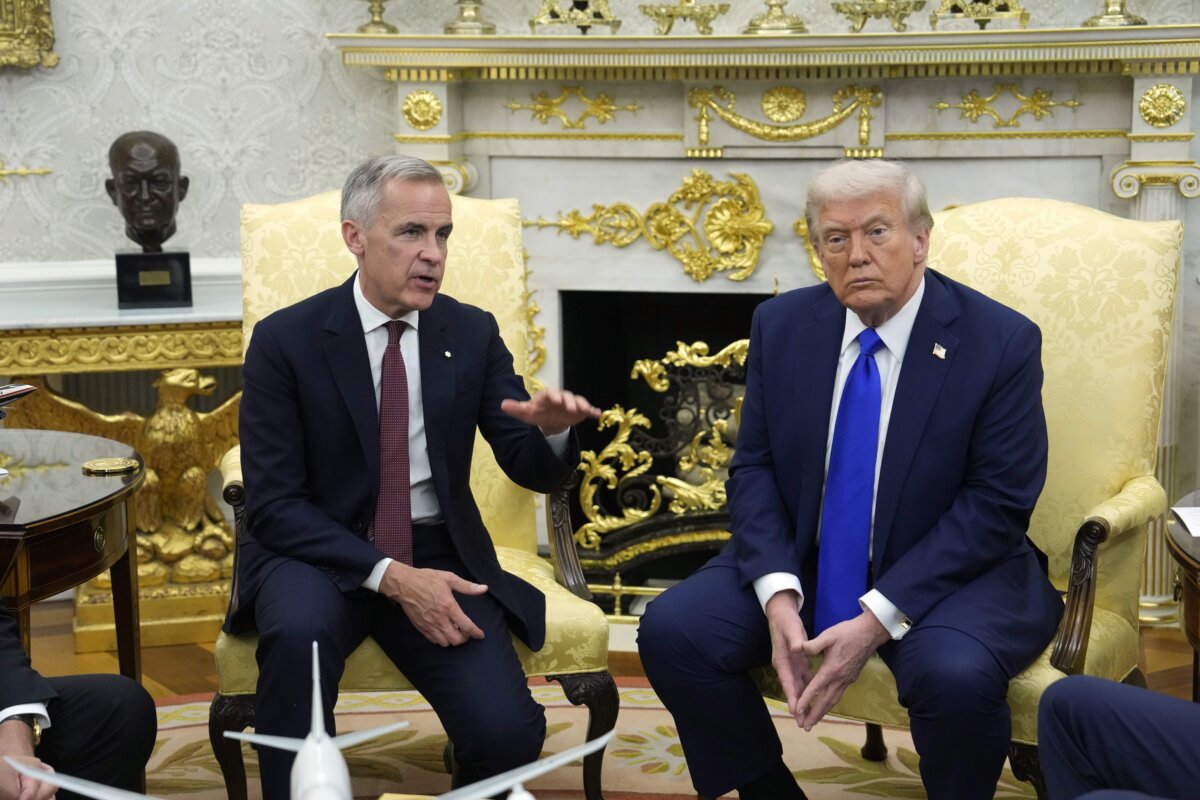

Prime Minister Mark Carney says Canada’s remaining counter-tariffs are in response to Washington’s sectoral tariffs on items such as Canadian auto parts, which he says violate the North American free trade agreement.
His comments came as U.S. President Donald Trump said his country would impose 50 percent tariffs on additional Canadian imports in response to Canada’s protective measures.
“This is the latest in a series of unilateral U.S. trade actions that began with the U.S. imposing a series of tariffs in direct violation of the Canada-United States-Mexico Agreement (CUSMA), the free trade agreement between Canada, the United States, and Mexico,” Carney said late on July 20 in a statement.
“These include tariffs on the Canadian auto sector, in violation of CUSMA. Canada, as is its right, has merely matched those measures.”
Trump signed three proclamations on July 20 to impose 50 percent tariffs on Canadian alcohol, dairy products, cement, and other products including hockey sticks. The White House said the new measures are in response to Canada’s dairy supply management, provincial bans on U.S. alcohol, and counter-tariffs on auto parts.
Canada initially responded to U.S. blanket tariffs imposed in early 2025 over concerns about cross-border fentanyl trafficking and illegal immigration with a slew of counter-tariffs of its own, but later removed most of those measures in September 2025 in an effort to reach a trade deal with Washington. However, Carney said at the time that Canada will maintain its counter-measures in kind in response to Washington’s sectoral tariffs, including those on auto parts, steel, and aluminum.
Canada has also maintained its dairy supply management, which has long been a trade irritant for Washington. As well, most provinces, including Ontario, Quebec, and B.C., have removed U.S. alcohol from provincially run liquor stores to protest U.S. tariffs.
In announcing the new 50 percent tariffs, the White House said that, over the past year and a half, “only two countries have chosen to retaliate against President Trump’s tariffs rather than negotiate a deal with the United States: the People’s Republic of China and Canada.”
“President Trump is taking action to hold Canada accountable for its continued discrimination against and unreasonable and unequal treatment of U.S. commerce that has burdened and disadvantaged hardworking Americans,” the White House said.
In his own statement, Carney said that, in response to U.S. tariffs and “threats to Canadian sovereignty,” Canadians have “stood together, taking the necessary actions to support our economy and defend our workers, farmers, businesses, and families.”
He added that Canada has been making a series of proposals to resolve the trade dispute between the two countries, and wants to work on negotiating CUSMA.
“We stand ready to intensify those discussions in the coming weeks,” Carney said.
CUSMA was set for renewal on July 1; however, Washington decided to not extend the agreement. This means that while the free-trade agreement, which covers the majority of trade between the countries, remains in place for another 10 years, it requires an annual review, unless any party gives notice to completely withdraw.
The Conservatives called the latest U.S. tariffs an “unacceptable and unjustified attack” on Canadian workers and businesses, asking for them to be withdrawn. The Official Opposition also criticized the government for its response to the trade dispute with the United States.
“Canada is in a major crisis, and despite making promises to Canadians to secure a deal, the Liberals are failing to meet the moment with the urgency it deserves,” a group of the party’s shadow ministers said in a statement.
NDP Leader Avi Lewis also condemned the new tariffs, saying it amounts to a “direct attack on Canadian workers and industries,” while also driving up prices for American consumers.
 Friends Read Free
Copy
Facebook
Tweet
Friends Read Free
Copy
Facebook
Tweet