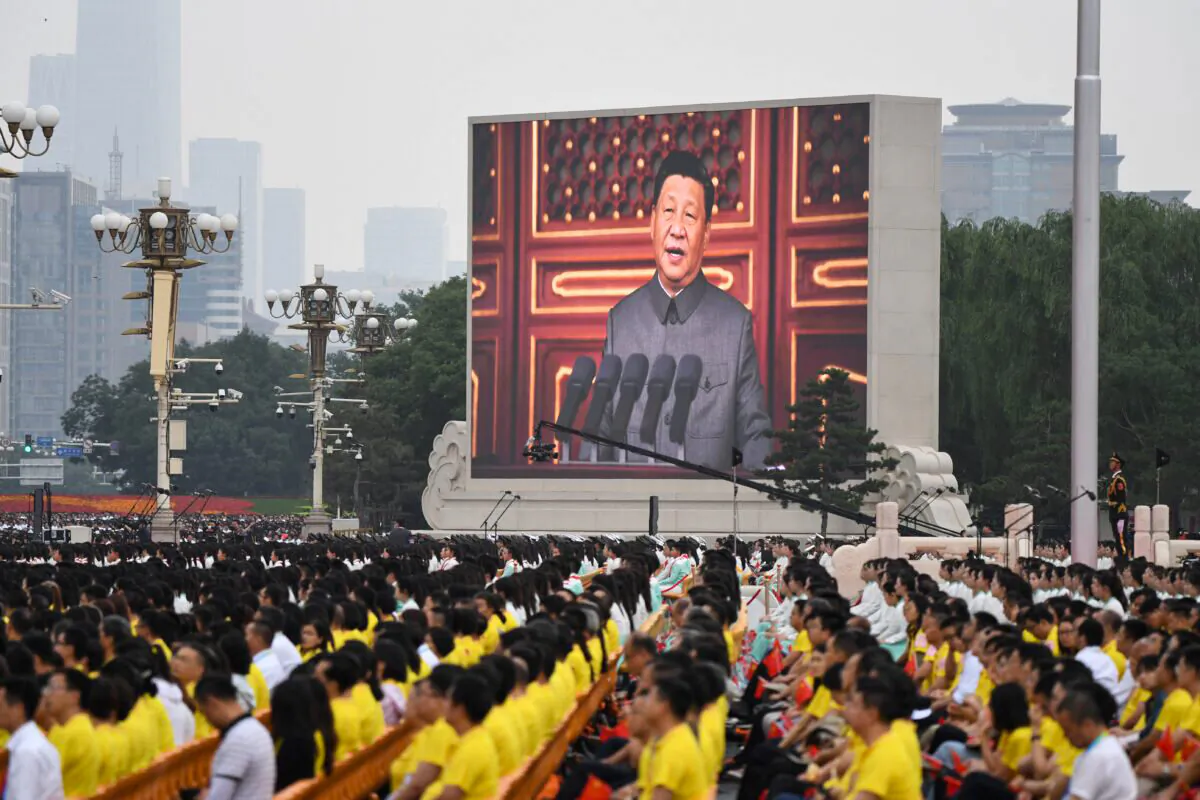

The Chinese regime is calling on its citizens to join counterespionage work, a move aimed at stoking nationalism and solidifying the Chinese Communist Party’s authoritarian rule. However, the emphasis on national security will harm the regime itself, analysts say.
In a rare move, China’s Ministry of State Security, the central agency overlooking intelligence and security operations at home and abroad, established an official account on the Chinese social media platform WeChat that went live on July 31.
A system that makes it “normal” for the masses to participate in counterespionage must be established, the ministry wrote in its first post, titled “Anti-Espionage Fight Requires the Mobilization of the Entire Society!”
“Currently, countering espionage remains a grim and complex task,” the ministry wrote. “It not only requires the national security agency to play the role of special anti-espionage organs but also requires the extensive participation of the people.”
The dire warning of the threat of foreign spies was met with disbelief among outside observers, who noted that the CCP had deployed a massive network abroad to collect intelligence and that its hackers broke into the email accounts of U.S. government agencies.
The CCP “is using the threat of external spies to stoke nationalism, prompting [the public] to be loyal to the regime,” said Su Tzu-yun, a senior analyst at Taiwan’s government-funded Institute for National Defense and Security Research.
National security should be understood as the CCP’s political security, according to Mr. Su.
‘Side Effects’
The call to mobilize the masses to participate in anti-spying work follows an expansion of Beijing’s anti-espionage law that took effect in July.
The law allows authorities carrying out an anti-espionage probe to gain access to data, electronic equipment, and information on personal property.
Notably, the legislation broadens the definition of espionage to “all documents, data, materials, or items related to national security and interests.” Still, it doesn’t specify what falls under national security, sparking fears of a more hostile environment for foreign businesses, researchers, and journalists in China.
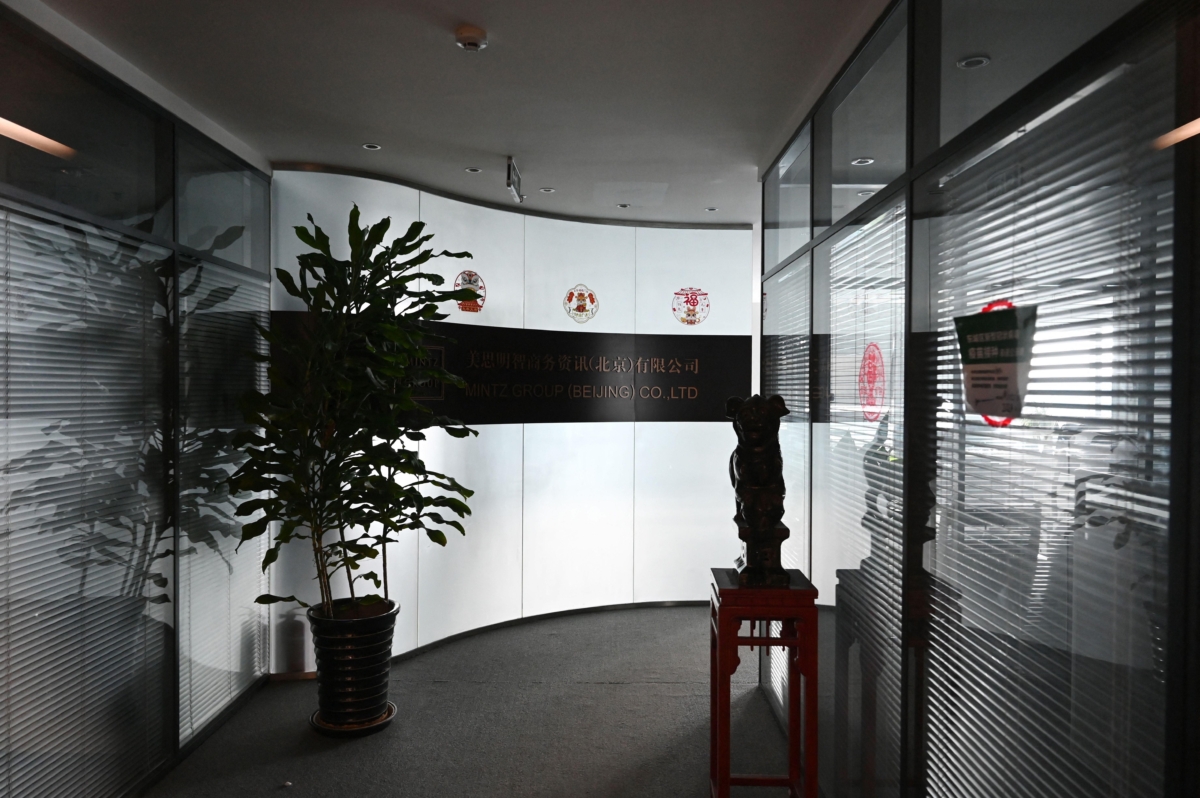
Foreign firms have already faced more scrutiny before vaguely worded legislation came into force. In March, Chinese police detained five local employees of Mintz, a New York-based corporate intelligence firm, and shut its office in Beijing. The Foreign Ministry accused the company of engaging in “illegal business operations.” Since then, authorities have raided the offices of consultancy Capvision and questioned employees at Bain & Co.
Authorities also have detained an employee of Japanese drugmaker Astellas on “suspicion of engaging in espionage activities which violates criminal law and counter-espionage law,” China’s Foreign Ministry stated in late March. Japanese Prime Minister Fumio Kishida has vowed that his government will continue to strongly demand that the Beijing regime release its citizen.
Mr. Su said the expansion of the anti-spying law would likely harm the CCP, whose leadership is seeking to assure foreign companies that China will continue to open up and welcome investment amid a frail recovery from a pandemic slowdown.
He pointed to a Bloomberg report that states that Morgan Stanley is shifting more than 200 technology developers out of China after the country tightened access to a cache of data stored onshore. The report, citing unidentified persons, claims that most employees are moving mainly to Hong Kong and Singapore.
A June report by the European Union Chamber of Commerce in China found “a significant deterioration of business sentiment,” with foreign firms shifting their existing investment or part of supply chains out of the country.
“The anti-espionage law will indeed have great side effects on the CCP itself,” Mr. Su said.
Ratcheting-Up Security Call
As China’s economy declines, the CCP is shifting public attention to the threat of foreign agents, with the leadership ratcheting up the call for counterespionage work in recent months.
On July 14, the nation’s spymaster called for officials to support the cause on “covert front lines,” referencing the Party’s intelligence work.
The message was delivered by Chen Wenqing, secretary of the Party’s Central Political and Legal Affairs Commission, a top security post with oversight of police, judges, and spies in China’s opaque political system, as he chaired a commendation meeting in Beijing on July 14 to recognize contributions by officials in its national security system.
Party organs at all levels and relevant departments must “pay great attention and support for the works of covert front lines,” Mr. Chen said, according to a summary of the meeting published by state-run media outlet Xinhua.
He called on “resolutely implementing” CCP leader Xi Jinping’s “overall national security concept.”
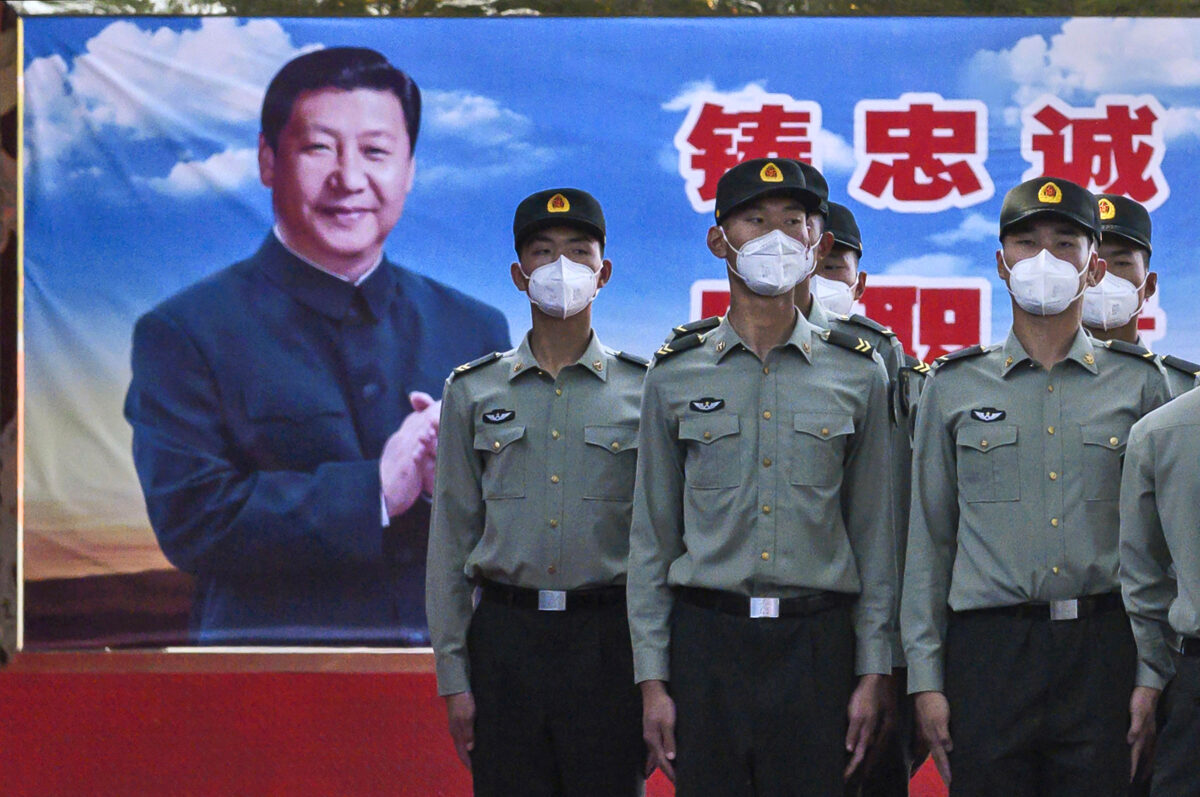
U.S. CIA Director William Burns acknowledged that his agency has “made progress” in rebuilding intelligence operations in China.
Mr. Burns made the remarks at the Aspen Security Forum on July 20 when asked whether his agency had recovered from the setback in which a dozen of informants were allegedly arrested or executed by the Chinese regime.
“About a decade ago, China rolled up a lot of CIA operations in China. A dozen or more CIA sources were arrested or, worse, executed. Have you rebuilt?” host Mary Louise Kelly asked.
“We’ve made progress, and we’re working very hard over recent years to ensure that we have strong human intelligence capability to complement what we can acquire through other methods,” Mr. Burns responded.
The pronouncements from Washington angered Beijing. China’s Foreign Ministry noted Mr. Burns’s comment, stressing that it’ll take “all measures necessary” to defend its security.
Mr. Xi, China’s most powerful leader in decades, has instructed senior officials to speed up the modernization of its national security system and capabilities.
China has already poured massive resources into building a nationwide surveillance system, cracking down on domestic and foreign businesses, and punishing anyone it deems threatening to its national security. The amount that Chinese authorities spent on policing society surpassed its national defense budget in 2020.
At a national security meeting in May, Mr. Xi said the external threats faced by China have become “more complex,” and warned that the country must prepare for “extreme scenarios.”
To push the public to participate in the anti-spying drive, the Public Security Bureau stated that departments at various levels must carry out anti-espionage training, incorporating such information into education and propaganda agencies.
“News, broadcasting, television, cultural, and internet information services should carry out targeted anti-espionage publicity and education for the entire society,” it stated in a recent post.

Li Yuanhua, an Australia-based Chinese scholar, said the latest propaganda campaign is designed to further tighten the Party’s grip on the country.
“Under the pretext of [countering] spies, [the CCP] is intended to create an atmosphere that everyone in the society could be an enemy,” said Mr. Li, a former history professor at the Capital Normal University College of Education in Beijing.
“The CCP wants to control everything, including its people. That’s the nature of an authoritarian regime. To make that happen, the key factor is to make people hostile and monitor each other so that the CCP could feel a sense of safety.
“The purpose is to protect the stumbling authoritarian rule.”
Luo Ya and Reuters contributed to this report.
 Friends Read Free
Copy
Facebook
Tweet
Friends Read Free
Copy
Facebook
Tweet