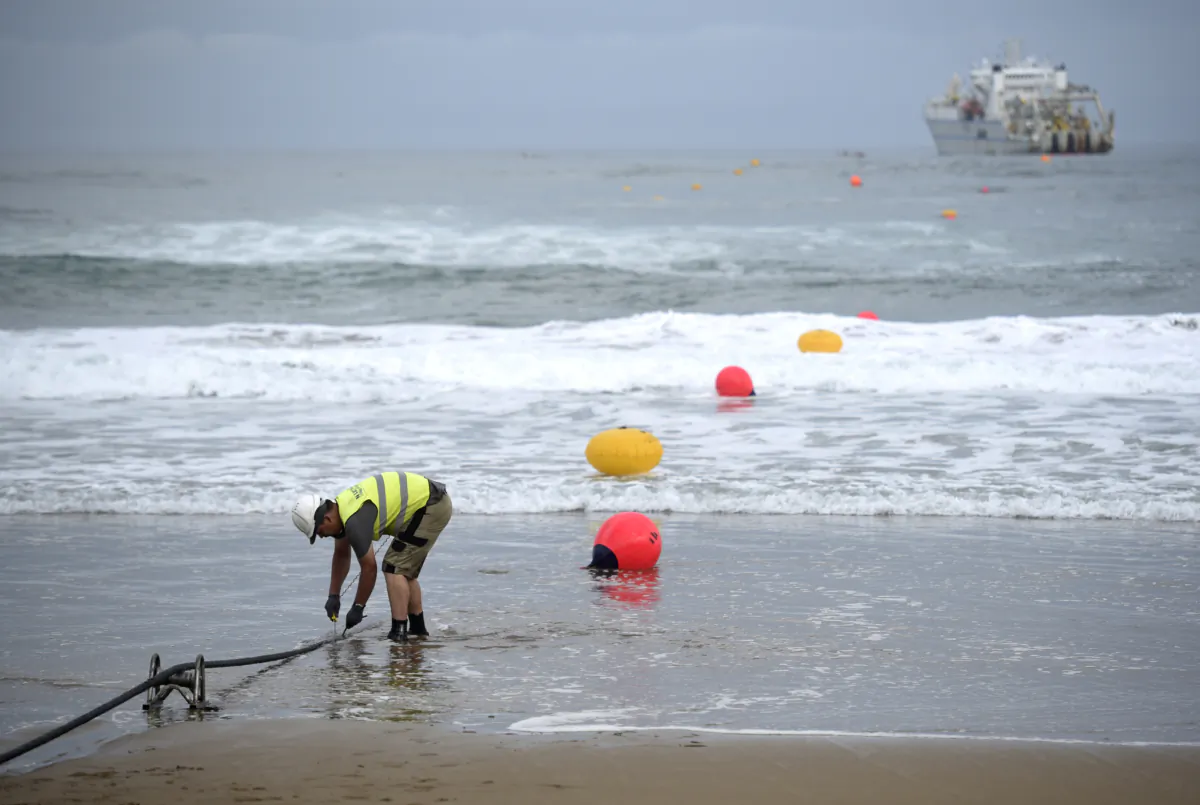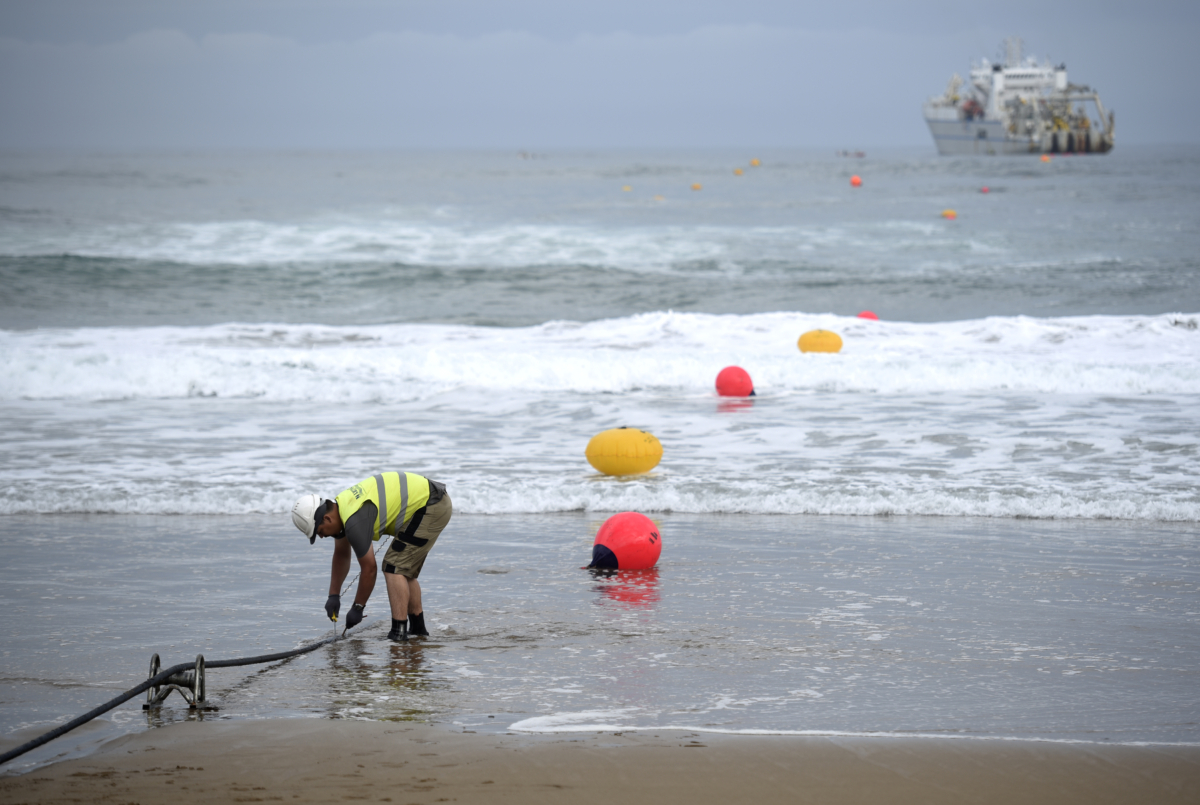

As the timeline for a hypothetical 2027 Chinese offensive against Taiwan approaches, analysts warn that Beijing will likely escalate the targeted severing of Taiwan’s undersea cables to erode public morale and incite panic.
Taiwan’s Mainland Affairs Council (MAC) on Dec. 24 criticized the Chinese Communist Party (CCP) for engaging in “political manipulation” after Chinese authorities claimed Taiwanese nationals masterminded an operation involving a Chinese-crewed vessel that severed undersea cables, Taiwan’s Central News Agency reported.
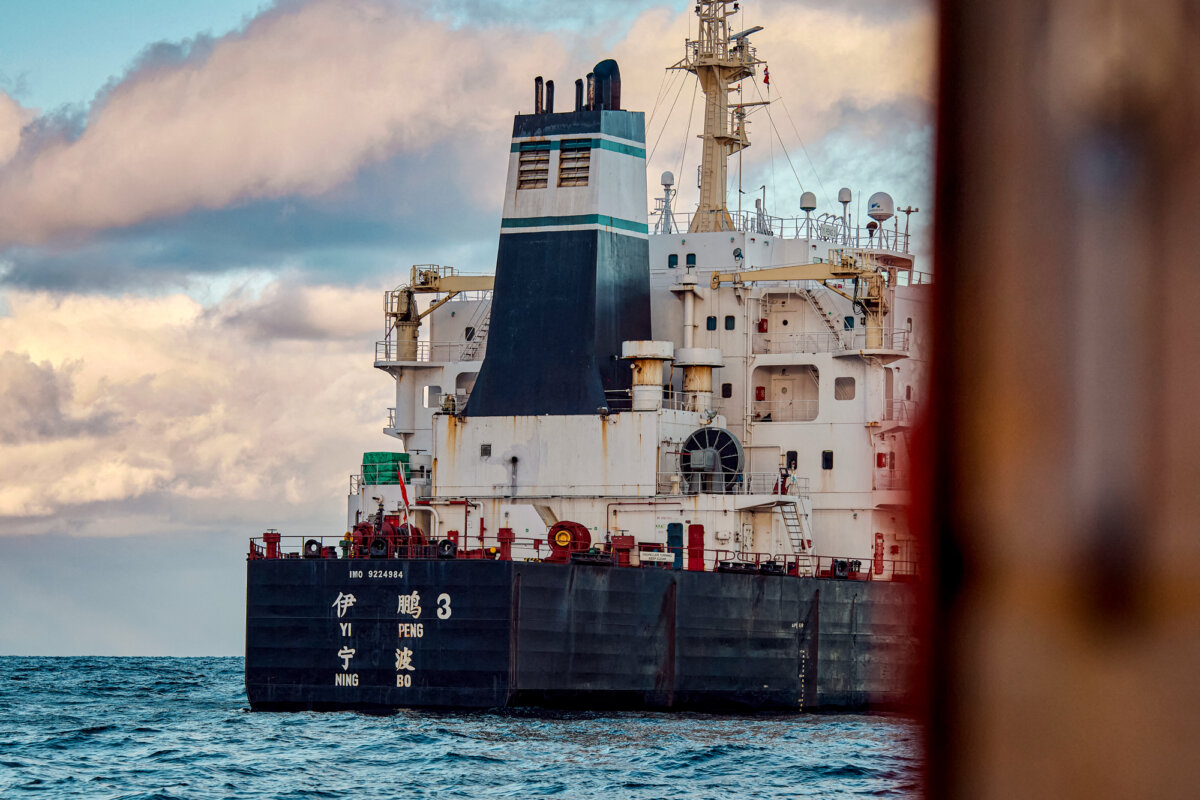
The dispute stems from a February incident in which the Togo-registered ship Hong Tai 58 was linked to the damaging of Taiwan-Penghu Undersea Cable No. 3. A Taiwanese high court in August sentenced Wang Yuliang, the ship’s captain, to a three-year prison sentence for the offense. This is the first time a Chinese ship captain has been criminally convicted for such an incident. Wang began serving his sentence in August.
The Weihai public security bureau in China issued a notice offering up to 250,000 yuan ($35,569) for information on two Taiwanese individuals, alleging they led a smuggling operation involving the Chinese-crewed Hong Tai 58, and were responsible for the subsea cable damage. The bureau claimed that the two individuals have been on a customs wanted list since 2014.
However, when asked by reporters whether Chinese authorities actually investigated the cable damage or communicated with Taiwan, China’s Taiwan Affairs Office spokesperson Peng Qingen did not directly address the inquiries and merely repeated the accusations against the Taiwanese suspects.
Describing the bounty as “uncivilized,” MAC officials stressed that Beijing lacks jurisdiction over Taiwanese citizens and characterized the move as a clear instance of “cross-border suppression” rather than legitimate legal cooperation.
China Linked to Serial Cable Cuts
Lin Ting-hui, former deputy secretary-general at the Taiwanese Society of International Law, argued that the evidence collected by Taiwan’s coast guard during the vessel’s capture clearly contradicts the smuggling narrative, suggesting Beijing is merely trying to “shift blame.”
“Even China’s Taiwan Affairs Office isn’t clear on what this so-called ‘smuggling operation’ is and is likely just fabricating a charge or a story, whereas our Coast Guard possesses concrete evidence including the ship’s trajectory that makes the facts of the case definitive,” Lin told The Epoch Times.
Statistics from Taiwan’s Control Yuan, an independent government watchdog, indicate that the February severance was not an isolated incident, as the top government watchdog has recorded 36 cases of external damage to undersea cables between 2019 and 2023. Taiwan’s Submarine Cable Map shows a record high of 18 cable incidents so far this year.
Lin stated that damaging buried undersea cables is technically difficult and maintained that the high frequency of disruptions in the Taiwan Strait compared to global averages points to deliberate human manipulation rather than accidental failure.
“It is impossible for telecom employees or Taiwanese citizens to do this, yet we consistently find suspicious Chinese vessels, whether Chinese-flagged or under flags of convenience like Mongolia that are actually operated by Chinese owners, engaging in irrational activities in the exact areas where cables are destroyed,” Lin said.
Cable Sabotage as Psychological Warfare
Kenny Huang, board chair of the Taiwan Network Information Center, warned that while undersea cables have already suffered outages under normal conditions, they would become prime targets during any escalation of Chinese military aggression.
“In a worst-case scenario where these cables are destroyed, instantly cutting off over half of Taiwan’s data traffic, the resulting communications outage would overwhelm civilian networks and emergency backups, paralyzing government communications and endangering public safety,” Huang told The Epoch Times.
Lin contended that the frequent cable disruptions signify Beijing’s intent to wage psychological warfare—a key component of the “three warfares” strategy of the CCP alongside legal and public opinion warfare—aimed at eroding governance and inciting chaos in Taiwan.
“These actions are essentially China probing Taiwan’s defensive capabilities, because if the government cannot respond forcefully or restore communications and power quickly, it will create immense public agitation and panic,” Lin said.
Lee Chung-chih, deputy convenor of the Strategic Industries Program at Taiwanese think tank the DIMEs Center and former deputy CEO of Taiwan’s Telecom Technology Center, characterized the incidents as calculated sabotage that poses a critical threat to both defense logistics and economic stability.
“We must view these cable cuts not as lone wolf actions but as organized hybrid operations. Given Taiwan’s critical role in data transmission, shutting down our connectivity would not only cripple our military but deliver a massive shock to the global economy,” Lee told The Epoch Times.
Precursor to Conflict
As discussions continue over a potential Chinese invasion of Taiwan in 2027, security analysts increasingly view cyberattacks and damage to undersea cables as likely precursors to conflict, an assessment shared at the NATO Defense College Foundation conference in June.
Lin agreed with the assessment, citing the cutting of telegraph cables during the Spanish–American War as evidence that such attacks are inevitable in armed conflict, and cautioned that despite intelligence pointing to 2027, the CCP continues testing defenses and could move earlier.
“The specific year, whether 2027, 2028, or 2029, matters less than the fact that China’s People’s Liberation Army (PLA) could strike at any moment if it perceives Taiwan’s defenses as weak, and severing undersea cables before an attack would cut all external communications and disrupt coordination between government agencies,” Lin said.
Taiwan’s Legislative Yuan responded to the threat by passing amendments to undersea cable-related laws on Dec. 16, approving four bills aimed at deterring future incidents.
Huang singled out the PLA’s development of deep-sea cable-cutting technology earlier this year as proof that sabotaging this infrastructure is a critical invasion objective, predicting that the intensity of such disruptions will likely escalate.
“The CCP would never abandon such an important tactic, and Taiwan must prepare assuming the worst, because undersea cables are a major vulnerability globally once they enter international waters,” he said.
Lee projected that while the targeting of undersea cables would occur in coordination with other military indicators during a hypothetical 2027 invasion, Beijing is likely to unilaterally ramp up the frequency of these specific disruptions beforehand as a form of pre-war intimidation.
“The CCP is gauging the social impact of cutting undersea cables, including public morale, media manipulation, and which Taiwanese outlets might push pro-China narratives,” Lee said.
“Such activities would strongly indicate an imminent Chinese attack on Taiwan when combined with mass troop deployments and large-scale stockpiling of strategic reserves.”
 Friends Read Free
Copy
Facebook
Tweet
Friends Read Free
Copy
Facebook
Tweet