
China’s economic momentum continued to falter in August, with a slowdown in household spending and a drop in real estate investment overshadowing robust factory output and export growth.
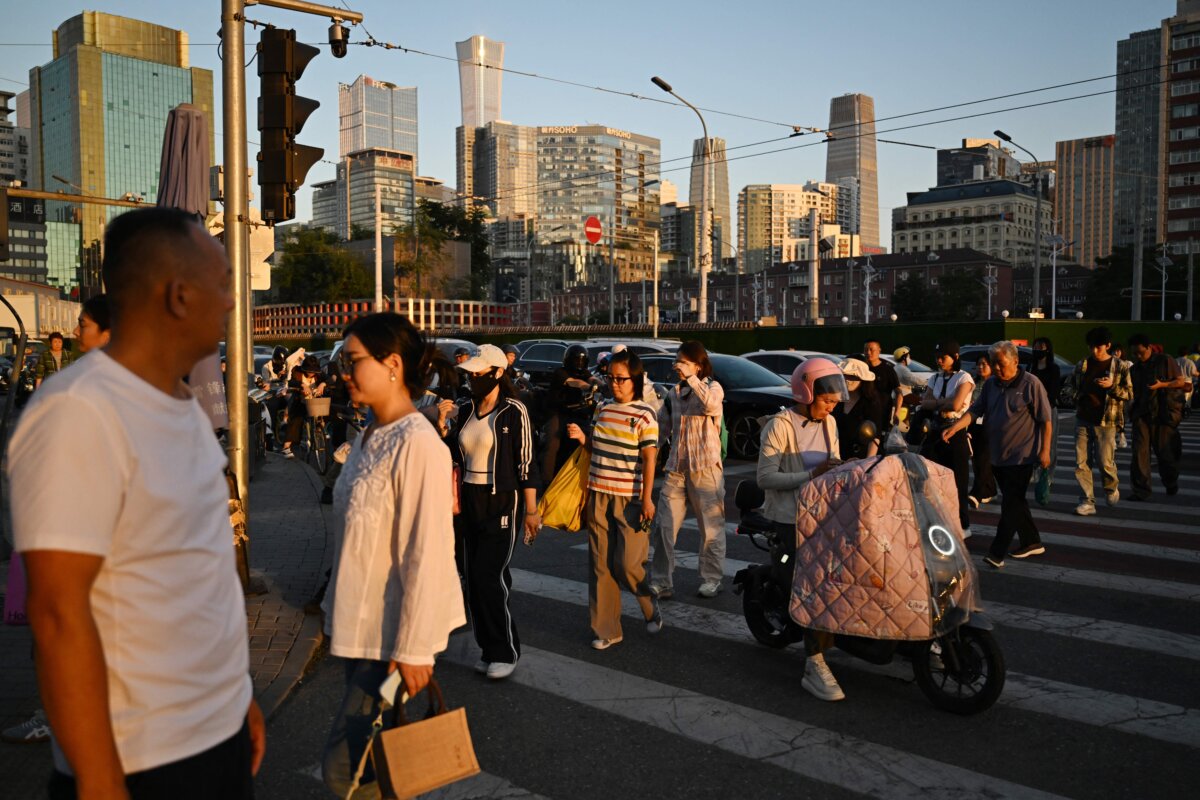
China’s retail sales—a gauge of domestic consumption—grew by just 0.4 percent year over year in August, missing forecasts and signaling weakening consumer demand, according to data released on Tuesday by the National Bureau of Statistics, the primary agency responsible for collecting, compiling, and publishing official economic data.
The slowdown—down from July’s 0.6 percent growth and below the 0.8 percent gain expected by analysts polled by Reuters—underscores mounting pressure on the country’s economy.
Fixed-asset investment—which tracks money in factories, buildings, roads—plummeted 7.2 percent in the first eight months of the year, widening from a 6.7 percent decline in the January to July period.
In contrast, industrial production surged by 5.2 percent in August compared to a year earlier, accelerating from a 4.5 percent increase in July. Economists have projected that industrial output will grow by 4.8 percent.
“Today’s data suggest that China’s economy continued to face downward growth pressures in August,” said Lynn Song, chief economist for Greater China at ING.
“Barring an unexpectedly strong September, GDP growth will likely remain sluggish in the third quarter,” Song said in a Tuesday note.
China’s economy last quarter already grew at the slowest rate in three years, although analysts and locals who previously spoke to The Epoch Times said that the real situation on the ground is much grimmer than the official figures indicate.
Chinese Communist Party (CCP) officials have set this year’s growth target at the lowest in more than three decades.
China’s property downturn deepened in August, with new home prices continuing to drop. Investment in the housing sector plummeted nearly 20 percent in the first eight months of 2026 compared to the same period last year.
“We now expect the housing downturn to persist through the current Five-Year Plan, with residential investment not recovering until 2031,” Sheana Yue, senior economist at Oxford Economics, said in a note on Tuesday, referring to the economic blueprint through 2030.
“A more proactive policy response is increasingly needed to revive domestic demand.”
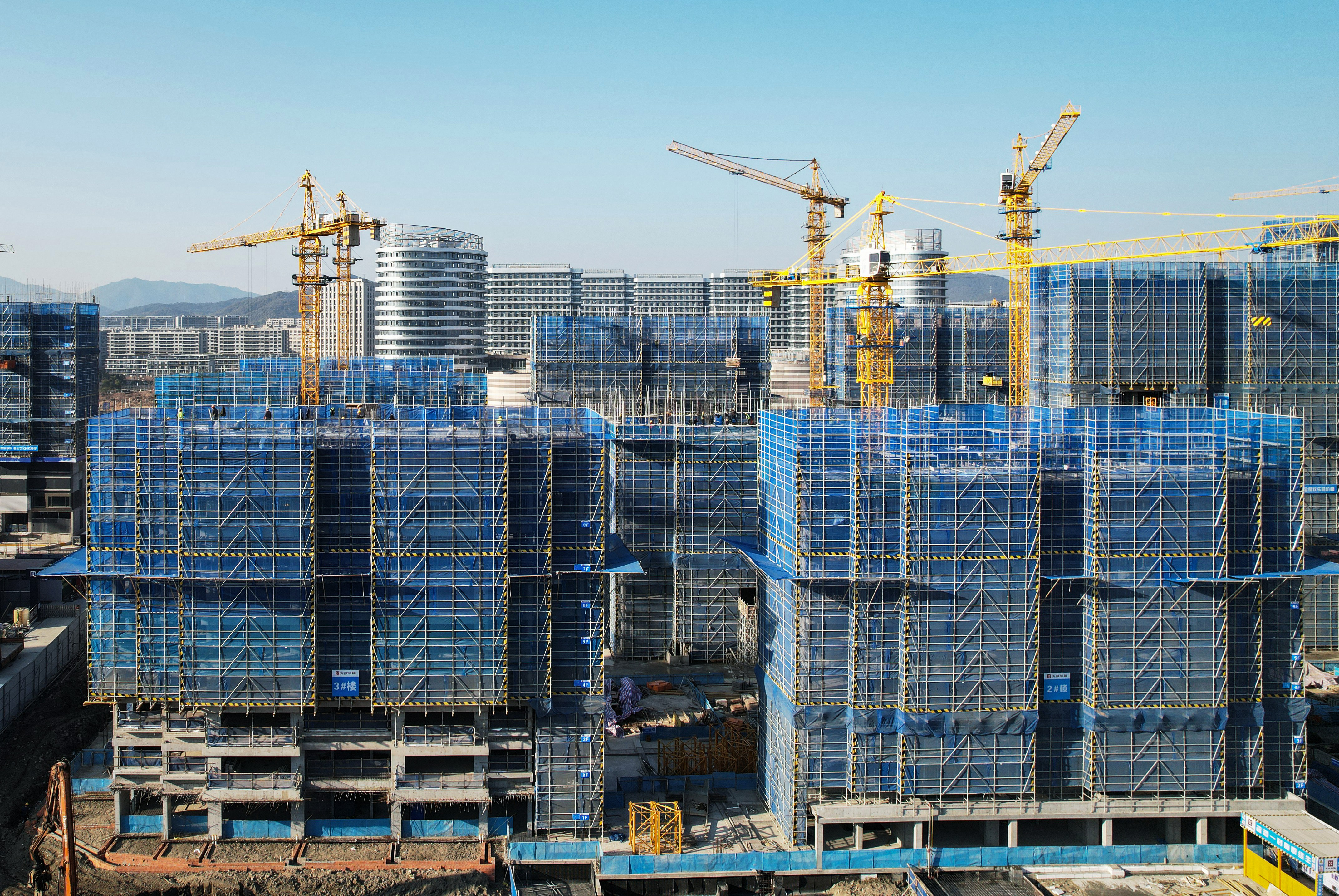 The aerial view shows residential buildings under construction by China’s indebted real estate developer Vanke in Hangzhou, Zhejiang Province, China, on March 15, 2024. (STR/AFP via Getty Images)
Amid the long-running property crisis and weak household demand, China has increasingly relied on exports to sustain economic growth, a lopsided structure that has created a huge trade imbalance and heightened geopolitical tensions.
Customs data released earlier this month showed that China’s exports surged by more than 20 percent in August compared to a year earlier, driven by global demand for high-tech and artificial intelligence. As a result, the trade surplus in the first eight months of this year reached $805 billion, putting it on track to surpass $1 billion for the third consecutive year.
China’s official statistics have long faced skepticism over their veracity, partly due to the CCP’s record of withholding information deemed harmful to its image.
Fu Linghui, spokesperson for the statistics bureau, said that China’s economy remained overall stable, although he acknowledged the challenges ahead.
“It should be noted that economic operations still face many risks and challenges, and the external environment is complex and severe,” Fu said at a press conference on Tuesday.
“The pressure to adjust domestic structure remains. We must keep working to steer the economy onto a stronger growth path.”
Reuters contributed to this report.
 Friends Read Free
Copy
Facebook
Tweet
Friends Read Free
Copy
Facebook
Tweet