
Iranian strikes have damaged or destroyed hundreds of structures or buildings at American military bases since the conflict erupted earlier this year, according to an internal Pentagon watchdog report published Monday.
Although many details have been released over the past six months, the inspector general’s report appears to be the most comprehensive official audit of the Iran war and its financial impact.
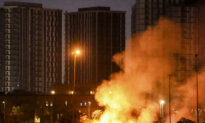
Throughout the war, Iran has launched missiles and drones at U.S. military bases in the Middle East and Gulf, destroying “hundreds of buildings and structures” at American bases in the United Arab Emirates, Kuwait, Bahrain, Qatar, Saudi Arabia, Iraq, Oman, and Jordan, according to the inspector general’s report.
Dozens of U.S. aircraft were damaged or destroyed as well, it also said, including four F-15E fighter jets, one F-35 advanced fighter plane, multiple refueling aircraft, several helicopters, and others.
The report, which covers April 1 to June 30 of this year, also found that a U.S. Navy base in Bahrain was targeted by Iranian ballistic missiles and explosive drones. The U.S. Central Command (CENTCOM) indicated that it had to shift its logistics supply lines to other hubs, resulting in delays.
Acting Navy Secretary Hung Cao told The Epoch Times in an interview last week that Iran “blew the hell out of Bahrain” and added that an investigative body is looking at whether the Bahrain base needs to be repaired in order to keep U.S. forces in the region.
U.S. bases in Iraq sustained the most damage, with more than $157 million in costs, it found. More than $11.5 million in damage was reported in Saudi Arabia, $14.75 million in Kuwait, and $125,000 in the UAE, it added.
Last month, the Pentagon reported that more than 750 U.S. service members were wounded since the start of the U.S.–Iran conflict. Overall, 18 service members were listed as killed.
The 44-page watchdog report also noted that “production of solid rocket motors, the availability of high-grade explosives and propellants and the recruitment of skilled manufacturing labor” are the most significant logistical problems for the Iran war effort, namely Operation Epic Fury, the initial campaign against Iran launched in February.
The munitions that were expended in the operation, it added, “directly illustrate the magnitude and complexity of the target set posed by Iran,” as Tehran has the “largest armed forces in the region and spent decades of intense focus developing and expanding its own domestic defense industry.”
“Iran has also focused heavily on passive defense measures to protect its military capabilities, including extensive underground facilities, dispersal of munitions inventories, concealment and deception to mask equipment, and mobile launch platforms,” the report stated.
Throughout the war, Secretary of War Pete Hegseth has denied reports that the military is running low on munitions, including during comments to reporters in August.
“We had plenty when we needed it, and we have plenty now,” he said, adding that he would not answer any questions from reporters about classified U.S. military weapons systems.
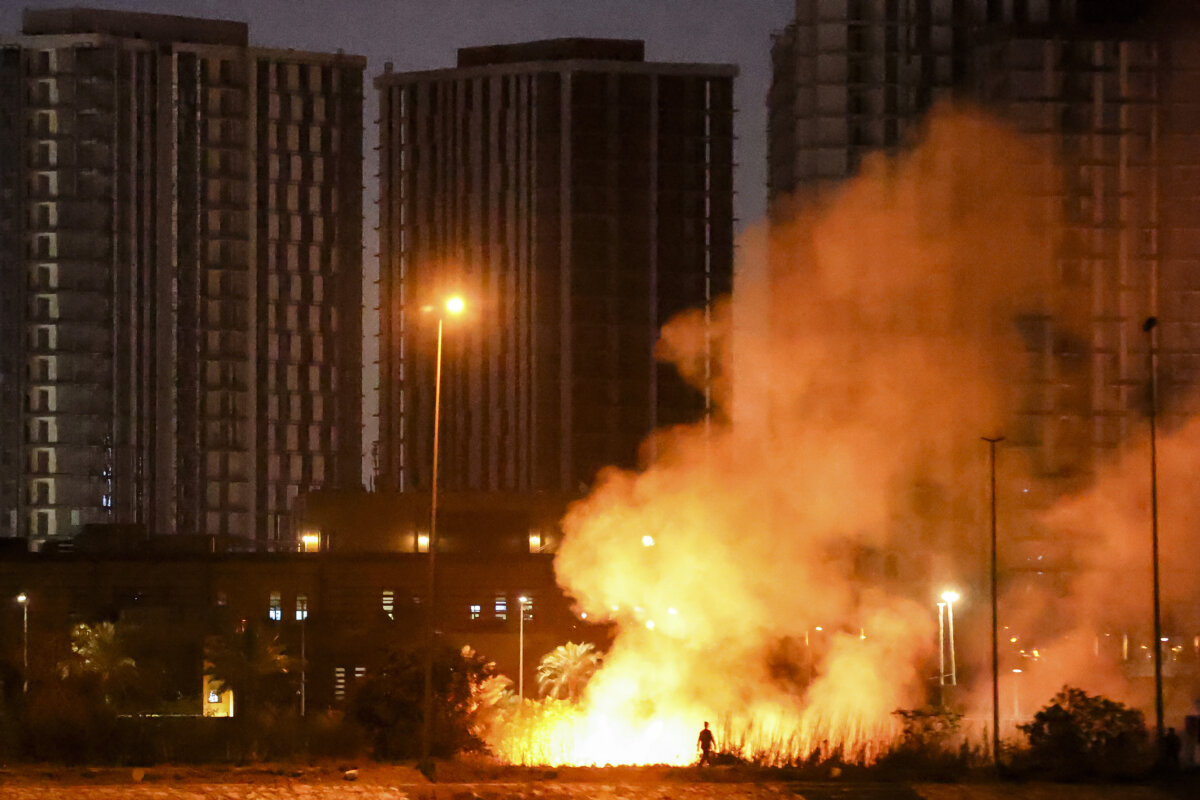
 Smoke rises after reported Iranian missile attacks, following strikes by the United States and Israel against Iran, in Manama, Bahrain, on Feb. 28, 2026. (Reuters/Stringer)
Elaborating, Trump said that production has been ramped up for Patriot missiles, Terminal High Altitude Area Defense anti-ballistic missile systems, Tomahawk missiles, and other systems.
Trump wrote in early September that the U.S. military has “virtually unlimited amounts” of munitions that he described as “Mid to high-grade” and criticized media reports saying otherwise.
The Department of War did not immediately respond to an Epoch Times request for comment on the inspector general’s report.
 Friends Read Free
Copy
Facebook
Tweet
Friends Read Free
Copy
Facebook
Tweet