
News Analysis
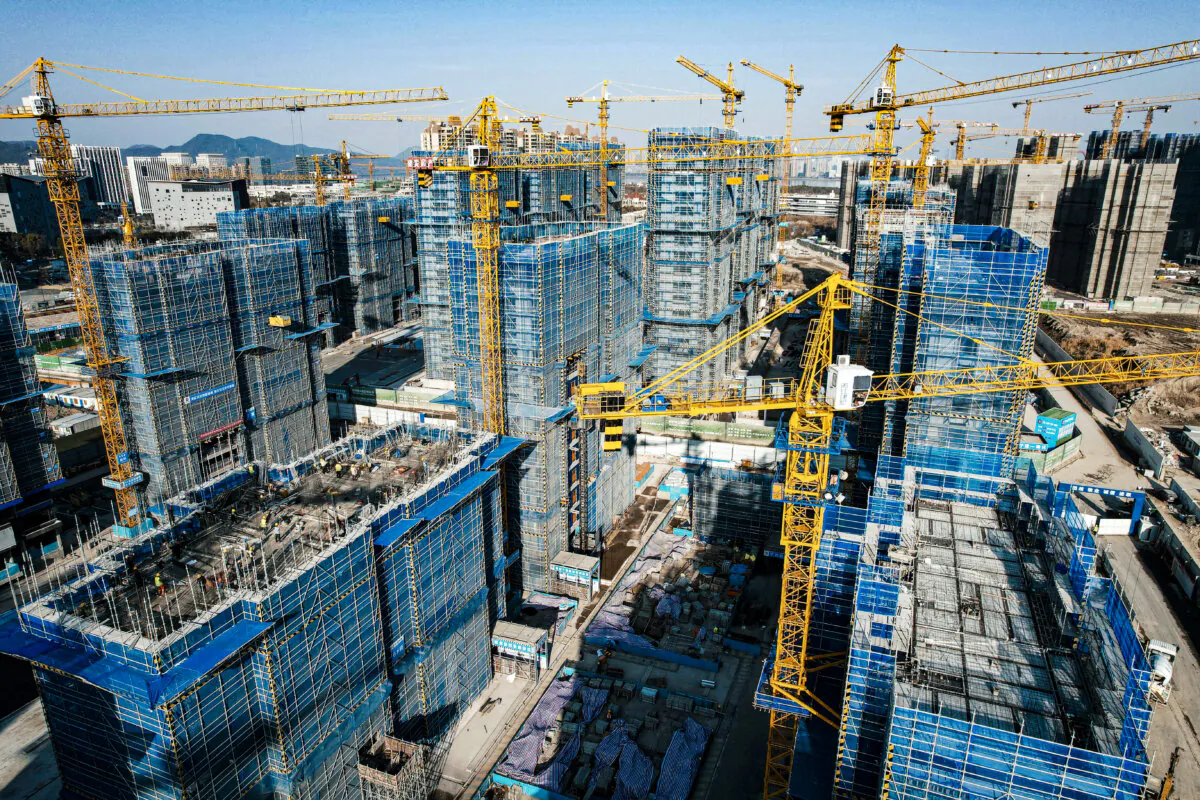
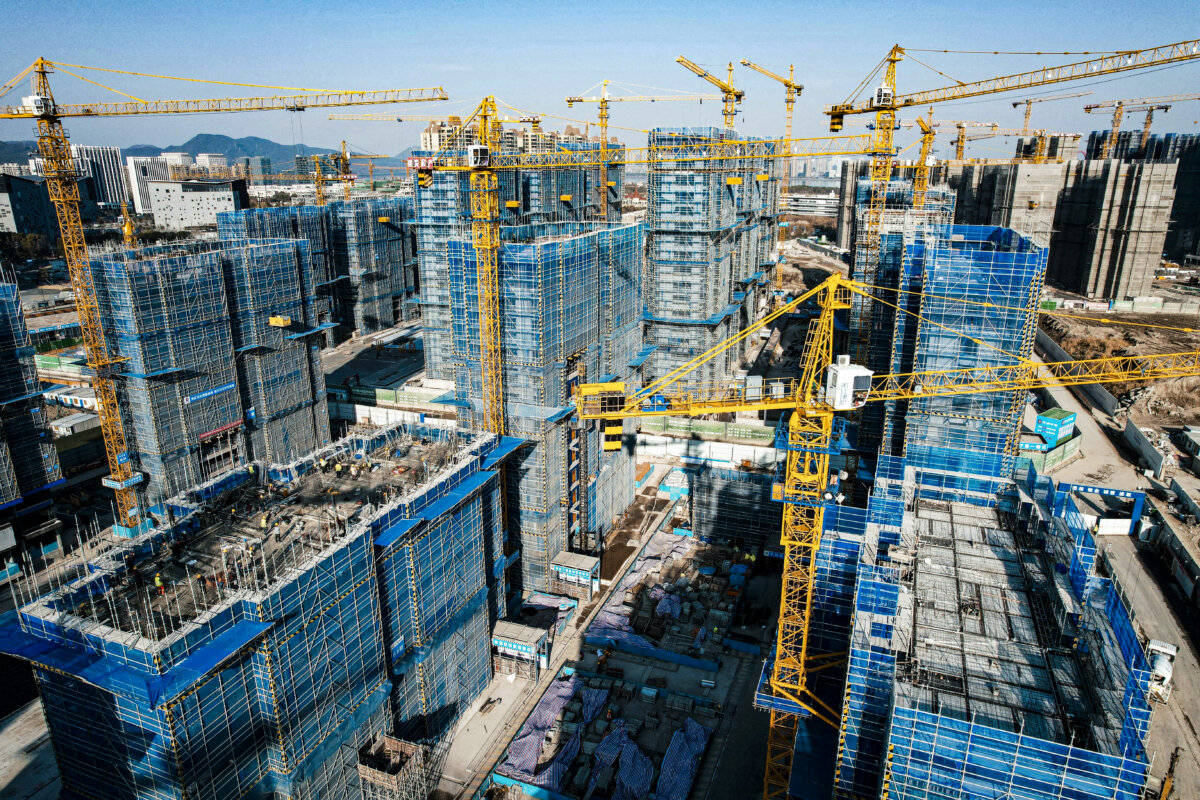
China’s prolonged economic slowdown is rippling across industries, but few sectors have been hit as hard as real estate, once a pillar of growth and now in contraction.
In recent weeks, state media outlets have pointed to signs of stabilization in major cities, describing a modest “spring bounce” in the property market. Yet behind the optimistic messaging, both official data and firsthand accounts suggest the recovery is fragile, short-lived, and driven more by falling prices than renewed demand.
Several China-based industry insiders shared their observations with The Epoch Times on condition of anonymity out of fear of reprisal.
Official Admission of Limited Rebound
In early April, Chinese state-controlled media outlet National Business Daily and several other state-affiliated outlets reported that property markets in cities such as Beijing, Shanghai, Guangzhou, and Shenzhen were showing signs of stabilization, using the seasonal phrase “spring bounce.”
However, these reports acknowledged the limits of the rebound. Market activity, they noted, was short-lived and largely driven by delayed demand following the Lunar New Year in February, pushing homebuyers into March.
More significantly, the uptick in transactions appears to be driven less by renewed confidence than by sharply falling prices. Over the past year, steep declines—especially in older, smaller existing homes—have made properties more affordable, driving sales primarily in the resale market. New home sales, by contrast, remain weak.
By early April, real estate agents in Beijing told Chinese media that the brief surge in activity seen throughout March was already fading; the peak sales season of past years had largely disappeared this year.
Official data show how limited the recovery has been. Recent figures from the China Index Academy underscore the lack of a meaningful recovery.
In March, the average price of new homes across 100 cities rose marginally by 0.05 percent month on month, and was up by 2.24 percent from the previous year. Meanwhile, existing home prices continued to fall, dropping by 0.34 percent from the previous month and 8.55 percent year on year.
Transaction volumes tell a similarly bleak story. The total floor area of new homes sold in 100 major cities fell by 13 percent compared with a year earlier. For the first quarter, sales dropped by roughly 22 percent year-on-year.
In the secondary market, transactions in 20 key cities declined by about 2.5 percent in March, with first-quarter figures down by 4 to 6 percent.
Industry Workers Feel the Pain
As the downturn drags on, its human toll is becoming increasingly visible. Layoffs are spreading across the real estate sector and its extensive supply chain, from developers and agents to construction, design, and materials.
A real estate sales manager in China with more than a decade of experience was laid off last month and now has no income. At 40, he told The Epoch Times that switching careers is daunting.
“After more than ten years in real estate, I don’t even know what else I could do,” he said.
He is considering launching a social media account to share industry insights and warn others about its risks.
The former sales manager described a market that has fundamentally shifted.
“There used to be five agencies downstairs—now there’s only one left. There’s no shortage of homes, only a shortage of buyers. Prices have fallen so much that fewer and fewer people are willing to purchase.”
He noted that conditions are even tougher for agents focused on existing homes, many of whom rely entirely on commissions.
“Some agents go six months or even a year without closing a deal. They just can’t survive like that,” he said.
In the past, he said, a single property launch could generate 20 to 30 sales, with agents regularly closing several deals a month. Now, entire projects can go years without a single sale.
A real estate agent in Nanchang, the capital of Jiangxi Province, echoed the sentiment in an interview with The Epoch Times.
“This industry is no longer viable. You’re basically paying to go to work,” the realtor said.
Propaganda Messaging Versus Market Reality
As the property sector struggles, Beijing has continued to promote a narrative of economic resilience. In recent years, the Chinese regime has emphasized what they call “positive economic messaging,” while pushing back against claims that China’s economy is faltering.
However, some signals suggest a shift in priorities. In this year’s government work report, the importance of stabilizing the property market was downgraded, falling from sixth to tenth place among policy goals. The language was also softened—from “continuing efforts to halt the decline and stabilize the market” to simply “working to stabilize.”
U.S.-based China current affairs commentator Wang He told The Epoch Times the adjustment reflects a tacit acknowledgment that previous policies have failed, without openly admitting it.
“It suggests the Chinese Communist Party has lost confidence in the sector,” Wang said, describing the approach as effectively “letting things drift.”
In recent weeks, several Chinese economists, pushed by state-affiliated media, have urged young people to enter the housing market, citing signs of stabilization and proposing incentives such as interest subsidies.
At a forum in late March, renowned economist Jia Kang encouraged young buyers to consider purchasing homes with their own funds, pointing to what he described as early signs of recovery.
Separately, economist Li Daokui, a professor at Tsinghua University’s School of Economics and Management, proposed cutting mortgage rates from around 4 percent to as low as 1 percent through state subsidies to stimulate demand.
The response on Chinese social media has been largely skeptical, if not outright mocking. One widely shared comment suggested that “experts should lead by example and buy a few more homes themselves,” and it drew thousands of likes.
Frank Xie, a professor at the University of South Carolina–Aiken School of Business Administration, told The Epoch Times that official recommendations are less about market fundamentals and more about policy objectives—encouraging households to absorb excess housing supply and easing fiscal pressures on local governments.
For many in the industry, however, policy debates offer little immediate relief. With demand shrinking and job prospects fading, the aforementioned laid-off real estate sales manager says the real estate market appears to have reached its end as a cornerstone of China’s economy.
Ning Haizhong and Gu Xiaohua contributed to this report.
 Friends Read Free
Copy
Facebook
Tweet
Friends Read Free
Copy
Facebook
Tweet