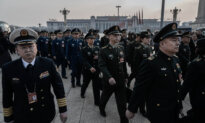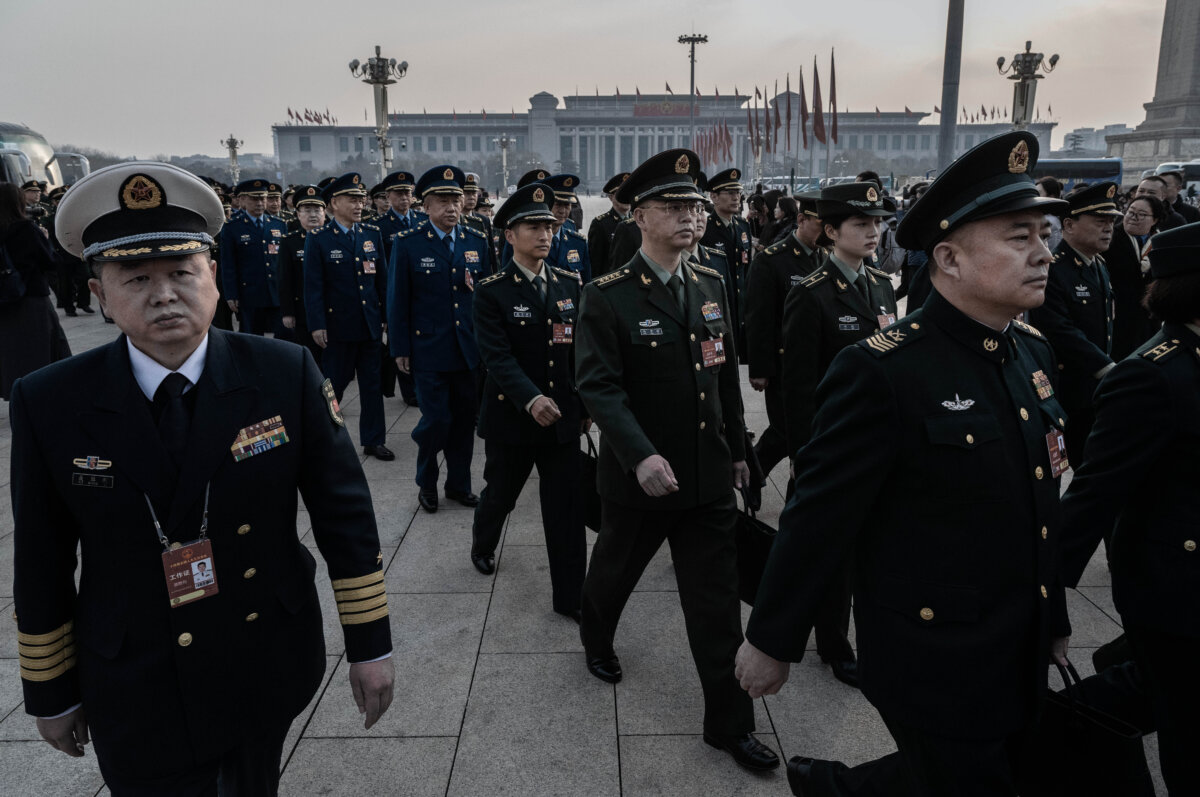
China’s official military newspaper has renewed its public attack on two recently purged top generals, urging troops to support their investigation and to pledge loyalty to Chinese leader Xi Jinping—a move that analysts say underscores growing unease within the People’s Liberation Army (PLA).
In a front-page editorial published on Jan. 31, the PLA Daily described the investigation of former Central Military Commission (CMC) Vice Chairman Zhang Youxia and CMC member Liu Zhenli as a “major victory” in the Chinese Communist Party’s (CCP’s) anti-corruption campaign. The article calls on officers and soldiers across the military to “resolutely support” the Party leadership and “maintain a high degree of consistency” with Xi.
The renewed messaging, coming days after the two generals were officially removed, has raised questions among analysts about whether Beijing is struggling to contain dissent within the armed forces following one of the most dramatic military purges in years.
A Rare 2nd Denunciation
On Jan. 24, it was announced that Zhang and Liu were under investigation. That same night, the PLA Daily ran a sharply worded editorial accusing them of seriously undermining the system that places the military under the direct authority of the Party leader—a political charge that drew widespread attention.
Since then, official propaganda outlets have largely fallen silent. The Jan. 31 article marked a rare second public denunciation, naming both men repeatedly and framing their cases primarily through the lens of corruption.
The editorial emphasizes that the investigations demonstrate that the anti-corruption campaign tolerates “zero leniency.” It concludes by demanding that the military follow Xi’s command and be accountable to Xi.
Analysts See Signs of Unease
Shen Ming-Shih, a research fellow at Taiwan’s Institute for National Defense and Security Research, told The Epoch Times that the unusually strong language suggests that morale problems may have emerged in the military after the purge.
“The CCP tends to emphasize what it lacks,” he said. “The fact that the military newspaper felt compelled to issue another attack days later indicates instability in the ranks—and possibly even resistance.”
Following the initial purge of the two generals, insiders revealed that the CMC was implementing a “near-war” level of internal control to protect the regime’s political stability. Shen said the renewed propaganda push may reflect concerns that some units remained sympathetic to Zhang, a long-serving and influential figure within the PLA.
According to Shen, Xi may be using the military newspaper to project an image of finality—signaling that Zhang and Liu have no chance of reversal—in an effort to deter further dissent and reassert control.
Anti-Corruption or Political Purge?
Several analysts said the corruption framing obscures what is fundamentally a political struggle.
In the Jan. 24 editorial, Zhang and Liu are first accused of political offenses—specifically, challenging the authority of the CMC chairman, a post held by Xi. The Jan. 31 article, by contrast, focuses almost entirely on corruption, without providing specific allegations or evidence.
“Corruption becomes an all-purpose label that can be used against anyone associated with them,” Shen said. “This is how political purges are conducted.”
Su Tzu-yun, a research fellow at Taiwan’s Institute for National Defense and Security Research, told The Epoch Times that the messaging reveals deep insecurity within the Chinese leadership.
“The [slogan] ‘anti-corruption will prevail, military strengthening will succeed’ actually highlights the CCP’s anxiety,” Su said. “What we are seeing may be the early stage of the CCP’s political and military fragmentation.”
Su noted that corruption within the PLA has deep roots, dating back to policies in the 1990s under former CCP leader Jiang Zemin that allowed military units to operate businesses. Xi has used anti-corruption campaigns to reassert control over the armed forces; however, he now may be pushing it too far, Su said.
“Inside the military, people understand this is political cleansing,” he said. “Trying to legitimize it [doesn’t restore morale]—it risks breaking it.”
Broader Political Signals
The developments come amid broader political messaging from Beijing. On Jan. 30, the CCP’s Politburo Standing Committee—the highest decision-making body—held a meeting emphasizing the need to uphold “centralized and unified leadership,” according to Chinese state media outlet Xinhua.
U.S.-based Chinese current affairs commentator Wang He told The Epoch Times that the emphasis was likely aimed at reinforcing Xi’s authority following the purge.
Su warned that Xi’s uncompromising approach could have dangerous consequences. Continued purges, he said, risk eroding morale, disrupting command chains, and leaving the military ill-prepared in a crisis.
“If Xi chooses a course of military adventurism, there may be no one left to restrain him,” he said. “At the same time, he may find himself without the personnel needed to execute such actions effectively—raising the likelihood of failure.”
Risk of Backlash
In the days following Zhang and Liu’s removal, the PLA did not issue collective statements backing Xi’s decision. A review of official military websites by The Epoch Times shows that several units, including forces responsible for Beijing’s security, have instead intensified political study sessions focused on “Xi Jinping thought on strengthening the military.”
Shen said the Jan. 31 article appears designed to support these ideological campaigns. But without clear evidence of corruption, he warned, heavy-handed political indoctrination could prove counterproductive.
“It may work temporarily,” Shen said, “but the backlash, when it comes, could be much stronger.”
Insiders close to the Chinese military told The Epoch Times that multiple directives issued by the CMC after the investigation met widespread resistance at the grassroots level. According to those insiders, at least two documents sent to major theater commands were not implemented, leading to signs of dysfunction within the PLA’s chain of command.
Ning Haizhong and Luo Ya contributed to this report.
 Friends Read Free
Copy
Facebook
Tweet
Friends Read Free
Copy
Facebook
Tweet