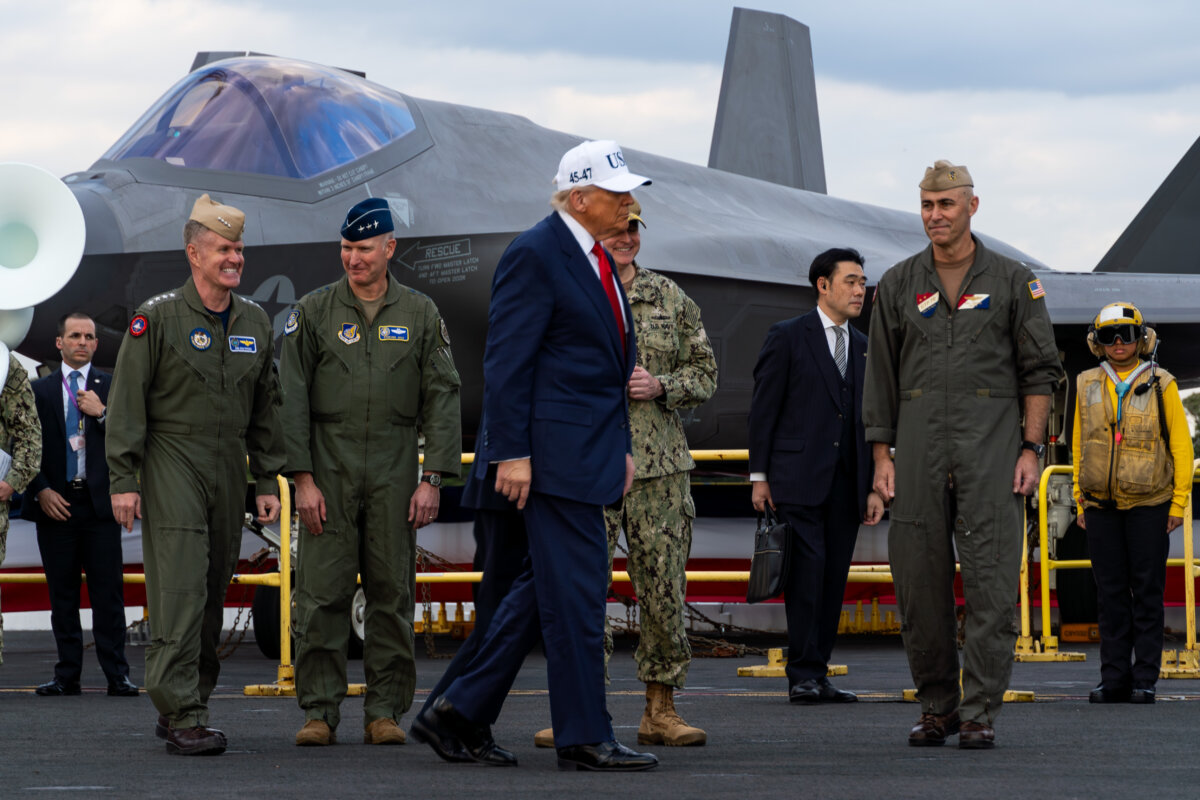

The U.S. Navy is officially moving forward with President Donald Trump’s order to put old steam catapults on new aircraft carriers, but the decision could complicate the service’s multi-decade effort to upgrade its carrier fleet.
On Aug. 13, Trump ordered the Navy to scrap the Electromagnetic Aircraft Launch System planned for the under-construction aircraft carrier USS Doris Miller. He also called for the Navy to cancel the ship’s electromagnetic weapons elevators in favor of legacy hydraulic lifts.
The electromagnetic systems have already been installed on the first two ships in the Ford-class aircraft carriers, and construction is ongoing on the third and fourth ships in the class.
Trump’s call to revise the Ford-class carrier design comes at a moment when the Navy is already hard-pressed to modernize and deliver ships to keep pace with China’s rapid fleet expansion.
General Atomics, the manufacturer of the electromagnetic system, has pushed back on Trump’s new order, warning the design change “would introduce significant cost, schedule, and integration risks.”
Trump’s Aug. 13 presidential memorandum calls on the Pentagon and the Navy to, within 60 days, present a plan to replace the electromagnetic aircraft launcher and electromagnetic weapons elevators, with timeline and resource requirements.
“The President has ordered us to implement design changes to our future aircraft carriers,” the Navy told The Epoch Times this week. “The Navy has begun moving out on options to meet the President’s intent.”
Trump Is a Longtime Critic
The electromagnetic aircraft launcher is among the systems meant to give the Ford-class an edge over the older Nimitz-class carriers, but it’s been the subject of Trump’s ire for years.
In a 2017 interview with Time Magazine, Trump derided the electromagnetic launcher as unreliable and difficult to keep in working order, saying, “You have to be Albert Einstein to figure it out.”
The president has repeated his criticisms over the ensuing years, and did so again while addressing the Pennsylvania Defense and Innovation Summit last month.
“We’re not letting any more ships be built with the ridiculous billions of dollars more they spent on electric catapults,” Trump said. “And they’re not good. They’re not nearly as good. Too complex.”
“We had to call a ship in twice because the catapults didn’t work,” he added.
The Ford-class’s electromagnetic launchers are among several features meant to help the new carriers launch, recover, rearm, and relaunch aircraft at higher rates than their Nimitz-class predecessors. This aircraft launch frequency is also known as its sortie generation rate.
The Nimitz-class was designed to sustain 120 aircraft launches per day, with the ability to surge up to double that in limited high-intensity scenarios.
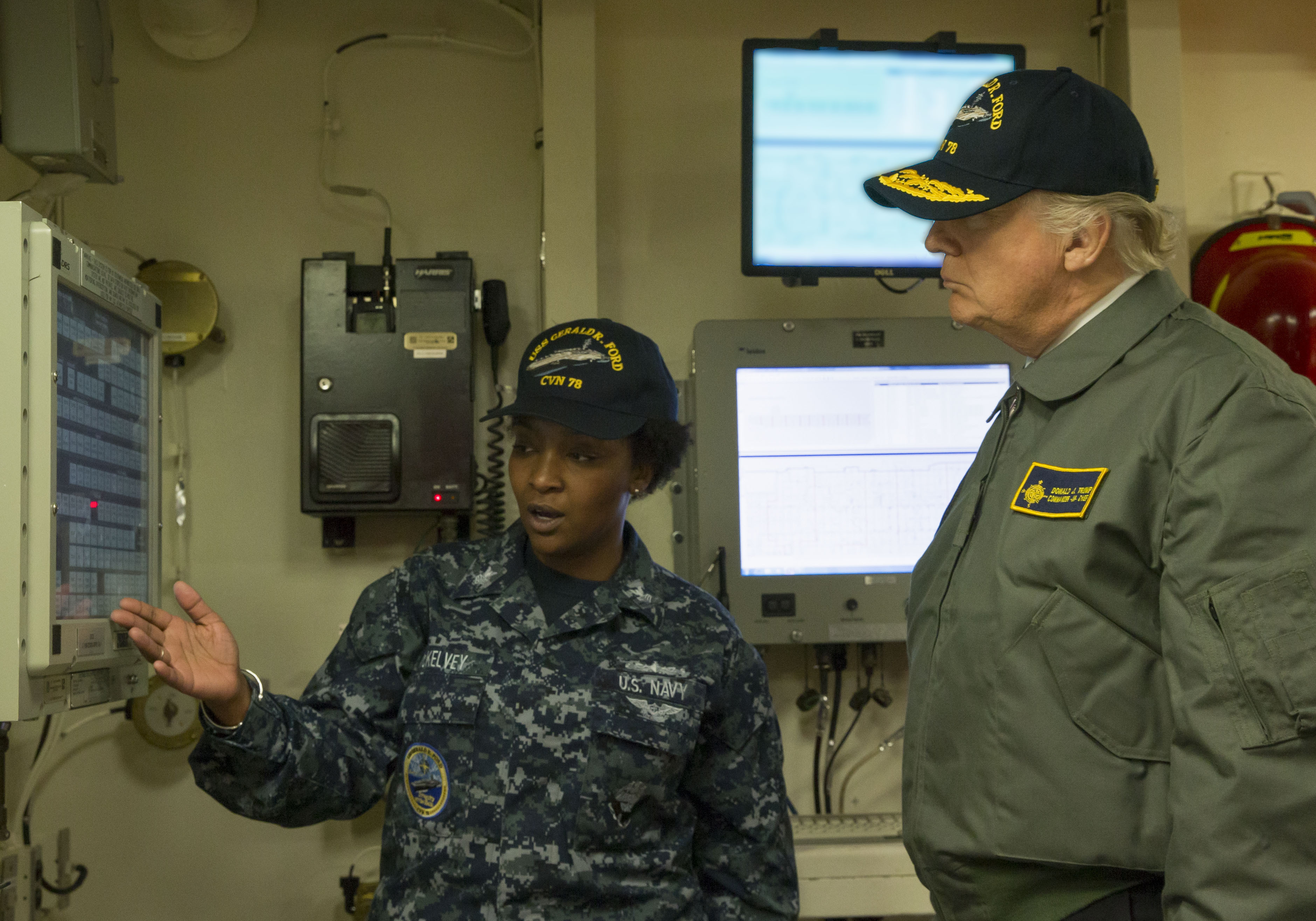 President Donald J. Trump tours the aircraft carrier USS Gerald R. Ford during its pre-commissioning in Newport News, Virginia, on March 2, 2017. (U.S. Navy/Mass Communication Specialist 3rd Class Cathrine Mae O. Campbell)
The electromagnetic launcher is supposed to offer other benefits, such as putting less mechanical strain on aircraft when they launch. Reduced launch strain would theoretically translate to reduced maintenance requirements for aircraft, increasing their availability to fly missions.
Brent Sadler, a senior research fellow on naval warfare and advanced technology for the Heritage Foundation, said the electromagnetic launcher can also be quickly adjusted to accommodate a variety of different aircraft, whereas steam catapults have “a very narrow band of weight that it can throw off the carrier.”
Sadler told The Epoch Times that the adjustability of the electromagnetic launcher would enable the Navy to more reliably launch a potentially heavier future aircraft, such as the service’s planned next-generation stealth fighter.
Overall, the various design features of the Ford-class are also supposed to lower lifetime operating costs by about $4 billion per ship compared to the Nimitz-class.
Questions Surround Electromagnetic Launcher’s Reliability
A December 2025 Congressional Research Service report said the USS Gerald R. Ford—the first Ford-class aircraft carrier—launched aircraft at a rate sufficient to meet a commander’s tasking during its maiden deployment. Still, the report said the carrier had yet to demonstrate the launch configuration and tempo to fulfill its official performance requirements.
According to the report, the Ford’s crew also had to rely on outside technical support to resolve various system failures. The report said the reliability and maintainability of the Ford’s electromagnetic launchers “continue to adversely affect sortie generation and flight operations, which remains the greatest risk to demonstrating operational effectiveness and suitability.”
The Ford concluded its first deployment in January 2024 and departed for a second deployment in June 2025.
In a Feb. 26 statement, the Navy said that while it’s still analyzing the data, preliminary reports indicate the Ford has achieved an improved aircraft launch rate over Nimitz-class carriers, thanks to the electromagnetic launchers and other new systems.
“As of today, these systems are operating as designed, and the Ford continues with scheduled mission tasking.”
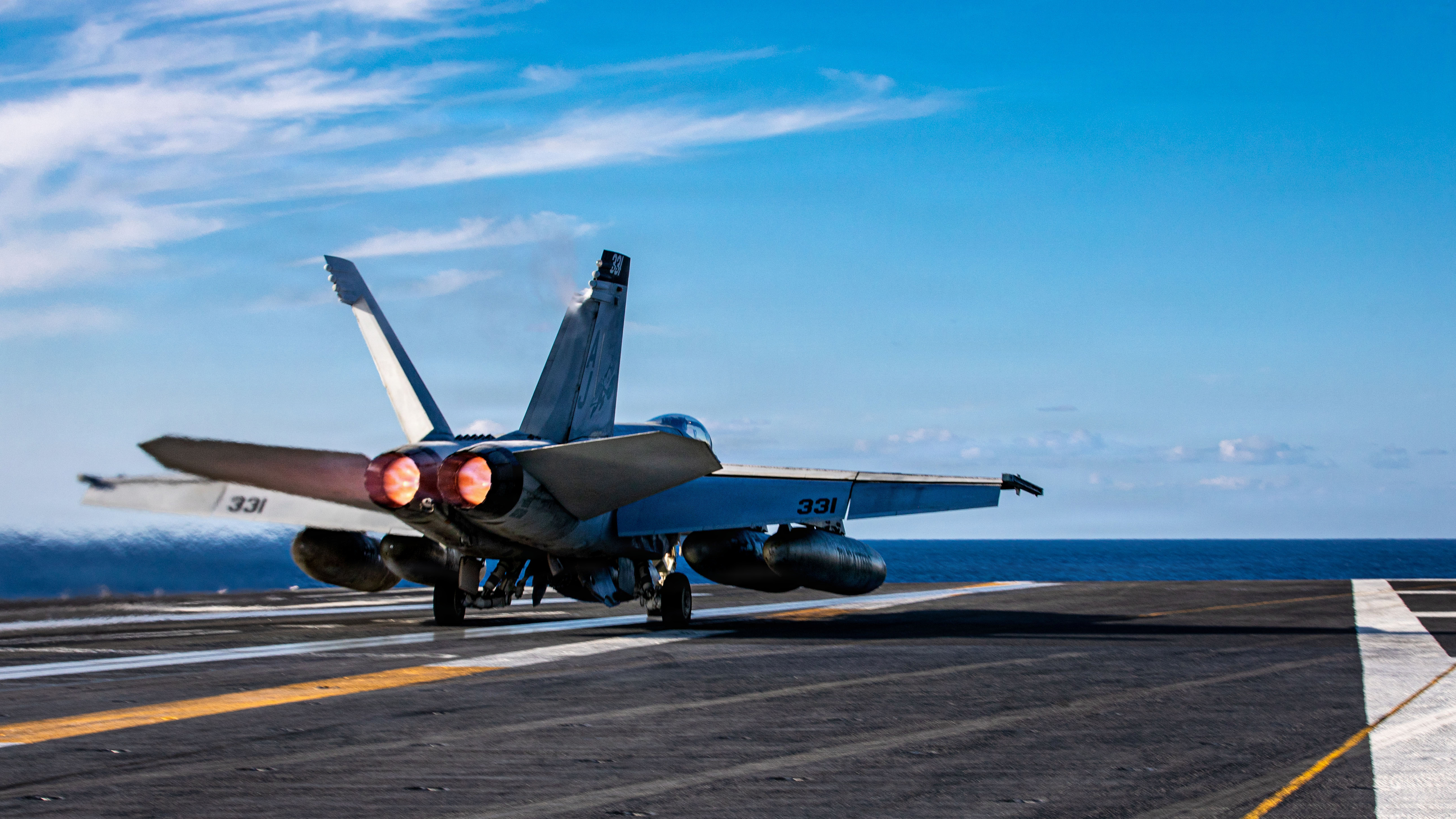 An F/A-18E Super Hornet aircraft, attached to Strike Fighter Squadron 31, launches from the flight deck of the aircraft carrier, USS Gerald R. Ford, while supporting combat operations against Iran on Feb. 28, 2026. (U.S. Navy photo)
The Ford completed 12,200 aircraft launches during this second deployment.
The Epoch Times reached out to the Navy for more granular data about the Ford’s aircraft launch rates during recent combat operations against Iran, but the service didn’t respond.
Sadler said he expects performance records will ultimately convince Trump to keep the electromagnetic launcher, but said the Navy has to step up.
“The Navy has the data, and they need to make the case. And I’m confident that the data will support staying the course,” Sadler said.
Design Changes Could Widen Delays
Even if the electromagnetic aircraft launcher has yet to live up to its advertised potential, Trump’s push to return to steam could put the Navy in an awkward position.
If the Navy presents data supporting the electromagnetic aircraft launcher but Trump remains adamant about going back to steam catapults, it could leave the service weighing whether to outwait Trump or proceed with costly and time-consuming redesigns.
The last steam catapults were installed on the USS George H.W. Bush more than two decades ago. It’s not clear if U.S. manufacturers can immediately resume production.
When asked if the U.S. industrial base is currently capable of producing new steam catapults, the White House referred The Epoch Times to a previously published press release that stated Trump’s order would “restore capacity and competition to the maritime industrial base.”
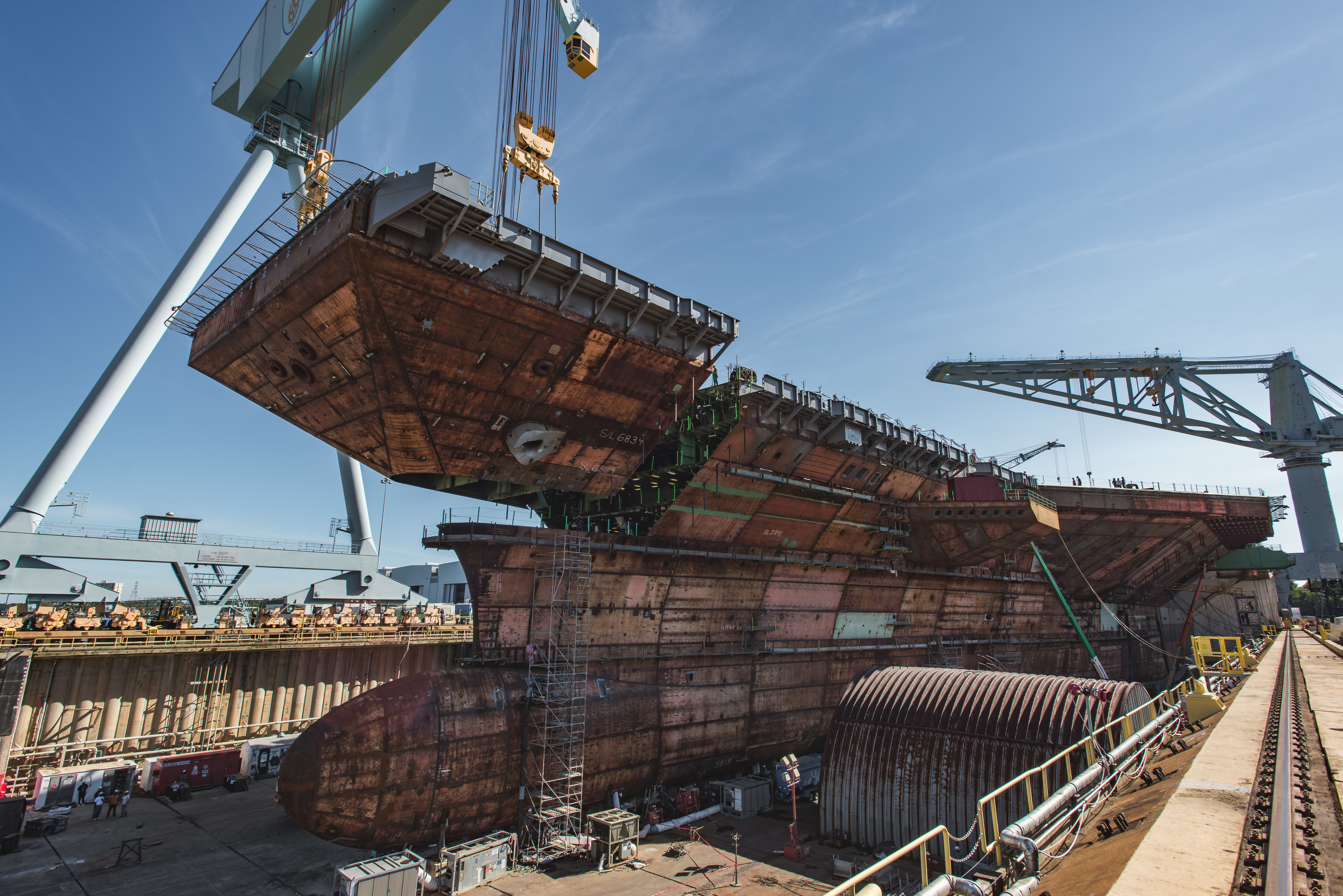 The upper bow unit of the future aircraft carrier USS John F. Kennedy is fitted to the primary structure of the ship, at Huntington Ingalls Industries Newport News Shipbuilding, in Newport News, Virginia, on July 10, 2019. (U.S. Navy/Courtesy of Huntington Ingalls Industries by Matt Hildreth)
In April, the Navy revealed that delivery of its third Ford-class carrier, the USS Enterprise, had been delayed by eight months, from July 2030 to March 2031. Delivery of the USS Doris Miller was delayed by two years, to February 2034.
Sen. Mark Kelly (D-Ariz.), a retired Navy pilot, has pushed back on Trump’s requested design changes.
“I’ve launched off the front of aircraft carriers hundreds of times, have a Master’s degree in aeronautical engineering, and am a test pilot and even I wouldn’t suggest to the Navy how to engineer specific systems on its ships,” Kelly wrote in an April 13 social media post.
Sadler said he expects Trump will most likely moderate his redesign requests.
“I think the president, in this case, has a desire for an aircraft carrier that works, looks good, and performs very effectively,” Sadler said. “And I think once he gets the data from the engineers … the math will speak.”
 Friends Read Free
Copy
Facebook
Tweet
Friends Read Free
Copy
Facebook
Tweet