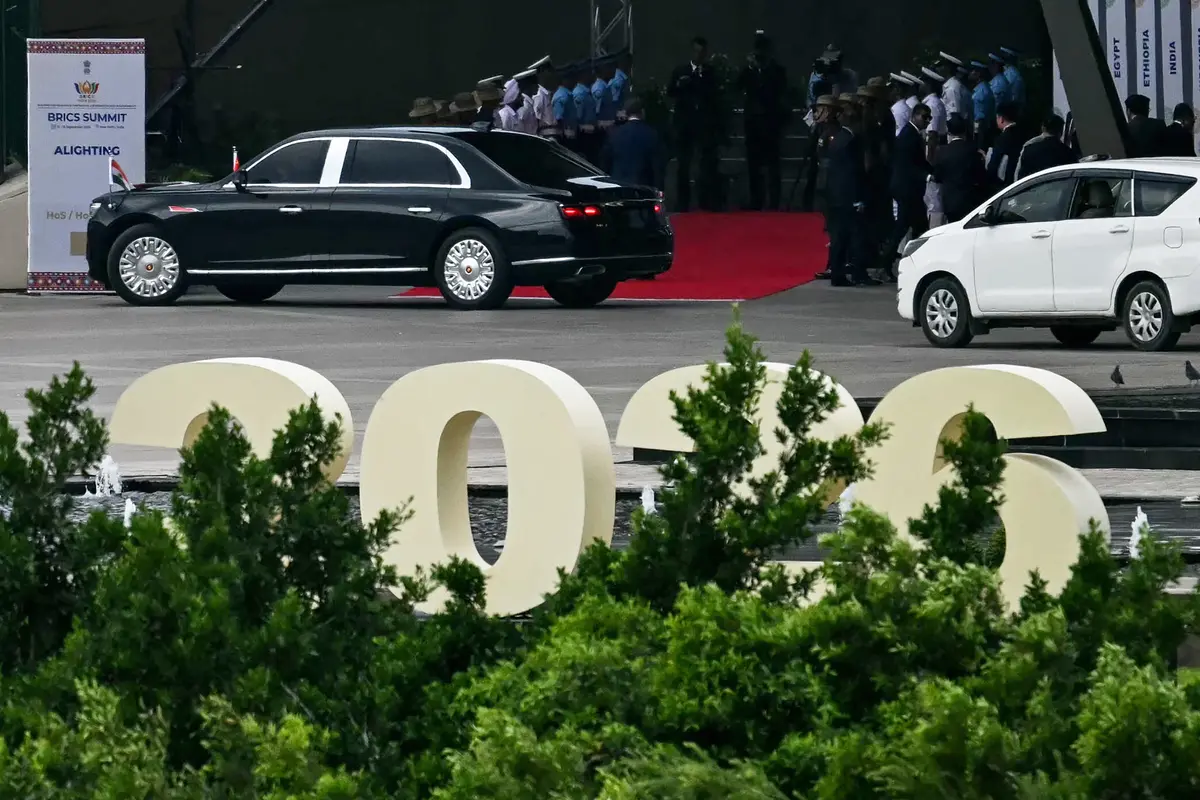

Chinese leader Xi Jinping faced protests from Tibetans in New Delhi, India, while attending the BRICS summit, with demonstrators chasing his motorcade and shouting slogans calling for Tibetan independence.
According to a video posted by Indian media outlet FirstPost, large groups of Tibetans carrying the Tibetan flag followed Xi’s vehicle through New Delhi on Sept. 12.
Protesters shouted slogans including “Free Tibet,” “Down with Xi Jinping,” “China get out of Tibet,” and “Tibet will win,” while some attempted to break through police lines.
The protests came as India hosted Xi for the BRICS summit, where leaders of the group of emerging economies gathered in New Delhi. BRICS is made up of 10 countries, including Brazil, Russia, India, China, South Africa, Egypt, Ethiopia, Indonesia, Iran, and the United Arab Emirates.
India has been a major refuge for Tibetans in exile since 1959, when the Dalai Lama fled Tibet after a failed uprising against brutal Chinese occupation of Tibet. Since 1960, the Himalayan town of Dharamshala in India has served as the seat of the Tibetan government in exile. Today, approximately 94,000 ethnic Tibetans live in India. Tibetan groups worldwide continue to draw attention to the Tibetan struggle for freedom via protests and activism against the Chinese regime.
The Tibetan Youth Congress (TYC), an organization that campaigns for Tibetan freedom and independence from Chinese occupation, organized the protest near the BRICS summit venue on the evening of Sept. 12, according to Phayul, a news outlet run by Tibetans living in exile in India.
At about 9:45 p.m. local time, members of the TYC from 15 regional chapters gathered at the summit venue to protest Xi’s attendance at the summit. Delhi police arrested 64 Tibetan activists at the scene, according to Phayul.
The demonstrations followed a larger protest in New Delhi the previous day.
Voice of Tibet, a Norway-based radio station with a focus on Tibetan affairs, reported on Sept. 11 that hundreds of Tibetans marched through the Indian capital to protest Xi’s visit and called on India and the international community to pay attention to what they described as the Chinese Communist Party’s oppressive assimilation policies in Tibet.
Xi’s arrival had also drawn attention to the security and logistics surrounding his visit.
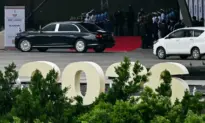
Before he arrived in New Delhi, China transported two Hongqi N701 vehicles—luxury limousines used for senior Chinese officials—to the Indian capital. The vehicles had black protective coverings and were photographed by members of the public while being driven on Indian streets.
 Friends Read Free
Copy
Facebook
Tweet
Friends Read Free
Copy
Facebook
Tweet