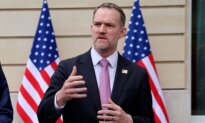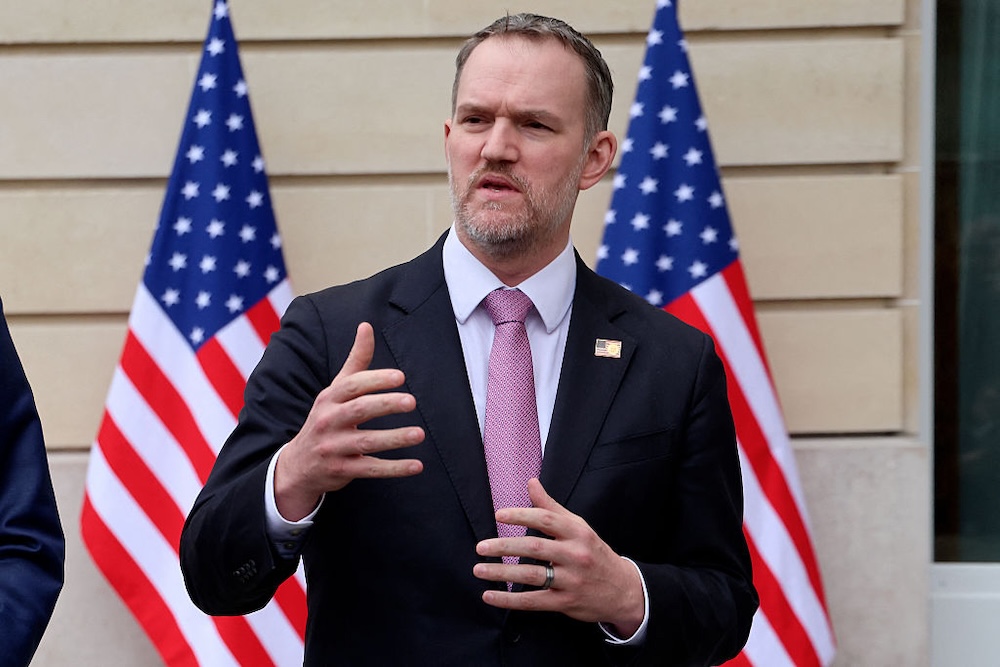

U.S. Trade Representative Jamieson Greer has said the Trump administration may take further action if ongoing trade investigations find that China’s industrial overcapacity and market barriers are distorting trade, even as Washington and Beijing work to formalize new economic channels following President Donald Trump’s summit with Chinese leader Xi Jinping.
Greer, speaking on CBS News’s “Face the Nation” on May 17, said the administration is preparing to manage U.S.–China trade through a new “Board of Trade” and “Board of Investment,” while keeping national-security-sensitive sectors outside those discussions.
“We’re focused on trade in non-sensitive goods,” Greer said, naming agricultural products, energy, Boeing aircraft, and medical devices as examples of areas in which the United States wants expanded access to the Chinese market.
The comments came as the White House released new details of the Beijing summit’s economic agreements.
Tariff Tools Remain Available
Greer said the administration is still weighing trade actions under ongoing Section 301 investigations into structural excess capacity and production.
Those investigations, launched by the Office of the U.S. Trade Representative (USTR) in March, cover China and more than a dozen other countries. USTR said the probes are focused on economies that appear to have structural excess capacity in manufacturing sectors, as reflected in persistent trade surpluses or unused industrial capacity.
Greer said the investigations could authorize Trump to consider tariffs, service fees, quotas, or other measures if they find unfair practices.
He said USTR would present Trump with options if the probes show what the administration suspects: “a huge problem with overcapacity in China and other countries.”
The USTR investigation notice published in the Federal Register said evidence of structural excess capacity exists for China, citing its global goods trade surplus, which exceeded $1.2 trillion in 2025.
Formal Channels, Security Boundaries
Greer said the new Board of Trade and Board of Investment are intended to replace what he described as a long-running ad hoc approach to managing economic disputes with Beijing.
“We have never had a Board of Trade or a Board of Investment before,” he said. “It’s much better to discuss these in a formalized way between our government and their government.”
The Board of Trade will focus on non-sensitive commerce, including U.S. agricultural exports, energy products, Boeing aircraft, medical devices, consumer goods, and low-tech items, Greer said. High-tech products and items with potential military applications will remain national security matters, he said.
The Board of Investment is not an investment program, Greer said. Instead, he described it as a mechanism to address disputes in U.S.–China investment policy when they arise.
“It’s to try to almost be like a firefighter and put out issues when they arise between the two countries,” he said.
The spokesperson for China’s Ministry of Commerce confirmed after the Trump–Xi summit that the two governments had agreed to establish trade and investment bodies.
Agriculture Commitments Detailed
The White House said China agreed to purchase at least $17 billion per year in U.S. agricultural products in 2026, 2027, and 2028, in addition to soybean purchase commitments made in October 2025.
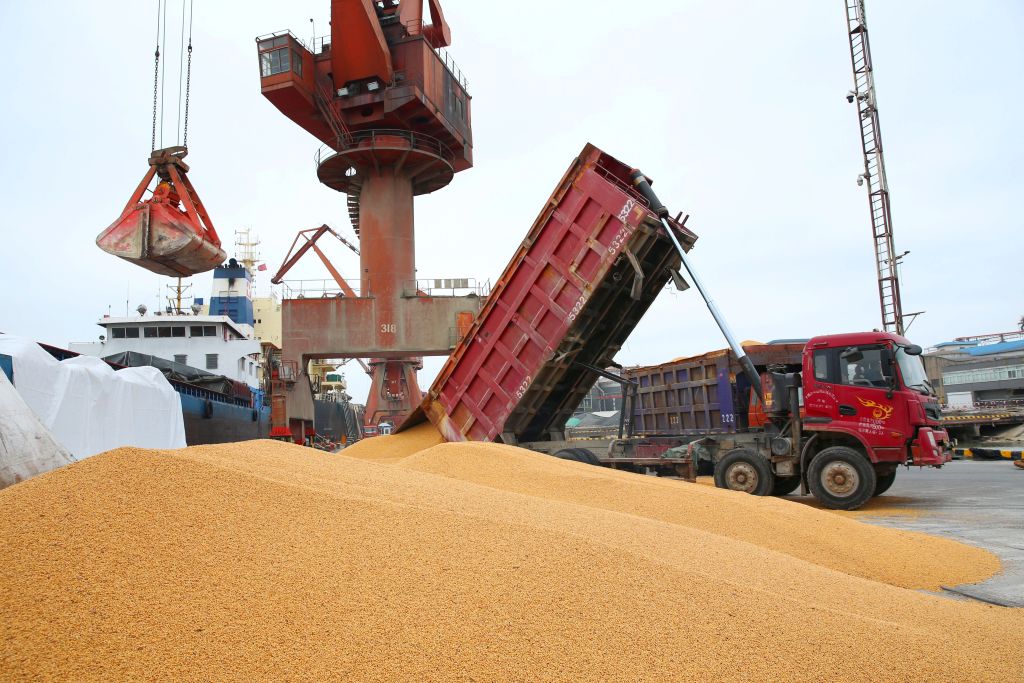
The White House also said China restored market access for U.S. beef by renewing expired listings for more than 400 U.S. beef facilities and adding new listings. Beijing will also work with U.S. regulators to lift remaining suspensions on U.S. beef facilities, according to the fact sheet.
Greer said China had already begun reducing nontariff barriers on U.S. agricultural goods, including beef and poultry. He said Beijing had re-registered U.S. beef facilities whose approvals had expired, had resumed poultry imports, and was working with Washington on biotechnology approvals.
Boeing Deal Confirmed, More Details Pending
Greer also defended the summit’s aviation outcome, saying China’s order for 200 Boeing aircraft is “locked in.”
“The reality is, this is the first major purchase by China in almost 10 years of Boeings,” he said.
Trump said after the summit that China had agreed to buy 200 Boeing jets and that the order could eventually rise to as many as 750 aircraft. Greer said additional aircraft purchases could follow if deliveries proceed successfully.
Balanced Trade, Not Concessions
Greer described the administration’s China approach as a push for balanced, mutually beneficial trade rather than a concession-based bargain.
When asked by “Face the Nation” host Margaret Brennan what the United States had given up to secure China’s purchase commitments, Greer said the issue was less about concessions and more about identifying areas in which trade benefits both sides.
China wants regular access to aircraft parts, auto parts, and other goods needed to keep its fleets operating, he said. The United States wants expanded access for exports and a narrower trade imbalance.
The distinction between sensitive and non-sensitive sectors remains central to the administration’s approach. Greer said that advanced technologies and goods with military applications remain national security concerns, while agricultural products, energy, commercial aircraft, and medical devices can be handled through trade channels. That framework allows the White House to claim market-access gains from the Beijing summit while maintaining pressure tools against Chinese industrial policy.
July Timeline Ahead
The next pressure point is the conclusion of the Section 301 investigations and the administration’s decision on whether to use new trade tools.
On Feb. 20, the U.S. Supreme Court invalidated the sweeping International Emergency Economic Powers Act (IEEPA) tariffs Trump had imposed on China and other trading partners since February 2025. Within hours of the ruling, Trump signed an executive order imposing a 10 percent tariff on all countries under Section 122 of the Trade Act of 1974—a provision that carries a 150-day statutory limit, which period ends on approximately July 24 this year.
On March 11, the USTR initiated new Section 301 investigations into structural excess capacity and production across multiple manufacturing sectors, targeting China, among other countries. Those investigations could provide the legal basis for new tariffs that would not face the same constitutional constraints as the struck-down IEEPA duties, according to an analysis by the Council on Foreign Relations.
Greer declined to prejudge the outcome of these Section 301 investigations but said the Chinese regime understands that the United States may raise tariffs again if needed.
“The Chinese know, just like many other countries we’re dealing with, that we’re going to have a certain level of tariff to control our imports,” Greer said. “But that we also expect market opening.”
 Friends Read Free
Copy
Facebook
Tweet
Friends Read Free
Copy
Facebook
Tweet