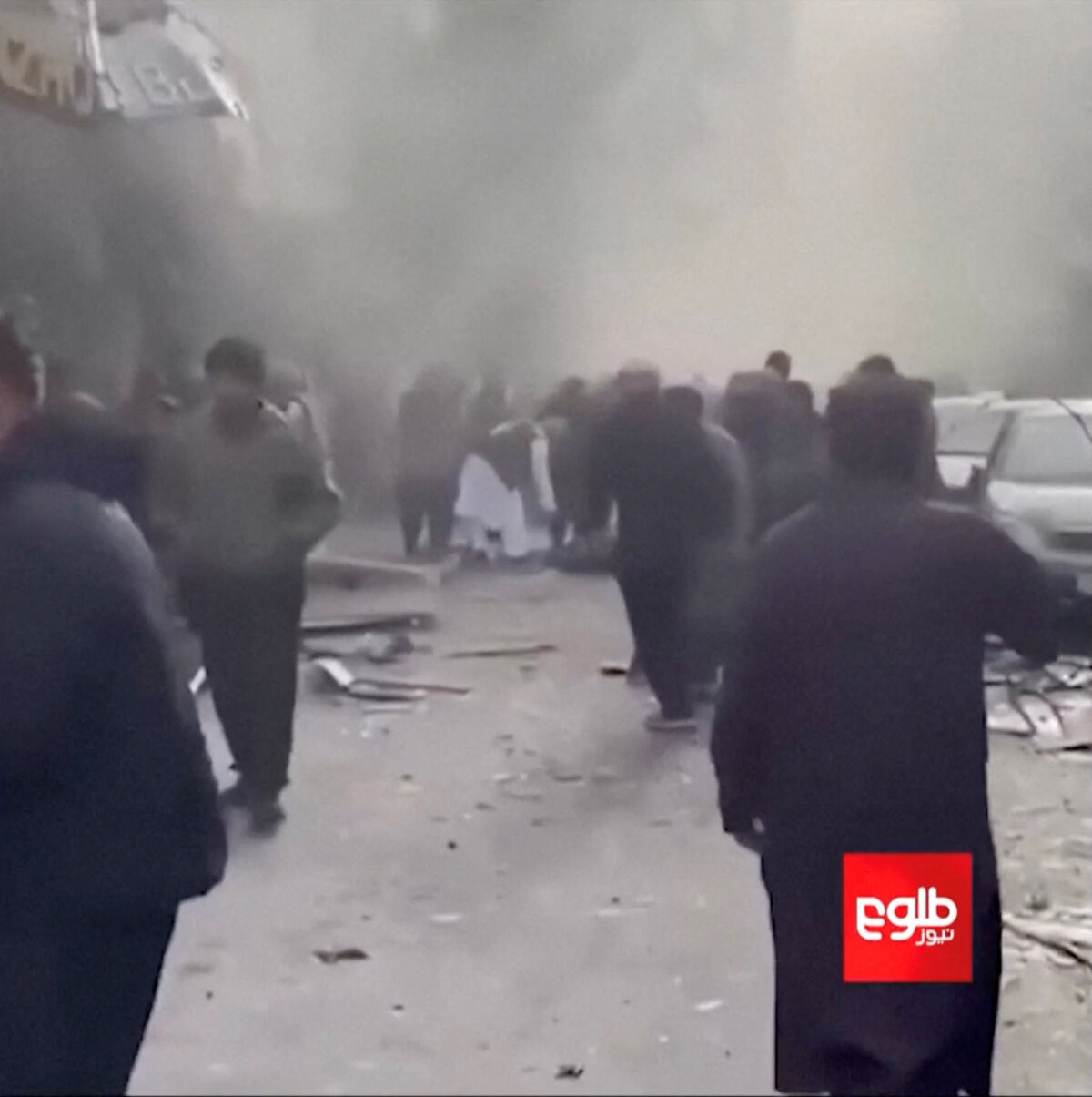

A bombing at a Chinese restaurant in downtown Kabul, Afghanistan, killed one Chinese national and six Afghans and injured more than 10 others on Jan. 19. The ISIS terrorist group claimed responsibility for the attack.
This latest attack on Chinese entities and nationals in Afghanistan reflects the complicated relationships between the Chinese regime and different fundamentalist groups in the Middle East.
The explosion occurred near the kitchen inside the Chinese-run restaurant, which primarily serves the Chinese Muslim community in Kabul, according to the local police. The restaurant is in the commercial Shahr-e Naw area, one of the safest neighborhoods in the city.
ISIS-K, the Afghan branch of the terrorist group, claimed responsibility in a statement on Jan. 19, saying the attack was carried out by a suicide bomber. The group said it has designated Chinese citizens in Afghanistan as its targets because of the Chinese regime’s increasing persecution of Uyghur Muslims.
Since the Taliban regained control of Afghanistan in 2021, the Chinese regime has been one of its main supporters. The two nations share a 47-mile border, and a large number of Chinese businessmen have sought opportunities in Afghanistan in recent years.
ISIS has been defeated and no longer has core leadership. Small sects of it remain, including the branch in Afghanistan, according to Feng Chongyi, a professor of China Studies at the University of Technology Sydney.
The ISIS branch is emphasizing its existence in the Middle East by attacking the Chinese restaurant, “especially now when Iran is in trouble,” Feng told The Epoch Times.
“This is because ISIS is Sunni, which is opposed to the Shia regime in Iran,” he said.
After the Taliban regained control of Afghanistan, the social order was still poor, Shen Ming-shih, research fellow at the Division of National Security Research at Taiwan’s Institute for National Defense and Security Research, told The Epoch Times.
“Therefore, ISIS established branches in Afghanistan,” he said. “Since ISIS itself had strong opinions about the Chinese government’s persecution of Uyghurs, its branches naturally carried out terrorist attacks in Afghanistan targeting Chinese.”
BRI Exploitation
Another reason for the ISIS attack is the Chinese regime’s Belt and Road Initiative (BRI) in the Middle East, Su Tzu-yun, researcher and director of the Division of Defense Strategy and Resources at Taiwan’s Institute for National Defense and Security Research, told The Epoch Times.
The BRI is the Chinese regime’s global foreign policy project to extend its political influence by issuing foreign governments loans for infrastructure projects that often cause nations to become indebted to Beijing. Afghanistan and Iraq are BRI participant countries, among others, in the Middle East.

This is not the first time that Chinese nationals in Afghanistan and in the Middle East have been attacked. A Chinese worker was killed in northern Afghanistan in January 2025. Five Chinese people were killed and another five injured in Tajikistan by a drone attack from Afghanistan in December 2025.
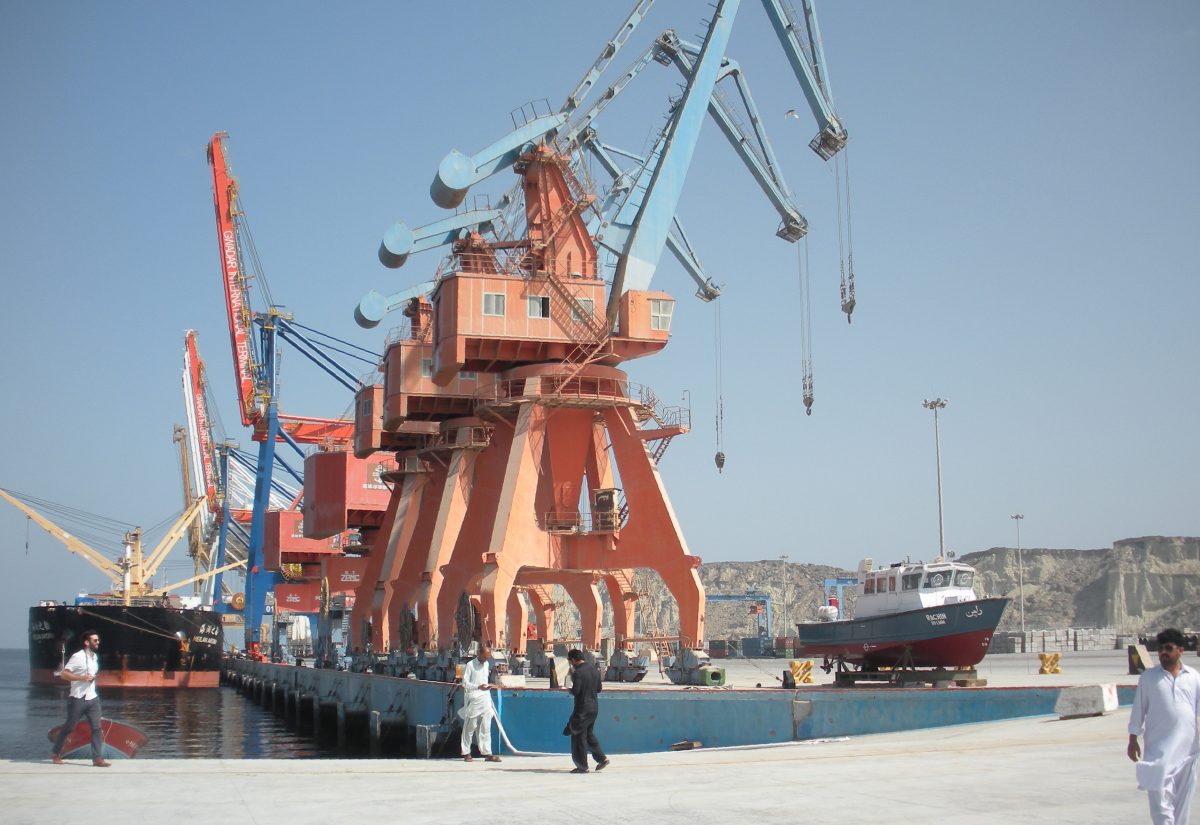
Chinese workers and engineers have also been repeatedly attacked in Pakistan by extremist groups targeting China-Pakistan Economic Corridor projects.
The grievances over exploitation of local people by China’s BRI in the region have been cited as one of the reasons for the attacks. Both Tajikistan and Pakistan are BRI participant countries.
The terrorist groups’ targeting of Chinese people, especially in a Chinese restaurant, is partly to demonstrate their capabilities, and partly to serve as a warning to Chinese people in the region, Shen said.
The ISIS branch now operates across Pakistan, Afghanistan, and other territories, as it’s easier for them to develop in the zones that lack the rule of law, he said.
“Chinese citizens in these areas, particularly in West Asia and the Middle East, have become their primary targets,” Shen said.
CCP Relationships With Extremist Groups
The relationships between the Chinese Communist Party (CCP) and Islamic forces in the Middle East are quite complicated, Shen said.
“Although China has close ties with regimes and groups such as Iran, Hezbollah in Lebanon, or the Houthi rebels in Yemen, this also involves the interests of various Islamic ethnic factions,” Shen said.
Hezbollah and the Houthis are both U.S.-designated terrorist groups.
“Theoretically, these countries are all anti-American, which aligns with China’s interest,” Shen said. “However, China is carrying out a lot of construction in Central Asian countries and the Middle East through the China-Pakistan Economic Corridor or the Belt and Road Initiative, but these infrastructure projects are exploitative.”
The projects have become debt traps for those countries, coupled with the persecution of Uyghurs in Xinjiang, causing backlash against China by Islamic groups in West Asia or the Middle East, Shen said.
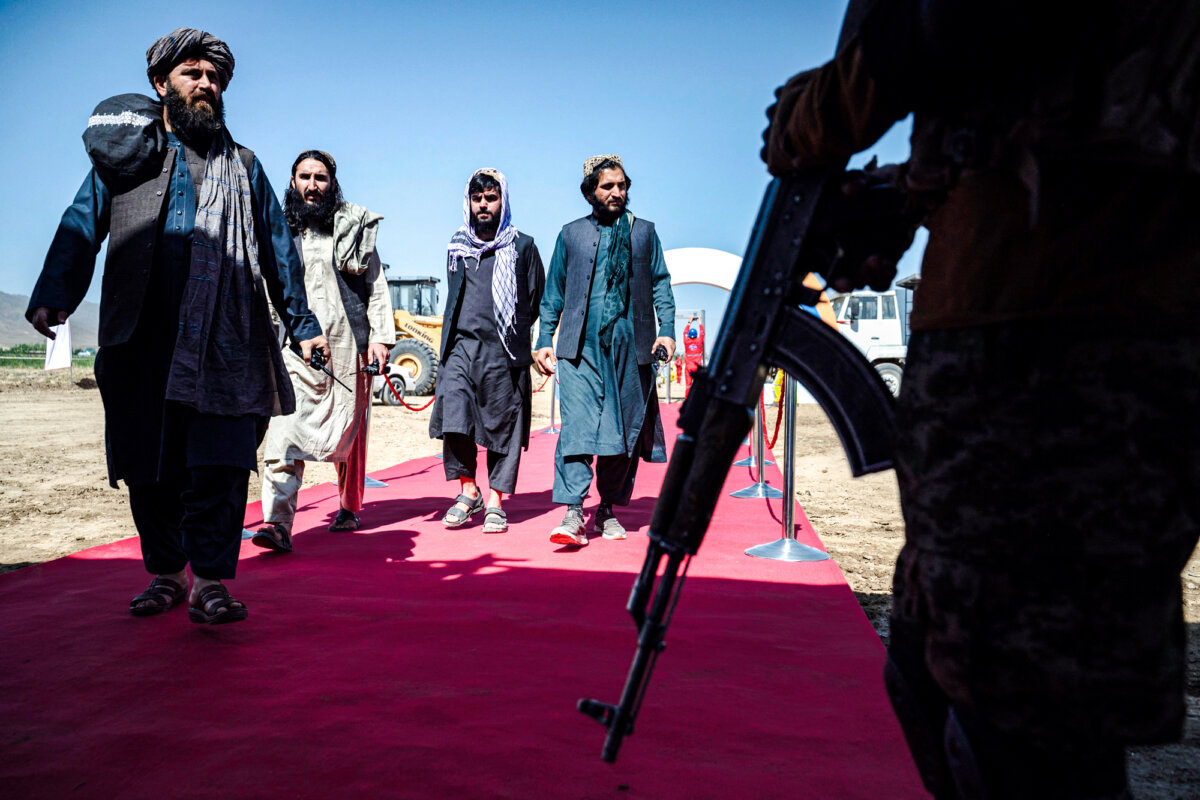
Su also noted that ISIS, the Taliban, and the Shiites in Iran are all different factions in the Islamic world. The Taliban and ISIS oppose each other, and Iran and the Taliban are also at odds.
Feng said the Taliban and ISIS are both theocratic systems in which religious and political power are combined.
“They are anti-America and the West,” Feng said. “But because the Chinese regime suppresses Muslims in Xinjiang, some smaller sects within the groups believe they have an obligation to help Muslims in China and see the Chinese regime as a threat to their Muslim brothers and sisters in China. Therefore, the relationship is quite complicated.”
Since the Taliban regained control of Afghanistan, the CCP has given it money and support, and it has become a friend to China, Feng said.
“However, the CCP didn’t directly give money to ISIS,” he said. “Therefore, even though they both oppose the United States, ISIS doesn’t have the ‘friendship’ bought with money with the CCP.”
Now that ISIS has been defeated, losing its core leadership, many of its smaller sects are acting independently.
“It doesn’t have a specific foreign policy or common rules that the former [ISIS] adhered to,” Feng said. “So each incident needs to be interpreted individually.”
Luo Ya, Reuters, and The Associated Press contributed to this report.
Correction: A previous version of this article misspelled the name of professor Feng Chongyi. The Epoch Times regrets the error.
 Friends Read Free
Copy
Facebook
Tweet
Friends Read Free
Copy
Facebook
Tweet