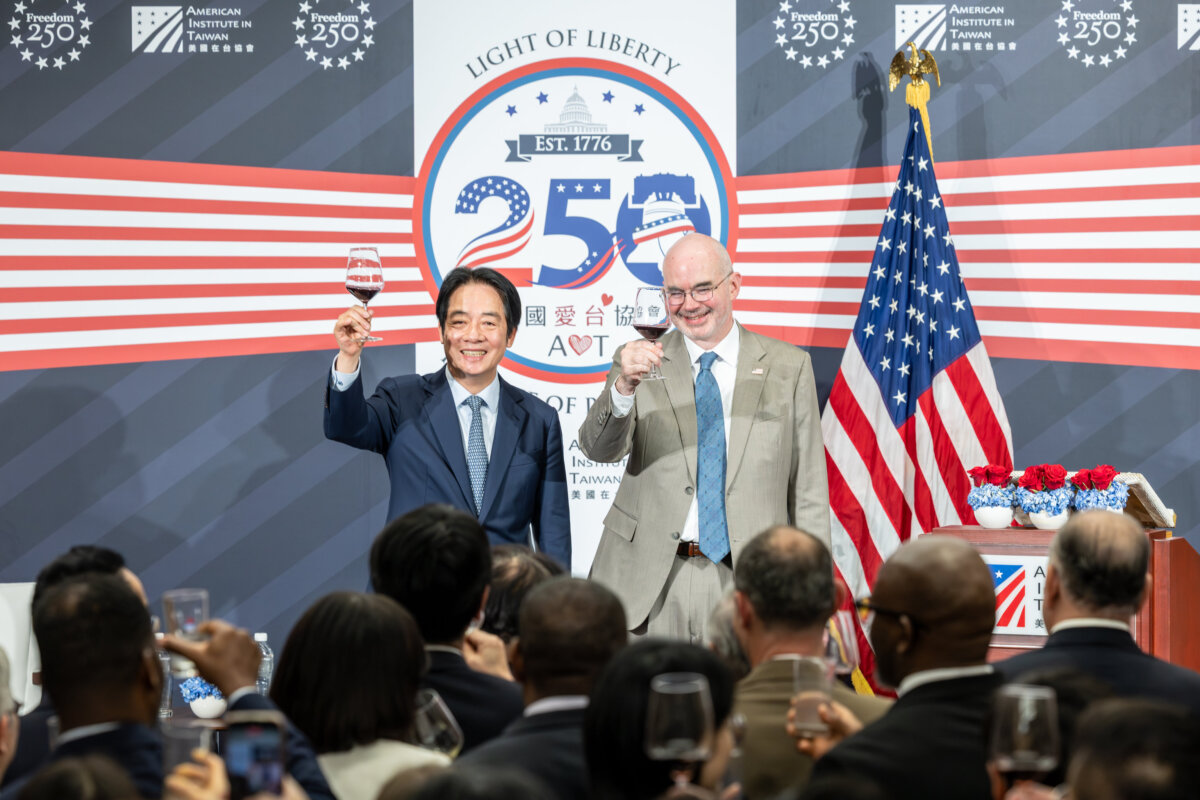
Taiwan President Lai Ching-te marked the coming 250th anniversary of American independence at a reception hosted by the American Institute in Taiwan (AIT), linking America’s founding ideals, Taiwan’s democratic development, and the future of economic and security cooperation between Taipei and Washington.
The May 27 reception in Taipei brought Lai together with AIT Director Raymond Greene, Legislative Yuan Speaker Han Kuo-yu, senior Taiwan officials, foreign diplomats, and Taiwan Semiconductor Manufacturing Co. (TSMC) founder Morris Chang. The event was hosted by AIT, Washington’s de facto embassy in Taiwan, as part of its “Freedom 250” program ahead of the July 4 U.S. Independence Day anniversary.
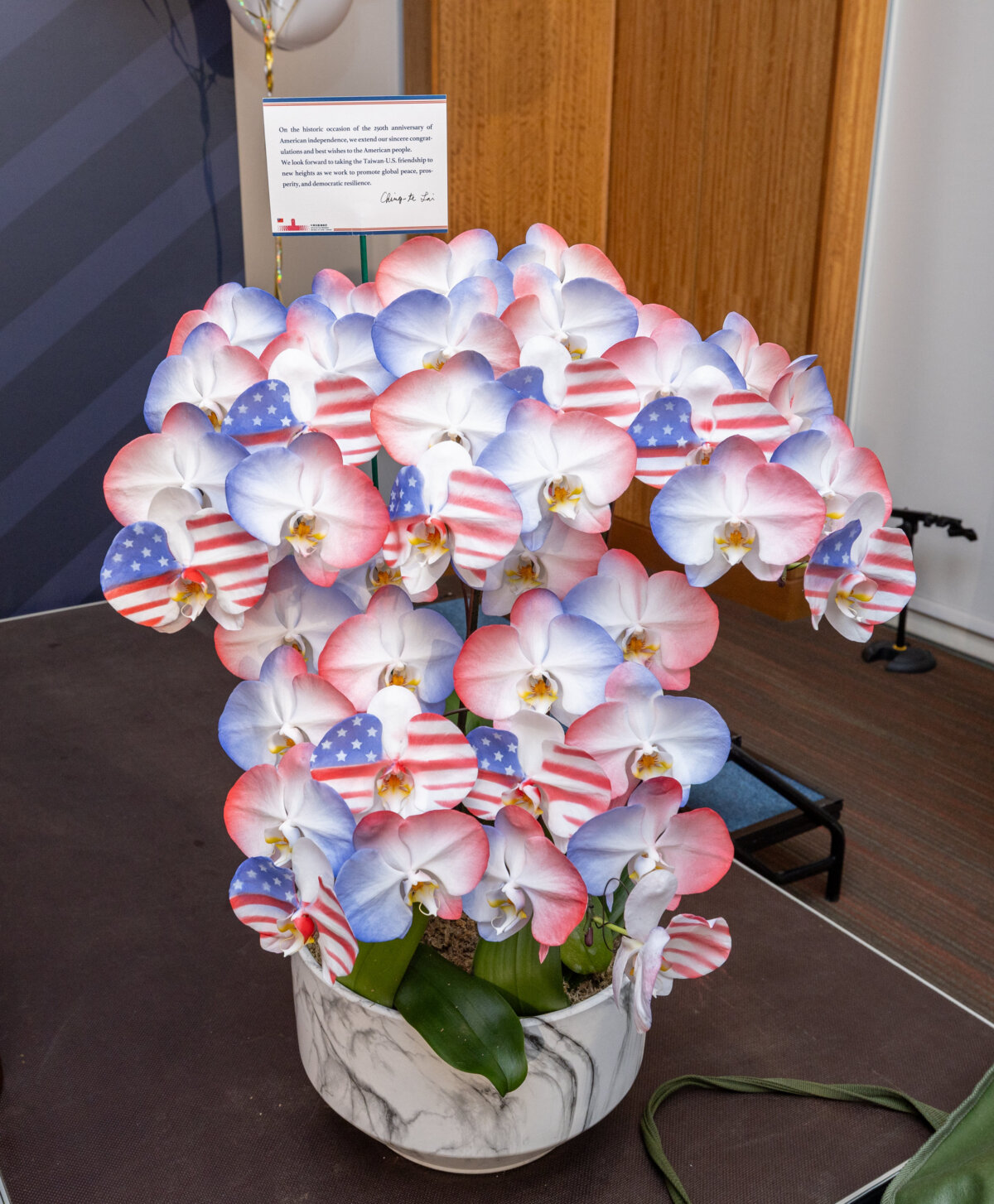
Lai said 2026 marks the 250th anniversary of American independence as well as the 30th anniversary of Taiwan’s first direct presidential election. He said Americans 250 years ago wrote a chapter in the pursuit of freedom, while Taiwanese voters 30 years ago defied Chinese missile threats and used their ballots to establish a democratic system.
“Freedom brings us closer, and democracy deepens our friendship,” Lai said.
Two Democratic Anniversaries
Lai drew a parallel between Taiwan’s 1996 presidential election and the founding of America, describing them as two democratic milestones separated by more than two centuries but joined by the principle that people should govern themselves.
The island’s first direct presidential election was held in March 1996 after the Chinese regime fired missiles into waters near Taiwan in an attempt to intimidate voters. Taiwanese voters elected Lee Teng-hui, marking a turning point in Taiwan’s democratic transformation.
Greene’s remarks were also centered on self-government. He said America’s founders declared on July 4, 1776, that people should be free to govern themselves, pursue their dreams, and build a society based on justice, equality, and opportunity. He said the idea of government “of the people, by the people, and for the people” had resonated across centuries and oceans, and that Taiwan had shown what a society committed to democracy, openness, and the rule of law can achieve.
He said Taiwan’s 30th anniversary of direct presidential elections was a reminder that promoting democracy has no endpoint and that each generation must defend freedom, transparency, and accountability—especially when external threats seek to undermine society.
Chips, AI, and a Gift for Trump
Lai also used the reception to address semiconductors—one of the most sensitive issues in U.S.-Taiwan relations.
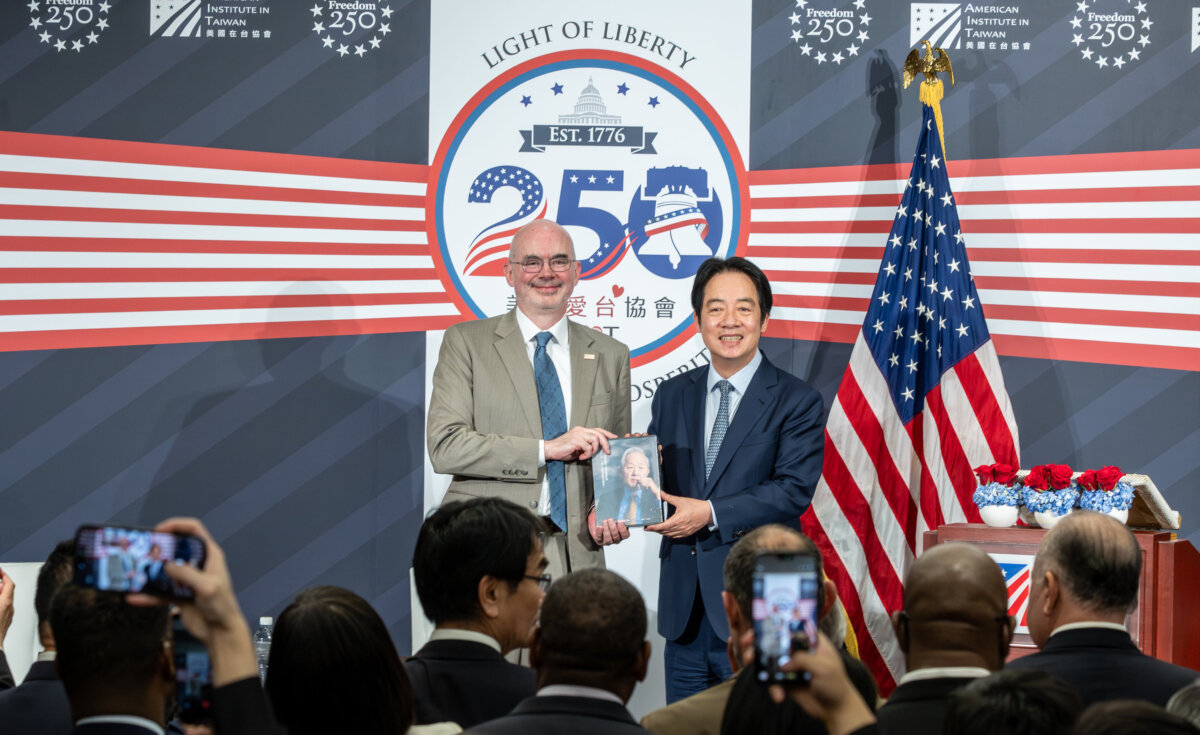
He presented Greene with a two-volume autobiography of Morris Chang, who was also in attendance, and asked the AIT director to pass it along to U.S. President Donald Trump. Lai said the books document the development of Taiwan’s semiconductor industry and could help Trump better understand how that industry was built. He said future Taiwan-U.S. cooperation in semiconductors and artificial intelligence would bring them even closer.
The gesture came after Trump this month alleged that Taiwan “stole” the U.S. chip industry in an interview with Fox News’ Bret Baier, and said arms sales to Taiwan are a “negotiating chip” as he weighs a new weapons package for the island.
Founded by Chang in 1987, TSMC is the world’s largest contract chipmaker and a key supplier to companies including Nvidia. The company is investing $165 billion in Arizona, making Taiwan’s semiconductor industry a central part of Washington’s effort to rebuild advanced manufacturing and lead in artificial intelligence.
Greene also tied the U.S.-Taiwan partnership to technology. He said pioneers such as Chang helped build semiconductor industries in both places, and that their technology supply chains are now deeply integrated. He said American and Taiwanese innovators are shaping the future in artificial intelligence, quantum computing, and cybersecurity.
Trade and Security
Lai said Taiwan and the United States should continue expanding economic and trade ties. He cited the U.S.-Taiwan Initiative on 21st-Century Trade, the Silicon Century Declaration and U.S.-Taiwan Economic Security Joint Statement, and the Economic Prosperity Partnership Dialogue as channels for deeper cooperation.
Preserving peace and stability in the Taiwan Strait is necessary for global security and prosperity, he said, and no side should be allowed to change the status quo through force or coercion.
After the Trump summit with Chinese leader Xi Jinping, Lai said Taiwan would not be “sacrificed or traded,” and that arms sales are not only a U.S. security commitment to Taiwan but also an important deterrent against actions that undermine regional peace and stability.
Regional Context
The Taipei reception also took place against a wider regional backdrop involving Washington, Beijing, Tokyo, and Taipei.
Trump called Japanese Prime Minister Sanae Takaichi from Air Force One after his Beijing summit with Xi, and Takaichi said the two leaders reaffirmed the “ironclad” U.S.-Japan alliance.
Japan’s Taiwan posture has drawn sharp criticism from Beijing since Takaichi suggested that a Chinese attack on Taiwan could be a threatening situation for Japan’s security.
The United States and Taiwan have no formal diplomatic relations, but Washington maintains substantive unofficial ties with Taipei through AIT.
At the close of the reception, Greene urged Taiwan’s political parties to continue working to strengthen the island’s security, saying those efforts would make the United States and the Indo-Pacific region more secure and prosperous.
 Friends Read Free
Copy
Facebook
Tweet
Friends Read Free
Copy
Facebook
Tweet