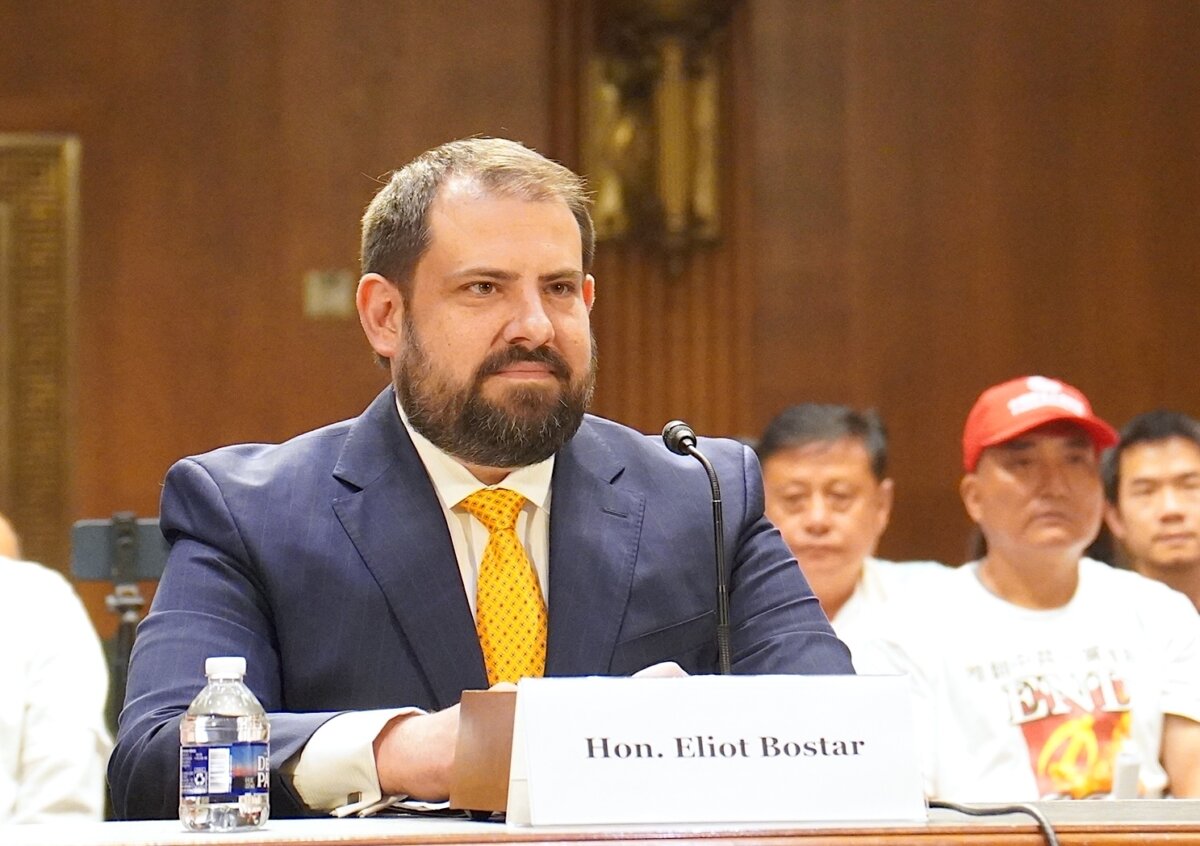

Nebraska state Sen. Eliot Bostar said states should pass laws to punish transnational repression, as new threats against Falun Gong practitioners and New York-based Shen Yun Performing Arts from China-linked actors raise concerns about intimidation campaigns reaching people on U.S. soil.
“I think the Crush Transnational Repression Act is exceedingly important, and I’m very proud that we were able to pass that in Nebraska,” Bostar told The Epoch Times in a recent interview. “We should be looking to pass that in every state.”
The new law aims to provide protection against tactics used by representatives of foreign adversaries to cause undue influence or harm.
“We should not tolerate the targeting of diaspora Chinese populations in our state,” he said. “We should be taking every measure possible to protect everyone.”
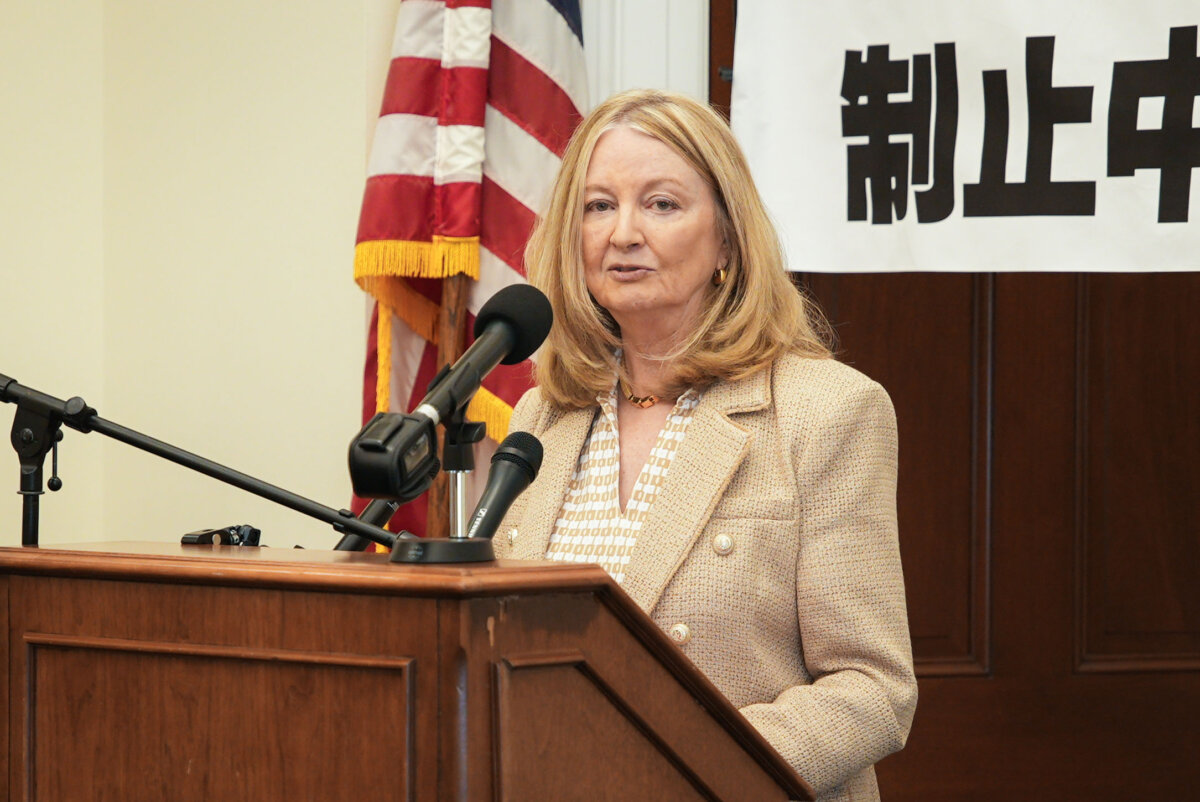
Nina Shea, a senior fellow and director of the Center for Religious Freedom at the Hudson Institute, said in a written response to The Epoch Times that malicious emails with threats of bombings and other such actions targeting Falun Gong practitioners, Shen Yun Performing Arts, theaters, officials, and institutions should be treated as criminal conduct.
“These emails and actions constitute threats and harassment which are not protected by the First Amendment of the U.S. Constitution,” Shea said. “They are crimes that are punishable under both federal and state laws.”
The comments came after a Falun Dafa Information Center report documented that one email account linked to mainland China through multiple technical and behavioral indicators sent at least 28 malicious emails over 114 days, including bomb and death threats, across six countries and three continents.
The report said the emails targeted Falun Gong practitioners, Shen Yun Performing Arts, theaters, government officials, and institutions.
Bostar said such threats should be taken seriously.
“It’s very serious,” he said. “It’s reprehensible to see the Chinese Communist Party take such an adversarial position to Chinese people themselves.”
He said Chinese diaspora residents, students, and performers in the United States should be protected from threats by those linked to the Chinese Communist Party (CCP).
“We need to be doing everything we can to protect them from being targeted and attacked by the CCP,” he said.
Nebraska Law Targets Foreign Repression
Nebraska Gov. Jim Pillen signed LB644 into law on June 4, 2025. The law created the Foreign Adversary and Terrorist Agent Registration Act and the Crush Transnational Repression in Nebraska Act.
In addition to protecting against harm, the acts aim to identify who represents foreign adversaries in the state and limit the information or data they can access or distribute.
Under the Crush Transnational Repression in Nebraska Act, transnational repression includes actions attributable to a foreign principal that are intended to harass, intimidate, censor, or influence people outside that principal’s territory. The law lists examples including threats, electronic targeting, financial coercion, abuse of administrative processes, selective prosecution, and the use or direction of social media and telecommunications entities.
The law enhances penalties for crimes such as assault, terrorist threats, stalking, violations of harassment protection orders, and false imprisonment when the offense is committed as part of transnational repression and targets lawful conduct such as religious exercise, speech, petitioning government, or peaceful assembly.
It also makes it a felony for a person acting as an agent of a foreign principal to engage in the prevention, detection, investigation, monitoring, surveillance, or prosecution of an offense under a foreign government’s law or rule without the knowledge and approval of the proper U.S. state or federal law enforcement agency.
Bostar told The Epoch Times that Nebraska’s foreign-adversary registration law is meant to bring transparency to those representing CCP interests in the state.
“With the passage of the Foreign Adversary Registration Act, we’re able to ensure that we have full transparency on the activities of individuals who are representing CCP interests in the state of Nebraska,” he said. “If they don’t register, then they’re subject to criminal violations and penalties.”
He said the registration law applies, for example, when someone in Nebraska represents a Chinese military company designated by the Pentagon and fails to disclose that relationship.
“They’re subject to, for the first offense, a $100,000 fine, and every subsequent offense, that penalty goes up by $100,000 up to a million dollars per violation,” he said.
Bostar said Nebraska also created a $50,000 award for people who provide information that helps the state identify violations of the registration requirements.
The Nebraska Legislature’s bill page states that LB644 also changes state rules on foreign contracts and genetic sequencing data.
The law bars public entities from entering into contracts or renewals that would transfer state or local government funds to certain scrutinized companies in connection with technology-related products or services. It also requires companies bidding for or entering public contracts for technology-related products or services to certify that they are not scrutinized companies, will not subcontract with such companies, and will not provide products or services originating with such companies.
The law also makes foreign adversarial companies ineligible for Nebraska incentive programs and prohibits medical or research facilities from using genetic sequencers or related operational and research software produced in or by a foreign adversary, a state-owned enterprise of a foreign adversary, or related businesses. It bars genetic sequencing data used in Nebraska from being stored in a foreign adversary country or remotely accessed from one.
Threats Against Performers
When asked how Nebraska law would apply if Shen Yun performers or theaters hosting Shen Yun were threatened or harassed in Nebraska by someone acting on behalf of the Chinese regime or the CCP, Bostar said such conduct would be illegal under the laws the state passed.
“That would be a criminal offense,” he told The Epoch Times. “It’s certainly my view that that should be investigated and prosecuted to the fullest extent of the law, and that the enhanced penalties that we have passed should be applied in those instances.”
Founded in 2006, Shen Yun Performing Arts is a New York-based classical Chinese dance company that presents stories from Chinese history and music inspired by China’s pre-communist civilization. Its performances also include depictions of the CCP’s persecution of Falun Gong, a spiritual discipline practiced by Shen Yun’s artists. The company has said it cannot perform in China.
Falun Gong, also known as Falun Dafa, consists of meditative exercises and moral teachings centered on truthfulness, compassion, and forbearance. It was introduced publicly in China in 1992, and, according to official estimates at the time, at least 70 million people had taken up the practice by the decade’s end.
In July 1999, the CCP, viewing the practice’s popularity as a threat to its authority, launched a persecution campaign to eradicate the practice. Since then, many have suffered arbitrary detention, forced labor, torture, and even death from forced organ harvesting.
Shea said the threats cited in the Falun Dafa Information Center report should be treated as an attack on constitutional freedoms.
“They are directed toward curbing Falun Gong practitioners’ constitutional rights to freedoms of religion and expression,” she said.
Shea said the FBI should “intensify its efforts to investigate, expose, and if possible apprehend the perpetrators,” saying the pattern described in the report is occurring across the United States and “is a national, constitutional concern.”
She also said the U.S. president should personally denounce the treatment of the religious community in the United States and that “appropriate sanctions should be applied until it is ended.”
-

CECC Hearing on State-Level Response
Bostar testified at a June 4 hearing by the Congressional-Executive Commission on China titled “The PRC’s Threats to Americans: Transnational Repression & State-Level Responses,” where witnesses addressed the Chinese regime’s transnational repression in the United States and how federal, state, and local governments can respond.
In his testimony, Bostar said Nebraska has passed laws over several years aimed at transnational repression, foreign-adversary influence operations, data security, critical infrastructure, procurement, foreign land ownership, and other state-level vulnerabilities.
Other witnesses also highlighted the CCP’s pressure against diaspora communities, companies, universities, cultural institutions, public officials, and civil society organizations when their words or actions challenge the CCP’s preferred narratives.
Bostar told the commission that states have “power and responsibility” in protecting against malign foreign influence, but need more formal coordination with the federal government.
He made the same point in his interview with The Epoch Times, saying the federal government should do more on transnational repression, critical infrastructure security, foreign influence operations, and foreign-agent registration.
“We have too many loopholes, we have too many problems, we have too many ways for people to represent adversaries of the United States and not have any transparency,” he said.
He said federal, state, and local governments need better coordination and more up-to-date threat information.
“I think we need to be working together more, so that we all have current, up-to-date information about threats, and that we are all working in a united fashion to address the threats and challenges that we’re all facing,” Bostar said.
Li Chen contributed to this report.
 Friends Read Free
Copy
Facebook
Tweet
Friends Read Free
Copy
Facebook
Tweet