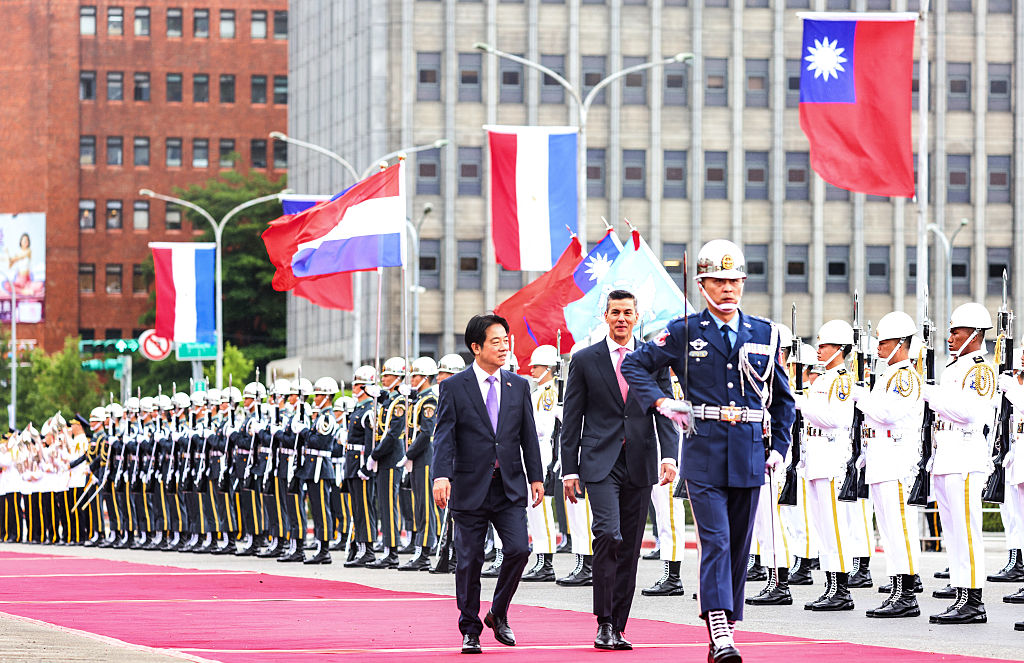

Paraguayan President Santiago Peña’s state visit to Taiwan underscores Beijing’s diplomatic setback in Latin America, experts say, while Washington continues to curb the Chinese regime’s expansion in the Western Hemisphere to mitigate the geopolitical threat.
During his May 7–10 trip, Peña met with Taiwanese President Lai Ching-te and signed three cooperation agreements covering mutual legal assistance, cybersecurity, and artificial intelligence infrastructure.
These pacts highlight a “shared vision for advancing technological development and enhancing governance,” marking 69 years of diplomatic relations between the two nations, Taiwan’s Ministry of Foreign Affairs stated.
Reaffirming the long-standing alliance, Peña called himself a “staunch advocate for Taiwan,” and he said that Taipei does not need to worry about the partnership during his tenure and that he will continue to promote bilateral cooperation, according to an interview with Taiwan’s Central News Agency on May 7.
On May 12, China’s Ministry of Foreign Affairs criticized Peña and his delegation, claiming they were serving as “pawns for ‘Taiwan independence’ separatist forces.”
The ministry urged Asunción to change its course based on the “one China principle”—which holds that Taiwan is an inalienable part of China’s territory.
Taiwan, whose formal name is the Republic of China, is a self-governed democracy that the Chinese communist regime has never controlled, although it has vowed to annex the island—by force if necessary.
Since 1971, when the People’s Republic of China—the regime’s official name—took the “China” seat at the United Nations from the Republic of China, most countries have shifted their formal recognition to Beijing and kept only unofficial ties with Taipei.
The island currently has only 12 diplomatic allies in the world, including Paraguay, its sole partner in South America.
Taiwan ‘Holds the Upper Hand’
Beijing’s persistent drive to strip Taipei of official allies has intensified scrutiny of Peña’s visit, although few expect Asunción to switch sides, according to Kung Kwo-wei, director of the Center for Latin American and Caribbean Studies at Tamkang University in Taiwan.
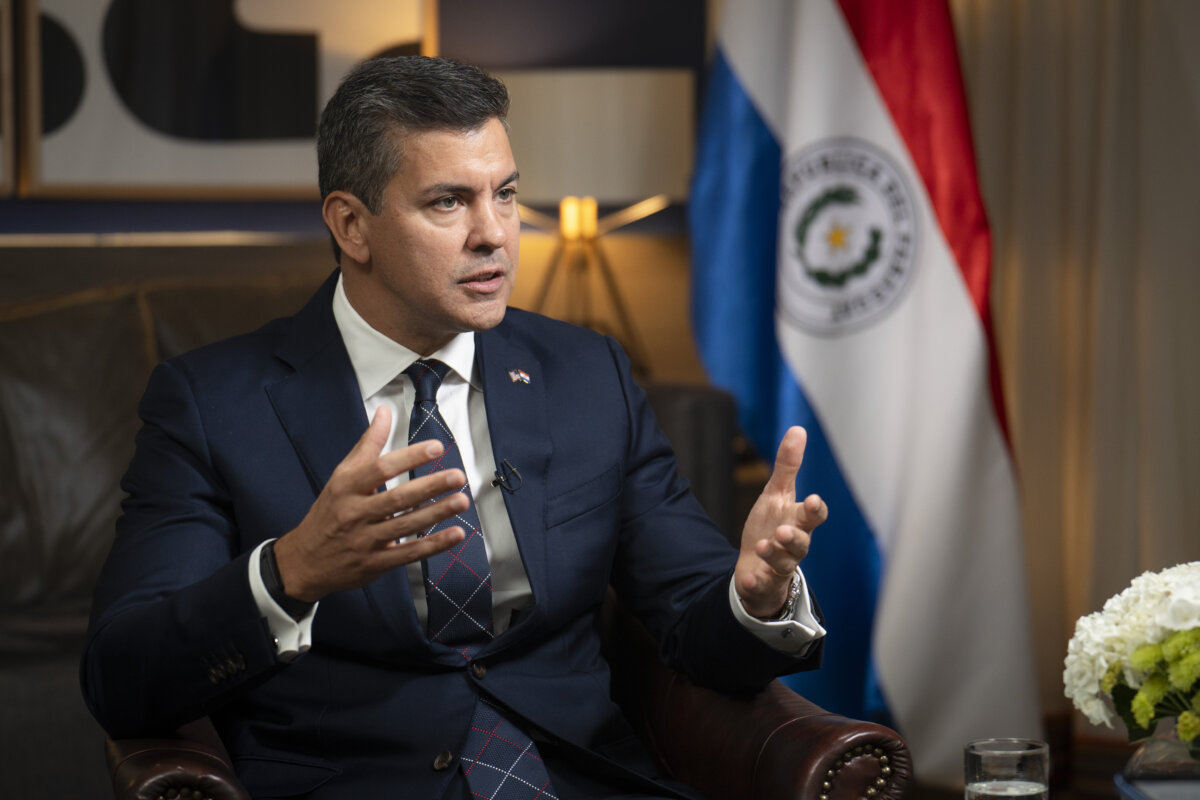
“Taiwan has done a solid job maintaining partnership with Paraguay, as evidenced by the newly signed bilateral agreements,” Kung told The Epoch Times.
“While China’s constant criticism of Paraguay reveals a sense of urgency on its part, Taiwan currently holds the upper hand in this diplomatic battle.”
Shen Ming-shih, research fellow at Taiwan’s Institute for National Defense and Security Research, said the Paraguayan leader’s trip reflects a friendly posture toward Taipei, indicating that such relations better serve Paraguay’s economic interests.
“We have seen that several Latin American countries gained no tangible benefits from the Chinese Communist Party (CCP) after severing ties with Taipei,” Shen told The Epoch Times.
“In contrast, Paraguay’s recent economic growth has been stellar, which only fuels Beijing’s desire to poach it and wipe out Taiwan’s diplomatic presence in the region.”
According to the International Monetary Fund’s World Economic Outlook report released in April, Paraguay’s economic growth is projected to reach 4.2 percent in 2026, the highest in South America and well above the regional average of 2.3 percent.
Yet after Honduras cut ties with Taipei and shifted recognition to Beijing in 2023, its shrimp exports—a cornerstone of Tegucigalpa’s economy—fell by 67 percent the following year to just $25 million, according to an analysis in August 2025 by the China-Global South Project, an independent think tank.
Aid and Propaganda
Huang Kwei-bo, professor at the Department of Diplomacy at National Chengchi University in Taiwan, said Beijing has continuously invited Paraguayan lawmakers, media professionals, and opposition figures to visit China, but these efforts have ultimately failed to sway Peña’s stance.
“Peña emphasized that Paraguay and Taiwan are strategic partners sharing common values like democracy and freedom,” Huang told The Epoch Times.
“In other words, his political ideology is fundamentally incompatible with Marxist-Leninist communism.”
But Huang warned that the CCP’s campaigns will not halt in the short term.
“Paraguay’s main opposition party had previously weighed establishing formal diplomatic relations with Beijing, driven by agricultural trade interests,” he said.
“Since Paraguay’s gross domestic product per capita is still below $8,000 and requires growth, economic incentives and financial aid projects will remain Beijing’s primary tools to influence Asunción.”
Echoing Huang’s assessment, Kung said the Chinese regime continues to strengthen exchanges with Asunción’s rival political factions, waiting to seize the opportunity if a power shift occurs in future elections.
“Beijing is working hard to cultivate pro-China groups in Paraguay and trying to build close relationships with local officials,” Kung said.
“It also consistently delivers financial promises and uses local media to wage cognitive warfare, meaning a change in the ruling party could lead Asunción to consider forging ties with the CCP.”
Paraguay’s presidential and legislative elections will be held in 2028.
Countering Beijing
In March, U.S. President Donald Trump vowed at the Shield of the Americas Summit—a gathering of heads of state and government officials from 12 countries in the region—that Washington “will not allow hostile, foreign influence to gain a foothold” in the Western hemisphere.
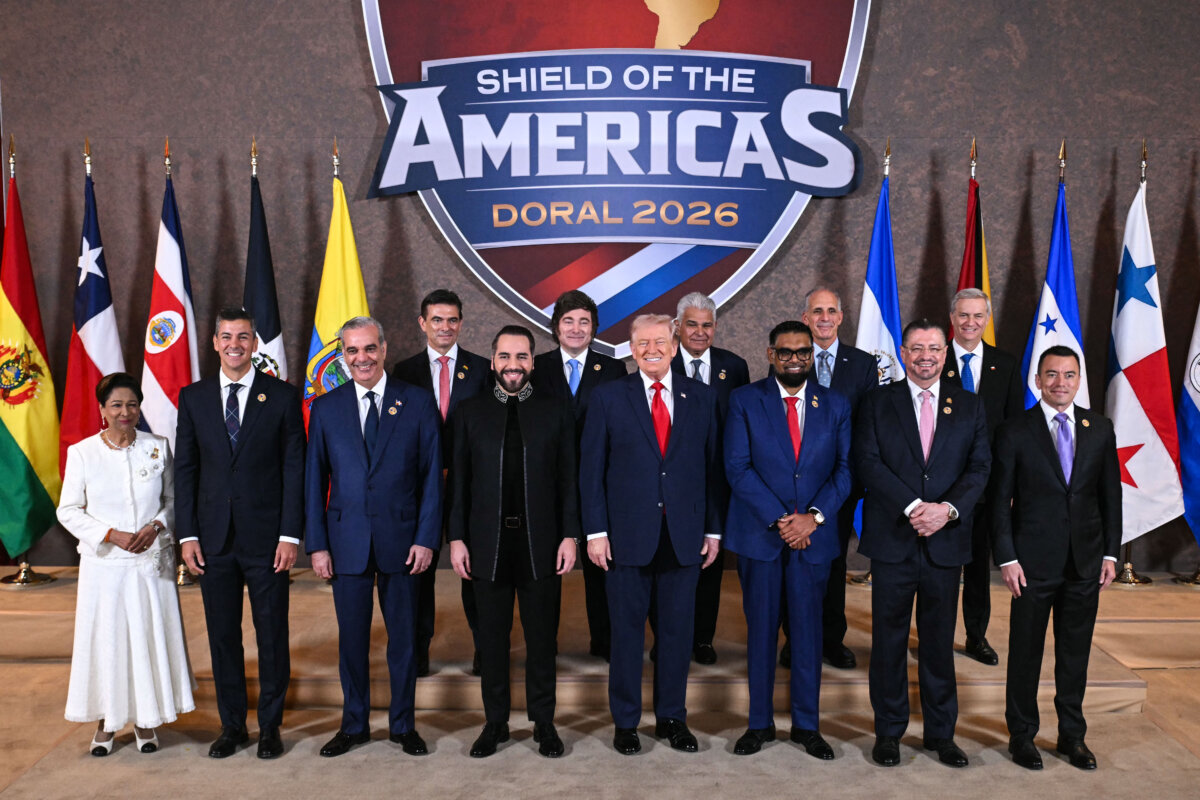
Analysts viewed this move as a counter to the CCP’s expanding footprint in Latin America and the Caribbean, where Chinese trade surpassed $500 billion in 2024.
Shen said this strategic focus means the United States will actively push back against Beijing’s ongoing campaigns in Paraguay and other countries in the region, inevitably squeezing existing Chinese interests there.
“The U.S. will continue using this approach to stabilize its ‘backyard,’ so keeping Paraguay out of Beijing’s grasp is a critical step in curbing China’s encroachment in the region,” he said.
This intensifying competition will also likely push regional governments to align with the United States on sensitive infrastructure and critical minerals, creating substantial roadblocks for Beijing, according to Kung.
“Because the U.S. views any Chinese involvement in key Western Hemisphere installations as a geopolitical threat, it’s addressing these issues with long-term planning,” he said.
Still, Kung said that Latin American nations will maintain a dual-track strategy, continuing to engage Beijing to capitalize on its trade and investment.
“Latin America cannot fully decouple from China, so the Chinese regime’s trade presence in the region will only grow,” Kung said.
“But these governments are well aware of Washington’s approach toward the CCP, and will tread carefully on delicate geopolitical matters.”
 Friends Read Free
Copy
Facebook
Tweet
Friends Read Free
Copy
Facebook
Tweet