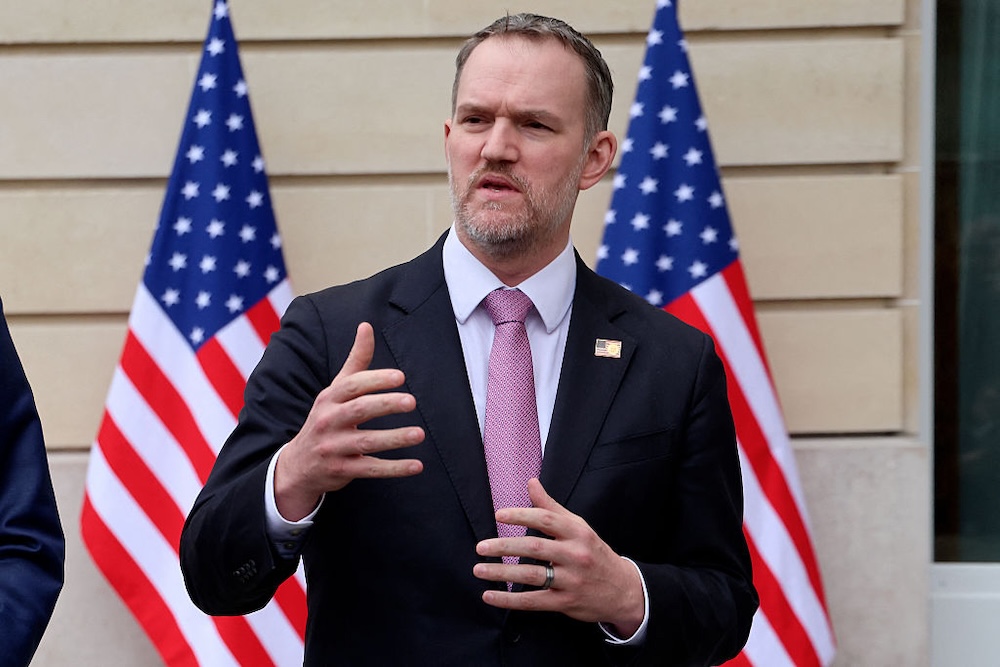

China has eased restrictions on rare-earth exports to the United States, but approvals are still slow, while advanced chip controls were barely discussed at the Trump–Xi summit, according to U.S. Trade Representative Jamieson Greer.
Greer said rare-earth flows had returned to better levels, although delays still occur.
“We’ve certainly seen the rare earths come back up to better levels,” Greer told Bloomberg Television in an interview published on May 15. “Sometimes it’s slow. There are times when we have to go and make our point.”
He gave China a “passing grade” on rare-earth exports and said U.S. officials would intervene when companies report problems. Chinese counterparts have been constructive in resolving specific cases, he said.
The United States recently received several large shipments of yttrium, a rare earth produced only in China that had been in short supply for more than a year, affecting the American semiconductor and aerospace industries.
In contrast, talks on semiconductor export controls made little headway.
“This was not a major topic of discussion at the bilateral meeting,” Greer said. “We did not talk about chip export controls at the meeting.”
The United States approved the sale of Nvidia’s advanced H200 AI chips to about 10 Chinese firms, including Alibaba, Tencent, and ByteDance, in December 2025, with additional conditions added in January. No deliveries have been made so far.
Greer said any decision to import the chips was a “sovereign decision” for China. U.S. President Donald Trump suggested that Beijing had not approved them because it wants to develop its own technology.
Chinese AI companies are increasingly using domestic chips because of U.S. restrictions.
However, these curbs have slowed Beijing’s push for self-sufficiency while domestic factories struggle to increase output. Some Chinese AI models have had to ration access because of computing shortages.
The comments came as Trump and Xi met in Beijing this week. The summit builds on a trade truce agreed on in October 2025, under which China pledged to allow freer flow of rare earth shipments. Beijing had imposed tighter controls last April in response to U.S. tariffs.
Greer said both sides showed a willingness to extend the truce if it continues to work well, including steady rare-earth supplies and increased U.S. sales of goods such as Boeing aircraft, soybeans, and energy products to China.
Rare earths are essential minerals used in electric vehicle motors, wind turbines, defense equipment, and electronics. China produces and refines the vast majority of the world’s supply, raising concerns in Washington about supply chain risks.
The two leaders also discussed artificial intelligence and possible cooperation on AI safety rules. Trump said the United States leads, but China is a strong second.
No major breakthroughs on rare-earth delays or semiconductor access were announced during the talks.
 Friends Read Free
Copy
Facebook
Tweet
Friends Read Free
Copy
Facebook
Tweet