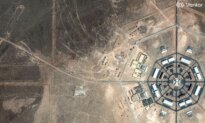

The Chinese communist regime seems to be expanding facilities near nuclear silos, forming a vast military network in the desert in northwestern China, according to recent satellite images publicized by Reuters on May 29.
Analysts told The Epoch Times that the facilities in the desert are hosting China’s long-range missiles that can reach any city in the United States, and the expansion shows that the regime is increasing the number of its nuclear warheads.
The images indicate that China is continuously expanding its mobile missile launch sites and air defense artillery positions, potentially having more than 80 launch pads forming a large network. According to three security analysts who evaluated the imagery for Reuters, these platforms could be used to deploy mobile air defense missiles, electronic warfare nodes, or—in the case of some of the larger platforms—road-mobile intercontinental ballistic missile launchers.
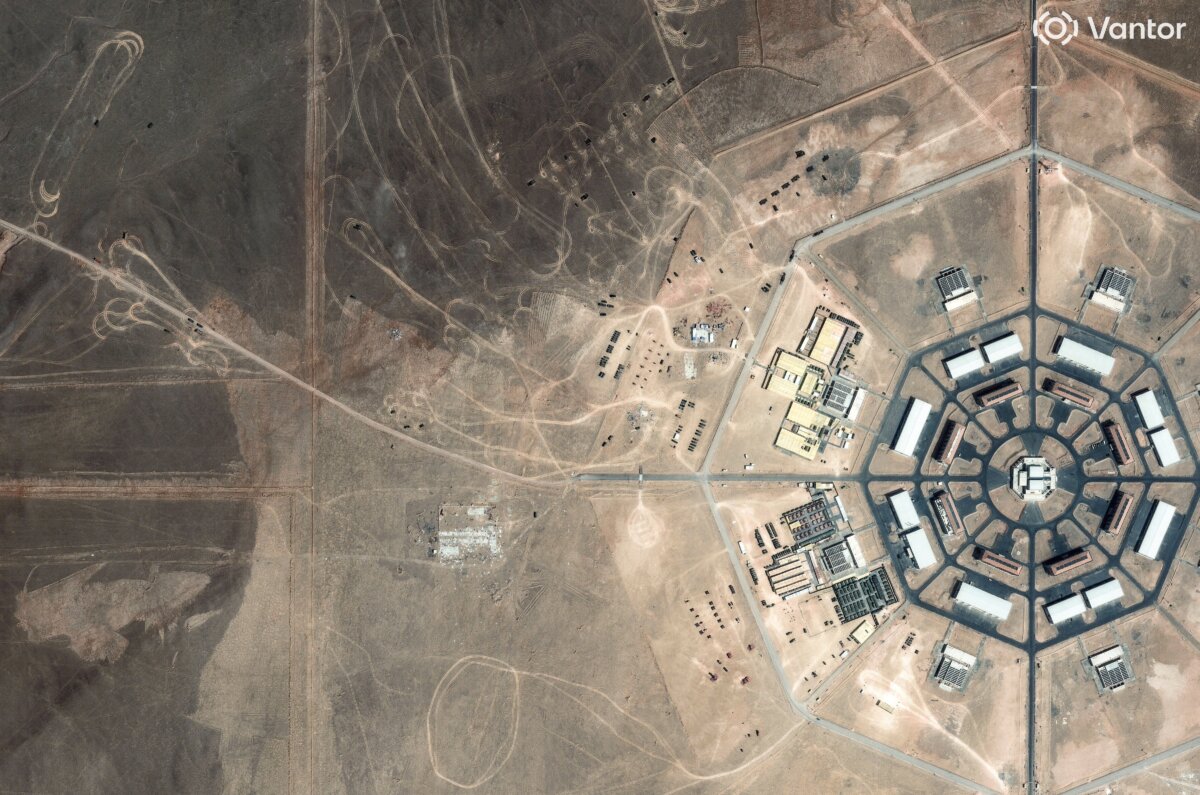
The images reveal a new desert missile launch facility, centered around two octagonal structures built near Hami in the Xinjiang region over the past six years. These buildings house accommodations for military personnel and parking areas for large military vehicles. These two facilities are situated southwest of the Hami nuclear missile silo complex: One is about 140 kilometers (about 87 miles) away, and the other is about 230 kilometers (about 143 miles) away.
The images also show that large-scale military vehicle exercises were conducted near the northern octagonal area in April. In recent images, large tents can be observed.
Although the Chinese communist regime claims that it has maintained a longstanding “no first use” nuclear policy, the outside world has continued to express concerns over China’s nuclear coercion of Taiwan, the self-ruled island nation that the Chinese regime considers to be its territory.
China’s Ministry of National Defense did not respond to questions regarding the nuclear program and its progress as revealed by satellite imagery. The U.S. War Department stated that it would not comment on intelligence-related matters.
The missile silos deployed in Chinese desert regions, whether in the Xinjiang region or Gansu Province, are for launching long-range missiles, Shen Ming-shih, research fellow at Taiwan’s Institute for National Defense and Security Research, told The Epoch Times.
Some of the missile silos deployed in the vast fields in northwestern China have faulty lids, and missiles are sometimes filled with water instead of fuel, according to U.S. intelligence agencies. These severe malfunctions are believed to be the result of rampant corruption throughout the Chinese military and defense industry.
The Chinese regime’s deployment of missiles is a mix of reality and deception, Shen said.
“The presence of a launch silo does not necessarily mean a missile is present; the presence of a missile does not guarantee that it is fitted with a nuclear warhead. This is because the missiles and their nuclear warheads are stored separately,” he said.
Mark Cao, a U.S.-based military analyst and host of Chinese-language military news YouTube channel Mark Space, shared the same assessment.
“These missile silos, including some of the launch pads, are sometimes real and sometimes fake. The purpose is to deceive the adversary,” he told The Epoch Times.
Judging by past patterns, the Chinese leaders typically hide their mobile missile launch vehicles deep within mountain ranges, inside caves, or within underground facilities, and have transported them via railway to evade external detection or to avoid direct attack, Cao said.
Therefore, he said, what’s shown in the images in the desert are unlikely to be large-scale mobile missile launchers, as there would be absolutely no cover in the desert.
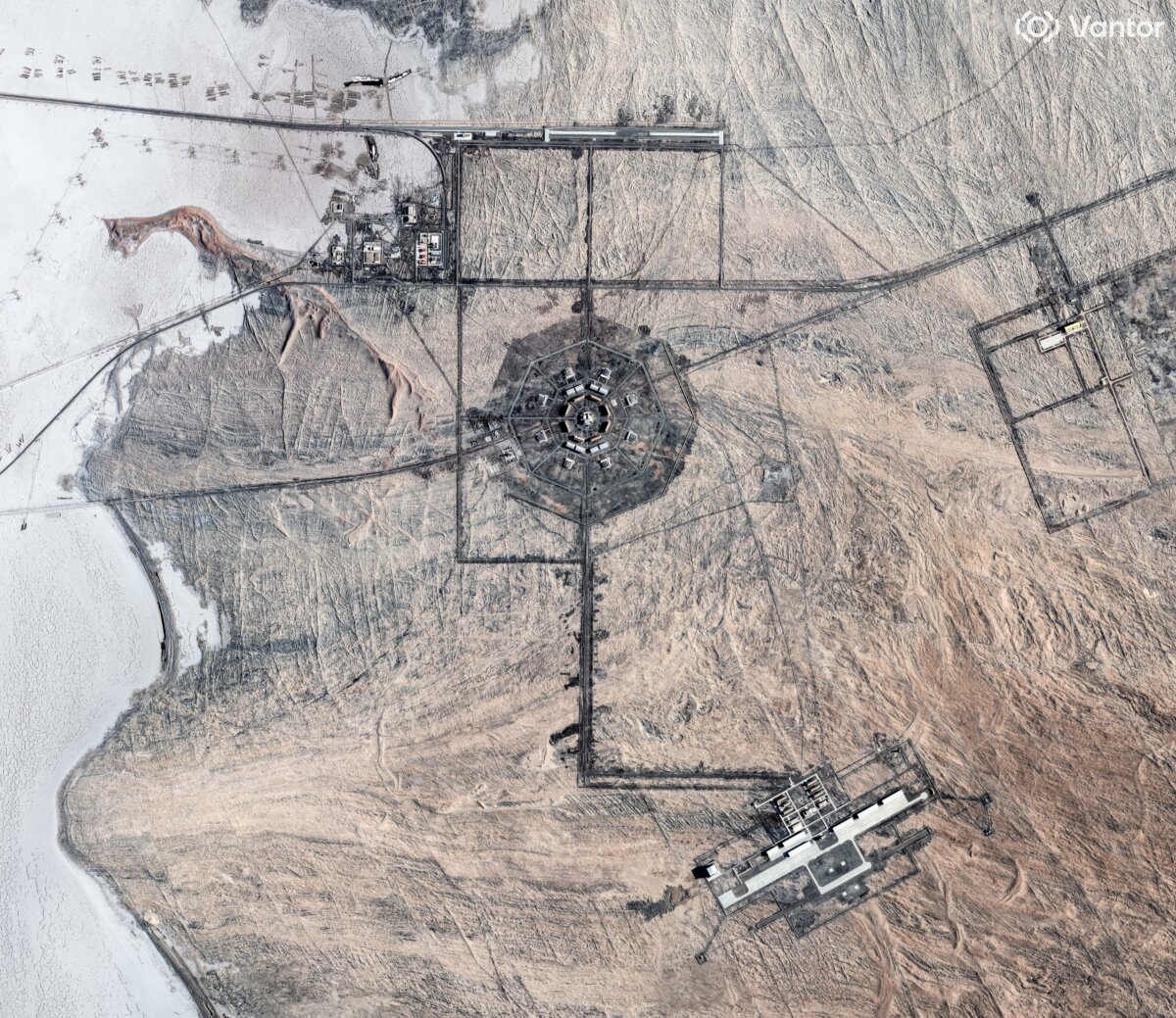
“These two massive facilities are more likely to be support facilities for a large number of missile silos and associated nuclear weapons infrastructure, such as bases for nuclear warhead maintenance and technical support teams,” Cao said.
With the adjacent airfields, which greatly facilitate personnel movement, the facilities could be serving as garrison sites and logistical support hubs for the Rocket Force personnel stationed there, he said.
As to the purpose of expanding military sites near missile silos in northwestern China, it is aimed at increasing the size of the regime’s nuclear arsenal, Cao said.
Strategic Location
Situated in regions such as Xinjiang and Gansu, the Chinese regime’s nuclear sites are capable of targeting various nations, including Russia, the United States, and European countries, Shen said.
“From a geographical perspective, it occupies a relatively central position,” he said.
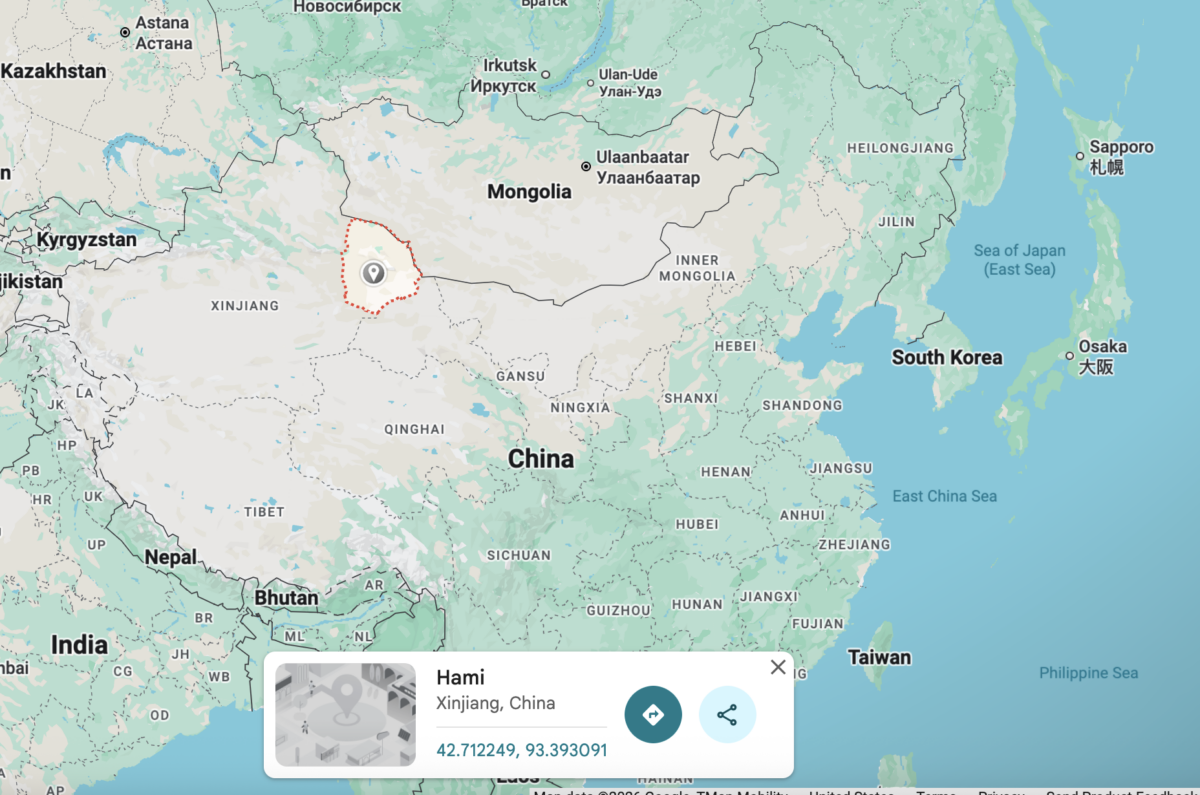
Yet its primary function remains nuclear deterrence, according to Shen.
According to Cao, China continues to construct missile launch bases in its western regions primarily to deploy land-based intercontinental ballistic missiles, and its primary target is the United States.
As Xinjiang is situated in the heartland of northwest China, surrounded primarily by Central Asian nations and Russia, the Chinese Communist Party (CCP) views the location as relatively secure, “making the region suitable for the deployment of nuclear strategic assets,” he said.
If the CCP’s target is the U.S. East Coast, the missile’s trajectory would most likely pass over Russia and fly across the Arctic—as the route traversing the Arctic is typically the shortest—before entering the Atlantic from the direction of Canada and ultimately striking the U.S. East Coast, Cao said.
If the intended targets are the U.S. West Coast, Hawaii, or Guam, “the trajectory might go a different direction—entering the Pacific Ocean before striking the targets,” he said. “Consequently, Xinjiang indeed possesses a rather unique geographical advantage.”
In addition, the imagery shows a smaller octagonal facility located south of the Lop Nur nuclear test site, which appears to serve as a firing range, with damaged buildings and mock-ups of Western fighter jets.
In Gansu Province and Inner Mongolia, there are also facilities designed to simulate Taiwanese cities or American targets, Shen said.
“These serve primarily as sites for tests, experiments, or military exercises including aircraft-delivered bombing runs or the inland launch of ballistic missiles from other parts of China,” he said.
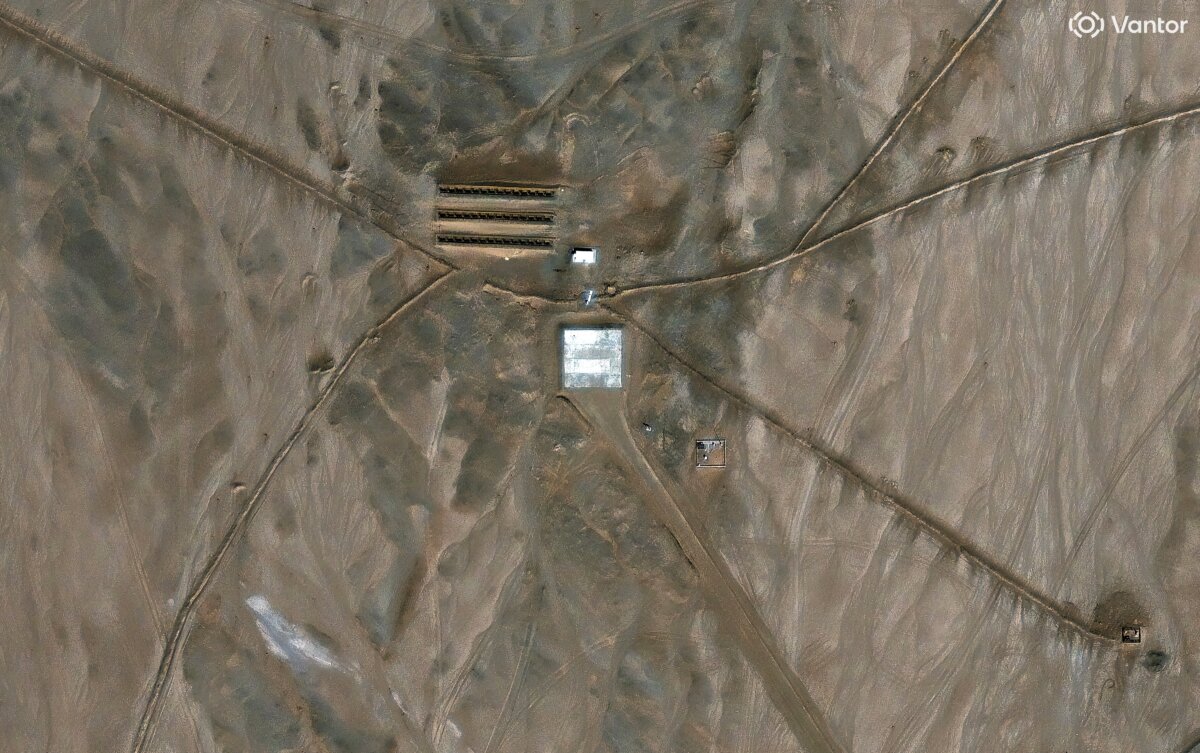
Some facilities shown in the satellite images might be for satellite and microwave communication, according to analysts.
These military sites in the desert in Xinjiang—a remote and distant region—rely primarily on satellite phones, satellite networks, and satellite communication systems for long-distance liaison, such as communicating with headquarters in Beijing, Cao said. Microwave communication handles the needs within the immediate region, ranging from 100 kilometers to 200 kilometers (about 62 miles to 124 miles) across the desert to communicate within the base or with other bases, he said.
“Microwave technology represents a highly practical choice, given its equipment simplicity and lower cost,” Cao said.
CCP’s Purpose and Nuclear Ambition
At present, the function of China’s nuclear weapons is primarily for deterrence, Shen said.
The United States currently retains the world’s most formidable nuclear capabilities, he said.
“Meanwhile, China possesses an estimated 500 to 600 nuclear warheads and serves as ‘limited deterrence’ aiming at U.S. decision-making leadership, rather than to actually launch nuclear weapons,” he said.
The Pentagon’s 2023 report to Congress estimates that the People’s Liberation Army is on track to have more than 1,000 operational nuclear warheads by 2030, based on what is known about China’s inventory of fissile materials.
Chinese leader Xi Jinping is actively pursuing the development of nuclear weapons to stand on equal footing with the United States and Russia, Cao said, “as the number of nuclear weapons is one of the key indicators of great-power status.”
Currently, the United States and Russia each possess approximately 1,500 deployed nuclear warheads. If stockpiled warheads are included, both the United States and Russia maintain arsenals of roughly 5,000 warheads each, he said.
“The CCP is far from this level,” Cao said.
Curbing the CCP’s nuclear weapons development is no easy task, he said.
“It’s only when its economy struggles to sustain its nuclear arsenal, the CCP might potentially consider engaging in relevant negotiations with the United States,” Cao said.
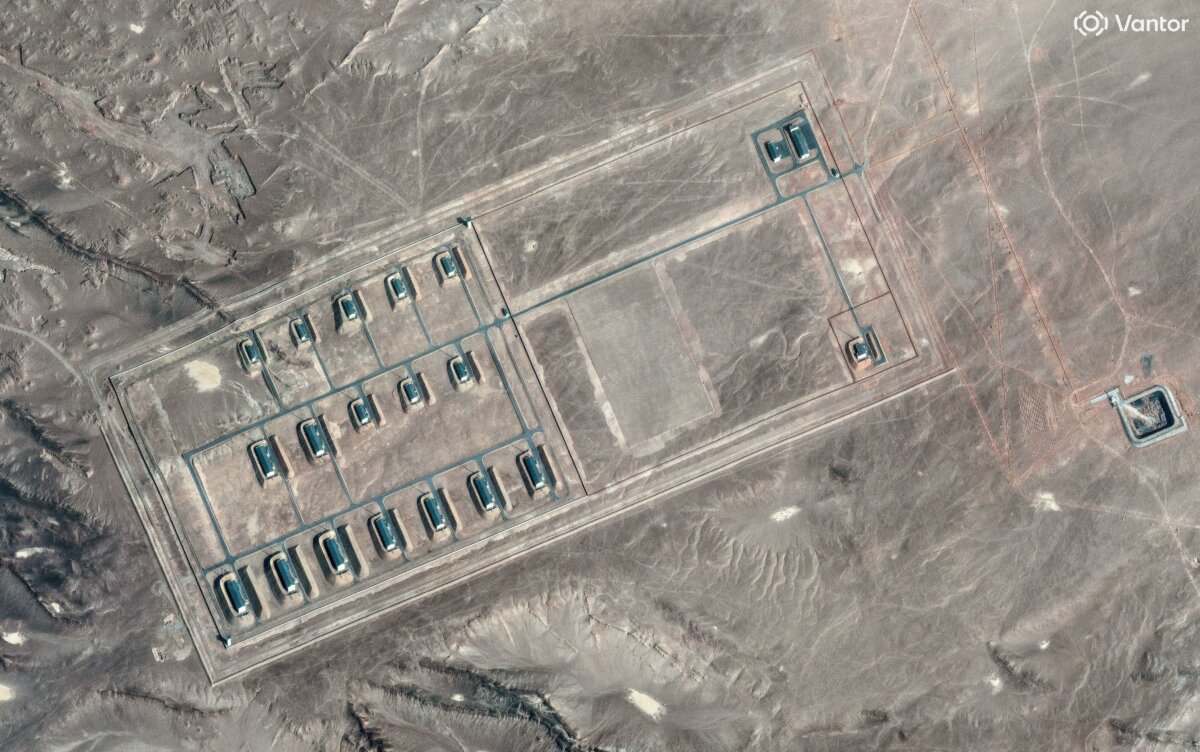
Measures to Deal With CCP’s Nuclear Threat
For Japan and Taiwan, neither of which possesses nuclear weapons, there are essentially only two primary ways to respond to the CCP’s nuclear threat, according to Shen.
The first is passive defense, which entails measures on how to protect oneself should China actually launch a nuclear attack, such as shelter facilities, protective systems, and disaster response mechanisms, he said.
The second approach is to seek “extended deterrence,” Shen said, which entails seeking protection from an ally that possesses nuclear weapons.
Alliances exist between the United States and Japan, the United States and the Philippines, and the United States and South Korea, Shen said.
“Therefore, if Japan, the Philippines, or South Korea were to suffer a nuclear attack, the United States would, in principle, have the right to launch a nuclear counterstrike,” he said.
However, while the United States and Taiwan have a strategic partnership and cooperation relationship, it is not a formal mutual defense alliance, Shen said.
For Taiwan, the primary approach is passive defense, he said.
“The United States would not necessarily resort to the direct use of nuclear weapons solely on account of Taiwan. Consequently, Taiwan cannot fully integrate itself into a typical extended deterrence framework,” Shen said.
Luo Ya and Reuters contributed to this report.
 Friends Read Free
Copy
Facebook
Tweet
Friends Read Free
Copy
Facebook
Tweet