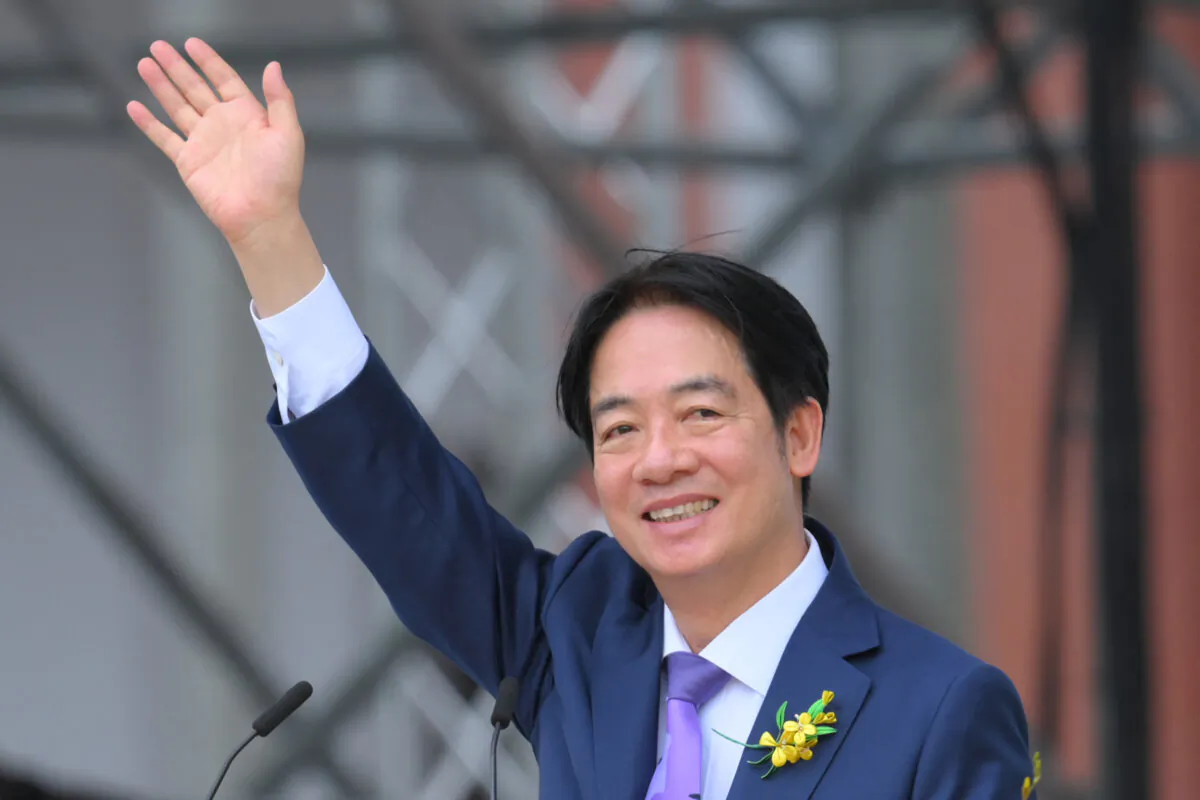

Taiwan’s Legislature rejected the first presidential impeachment motion in the island’s constitutional history on May 19, after opposition lawmakers failed to secure the supermajority required to advance proceedings against President William Lai Ching-te.
The motion received 56 votes in favor and 50 against, falling short of the 76 votes required in the 113-seat Legislative Yuan. Seven lawmakers did not cast ballots, including Legislative Speaker Han Kuo-yu and Deputy Speaker Johnny Chiang, both of the Kuomintang, or KMT, according to Taiwan’s Central News Agency.
The vote ended an unprecedented impeachment bid but left unresolved a broader standoff between Lai’s government and an opposition-led Legislature over budget authority, defense spending, and the balance of power in Taiwan’s constitutional system.
Under Taiwan’s political system, the central government consists of the presidency and five branches, known as yuans. The Executive Yuan serves as the nation’s highest administrative body, while the Legislative Yuan is its highest legislative body. The president is directly elected and appoints the premier, who leads the Cabinet.
The vote came one day before the second anniversary of Lai’s inauguration. Lai won the presidency in 2024, but his party lost its legislative majority, leaving the KMT and Taiwan People’s Party, or TPP, with enough seats to drive legislative confrontations but not enough to meet the presidential impeachment threshold.
Budget Dispute Led to Impeachment Vote
The impeachment effort grew out of a dispute over opposition-backed amendments to the Act Governing the Allocation of Government Revenues and Expenditures, Taiwan’s key fiscal revenue-allocation law.
According to the Taiwan New Century Foundation think tank, the KMT and TPP argued that the amendments were needed to give local governments a larger share of public revenues. Lai’s Cabinet countered that the revised law would damage central government finances, crowd out national priorities, and widen disparities between local governments.
Premier Cho Jung-tai declined to countersign the amendments after the Executive Yuan’s request for reconsideration was rejected by the Legislature. The Executive Yuan argued that implementing the changes would force the central government to either borrow beyond the legal limits set by the Public Debt Act or severely cut spending on national defense, diplomacy, major infrastructure projects (including AI-related developments), flood control, social welfare, labor insurance subsidies, and national health insurance.
The KMT and TPP accused President Lai of violating the Constitution after Premier Cho declined to countersign the bill. In the formal impeachment filing, lawmakers charged that Lai failed to promulgate the legislation as required under Article 72 of the Constitution and cited relevant constitutional amendment provisions along with laws governing legislative powers.
The Presidential Office and Democratic Progressive Party lawmakers rejected the allegation, saying the dispute over the fiscal law did not justify impeachment.
Presidential Office spokeswoman Karen Kuo said after the vote that President Lai has always acted with integrity and is firmly leading the country forward. She urged lawmakers to quickly review the central government budget and do something truly positive and meaningful for the public, according to CNA.
High Threshold Blocked Motion
Taiwan’s impeachment rules set a high bar for action against a sitting president. A motion to impeach the president or vice president must be proposed by more than half of all lawmakers and approved by at least two-thirds of all lawmakers before it can be sent to the Constitutional Court, according to Taiwan’s Constitutional Litigation Act.
The KMT and TPP together control a legislative majority, but they do not hold the 76 seats required to advance a presidential impeachment case. That made the vote’s outcome expected. The motion marked the first time Taiwan’s Legislature had voted on impeaching a sitting president.
Defense and China Policy Flashpoints
The impeachment vote came as Taiwan faces continued military and political pressure from communist China, which claims the self-ruled island as its territory and has not ruled out the use of force.
Taiwan’s Ministry of National Defense has continued to report Chinese military activity around the island. On May 19, the ministry said it had detected 13 Chinese military aircraft, 5 Chinese naval vessels, and 2 official ships operating around Taiwan as of 6 a.m., adding that 10 of the aircraft crossed the median line of the Taiwan Strait and entered Taiwan’s northern, southwestern, and eastern air defense identification zones. Taiwan’s armed forces monitored the activity with combat air patrol aircraft, naval vessels, and coastal missile systems, the ministry said.
The political standoff has also affected defense policy. Lai’s administration has sought higher defense spending and special arms-procurement funding, while opposition lawmakers have scrutinized or reduced portions of the government’s proposals. Presidential Office and Cabinet officials have argued that defense funding is essential as Beijing continues to increase military pressure around Taiwan.
Lai’s government says its cross-strait policy is intended to maintain the status quo, strengthen Taiwan’s defenses, and keep the door open to dialogue based on equality and dignity. In a May 17 statement, Lai said Taiwan is “the defender of the status quo of peace and stability in the Taiwan Strait and the region,” while China is “the root cause of regional instability and change of the status quo.” He said “peace depends on strength” and that Taiwan would maintain the status quo “neither submissively nor arrogantly” while working to “make positive contributions to regional and global peace and prosperity.”
The United States does not have formal diplomatic relations with Taiwan but remains the island’s main security partner. Under the Taiwan Relations Act, the United States is to make available defense articles and defense services needed for Taiwan to maintain a sufficient self-defense capability.
The vote did not resolve the disputes that caused it: Budget negotiations, defense spending, and cross-strait policy remain central tests for Taiwan’s divided government as Beijing maintains military and political pressure around the island.
 Friends Read Free
Copy
Facebook
Tweet
Friends Read Free
Copy
Facebook
Tweet