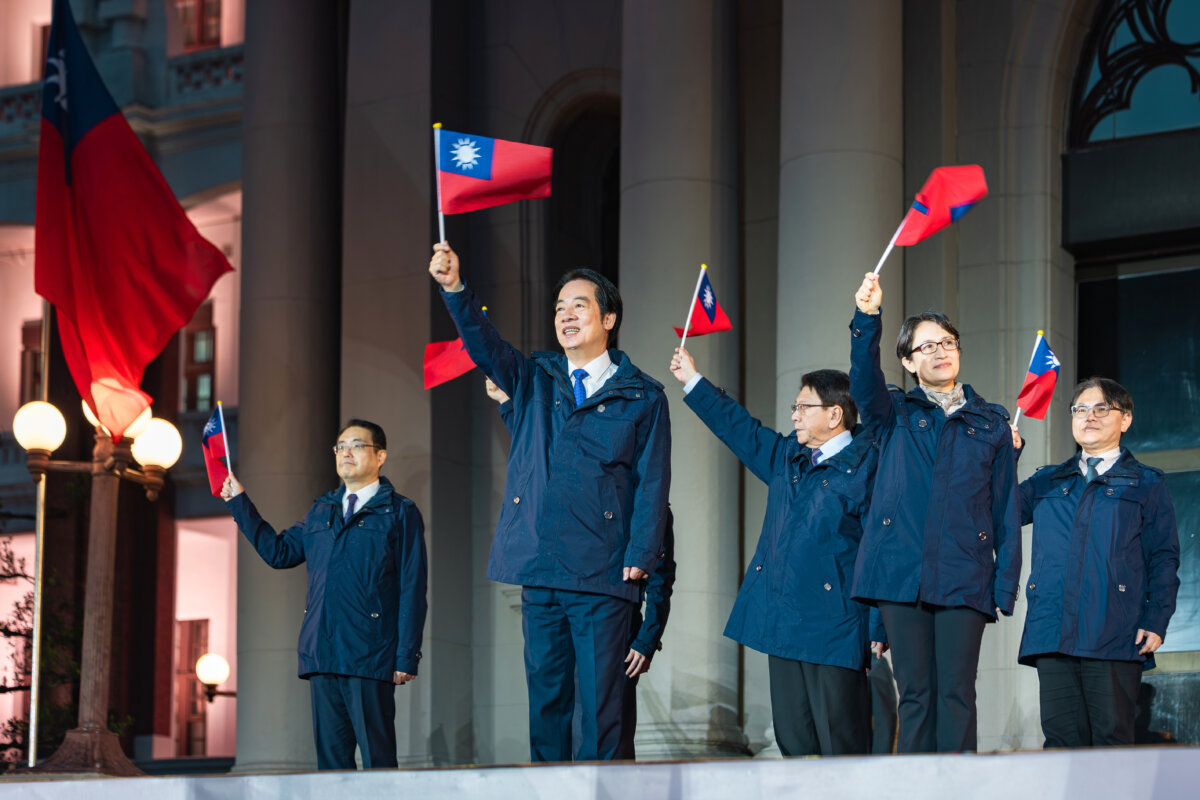
Taiwan has offered to arrange a direct phone call between U.S. President Donald Trump and Taiwanese President Lai Ching-te.
Taiwanese Deputy Foreign Minister Chen Ming-chi made the offer on Monday as Taipei tries to ease concerns triggered by Trump’s remarks following his summit with Chinese leader Xi Jinping in Beijing.
Trump, speaking to Fox News after the summit, warned Taiwan against declaring independence and said he was undecided on a new U.S. arms sales package, stating, “I’m not looking to have somebody go independent.”
Chen told reporters that Trump’s comments had caused “some unnecessary concern” in Taiwan, even though the government believes U.S. policy has not changed. He said Taiwan would seek confirmation from the U.S. president on whether he wants to speak with Lai.
“Of course, we would also ask: Based on what you have said, does that mean you want to speak with our president? If he says yes, then should we make the relevant arrangements? We very much hope to have such an opportunity,” Chen said.
No U.S. president has held a direct call with a Taiwanese leader since Washington switched diplomatic recognition to Beijing in 1979.
The White House fact sheet on Trump’s China trip, released on Sunday, made no mention of Taiwan. It focused instead on trade deals and economic agreements.
Secretary of State Marco Rubio has said America’s Taiwan policy remains unchanged, a position repeated by a State Department spokesperson.
After Trump’s remark, Lai said the Republic of China—Taiwan’s formal name—is already a sovereign, independent, democratic country. He stated that neither the Republic of China nor the People’s Republic of China is subordinate to the other.
“There is no so-called ‘Taiwan independence’ issue,” Lai said.
Lai added that Taiwan “will not provoke or escalate conflict, but it will also not relinquish its national sovereignty and dignity, or its democratic and free way of life, under pressure.”
During the Beijing summit, Xi warned that mishandling the Taiwan issue could lead to clashes or conflict between the United States and China. The Chinese regime claims democratically governed Taiwan as its own territory and has never ruled out using force to bring the self-governing island under its control.
Trump told reporters he discussed Taiwan in detail with Xi.
Political science professor Tsai Jung-hsiang at Taiwan’s National Chung Cheng University said Trump’s comments meant he did not want either side to take unilateral action that would force the United States into a conflict.
Chen noted that U.S. arms sales to Taiwan create American jobs and meet the island’s urgent defense needs amid pressure from China.
The United States is required under its 1979 Taiwan Relations Act to help Taiwan maintain its ability to defend itself.
Most countries, including the United States, do not formally recognize Taiwan as a sovereign state but maintain strong unofficial economic and security ties.
Taiwan’s financial markets showed little reaction to the comments. Analyst Alex Huang of Mega International Investment Services said they had no impact on Taiwanese stocks.
Reuters contributed to this report.
 Friends Read Free
Copy
Facebook
Tweet
Friends Read Free
Copy
Facebook
Tweet