
An upcoming visit to China by Taiwan’s opposition leader is unlikely to impact U.S. arms sales policies toward Taipei or alter the Taiwan agenda at the planned Trump–Xi summit, some experts say.
At the invitation of Chinese leader Xi Jinping, Kuomintang (KMT) chairwoman Cheng Li-wun will begin a six-day visit to Jiangsu, Shanghai, and Beijing on April 7.
It will be the first visit to China by a KMT chairperson in a decade.
The KMT, which holds a legislative majority in Taiwan, is widely seen as more Beijing-friendly than the ruling Democratic Progressive Party (DPP).
Cheng said at a meeting with top KMT leaders on April 1 that her trip to China would send an “important” message to “resolve military tensions in the Taiwan Strait.”
The chair said that the party and China’s sole ruling party, the Chinese Communist Party (CCP), can “lay the foundation for peaceful and stable cross-strait relations.”
Neither the KMT nor Beijing has confirmed whether Cheng will meet with Xi, leaving key itinerary details undisclosed.
Although the CCP has never ruled Taiwan, it refuses to renounce the use of military force to annex the self-governed democracy. It has also stepped up military drills around Taiwan since then-U.S. House Speaker Nancy Pelosi’s 2022 visit to Taipei.
Backing Pro-CCP Camp
Tzeng Wei-feng, an associate research fellow at the Institute of International Relations of National Chengchi University (NCCU) in Taiwan, said Beijing aims to amplify Taiwan’s pro-China forces by backing Cheng as “the best candidate” to accelerate its unification campaign.
“Beijing wants to use this trip to demonstrate its dominance over Taiwan, especially since there have been almost no high-level meetings between KMT and CCP leadership since 2016,” Tzeng told The Epoch Times.
Cheng said in October last year that Taiwan’s constitution defines all citizens as Chinese, pledging to ensure people on the island feel “proud to call themselves Chinese.”
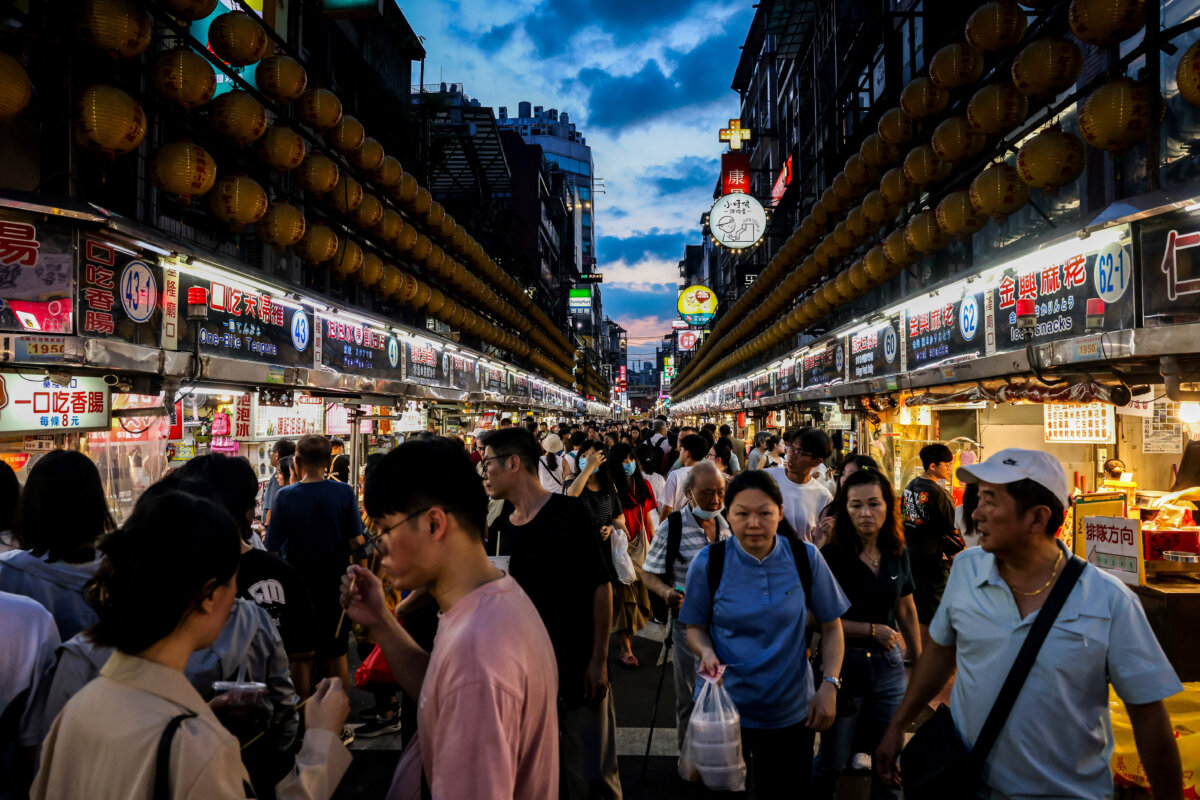
However, NCCU’s Election Study Center tracking surveys show that the proportion of citizens identifying exclusively as Taiwanese has trended upward since 1992, reaching 62 percent by December 2025.
By contrast, the number of respondents identifying solely as Chinese plummeted to just 2.5 percent by late 2025.
Ian Tsung-yen Chen, a professor at the Institute of Political Science of Taiwan’s National Sun Yat-sen University, said Beijing hopes the visit will stabilize the KMT’s political momentum after Cheng’s high-profile pro-China statements damaged the party’s reputation.
“To some extent, Beijing is rushing this meeting to foster a sense of ‘peaceful unification’ among Taiwanese people, even though support for unification remains extremely low in Taiwan,” Chen told The Epoch Times.
Chen said Beijing expects the visit to yield immediate results, fearing a poor showing in Taiwan’s late-2026 local elections would consolidate power for the governing DPP and further weaken the KMT’s political standing.
“If the CCP wants to help the KMT shore up its political base, it likely needs to use this meeting with Cheng to deliver tangible political benefits,” Chen noted.
Security Ties Unchanged
Before Cheng’s trip, the KMT asked to postpone a review of the special defense budget bill in parliament, Taiwan’s Central News Agency reported on April 2.
Taiwan’s Mainland Affairs Council (MAC), the government body handling issues with China, said on the same day that Beijing’s objective in arranging the visit is to “cut off Taiwan’s military procurement from the United States.”
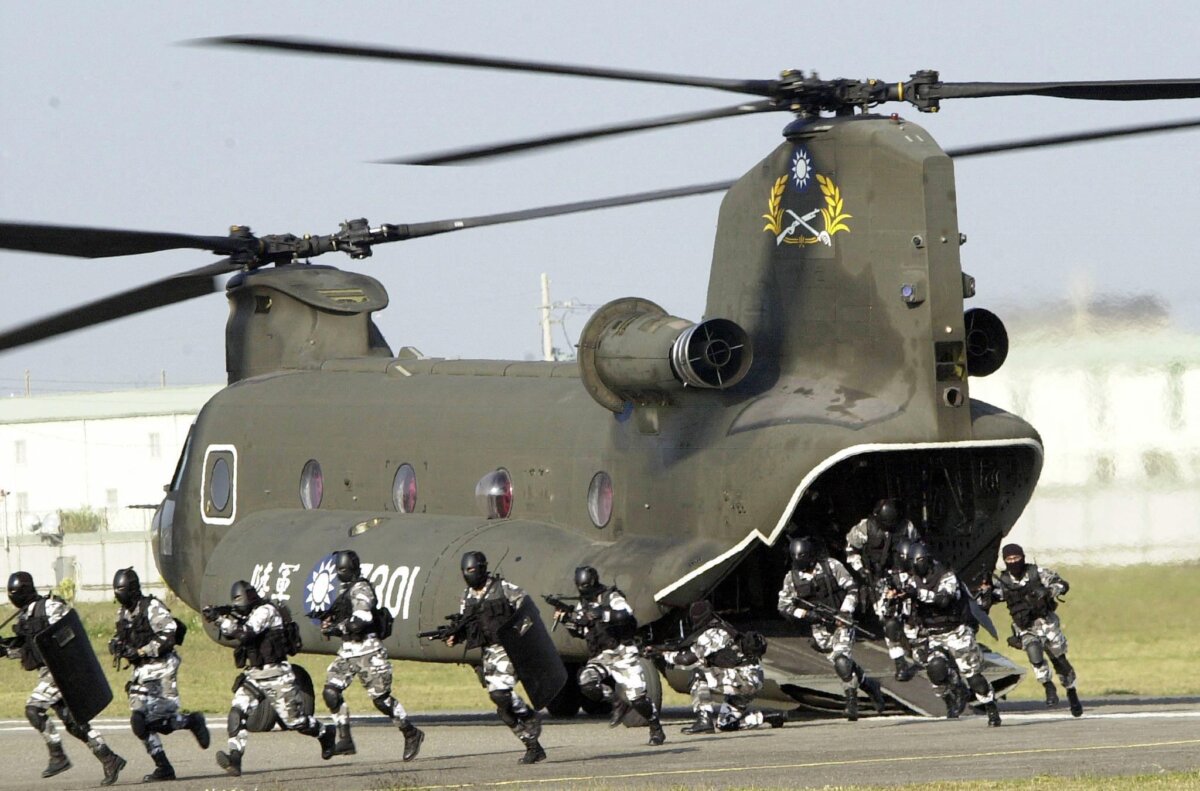
Echoing the MAC’s assessment, Tzeng said the Chinese regime intends to use the visit to signal that Taiwan does not need U.S. arms sales and to project an image of reduced hostilities between Beijing and Taipei, in a bid to influence Washington’s perspective.
“Beijing will leverage this trip to convey that cross-strait relations are a strictly bilateral issue requiring no ‘external interference,’ particularly from the U.S.,” Tzeng said.
However, Tzeng dismissed the possibility that the visit would interfere with the U.S. security arrangements with Taiwan.
“The U.S. Congress clearly supports communication between Taiwan and China but opposes defense delivery delays, meaning this visit will not sway Washington’s military backing,” Tzeng said.
Similarly, Chen said Cheng’s trip suggests the KMT might attempt to dilute strategic cooperation between Taiwan and the United States, though Washington’s stance is expected to remain firm.
“The U.S. will likely pressure Taiwan’s opposition to continuously strengthen self-defense capabilities and swiftly pass the overdue military budgets,” Chen said.
Limited Impact
Cheng’s visit comes ahead of a bilateral meeting, set for May 14 to 15 in Beijing between U.S. President Donald Trump and Xi.
While a Cheng–Xi meeting remains unconfirmed, Chen said it would have little bearing on the Trump–Xi talks, should Taiwan even make it onto the agenda.
“Even if Cheng meets with Xi, both sides will merely parrot tired ‘One China principle’ rhetoric,” Chen said.
“It is highly unlikely the Trump–Xi summit will take any Cheng–Xi consensus seriously.”
The CCP’s “One China principle” holds that Taiwan is “an inalienable part” of China’s territory, whereas Washington’s “One China” policy acknowledges the People’s Republic of China as the sole legal government of China, while maintaining unofficial ties with Taiwan.
Tzeng said the United States will likely reaffirm its pledge to peace and stability across the Taiwan Strait should the issue be raised during the leadership sit-down.
“China will push hard for Trump to explicitly oppose Taiwan independence, but Washington’s core stance rejects unilateral changes to the status quo, and the U.S. government will respond to these narratives cautiously,” Tzeng said.
 Friends Read Free
Copy
Facebook
Tweet
Friends Read Free
Copy
Facebook
Tweet