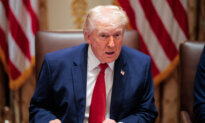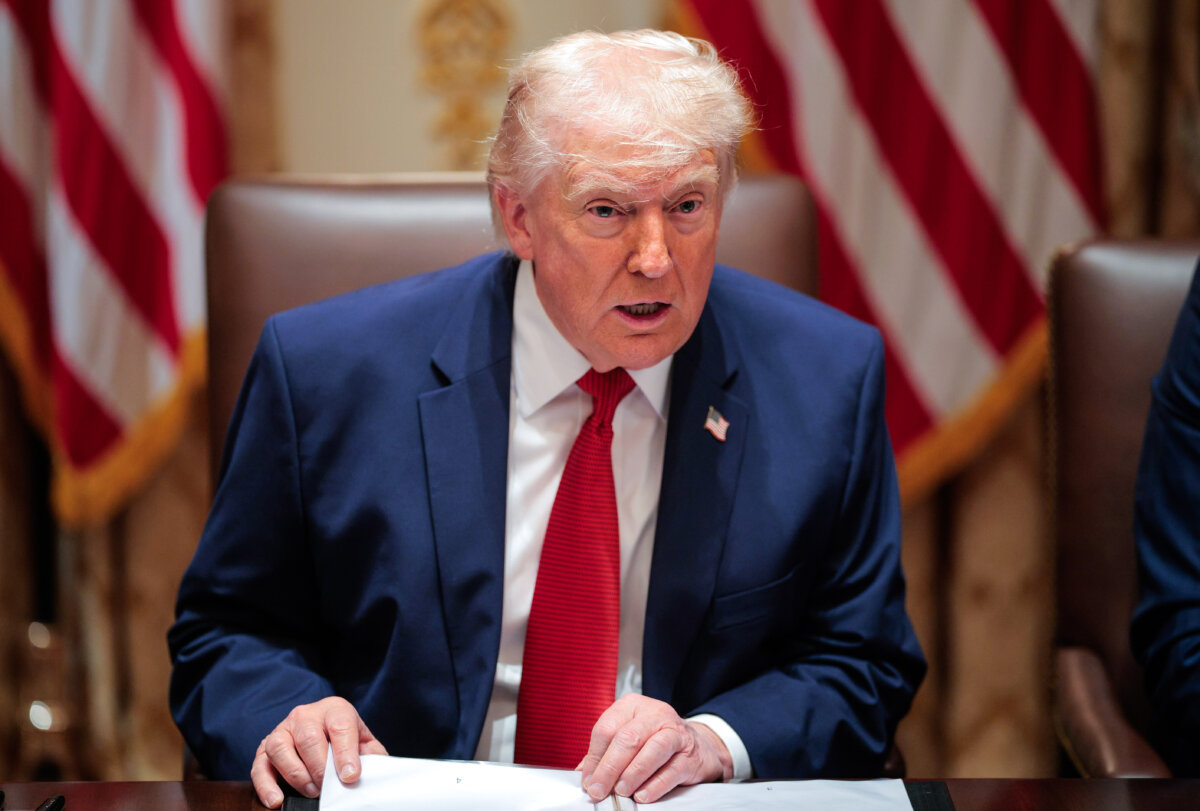

U.S. President Donald Trump said on April 15 that he had received a letter from Chinese leader Xi Jinping after he told Beijing not to supply weapons to Iran.
In an interview with Fox Business that aired on April 15, Trump said Xi’s letter was a response to his own letter expressing concerns about Beijing’s alleged arming of Tehran.
“He just wrote me a beautiful letter,” Trump told Fox Business host Maria Bartiromo. “He responded to a letter that I wrote because I had heard that China is giving weapons.
“And I wrote him a letter asking him not to do that, and he wrote me a letter saying that, essentially, he’s not doing that.”
The president didn’t specify when the letter exchange occurred.
Trump has warned that Beijing could face an additional 50 percent U.S. tariff if the communist regime is found to be arming Tehran. He told Fox News last week that he had heard reports claiming that Beijing was supplying shoulder-fired missiles and anti-aircraft missiles to Iran, although he expressed skepticism about the reports’ veracity.
The letter exchange came ahead of an expected summit between the two leaders. Trump has said that he plans to go to China and meet with Xi from May 14 to 15. The president had postponed his China trip, originally slated for March 31 to April 2, citing the situation in the Middle East.
During the latest interview, Trump downplayed concerns that U.S. operations in Iran and Venezuela would affect the dynamic of the leaders’ summit, telling Fox Business: “I don’t think it does. I mean, he’s somebody that needs oil. We don’t.”
In a subsequent post on Truth Social, Trump said China is “very happy” that he is “permanently opening the Strait of Hormuz.”
“I am doing it for them, also — And the World,” he wrote on April 15. “This situation will never happen again. They have agreed not to send weapons to Iran. President Xi will give me a big, fat, hug when I get there in a few weeks.”
Iran sourced much of its military equipment and conventional weapons from China in the 1980s, but under increased international scrutiny, such transfers largely stopped over the past decade.
According to a March report by the U.S.–China Economic and Security Review Commission, the Chinese regime’s cooperation with Iran has shifted toward selling Iran technology that has both civilian and military applications, including those relevant to missile and drone development.
“Chinese components—including sensors, voltage converters, and semiconductors—have been found in Iranian drones, both the drones used by its regional proxies and those exported to Russia for use in Ukraine,” the report reads.
Beijing is a major buyer of Iran’s oil. The congressional report notes that Chinese purchases “account for roughly 90 percent of Iran’s exported oil, providing tens of billions of dollars in annual revenue that supports Iran’s government budget and military activities.”
‘Unreliable Global Partner’
In Beijing, Chinese foreign ministry spokesperson Guo Jiakun said at a regular briefing on April 15 that China and the United States have “maintained communication” on issues related to Trump’s visits to China.
U.S. Treasury Secretary Scott Bessent has said the message for the president’s upcoming visits to China is to maintain stability in U.S.–China relations.
“We’ve had great stability in the relationship since last summer; that emanates from the top down,” Bessent told reporters on April 14. “I think that communication is the key.”
However, Bessent said that the Chinese regime has not been a reliable partner over the past five years.
“China has been an unreliable global partner three times in the past five years; once during COVID, when they hoarded health care products, second on rare earth,” Bessent said, referring to the regime’s rare-earth export control threats last year.
Bessent said that as the United States and Israel began their joint military operation in Iran, Beijing was stockpiling more oil instead of helping ease the global demand shortage caused by Tehran’s closure of the Strait of Hormuz, which carries 20 percent of the world’s oil.
“They continued buying, and they’ve been hoarding, and they have cut off exports of many products,” Bessent said.
Reuters contributed to this report.
 Friends Read Free
Copy
Facebook
Tweet
Friends Read Free
Copy
Facebook
Tweet