
News Analysis
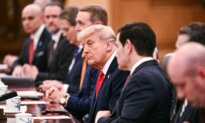
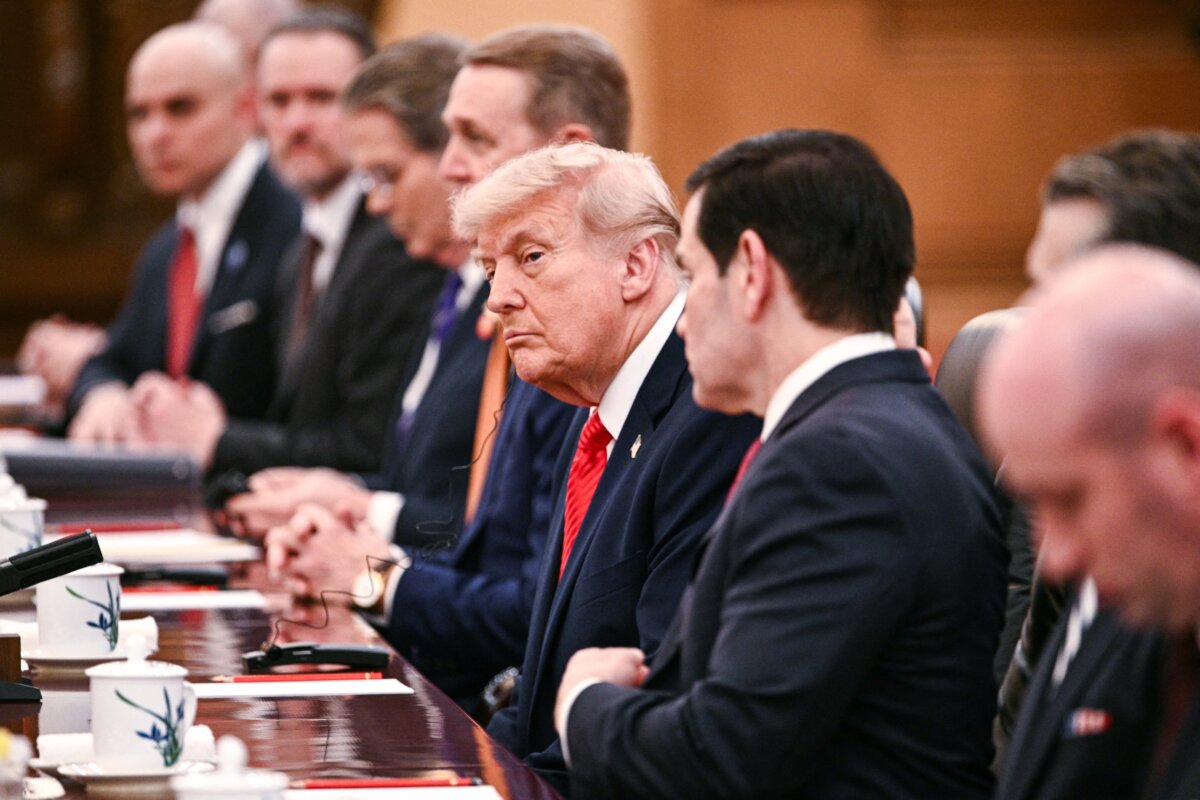
The U.S.–China summit wrapped up in Beijing on the afternoon of May 15, with preliminary deals on Boeing aircraft, U.S. farm exports, and the launch of new trade and investment boards.
Analysts told The Epoch Times that the agreements were narrow and largely symbolic—the start of what one called a “strategic cooling-off period,” not a sweeping reset of U.S.–China relations.
Each side walked away with enough to claim a win at home, the analysts said, and the talks avoided open confrontation. Meanwhile, the core disputes over technology, tariffs, and Taiwan remain largely unaddressed, and the success of the deals depends heavily on follow-through, which is uncertain given Beijing’s track record of failing to fulfill previous commitments.
According to a fact sheet released by the White House after the summit, Beijing approved an initial purchase of 200 Boeing aircraft—China’s first commitment to buy American-made Boeing planes since 2017. Boeing confirmed the order on May 15 but did not specify which models. The White House said the deal would create high-paying, high-skilled U.S. manufacturing jobs.
On agriculture, the White House said China pledged to buy at least $17 billion in U.S. farm goods annually in 2026, 2027, and 2028, with the 2026 figure prorated. The commitment builds on the 25 million metric tons of soybeans a year that Beijing promised at the Busan summit in South Korea with Trump in October 2025. China also restored market access for U.S. beef by renewing the expired listings of more than 400 American beef facilities and adding new ones.
Both countries agreed to set up two new institutions that the White House called the cornerstone of the deal: the U.S.-China Board of Trade, intended to manage bilateral trade in non-sensitive goods, and the U.S.-China Board of Investment, intended as a government-to-government forum for investment issues. Beijing also responded to U.S. concerns about supplies of rare earths and other critical minerals, including yttrium, scandium, neodymium, and indium.
Beijing’s own readout was notably thinner. China’s Ministry of Commerce did not directly confirm the 200-plane figure or the $17 billion agricultural number, saying only that the two sides had made “arrangements” for aircraft procurement and would “promote expanded two-way trade” in farm goods. Most of the specific numbers in the package come from the U.S. side.
At a regular ministry briefing on May 14, commerce ministry spokesperson He Yongqian said Beijing was prepared to work with Washington on the basis of equality, respect, and reciprocity, with the aim of “continuously expanding the list of cooperation and shortening the list of problems” between the two countries.
‘Symbolic, Not Structural’
U.S.-based economist Davy J. Wong told The Epoch Times that the summit was never intended to produce a sweeping deal. Instead, he said, it marked a shift “from a grand bargain to a strategic cooling-off period,” with both sides seeking a measure of “strategic stability.”
Wong said Washington’s strategy was to use Boeing and farm purchases to narrow the trade deficit, while the new investment panels suggested the United States wanted to separate ordinary trade from the technology fight—in effect, carving out a safer lane for everyday commerce while keeping export controls in place for sensitive technologies such as semiconductor chips and artificial intelligence (AI).
Frank Tian Xie, a professor at the Aiken School of Business at the University of South Carolina, called the outcome a “short-term truce.”
He told The Epoch Times that the purchase numbers came in below market expectations. He noted that Reuters had reported on the eve of the summit that the talks centered on roughly 500 Boeing 737 MAX jets, with dozens of widebody planes to follow. He added that the 200 announced will simply add to a Boeing backlog that already exceeds 6,100 commercial aircraft—meaning the new orders will do little to ease pressure on the U.S. economy in the near term.
Xie also pointed to Beijing’s track record. He said China fulfilled only about 50 to 70 percent of the purchase commitments it made under the so-called phase one trade deal signed during Trump’s first term. He expects Beijing to continue using delay tactics, trading slow progress for tariff relief and time to stabilize China’s economy.
Beef License Flip-flop
An incident highlighted doubts about Beijing’s dependability. On May 14, Chinese customs briefly approved licenses for U.S. beef exporters, only to revoke them hours later, citing that they had “expired.”
Wong noted that this reversal did not appear to be a clerical error but rather a “strategic pressure” move, indicating Beijing’s ability to open and close the market at will. He described it as a familiar last-minute negotiation tactic used to assert control over the timing.
Wu Jia-long, a senior Taiwanese political and economic commentator, offered a different perspective. He told The Epoch Times that the back-and-forth reflected Beijing’s bargaining weakness rather than its strength.
Wu noted that Chinese officials repeatedly raised the Taiwan issue before and after the talks, which he interpreted as an effort to obscure an uncomfortable reality: that on the economy, Beijing was being forced to soften its stance toward Washington. When Chinese officials cannot secure concessions on tariffs or export controls, Wu said, they fall back on Taiwan to “raise tensions” and project toughness.
The Next Moves
Looking ahead, analysts said the next three weeks or so will be an observation period, with the key tests being whether the Boeing orders and the agricultural licenses are actually carried out.
Wong predicted that U.S.–China trade will increasingly take the form of “fragmented cooperation”: continued business in non-strategic areas such as energy and food, paired with accelerating decoupling in semiconductors, AI, and other critical-technology supply chains.
Wu provided a more cautious outlook, describing the summit as a “diplomatic ceremony” designed to conceal the underlying tensions. He observed that Trump, accompanied by several financial industry leaders, appeared to be seeking access to Chinese markets. However, Wu pointed out that Beijing perceives economic liberalization as a threat to the Communist Party’s stability, which makes substantial structural reforms nearly unattainable.
Xie stated that in the medium to long term, global supply chains will keep reorganizing and U.S.–China decoupling will persist, with hostility and distrust between the two nations unlikely to diminish.
One detail from the trip, Xie said, captured how deep that distrust runs: U.S. executives and government staff traveling with the president were required to leave their personal phones and laptops at home and use temporary burner phones or devices in China.
Before boarding Air Force One on May 15, according to a New York Post reporter, White House staff were seen tossing everything Chinese officials had given them—badges, lapel pins, and the burner phones themselves—into a bin at the bottom of the stairs, out of concern for technological espionage.
Cheng Mulan and Yi Ru contributed to the report.
 Friends Read Free
Copy
Facebook
Tweet
Friends Read Free
Copy
Facebook
Tweet