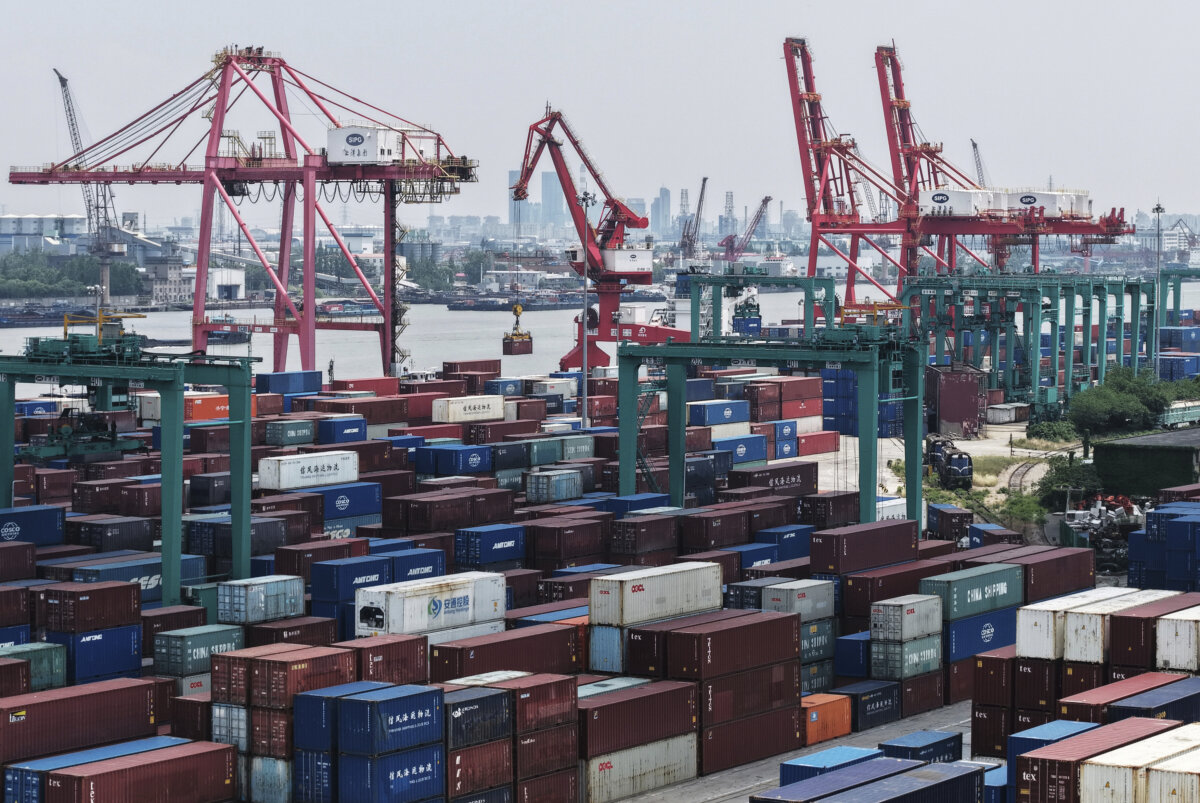

U.S. and Chinese trade negotiators will meet in Stockholm on July 28 to resolve remaining differences as they work toward finalizing a trade agreement.
The latest round of talks comes ahead of an Aug. 12 deadline, after which tariffs are set to sharply increase unless an agreement is reached.
President Donald Trump said on July 27 that negotiations with Beijing are nearing completion, though he offered few details.
“We’re very close to a deal with China,” Trump told reporters on July 27 during a meeting with European Commission President Ursula von der Leyen in Scotland.
“We really sort of made a deal with China but we’ll see how that goes,” he said.
The upcoming talks follow earlier meetings in Geneva in May and London in June. After the London meeting, the White House announced a limited deal, including agreements on export controls and tariffs. As part of the framework, China committed to resuming rare earth exports to the United States, and the Trump administration eased certain countermeasures.
As part of the deal, U.S. chipmaker Nvidia announced on July 14 that it received licenses to resume chip sales to China despite earlier U.S. export restrictions imposed in April. When asked about the shift, Treasury Secretary Scott Bessent described it as a bargaining tactic.
“It was all part of a mosaic,” he said in a July 15 interview with Bloomberg TV. “They had things we wanted. We had things they wanted, and we’re in a very good place.”
According to the U.S. Trade Representative’s Office, the U.S. goods trade deficit with China was $295.4 billion in 2024.
It remains unclear whether the Stockholm meeting will result in substantial progress, such as significantly narrowing the U.S. trade deficit or eliminating long-standing market barriers for American firms.
Financial markets are closely watching the Aug. 12 deadline, which marks the end of a 90-day tariff pause between the world’s two largest economies. But Bessent sought to ease market concerns.
“I tell market participants not to worry about Aug. 12,” he said.
In retaliation for Trump’s reciprocal tariffs introduced in April, Beijing imposed export restrictions on critical rare earth elements, metals, and magnets, effective April 4.
Although Trump has claimed the rare earth dispute has been resolved, U.S. officials remain cautious. In a June interview, National Economic Council Director Kevin Hassett confirmed that while China has resumed exports, shipments remain below previously agreed levels.
China dominates the global rare earth market and has weaponized that dominance to exert pressure on other countries.
Since joining the World Trade Organization in 2001, communist China’s economic ascent has been driven by controversial trade practices, including intellectual property theft, forced technology transfers, currency manipulation, and heavy state subsidies to domestic industries.
Trade Deal with EU
During his meeting with von der Leyen, Trump announced a new trade agreement with the European Union. As part of the deal, the EU will buy $750 billion worth of American energy, while the United States will impose a 15 percent tariff on most European imports, including automobiles, down from the 30 percent levy he proposed earlier.
Trump said several other trade deals are also in the works.
“There’s not a deal per se but people are going to pay tariffs,” he said. “We’re doing them at the low end, not the high end, because we don’t want to hurt anybody.”
He said discussions are underway with “three or four other countries” and noted that tariff notification letters have already been sent.
“They’ll probably receive a letter of clarification or a confirmation type letter, which will go out sometime during this week prior to Aug. 1,” he added.
 Friends Read Free
Copy
Facebook
Tweet
Friends Read Free
Copy
Facebook
Tweet