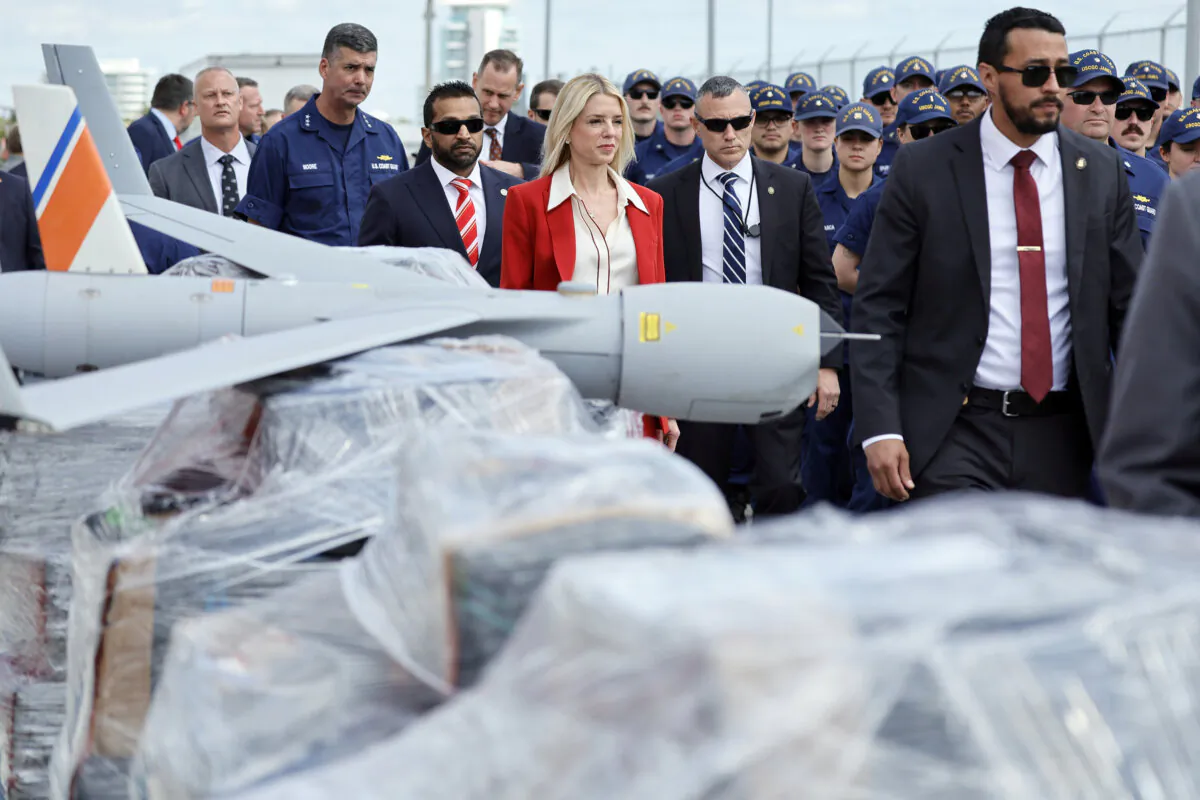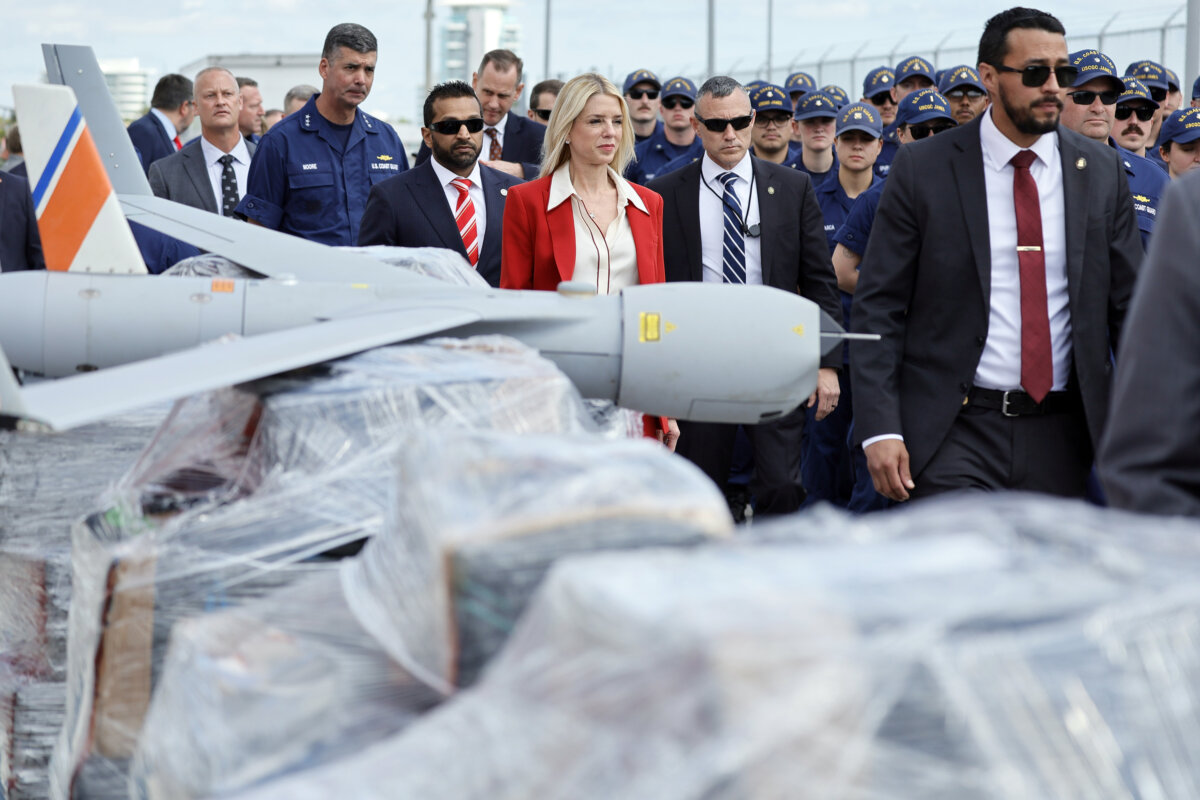

The United States continues to pressure Beijing over its role in America’s fentanyl crisis, with recent criminal convictions of Chinese executives and a presidential determination that identified China as a major drug transit or illicit drug-producing country.
China is widely recognized as the main source of precursor chemicals used to produce illicit fentanyl. Those chemicals are often shipped to other countries, particularly Mexico, where they are manufactured into final products and then transported into the United States.
President Donald Trump said on his Truth Social account on Sept. 19 that he and Chinese leader Xi Jinping discussed efforts to curb fentanyl during a phone call earlier that day.
Trump identified the Chinese regime among 23 major drug transit or illicit drug-producing countries in a presidential determination sent to Congress on Sept. 15.
“For too long, the PRC has enabled illicit fentanyl production in Mexico and elsewhere by subsidizing the export of the precursor chemicals needed to produce these deadly drugs and failing to prevent Chinese companies from selling these precursors to known criminal cartels,” Trump said, using the official acronym for China under the Chinese Communist Party (CCP).
“The PRC’s leadership can and must take stronger and sustained action to cut down these chemical flows and prosecute the drug criminals facilitating them.”
Trump also mentioned measures he had taken previously, including imposing an additional 20 percent tariff on China for its “failure to enact tangible, consequential reforms to stem the flow of precursor chemicals.”
The statement was issued as Washington held trade talks with Beijing in Madrid. There, China agreed to work with the United States to clamp down on money laundering involving fentanyl trafficking, the South China Morning Post reported.
Gordon Chang, senior fellow at the Gatestone Institute, told The Epoch Times that Xi failed to keep promises made to three different presidents over time.
Beijing has “lied to us now three times and apparently a fourth time in Madrid this week,” Chang said.
At a bilateral meeting on the sidelines of the G20 summit in Hangzhou, China, in September 2016, Xi told then-President Barack Obama that China would cooperate with the United States in combating the fentanyl inflow into the United States.
Xi also agreed at a meeting held during the G20 summit in Buenos Aires with Trump during his first term in 2018 that people in China who sell fentanyl to the United States will be subject to the maximum penalty under Chinese law. China’s maximum penalty is a death sentence.
In November 2023, Xi agreed with former President Joe Biden that China would cooperate with the United States on combating illicit fentanyl manufacturing and trafficking.
Chang, the author of “Plan Red: China’s Project to Destroy America,” said, “Fentanyl producers could not operate without the knowledge and approval of the regime,” and allowing them to continue the illicit trade is “part of a deliberate Communist Party plan to kill Americans.”
The U.S. House Select Committee on Strategic Competition between the United States and the CCP found in its investigative report issued in April 2024 that the CCP “directly subsidizes the manufacturing and export of illicit fentanyl materials.”
It also found that the CCP “holds ownership interest in several PRC companies tied to drug trafficking.”
Trump’s announcement came as the Justice Department announced on Sept. 19 that a U.S. district court judge had sentenced two executives of a China-based chemical company to 25 and 15 years in prison, respectively, for trafficking chemicals used to manufacture fentanyl.
Wang Qingzhou, the principal executive of Amarvel Biotech, based in Wuhan, and Chen Yiyi, the company’s marketing manager, were previously charged in June 2023 with “fentanyl trafficking, precursor chemical importation, and money laundering offenses” by the Justice Department.
A few days earlier, the U.S. Drug Enforcement Agency (DEA) seized large amounts of illicit fentanyl that could kill seven million Americans. About 14 kilograms of fentanyl were recovered across metro Detroit on Thursday after being funneled through Mexico, according to DEA special agent in charge Andy Lawton, who spoke with local media.
“It’s clearly a major national security threat, maybe the greatest direct threat to American lives that we face today, just given the fact that the scourge of fentanyl is literally taking the lives of tens of thousands of Americans on a regular basis,” Brian Burack, senior policy advisor for China and the Indo-Pacific at the Heritage Foundation, told The Epoch Times.
FBI director Kash Patel told the Senate Judiciary Committee on Sept. 16 that over 1,600 kilograms of fentanyl were taken off the streets.
“That’s enough fentanyl to kill a third of the American populace, 115 million Americans,” he said. “We’re also going after the companies that manufacture these precursors overseas, in places like mainland China, and their cutting agents.”
Patel said the amount seized is “a 25 percent increase from the same time last year.”
Fentanyl is a synthetic opioid 50 times stronger than heroin and 100 times stronger than morphine, and the principal cause for fatal overdoses in the United States, according to the Centers for Disease Control and Prevention (CDC).
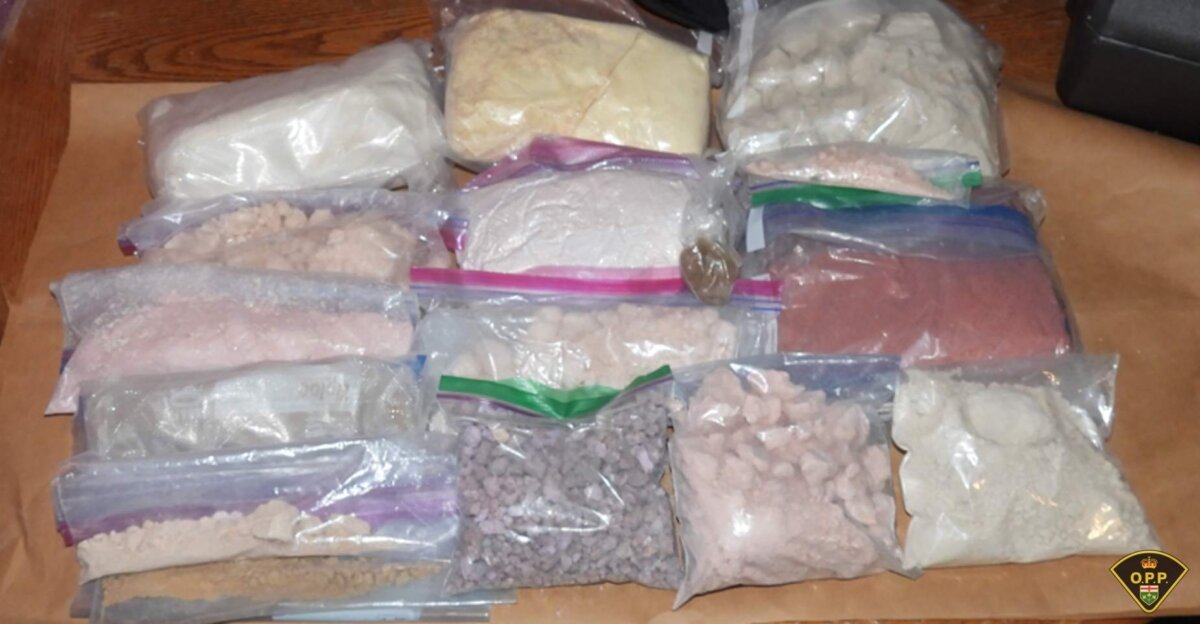
Illicitly manufactured fentanyl killed over 48,422 people in the United States in 2024, according to a CDC estimate.
Burack said the CCP has “routinely used fentanyl cooperation as a political weapon.”
“China’s level of cooperation should result in [a] meaningful reduction in fentanyl [inflows to] the United States and fentanyl precursor shipments to bad entities,” he said. “To date, I’m not sure that we’re seeing really any meaningful level of cooperation from the Chinese government on those issues.”
The U.S. Treasury Department on Sept. 3 sanctioned the China-based company Guangzhou Tengyue Chemical for allegedly manufacturing and selling synthetic opioids to Americans. Two individuals from the company were also sanctioned for coordinating illicit drug shipments.
That same day, 22 Chinese nationals and four Chinese pharmaceutical companies were indicted for fentanyl trafficking and money laundering.
Chang said the United States should designate Chinese banks as a primary money laundering concern.
“That would disconnect them from their corresponding banking relationships in New York, which means that they can’t transact dollars anywhere in the world except in paper currency,” he added. “They wouldn’t be able to clear dollars through New York. That would have a major effect.”
 Friends Read Free
Copy
Facebook
Tweet
Friends Read Free
Copy
Facebook
Tweet