The U.S. Department of the Treasury’s Office of Foreign Assets Control (OFAC) on Oct. 9 launched a new round of sanctions against Iran’s oil network, including a China-based crude oil port. Analysts say the move will sharply raise the cost and risk of China’s imports of Iranian crude, dealing a blow to the communist regime’s energy supply chain.
The sanctions came as Beijing widened export controls on rare earth minerals and opened an antitrust probe into U.S. tech giant Qualcomm, actions that prompted U.S. President Donald Trump to announce a 100 percent tariff on Chinese goods. Together, the measures signal a major escalation in the U.S.-China trade confrontation, now spanning energy, technology, and industrial supply chains.
The latest sanctions underscore Washington’s growing willingness to confront Beijing over its role in financing Iran’s energy exports, say experts.
US Targets Chinese Oil Terminals
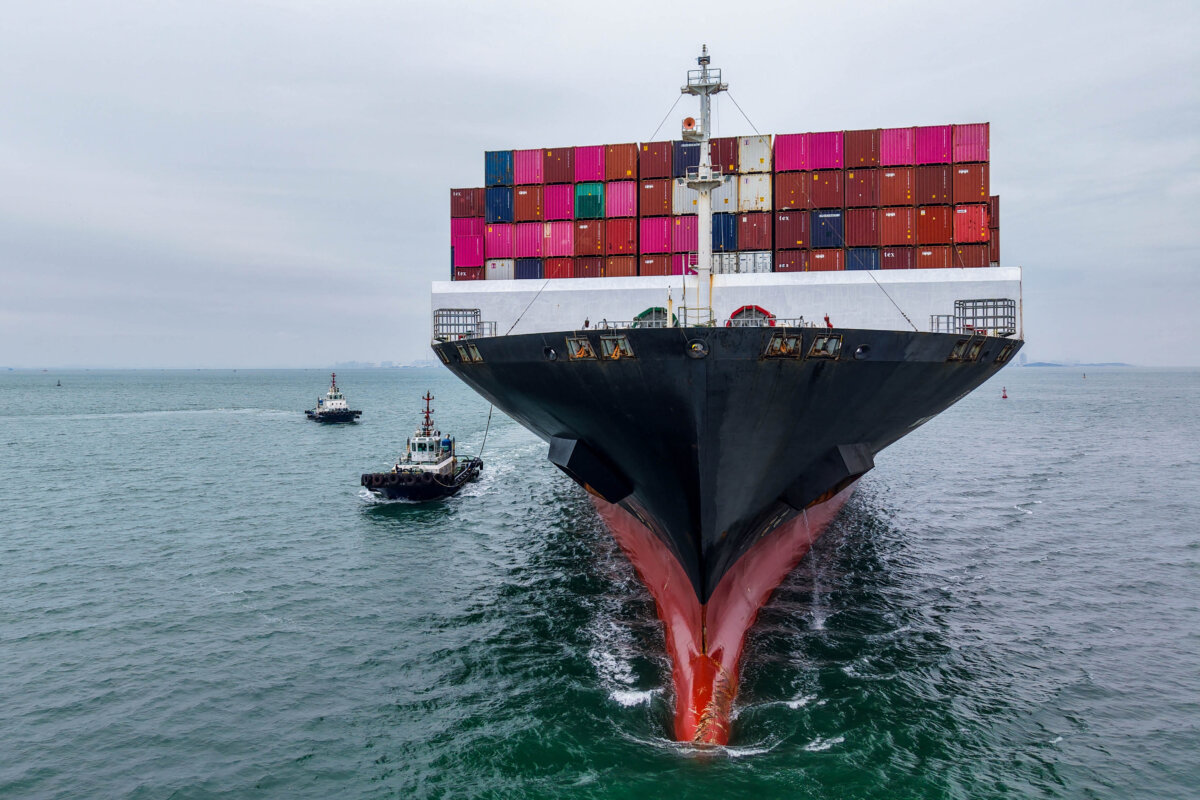
OFAC said it imposed sanctions on more than 50 individuals, entities, and vessels involved in Iran’s oil and liquefied petroleum gas trade. Unlike previous rounds, this one extends beyond shippers and traders to include port infrastructure, increasing both precision and deterrence.
Key targets include Rizhao Shihua Crude Oil Terminal Co. and Shandong Jincheng Petrochemical Group Co. According to the Treasury, Rizhao’s Lanshan Port had received more than a dozen “shadow fleet” tankers carrying millions of barrels of Iranian oil.
Shandong Jincheng, an independent teapot refinery, has also imported millions of barrels of Iranian oil since 2023, worth hundreds of millions of dollars, including from vessels sanctioned for their role in transporting Iranian petroleum, according to the Treasury.
“The Treasury Department is degrading Iran’s cash flow by dismantling key elements of Iran’s energy export machine,” Treasury Secretary Scott Bessent said in a statement.
The move follows an earlier round of U.S. State Department sanctions announced on July 30 against 20 other entities linked to Iran’s oil and petrochemical trade, including China-based Zhousan Jinrun Petroleum Transfer Co., accused of receiving shipments of Iranian-origin crude oil.
This marks the fourth round of U.S. sanctions under the Trump administration targeting Chinese refiners that continue to buy Iranian oil, a clear signal of Washington’s intent to pressure Beijing in the energy sector.
Higher Costs and Legal Risks for China’s Oil Imports
U.S.-based independent economist Davy J. Wong told The Epoch Times that this round of sanctions is strategically designed to “push the risk upstream from shipowners to the port ecosystem.”
“When terminals and unloading facilities are named, carriers, insurers, and agents all become more cautious,” Wong said. “Delays in docking, offloading, and customs approval could significantly raise costs and turnaround times.”
While other major ports in China could physically absorb some of the shipments, Wong said the main question is whether they are willing to take on high sanction risk. China’s Qingdao Port has already tightened restrictions on ships suspected of carrying Iranian oil, he noted.
“This isn’t a total cutoff,” Wong said. “But it raises the cost of breaking sanctions and makes compliance far harder. Iranian oil flows to China will likely fluctuate, reprice, and decline in phases, though not disappear entirely.”
Shen Ming-Shih, a researcher at Taiwan’s Institute for National Defense and Security Research, told The Epoch Times that since China relies heavily on crude from Iran and Russia, “it’s possible all Iranian oil bound for China could fall under sanctions.” Although China’s slowing economy has reduced overall oil demand, Shen said the United States could still impose further penalties on both Iran and Chinese buyers.
China Expands Rare Earth Controls
The sanctions prompted a swift response from Beijing. On the same day Washington unveiled its sanctions, China’s Ministry of Commerce announced it was expanding export controls on rare earth elements, adding five new materials to its restricted list.
China dominates the rare earth industry, accounting for 61 percent of global extraction and 92 percent of refining production, according to the International Energy Agency.
Beijing followed up on Oct. 10 by launching the antitrust investigation into Qualcomm and imposing port fees on all U.S.-owned or U.S.-flagged ships.
Shen said the timing likely reflects both internal political motives, including factional maneuvering ahead of the Chinese Communist Party’s Fourth Plenum, and an effort to project toughness toward the United States.
“It may also be an attempt to set the stage for a potential Trump–Xi meeting at the APEC summit,” he said.
Trump, in a post on Truth Social on Oct. 10, called China’s rare earth-related actions “extraordinarily aggressive,” accusing Beijing of sending “an extremely hostile letter to the World.”
The U.S. president announced in the post that, starting Nov. 1, the United States will impose a 100 percent tariff on all Chinese goods, on top of existing tariffs, and will expand export controls on key software.
American Counteroffensive Across Sectors
Alongside the new tariffs, the federal government rolled out measures across multiple industries to tighten pressure on China.
Regarding port equipment, the Trade Representative’s Office announced in a notice that a 100 percent tariff will be imposed on Chinese-made ship-to-shore cranes and cargo handling equipment, effective Nov. 9, directly targeting China’s dominance in port logistics.
In aerospace, Trump hinted at possible export restrictions on Boeing aircraft and parts when responding to reporters’ questions on trade with China on Oct. 10, noting that China relies heavily on American planes and components.
In electronics, Federal Communications Commission chairman Brendan Carr announced on X on Oct. 10 that it has successfully removed millions of prohibited devices, including Huawei and ZTE electronics, from major e-commerce platforms.
Li Jing and Luo Ya contributed to this report.
 Friends Read Free
Copy
Facebook
Tweet
Friends Read Free
Copy
Facebook
Tweet