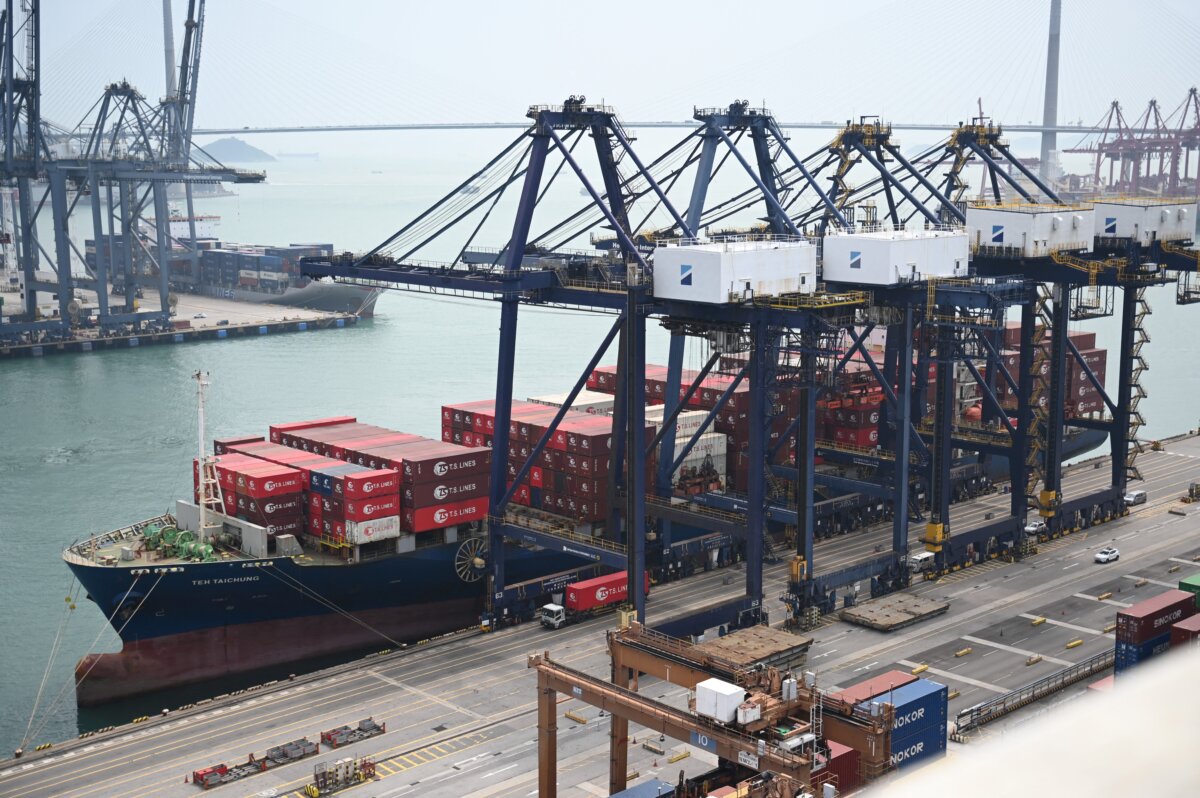

The United States has allowed the national emergency declaration related to Hong Kong to expire, but has retained an executive order issued by President Donald Trump during his first term that revoked the city’s preferential treatment.
In a July 17 statement, the Treasury’s Office of Foreign Assets Control announced that the president’s Executive Order on Hong Kong Normalization has expired.
Trump signed this executive order six years ago, declaring a national emergency in Hong Kong after Beijing imposed a sweeping national security law on the former British colony.
The executive order, subject to annual review, revoked a number of measures that treated Hong Kong as a separate entity from mainland China, such as exceptions to export controls and preferences for its passport holders. It also paved the way for sanctions against officials undermining the city’s autonomy.
A State Department spokesperson told The Epoch Times that although the president has allowed the national emergency to end, his executive order “otherwise remains in effect.”
“Hong Kong is no longer sufficiently autonomous to justify differential treatment in relation to the PRC” under U.S. laws and provisions listed in the order, the spokesperson said, using the acronym of the regime’s official name, the People’s Republic of China.
Treasury’s Office of Foreign Assets Control noted that the expiration of the national emergency authorization doesn’t affect a 2019 law that requires the U.S. secretary of State to assess annually whether Hong Kong is “sufficiently autonomous” from mainland China to merit special economic privileges.
A separate Hong Kong Autonomy Act, signed into law by Trump in July 2020, which provides a legal framework for sanctioning officials and entities responsible for eroding freedoms in Hong Kong, will remain in effect, the agency stated.
With these measures, the United States has imposed sanctions on then-security chief John Lee, who has been Hong Kong’s leader since 2022, and then-Chief Executive Carrie Lam, along with other senior Hong Kong and Chinese officials.
The sanctions freeze any U.S. assets these officials hold, and generally bar Americans from doing business with them.
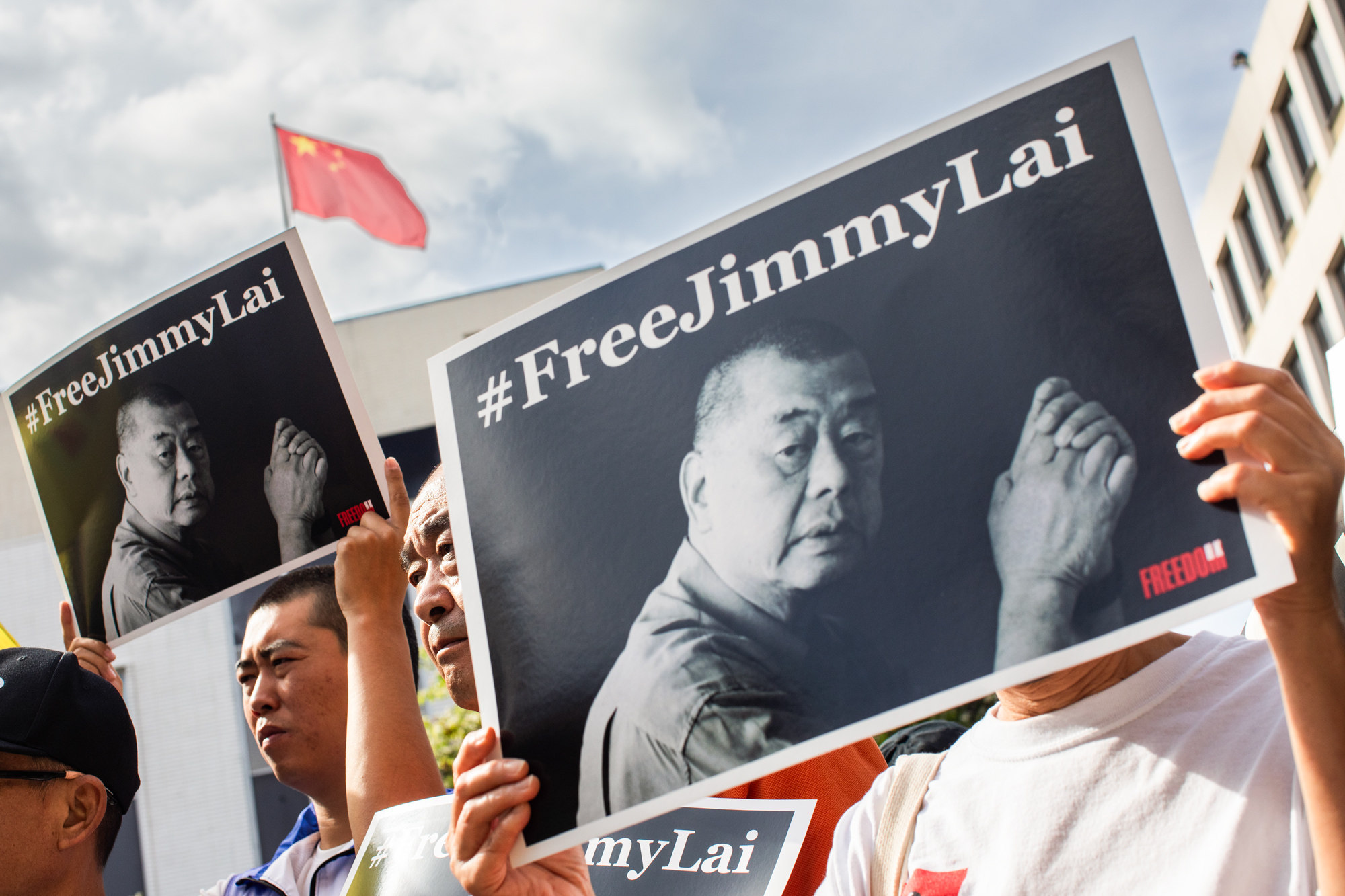 People gather in front of the Chinese Consulate General to protest the conviction of media entrepreneur Jimmy Lai in Los Angeles on Feb. 14, 2026. (Apu Gomes/Getty Images)
“The non-renewal is consistent with sanctions modernization efforts that streamline sanctions for greater efficiency and effectiveness, including by ensuring our sanctions are not duplicative,” the spokesperson told The Epoch Times in a statement.
“The Department of the Treasury will comply with all applicable laws and statutes.”
Hong Kong has taken a sharp authoritarian turn since Beijing enacted the security legislation in the city six years ago, with prominent politicians and activists now either in self-exile or in jail. Jimmy Lai, a 78-year-old pro-democracy publisher, received a 20-year jail term in February, the harshest sentence ever under the security law.
The penalty has sparked fresh concerns about Beijing’s assault on the city’s dwindling freedoms of speech and press that it promised to keep untouched for half a century when it took over the city from the British in 1997.
Concerns
Hong Kong Watch, a nonprofit advocating for the Asian financial hub’s human rights and freedom, called on the Trump administration to reverse the decision, saying the repression in Hong Kong has only deepened since the United States declared a national emergency.
Frances Hui, a Hong Kong activist wanted by the city’s government over her pro-democracy activities, noted that just earlier this week, Hong Kong’s national police raided two independent bookstores and arrested five people suspected of selling seditious publications.
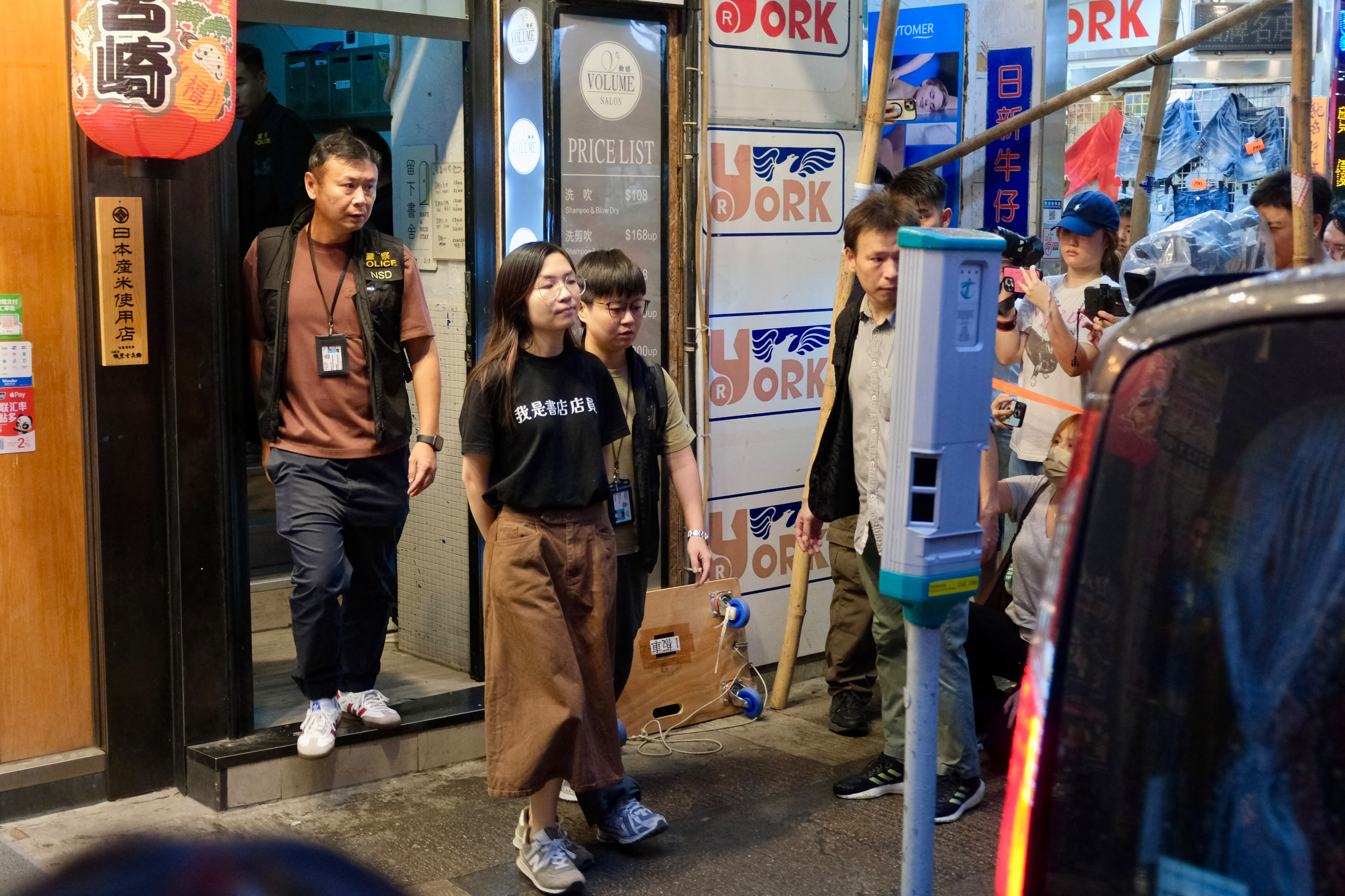 An independent bookstore employee is led away by policemen after the officers raided the Have A Nice Stay bookshop and confiscated items in Hong Kong on July 15, 2026. (Tommy Wang/AFP via Getty Images)
Asked about these concerns, a State Department spokesperson told The Epoch Times the United States will continue to call for the restoration of Hong Kong’s autonomy and the release of “all political prisoners unjustly detained for exercising their human rights and fundamental freedoms.”
“We continue to hold individuals accountable for undermining Hong Kong’s autonomy, including by implementing sanctions under the Hong Kong Autonomy Act.”
 Friends Read Free
Copy
Facebook
Tweet
Friends Read Free
Copy
Facebook
Tweet