



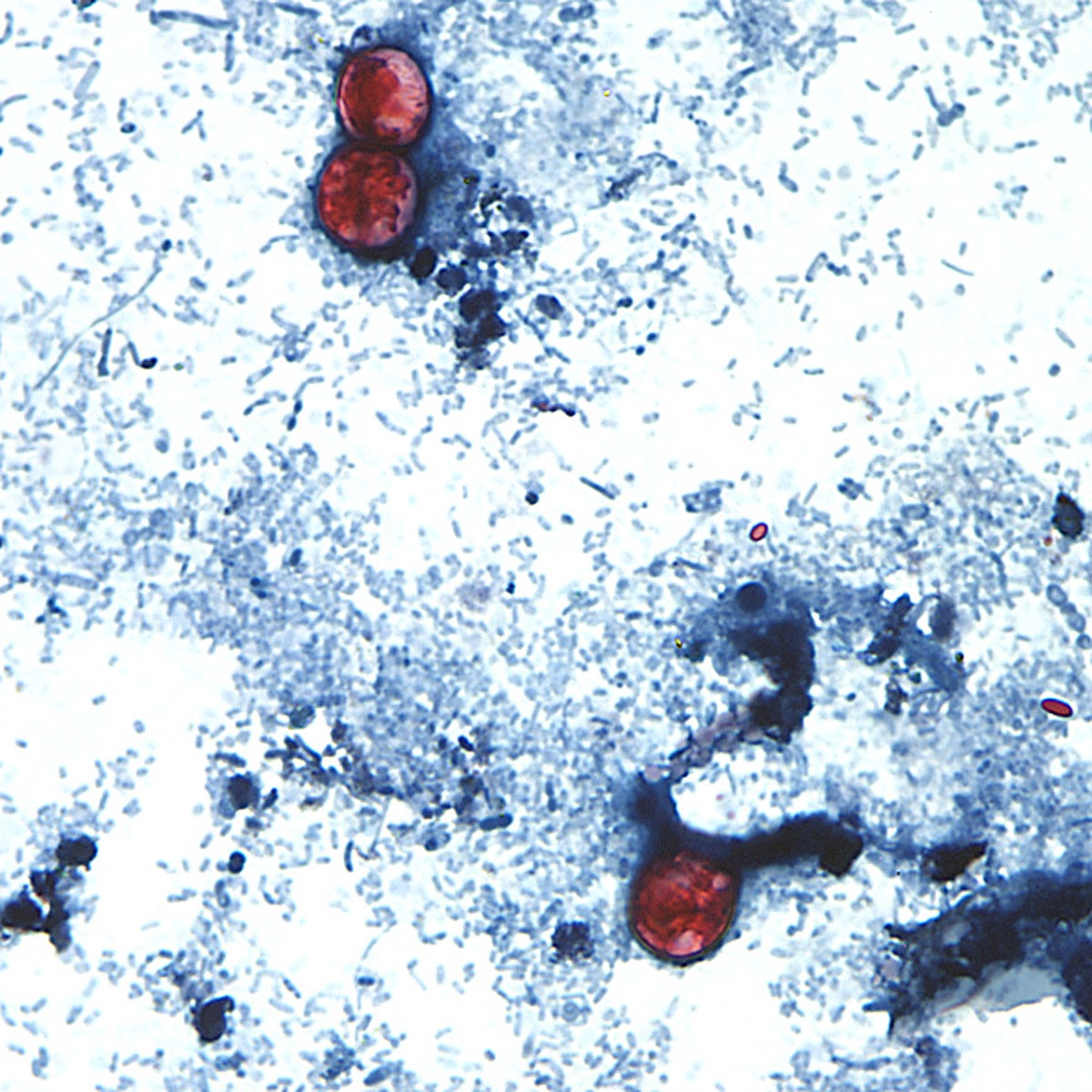
An outbreak of cyclosporiasis, a disease caused by a parasite present in food and water contaminated with feces, is spreading across the United States.
The disease is marked by watery, explosive diarrhea and can cause other symptoms such as abdominal pain and bloating.
Treatment typically consists of antibiotics. Doctors should advise patients to stay hydrated, the Centers for Disease Control and Prevention said in a health alert.
Officials said on July 16 that shredded iceberg lettuce served at Taco Bell is behind at least some of the cases and hospitalizations recorded in recent months.
Prevention tips include washing hands before and after handling produce, avoiding bagged salad mixes, removing several outer layers of leaves of lettuce before cutting, and cooking produce before consumption.
Here are the latest case numbers by state.
Alaska: Five cases in recent months; Alaska typically records five cases per year. Three of the patients had traveled internationally, one reported traveling to another state and eating fast food, and one reported no out-of-state travel. “Healthcare providers, laboratories, and tribal health organizations should remain vigilant for patients with prolonged or relapsing watery diarrhea and consider Cyclospora testing in patients with compatible illness,” the Alaska Department of Health said in an alert.
Arizona: 19 cases.
Arkansas: 26 cases year-to-date. “These cases are under investigation to determine if they are associated with the national outbreak,” an Arkansas Department of Health spokeswoman told The Epoch Times in an email.
California: 41 provisional cases, which is in line with the typical number recorded annually, officials said on July 14. “We are aware of the outbreaks affecting other states, however, and are closely monitoring for any signs of local acquired infection,” Dr. Erica Pan, California’s state public health officer, said in a statement.
Colorado: 150 cases and four hospitalizations. Just eight cases of the 120 for which investigations have been completed were domestically acquired, according to state officials. “While we’re seeing an increase in cyclospora cases, the vast majority are associated with international travel,” Hope Schuler, spokeswoman for the Colorado Department of Public Health and Environment, told The Epoch Times in an email. “Colorado is currently not part of the outbreak in the Midwest.”
Connecticut: 35 cases, up from 19 in 2025. “Connecticut’s surveillance system is doing exactly what it should: identifying cases, tracking exposures, and helping us stay ahead of this illness,” Connecticut Health Commissioner Dr. Manisha Juthani said in a statement. “We want to reassure residents that cyclosporiasis is treatable and we have not identified a Connecticut-specific source.”
Florida: 106 cases.
Georgia: 11 to 30 domestically acquired cases since May 1. A Georgia Department of Public Health spokeswoman told The Epoch Times via email that the agency is “not aware of any Georgia-specific outbreaks, clusters, or potential links to the outbreak that has sickened more than a thousand people across multiple states.”
Illinois: 227 cases, including 127 domestically acquired, and 23 hospitalizations as of early July 16.
Indiana: 327 cases, which is up from previous years. No sources have been identified.
Iowa: 57 cases, about half of which were acquired domestically, compared to 49 at this point in time in 2025. “None have been connected to the national outbreak investigations or a specific food source,” a spokeswoman for the Iowa Department of Health and Human Services told The Epoch Times in an email.
Kansas: 55 through July 15, up from 23 during the previous year through the same date. Thirty-seven of the new cases were acquired domestically. Kansas health officials said they are working to try to identify a source or sources of the cases.
Kentucky: 192 cases, including 108 confirmed, and seven hospitalizations as of July 15. Typically, Kentucky only has around 35 cases each year. “The Kentucky Department for Public Health and our partners at local health departments are engaged in surveillance, investigation and prevention activities to determine the effects of the illness in the commonwealth, share health and safety information with the public, and help determine a possible source,” a spokesperson for the department told The Epoch Times in an email.
Louisiana: One to 10 cases.
Maryland: 69 cases, including some contracted internationally. “Investigations into cyclosporiasis cases are conducted by local health departments and reported to the Maryland Department of Health. Investigations are ongoing and, to date, Maryland’s health departments have not identified a common link for cases reported in 2026 to present,” a spokesperson for the department told The Epoch Times in an email.
Massachusetts: 18 cases, which is in line with the normal number Massachusetts records each summer, a spokesperson for the Massachusetts Department of Public Health told The Epoch Times in an email. “There is no evidence currently that the outbreak of Cyclospora affecting multiple Midwestern states is affecting Massachusetts,” the spokesperson said.
Michigan: 5,002 cases and 102 hospitalizations. Michigan officials say that information to date indicates that lettuce or salad greens “may be a potential source” of the outbreak but that “other food items cannot be completely ruled out” and that no specific type of produce, grower, or supplier has been implicated.
Minnesota: 41 cases since May 1, some of which were acquired during international travel. “This total does not represent an increase in cases over what we would expect for this time of year, and we have not identified any outbreaks,” a spokeswoman for the Minnesota Department of Health told The Epoch Times in an email.
Nebraska: 49 cases, none of which are related to the wider outbreak, according to the Nebraska Department of Health and Human Services.
New Hampshire: One to 10 cases.
New Jersey: 46 domestically acquired cases. “While New Jersey is not experiencing substantial increases, illness clusters or outbreaks at this time, reported cases are steadily increasing,” the New Jersey Department of Health said in a statement.
New York state: 517 cases from May 1 to July 13. “New York’s current cases statewide do not represent a major deviation from the norm,” a spokeswoman for the New York State Department of Health told The Epoch Times in an email. “The Department continues to investigate cases to determine possible sources of exposure and is working closely with our partners at the Centers for Disease Control and Prevention, U.S. Food and Drug Administration and local health departments.”
North Carolina: 307 cases and 13 hospitalizations. “If you are experiencing severe or persistent diarrhea, you should reach out to your health care provider,” Dr. Zack Moore, the state’s epidemiologist, said in a statement.
Ohio: 1,409 cases in northwest Ohio, according to the Toledo-Lucas County Health Department. State officials said on July 8 that there were 177 cases across the state.
Oklahoma: 57 cases and 6 hospitalizations.
Pennsylvania: 28 cases. The state recorded 40 in 2025.
Rhode Island: Six cases since May 1. “There is no indication that any of Rhode Island’s cases this year are associated with cyclosporiasis clusters in other states, or with a common food source,” the Rhode Island Department of Health said in a statement.
Tennessee: 11 to 30 cases.
Texas: 68 cases and 15 hospitalizations as of July 13. All of those cases were domestically acquired, a spokesman for the Texas Department of State Health Services told The Epoch Times via email, and no source has been identified.
Utah: One to 10 cases. None of the cases are related to the wider outbreak, according to the Utah Department of Health and Human Services.
Virginia: 37 cases through July 4, up from an average of 13.4 cases in previous years through the same date. “There is not currently evidence that Virginia is experiencing an outbreak,” the Virginia Department of Health said in a statement.
Washington: 27 cases since May 1, including five acquired domestically or possibly acquired in the United States, and zero hospitalizations. “None of these cases are associated with outbreaks in other states,” a spokesperson for the Washington State Department of Health told The Epoch Times via email.
West Virginia: 69 cases and eight hospitalizations. “Epidemiologic investigations have not identified a common food item, produce supplier, grower, or distributor associated with these illnesses,” Shannon McBee, West Virginia’s state epidemiologist, told providers in a bulletin.
Wisconsin: 61 cases from May 1 to July 15, 11 of which were acquired domestically. “We have not identified any common food item responsible for illnesses among our domestically acquired infections,” Dr. Kimberly Zelton, an epidemiologist with the Wisconsin Department of Health Services, told reporters on a call.