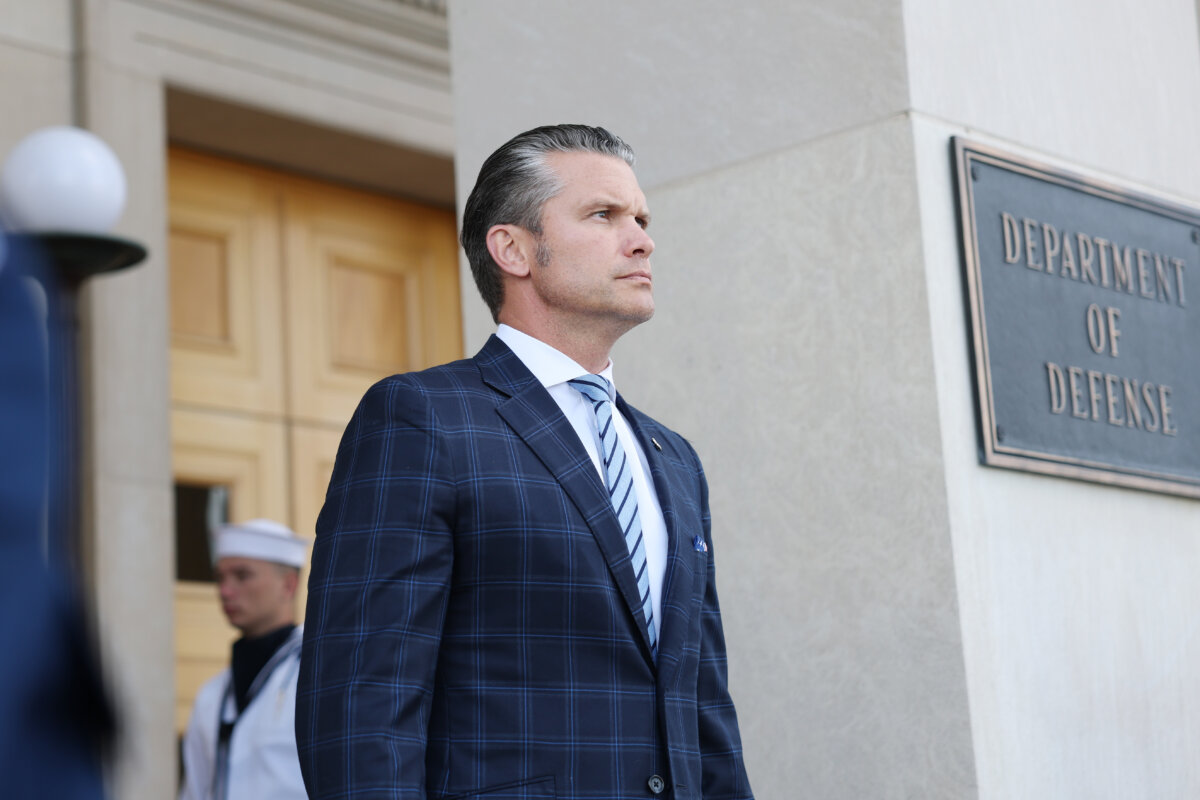

The United States does not seek conflicts with communist China but will resolutely safeguard its interests in the Indo-Pacific region, U.S. Secretary of Defense Pete Hegseth told Chinese Defense Minister Dong Jun in a meeting on Sept. 9.
Hegseth made it clear that the United States “does not seek conflict with China nor is it pursuing regime change or strangulation of the PRC,” Pentagon spokesperson Sean Parnell said in a statement, using the abbreviation of the communist regime’s official name, the People’s Republic of China.
“At the same time, however, he forthrightly relayed that the U.S. has vital interests in the Asia-Pacific, the priority theater, and will resolutely protect those interests,” Parnell said.
Parnell described the exchange as “candid and constructive,” noting that both sides agreed to further discussions.
According to a summary of the meeting published by Chinese state media Xinhua, the discussion touched on regional issues, including Taiwan and the South China Sea.
In the video call, Dong told Hegseth to maintain an open attitude, keep lines of communication open, and foster “a stable and positive relationship between the two militaries based on mutual respect and peaceful coexistence,” according to Xinhua.
Dong called for respecting Beijing’s “core interests,” while warning the United States against interfering in Taiwanese issues.
The Chinese Communist Party (CCP), which has never ruled Taiwan, views the democratically governed island as a breakaway province and has not ruled out the use of force to seize it.
“Any schemes and interference aimed at ‘using military force to assist independence’ or ‘using the Taiwan issue to contain China’ will be thwarted,” Dong was cited as saying by Xinhua.
Tensions remain high in the South China Sea. In August, a Chinese navy warship collided with its own coast guard ship while chasing a Philippine patrol vessel near the disputed Scarborough Shoal.
On Sept. 10, hours after Dong spoke with Hegseth, China’s State Council issued a notice stating that it had approved a plan to build a natural reserve at Scarborough Shoal. The Chinese regime had seized control of the coral reef more than a decade ago, although it lies within the 200-mile exclusive economic zone of the Philippines.
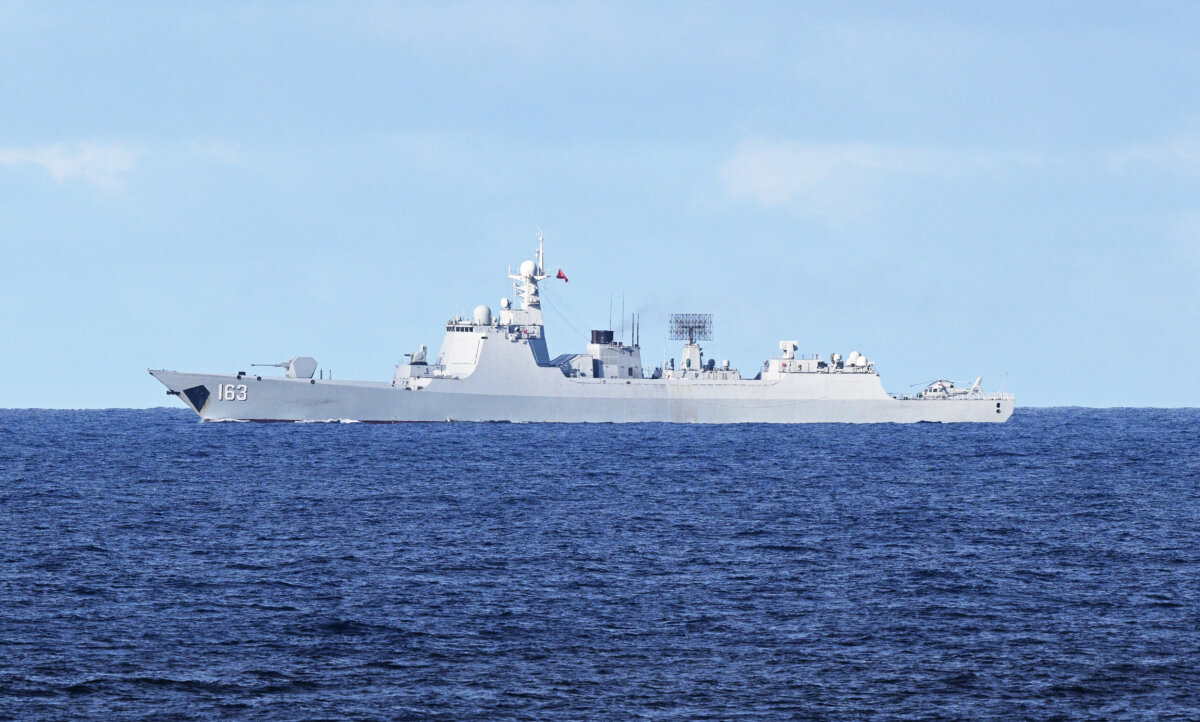
The CCP’s sweeping claims in the South China Sea overlap with the exclusive economic zones of Indonesia, Malaysia, Brunei, Vietnam, and the Philippines. A 2016 ruling by an international arbitration court concluded that most of Beijing’s claims in the water were invalid, but the CCP refused to abide by it.
In a speech delivered at the Shangri-La Dialogue in May, Hegseth said the CCP is “credibly preparing to use military force to alter the balance of power in the Indo-Pacific.”
Any attempts by the Chinese regime to seize control of Taiwan, Hegseth said, would result in “devastating consequences” for not only the Indo-Pacific, but also the entire world.
“There’s no reason to sugarcoat it: The threat China poses is real, and it could be imminent,” he told the security summit in Singapore.
 Friends Read Free
Copy
Facebook
Tweet
Friends Read Free
Copy
Facebook
Tweet