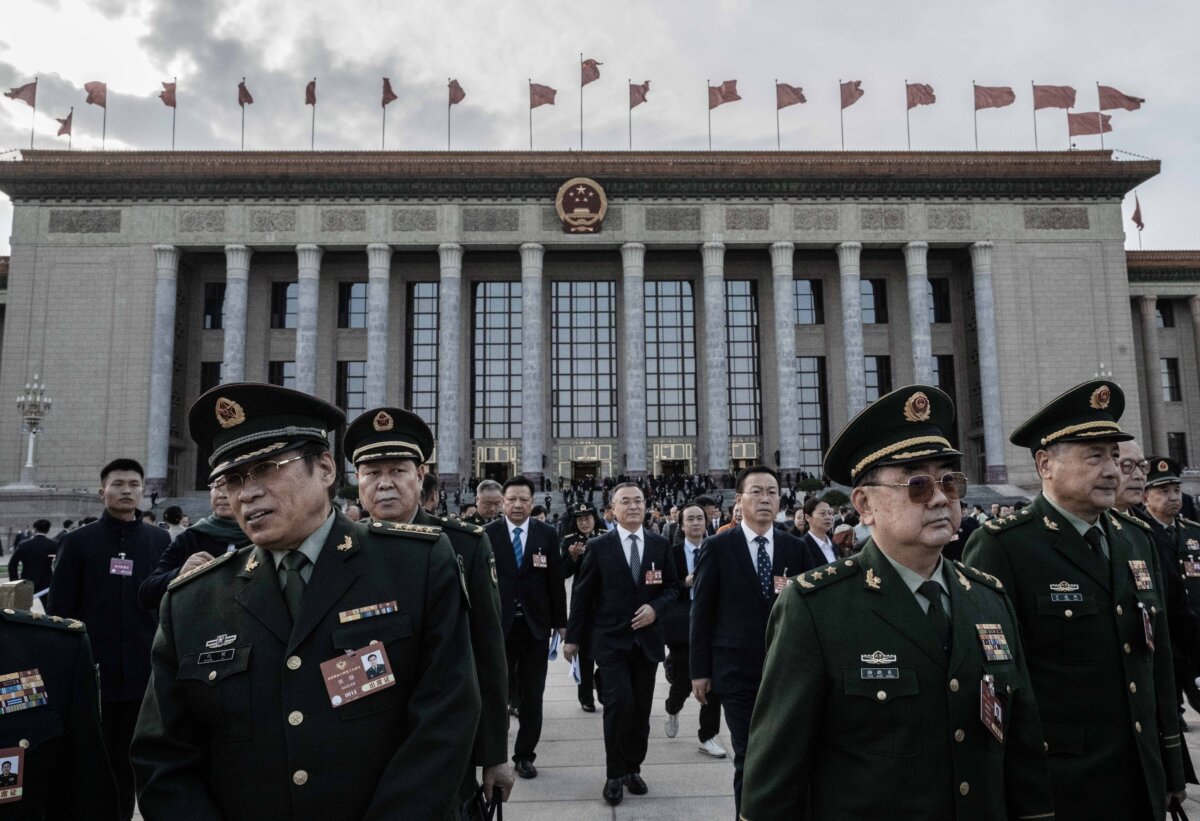

Chinese Communist Party (CCP) leader Xi Jinping has warned military officials against “disloyalty,” at a gathering during the CCP’s annual top political meetings known as the Two Sessions.
In a speech at a plenary meeting of the military, Xi stated that “there must be no one in the military who harbors disloyalty to the Party.” He also said his purges of officials under the “anti-corruption campaign” will continue and that oversight will tighten over the flow of funds, the exercise of power, and the quality of equipment in the military.
Analysts noted that more than a dozen top generals were absent from the meeting.
The Two Sessions are annual plenary sessions of the two houses of China’s rubber-stamp legislature, the Chinese People’s Political Consultative Conference (CPPCC) and the National People’s Congress. This year’s meetings were held from March 4 to March 11.
According to public records, there are 18 top-ranking generals among the military delegates to the National People’s Congress. Only five of them attended the plenary meeting of the military held on March 7: Zhang Shengmin, Dong Jun, Han Shengyan, Yang Zhibin, and Fan Xiaojun. The other 13 generals were absent.
A similar situation was observed among military representatives within the CPPCC. Only one military CPPCC member, Gen. Yi Xiaoguang, attended the meeting, while five other generals who are members of the CPPCC Standing Committee were absent.
Since the CCP’s 20th National Congress in 2022, five of the seven members of the Central Military Commission have been investigated or dismissed. Currently, only Xi and Zhang Shengmin remain.
Following the purge of top general Zhang Youxia in January, turmoil within the military has continued, while dissent has been growing. Zhang Youxia was accused of “seriously violating and undermining the system of responsibility under the Chairman of the Central Military Commission, and endangering the foundation of the CCP’s rule.” As the leader of the CCP, Xi is also chairman of the commission.
Xi’s warning at the Two Sessions this time is tantamount to admitting that the CCP’s internal political and military problems remain severe, Su Tzu-yun, researcher and director of the Division of Defense Strategy and Resources at Taiwan’s Institute for National Defense and Security Research, told The Epoch Times.
“This indicates that discontent with Xi Jinping is indeed ongoing within the People’s Liberation Army,” he said. “Factions have been purged, including those within Xi’s own faction, causing instability.”
While the “loyalty” of the People’s Liberation Army (PLA) previously meant loyalty to the Party’s commands, Xi has changed it to mean loyalty to Xi personally, Su said.
Deep-seated issues currently facing the Chinese military include loyalty crises, corruption, instability in the command structure, and deficiencies in combat readiness, Shen Ming-shih, research fellow at the Division of National Security Research at Taiwan’s Institute for National Defense and Security Research, told The Epoch Times.
“However, the root cause lies in factional infighting, which leads to disloyalty issues,” he said.
What appears to be an anti-corruption action is actually a struggle between factions or for power, Shen said. What Xi said at the meeting shows that it is possible that the purge of generals will be more severe in the future than it is now.
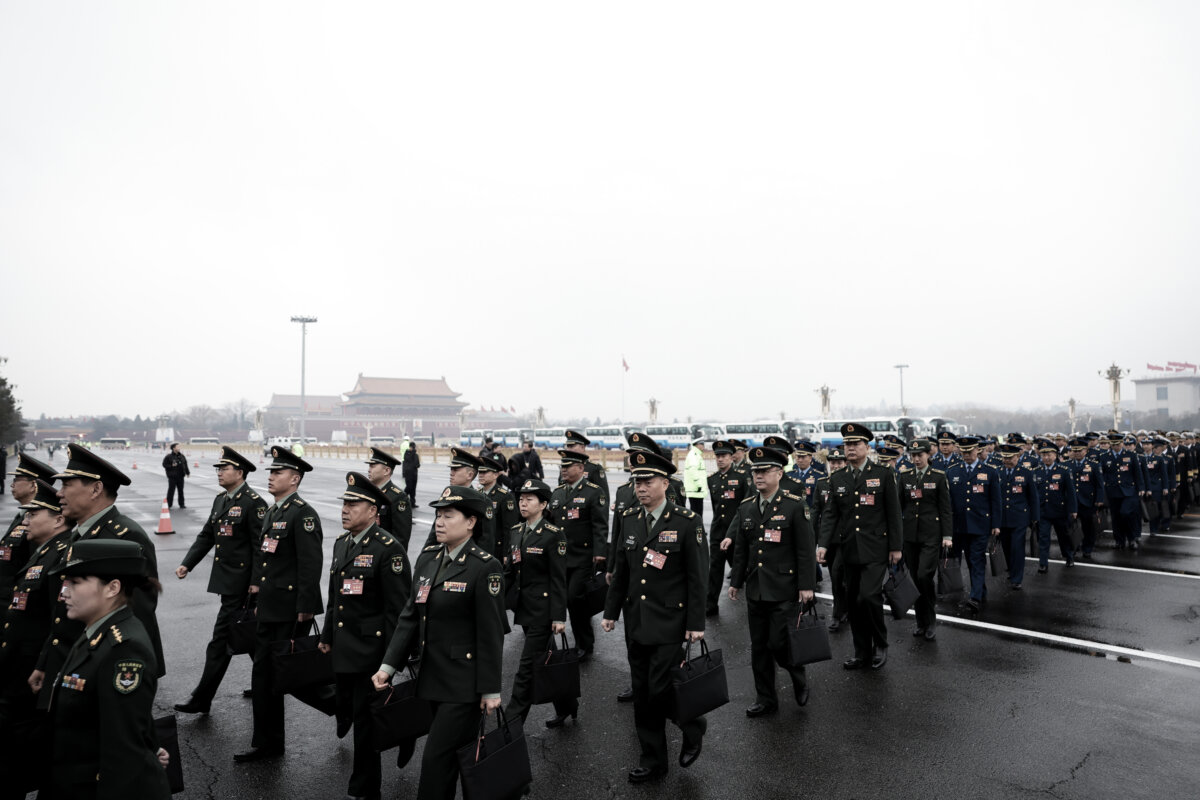
The reason for Xi’s continuous purge of top generals is ideological, Mark Cao, a U.S.-based military tech analyst and host of Chinese-language military news YouTube channel Mark Space, told The Epoch Times.
“Xi Jinping is actually following the extreme leftist ideology of the [Chinese leader] Mao [Zedong] era,” he said. “In the last year or two, a large number of CCP generals have been purged. This actually shows that Xi Jinping is not satisfied with any of these generals, as they do not meet his ideological standards.”
“He just uses one group of high-ranking military officials to fight another, and after he’s done using them, he replaces them with another group to take them down,” Cao said of Xi’s purge.
PLA’s Capabilities Weakened
The frequent changes in the top leadership of the Chinese military have a negative impact on its combat readiness, the analysts noted.
“Now everyone is living in constant fear,” Su said. “These generals have been detained, and their former subordinates may also have been implicated, including their connections and families. So under these circumstances, 57 percent of the generals have been purged.”
If these senior and experienced generals are unable to lead their armed forces, overall combat capability will decline, according to Su.
“Xi Jinping’s promotion of generals may be driven by political rather than professional aptitude, thus weakening the PLA’s overall combat strength,” he said.
This is a structural problem, Su noted.
“If war breaks out in the surrounding areas, whether it’s the East China Sea, the Taiwan Strait, or the South China Sea, the chances of Xi Jinping losing are much higher, and it will backfire and undermine the legitimacy of Xi Jinping and the Communist Party’s rule,” he said.
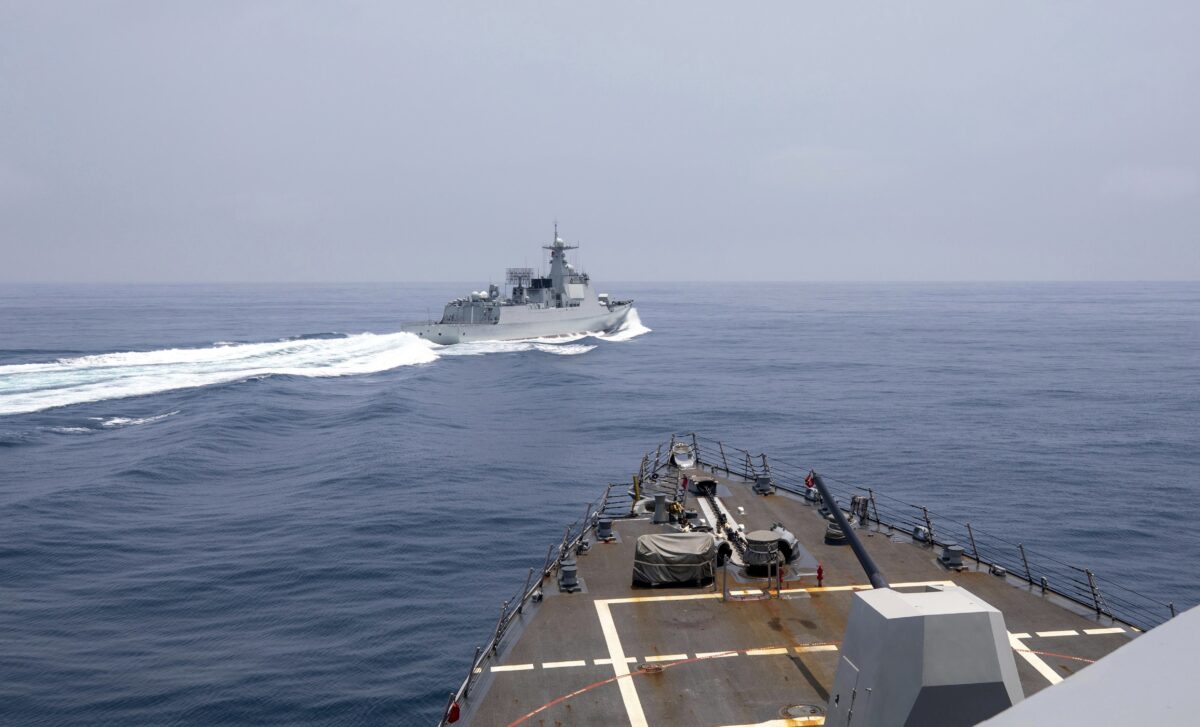
The continuation of factional and power struggles certainly has had a negative impact on China’s military strength, Shen said. Because many important general positions remain unfilled, there is a shortage of personnel.
“This shortage causes instability in the command system, which in turn affects the PLA’s combat readiness,” he said.
A lack of capable personnel is placing more pressure on Xi, Shen said.
“Most of the generals from his faction have also been purged, and he hasn’t cultivated any new military leaders,” he said.
It would be very difficult, at least for now, for the CCP’s military to fight a war, according to Cao. The recent U.S.–Israeli strikes on Iran, a close CCP ally, have given Xi pause.
“The upper echelons of its command chain have been almost completely purged, and the successors are in a temporary, uncertain state,” he said.
“Xi Jinping has seen the U.S. military’s tactics in Iran. The entire top leadership of the Chinese military knows that the CCP is no match for the U.S. military capabilities.
“The CCP’s invasion of Taiwan has been postponed, and I think Xi is unlikely to act immediately.”
Luo Ya and Li Jing contributed to this report.
 Friends Read Free
Copy
Facebook
Tweet
Friends Read Free
Copy
Facebook
Tweet