


“Your wrist shares a similar complexity with your ankles, and once pain syndromes start they can be difficult to eliminate,” Rebecca Gold, an occupational therapist who has specialized in wrist and hand rehabilitation for the past 34 years, told The Epoch Times.
Compounding the problem, the wrists are in near-constant motion throughout the day, and the modern era tends to subject them to many repetitive motions, which can provoke chronic pain.
Consistent exercise can help decrease or eliminate chronic pain presentations in otherwise healthy wrists.
Wrist Bones and Muscles
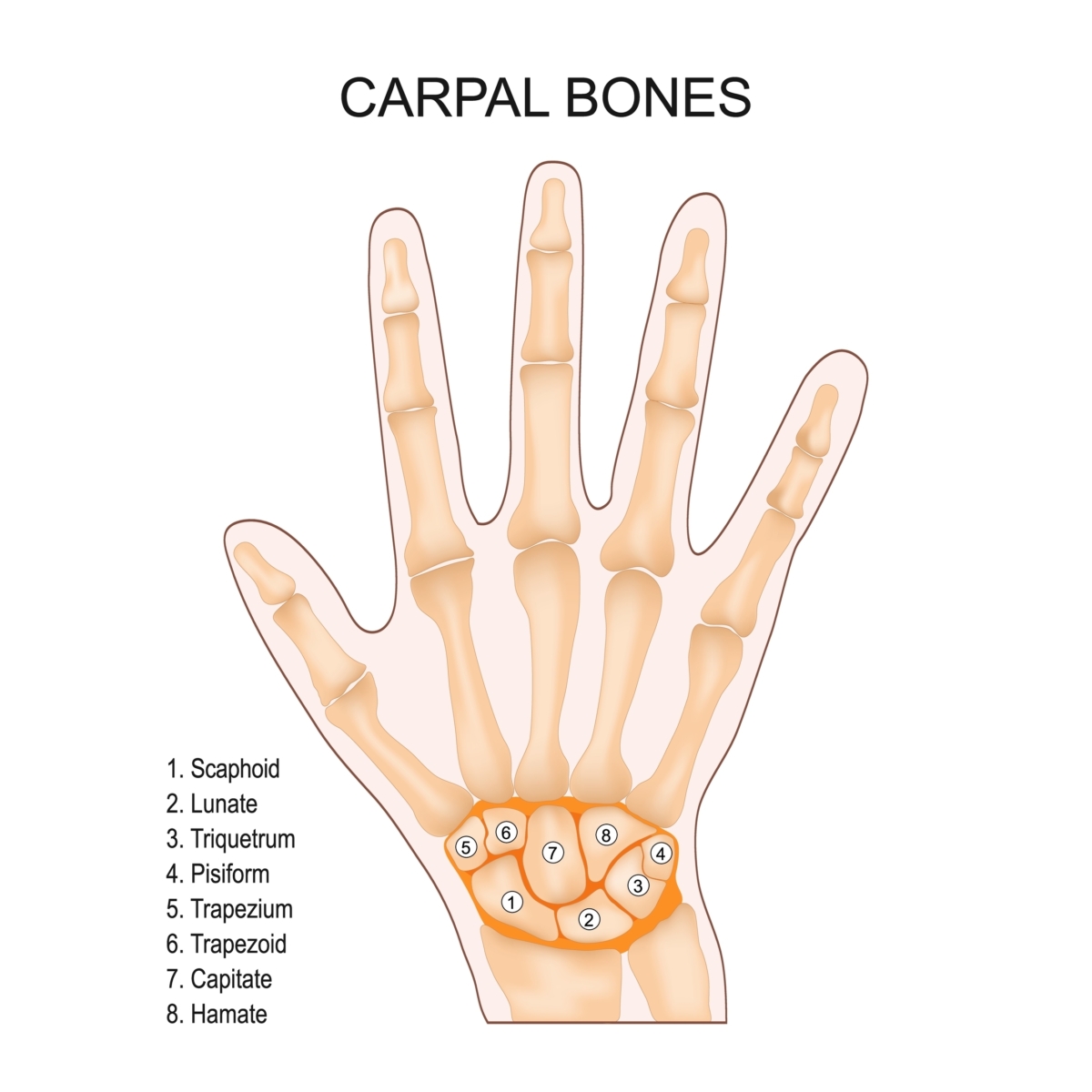
The wrist is composed of eight irregularly shaped small carpal bones that connect to the two forearm bones—the ulna and radius—via three joints.
The carpal bones then connect to the five long metacarpal bones of the palm. This intricate structure allows for strength and flexibility of the hand through its wide array of movements.
The primary muscles of the wrist and hand originate in the forearm. Muscles of the hand and wrist tend to follow what’s known as the rule of three: three muscles each for wrist flexion, wrist extension, finger flexion, finger extension, and thumb abduction.
This elegant, balanced design collectively provides strength and movement for the hands and fingers. These structures are further supported by an assortment of tendons, ligaments, and connective tissues that lend stability and flexibility to the wrist.
Causes of Chronic Pain in Healthy Wrists
Chronic pain is pain that lasts for more than three months. It may remain at low levels or can become worse over time. It isn’t uncommon for chronic wrist pain to last for years.
Two common causes of wrist pain are decreased flexibility and muscle weakness.
Decreased Flexibility
“Your wrists are front and center for every functional task that you do with your hands,” Ms. Gold said. “They simultaneously provide stability for the hand and also the mobility needed to position your fingers during task performance.”
Without the mobility of the wrist, the functional use of your fingers can be severely limited, especially if you have supination (turning of your arm so your palm faces up) and pronation (turning of your arm so your palm faces down) limitations.
Muscle Weakness
The three joints of the wrist rely on a balance of muscular strength to function optimally, and muscular imbalances can provoke pain.
Exercises for Chronic Wrist Pain
The following exercises are a great way to start a safe, effective flexibility and strengthening regimen for the wrist, which can assist in reducing or eliminating pain.
Wrist Supination and Pronation
“Most individuals don’t routinely move into full active supination and pronation, but it’s an excellent and simple exercise to get in the habit of doing,” Ms. Gold said.
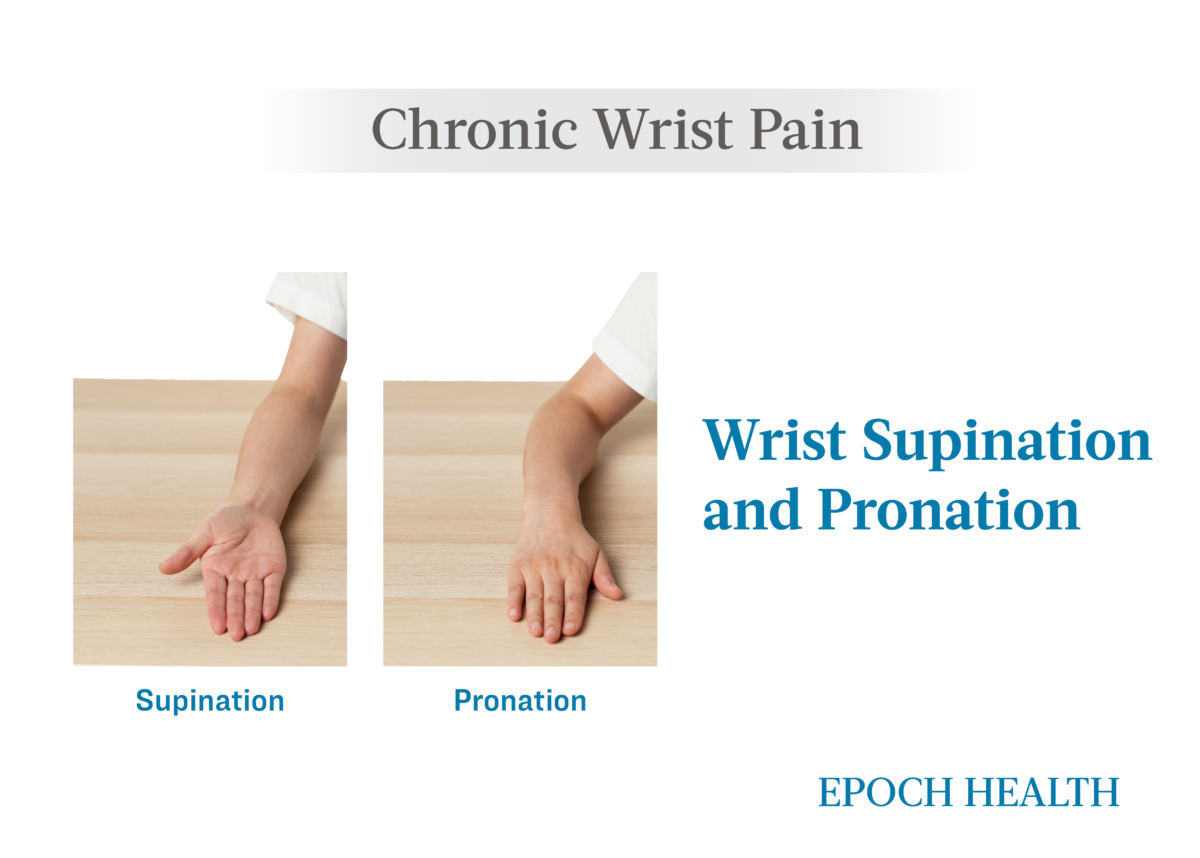
Step 1: Place your hand palm-down on a flat surface with your elbow by your side. Be sure to keep your hand as flat as possible.
Step 2: Keeping the pinky side of your hand in contact with the table, slowly turn your hand until your palm is all the way up. Keep your shoulders upright and don’t lean into the movement. Hold for three seconds.
Try doing three sets of 15 repetitions, with movement in both directions counting as one repetition.
While performing this activity on a tabletop can help ensure movement accuracy, you can also perform it with your arms to your side and your elbows bent to 90 degrees. This can allow you to push your rotations even farther.
Active Wrist Flexion
Wrist flexion is a critical aspect of hand function, especially when related to small item manipulation, and tight muscles and ligaments can inhibit wrist movement and daily activities. This simple exercise is easy to perform and can help maintain full wrist flexion.

Step 1: In a sitting position, place your elbow on a tabletop with your fingers pointing straight up toward the ceiling.
Step 2: Slowly bend your wrist while keeping your fingers straight, taking one second to move through your wrist’s whole range of movement. Push firmly into the movement at the end, but avoid provoking pain, then move your hand straight back up with your fingers pointed toward the ceiling again.
Perform the exercise for three sets of 15 repetitions.
Don’t underestimate the value of this exercise. Although simple to perform, it’s excellent for maximizing and preserving wrist flexion.
Wrist Extension
Wrist extension assists in plucking motions (e.g., guitar playing), stabilizing the wrist and strengthening your grip during pulling and pushing motions and positioning the wrist during typing and writing. Tight muscles and ligaments can inhibit wrist extension and functional capability.

Step 1: In a sitting or standing position, place your fingers together and make them as straight as you can while extending your arm/hand straight out in front of you.
Step 2: Slowly extend your wrist up, taking one second to move through your wrist’s whole range of movement. Once you reach the limit of your extension, push into the movement and hold for three seconds, then move your hand back to the starting position.
Perform three sets of 15 repetitions.
Wrist Fisted Flexion
Performing wrist movements with a fisted hand can intensify the previous two exercises. They should be performed after loosening up with the first two wrist flexion and extension exercises.

Step 1: While sitting, place your elbow on a tabletop with your fingers pointing straight up toward the ceiling, then pull your hand into a loose fist.
Step 2: Slowly bend your wrist, taking one second to move through your wrist’s whole range of movement. Push firmly into the movement while avoiding pain, hold for three seconds, then move your hand straight back up with your fingers pointed toward the ceiling.
Perform three sets of 15 repetitions.
Be sure to move carefully into this movement as it introduces increased tension across the tendons and ligaments along the palm side of your wrist.
[series_posts_list][/series_posts_list]
Wrist Fisted Extension
This exercise is easy to perform and can help build on the earlier extension exercise while increasing the intensity of the movement.

Step 1: In a sitting position, place your arm and hand on a tabletop, then make a loose fist.
Step 2: Slowly rotate your wrist upward, taking one second to move through your wrist’s whole range of movement. Once you reach the limit of movement, push firmly and hold for three seconds, then move your hand back to the starting position.
Perform three sets of 15 repetitions.
This movement and fisted wrist flexion can be challenging for some people, so approach both of these exercises carefully at first and don’t push into overt pain.
Radial/Ulnar Deviation
Radial/ulnar deviation refers to the movement of the wrist from side to side and tends to be one of the most neglected exercise movements. This exercise can help keep the joints and tendons associated with these movements flexible.

Step 1: While sitting, place your hand on a tabletop with your palm down, using the hand of your other arm to hold your wrist steady.
Step 2: Keeping your palm in contact with the table and your arm still, slide your fingers as far to one side as you can, hold for three seconds under full exertion, then move them as far as you can in the other direction and hold for three more seconds.
Perform three sets of 15 repetitions.
Be sure to maintain full resistance at the ends of both movements. These exercises can help maximize the flexibility and strength of the elbow muscles and ligaments, which can help decrease or eliminate chronic pain. If pain persists, however, seek medical consultation to get a proper diagnosis and treatment.
*If you have health or mobility issues that may present problems, consult with your physician before commencing any exercise regimen.
[note label=”Next” title=”Part 11 – Chronic Hand Pain: Often Caused by Overuse, a Therapist’s Top 6 Exercises for Relief” hyperlink=”https://cmsapi.theepochtimes.com/health/chronic-hand-pain-often-caused-by-overuse-a-therapists-top-6-exercises-for-relief-5365971″ description=”Although the hands often suffer from overuse syndromes and chronic pain, they’re also highly responsive to exercise targeted at maximizing their flexibility and strength, which can decrease or eliminate pain.”][/note]