This article includes affiliate links, which may earn us a commission, to support truthful and independent journalism (at no extra cost to you).
Owning a firearm and legally carrying one outside the home are not always the same thing.
Depending on where you live, you may be able to carry a concealed handgun without obtaining a state-issued permit. In other places, a permit or license may be required. And once you cross a state line, the rules can change again.
That can make concealed carry confusing even for experienced firearm owners.
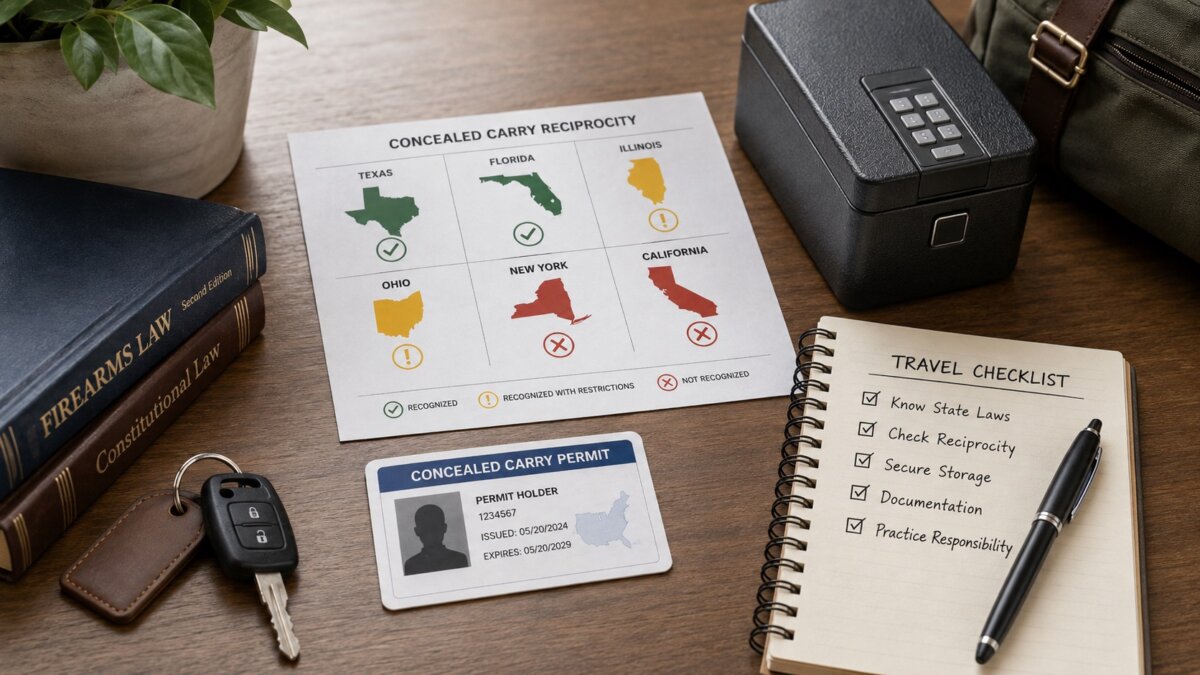
A concealed carry permit—often referred to as a CCW, concealed weapon permit, concealed handgun license, or another state-specific name—can provide a legal framework for carrying a concealed handgun where permitted. A permit may also be useful for people who travel, hunt, camp, drive across state lines, or simply want documentation showing that they have met their state’s requirements.
But a permit is not a nationwide pass. Firearm laws remain heavily dependent on state and sometimes local law, and the Bureau of Alcohol, Tobacco, Firearms and Explosives or ATF for short, advises firearm owners to consult applicable state and local requirements when determining what is legal.
Before applying, it helps to understand what a concealed carry permit actually does—and what it does not do.
What Is a Concealed Carry Permit?
The application process may involve some combination of identity verification, eligibility requirements, fees, fingerprinting, background checks, photographs, firearms training, or other documentation. The exact requirements vary considerably.
That variation is one of the most important things to understand about concealed carry.
There is no single national CCW application that automatically gives someone the right to carry throughout the United States. Instead, permits are issued under state law, and the privileges attached to them depend on both the issuing state and the laws of wherever the person happens to be carrying.
For someone considering a permit, the first question therefore should not simply be, “Can I get a CCW?”
A better question is: What does a permit available to me allow me to do, and where is it recognized?
Why Get a Permit if Your State Allows Permitless Carry?
This is an increasingly common question.
Some states allow eligible individuals to carry concealed handguns without first obtaining a permit. Depending on the jurisdiction, this may be called permitless carry or constitutional carry.
That does not necessarily make permits irrelevant.
A firearm owner may still choose to obtain a permit because it can provide documentation of eligibility, may be recognized by other jurisdictions, and in some circumstances can make interstate travel planning easier.
The important distinction is that the rules for carrying within your home state and the rules for carrying while traveling are not necessarily the same.
A person who can legally carry without a permit at home should not assume that the same privilege follows them across a state line.
Reciprocity: One of the Most Important Things to Understand
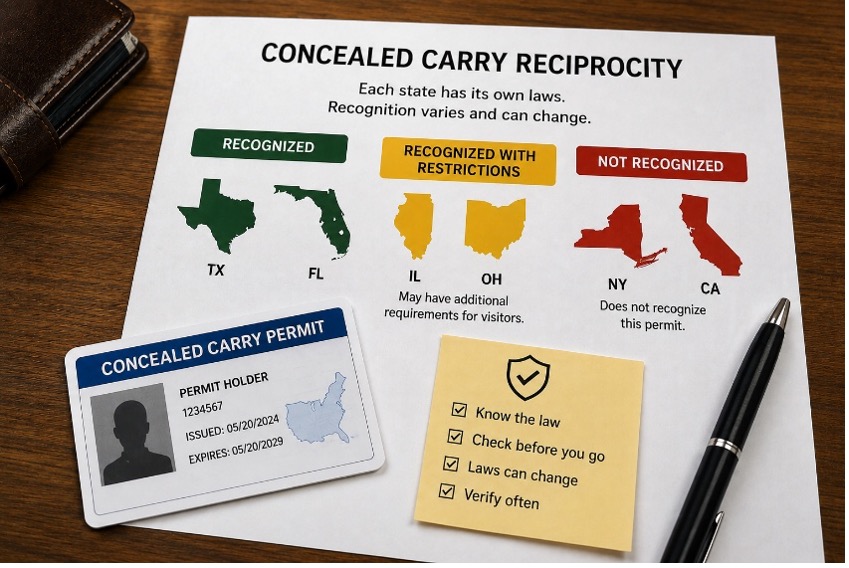
Reciprocity refers to whether one jurisdiction recognizes a concealed carry permit issued by another.
This is where many people become confused.
A driver’s license is generally recognized nationwide. Concealed carry permits do not currently operate under the same universal system.
One state may recognize your permit while another may not. A state may recognize permits from certain states but impose additional requirements on visitors. Rules can also change.
Federal legislation that would establish broader concealed-carry reciprocity has been proposed in Congress, but as of August 2026 it has not become nationwide law.
For travelers, that means checking the law before every interstate trip remains important.
Do not rely solely on an old reciprocity map, a social-media post, or what was legal during a previous trip.
Resident and Nonresident Permits
Another term shoppers may encounter when researching concealed carry is a nonresident permit.
A resident permit is generally issued by the jurisdiction where someone lives. Some jurisdictions also issue permits to qualified people who live elsewhere.
For travelers, a nonresident permit can sometimes provide additional legal carry options, depending on where the permit is recognized and the laws of the destination.
However, this is also an area where careful research matters.
Not every jurisdiction issues nonresident permits, not every permit has the same reciprocity, and obtaining an additional permit does not override the laws of the place you are visiting.
For that reason, applying for multiple permits simply because they are available may not be the best strategy.
It may make more sense to start with your actual travel habits.
Ask yourself:
- Where do I live?
- Where do I regularly travel?
- Which permits am I legally eligible to obtain?
- Where are those permits currently recognized?
- What additional rules apply in those destinations?
Those questions can help determine whether another permit would provide any practical benefit.
Crossing State Lines Requires More Than Checking Reciprocity
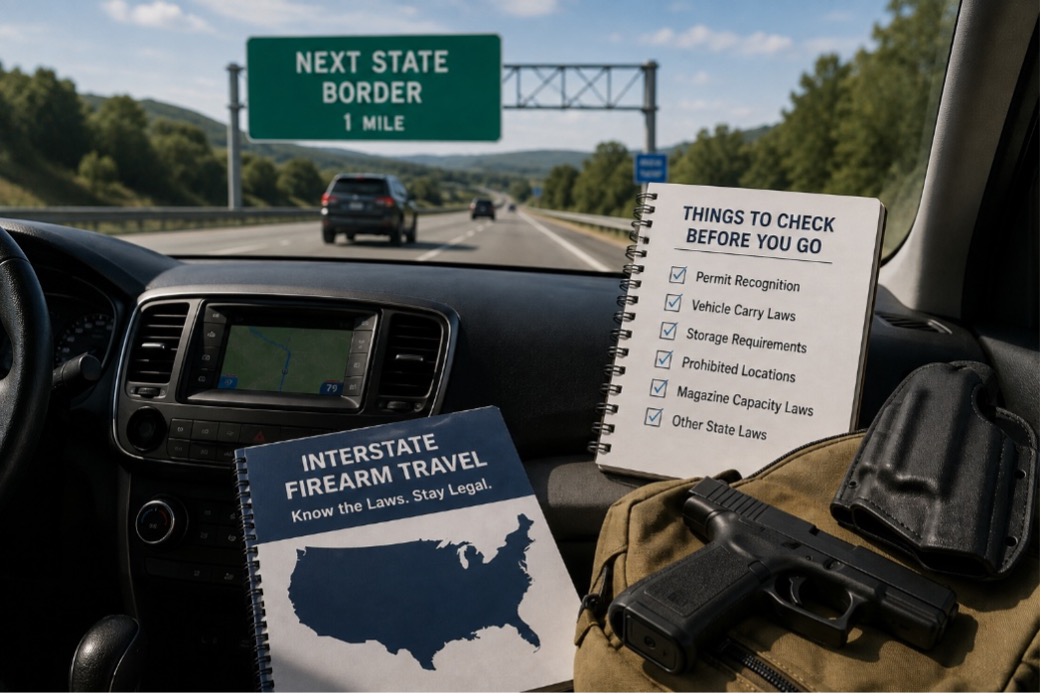
Knowing whether your permit is recognized is only part of responsible interstate travel.
States can have different laws governing where firearms may be carried, how they must be stored, whether signs have legal effect, magazine restrictions, vehicle carry, prohibited locations, notification requirements during encounters with law enforcement, and other issues.
Federal law also contains protections relating to lawful interstate transportation of firearms under certain conditions. Current federal regulations generally address transportation where the firearm is unloaded and not readily accessible from the passenger compartment, with additional requirements when a vehicle does not have a separate compartment.
That should not be confused with permission to carry concealed in the destination state.
Transportation and concealed carry are separate legal questions and it is important to understand the rules and laws concerning activities reasonably necessary during interstate firearm transportation, including stops for fuel, food, lodging, emergencies, and vehicle maintenance.
The practical takeaway is simple: before traveling with a firearm, look at both federal transportation rules and the current laws of every jurisdiction through which you plan to travel.
What Does the Application Process Usually Involve?
There is no universal application process, but most applicants can expect to provide basic personal and eligibility information.
Depending on the jurisdiction, additional steps may include fingerprints, photographs, background checks, proof of residency, references, training certificates, an appointment with a licensing authority, or payment of application fees.
Some jurisdictions have relatively straightforward processes. Others involve several steps.
The most important thing is accuracy.
Read every question carefully and provide complete and truthful information. If you are uncertain how a criminal record, restraining order, mental-health history, residency issue, or another legal matter affects your eligibility, obtaining qualified legal guidance is more appropriate than guessing on an application.
Federal law separately prohibits certain categories of people from possessing firearms, regardless of whether they are interested in a carry permit.
Training Still Matters
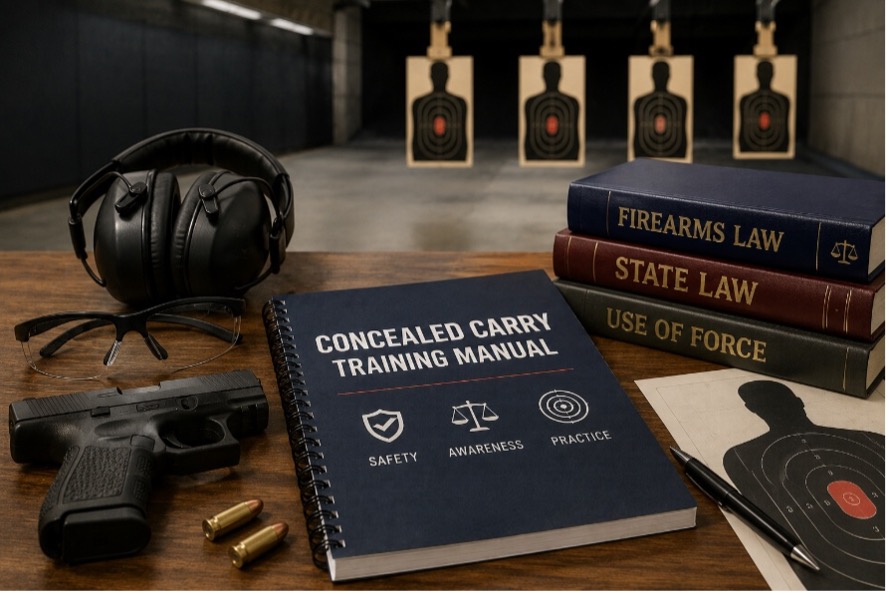
Meeting the legal minimum and being prepared to carry responsibly are not necessarily the same thing.
Some jurisdictions require training before issuing a permit; others may require little or none.
Even when training is optional, firearm owners may benefit from instruction covering safe handling, storage, marksmanship, applicable law, conflict avoidance, and decision-making.
Concealed carry introduces responsibilities that do not exist when a firearm remains secured at home or is used only at a range.
Training can also help a person determine whether carrying is actually appropriate for them.
A permit provides legal authorization under particular circumstances. It does not replace judgment, practice, safe handling, or an understanding of the law.
Safe Storage Should Be Part of the Decision
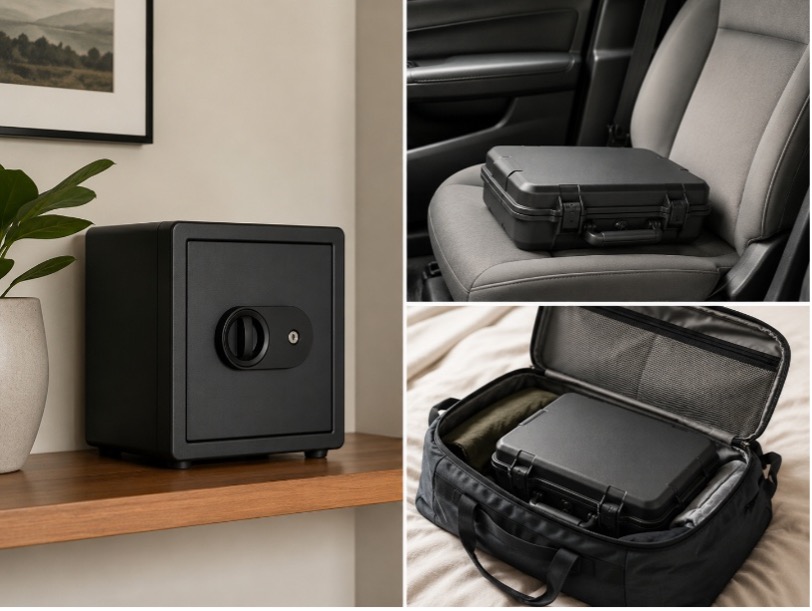
Another consideration sometimes overlooked in discussions about concealed carry is what happens when the firearm is not being carried.
A person may encounter a location where firearms are prohibited, need to leave a firearm secured in a vehicle, travel with children, stay overnight in a hotel, or return home and store the handgun.
That makes secure storage part of the overall planning process.
Lockboxes, safes, and other secure-storage options vary considerably depending on whether they are being used at home, in a vehicle, or during travel.
The appropriate storage method should account for both unauthorized access and applicable law.
Common Mistakes to Avoid
Many concealed-carry problems begin with assumptions rather than intentional violations.
One common mistake is assuming that a permit is valid everywhere.
Another is confusing permitless carry in one’s home state with nationwide permission to carry.
Travelers may also look only at whether their permit is recognized without researching restrictions that apply after they arrive.
Other mistakes include beginning an application without gathering required documents, overlooking renewal dates, relying on outdated reciprocity information, or assuming an online service itself issues the permit.
The licensing authority—not an application-assistance company—ultimately determines whether a permit is issued.
Application Assistance: What These Services Actually Do
Because requirements vary from one jurisdiction to another, some applicants use online services to help identify available permit options and organize the application process.
These services can be useful for navigating forms and identifying requirements, but consumers should understand the distinction between application assistance and government approval.
One platform operating in this area is CCWoffer, which provides the infrastructure behind state-specific concealed-carry eligibility and application-assistance funnels. Its network uses location-based routing so users can be directed toward options relevant to their jurisdiction. The company says its system supports traffic from all 50 states and uses state-specific funnels rather than presenting one permit as appropriate nationwide.
That approach makes sense because concealed carry eligibility cannot realistically be evaluated with a one-size-fits-all national form.
Those interested in exploring available options can CHECK CCW ELIGIBILITY to see information relevant to their location.
Remember that an application service can help facilitate the process; it cannot guarantee eligibility, permit approval, or recognition in another jurisdiction.
Before You Apply: A Simple Checklist
Before starting a concealed carry application, consider these questions:
Am I legally eligible to possess a firearm?
A carry permit cannot override federal or state prohibitions.
Do I need a permit where I live?
Your state’s current law determines whether a permit is required for concealed carry.
Where do I actually plan to travel?
This may determine whether reciprocity is important to you.
Is the permit I’m considering recognized there?
Check current official information rather than relying on an old chart.
Are there additional restrictions at my destination?
Recognition of your permit does not eliminate destination-state rules.
Have I considered training?
Even when not mandatory, training can be an important part of responsible concealed carry.
How will I secure the firearm when I’m not carrying it?
Think about storage at home, in vehicles, and while traveling.
Frequently Asked Questions
Is a CCW permit valid in all 50 states?
No. There is currently no universal concealed carry permit automatically recognized in every state. Recognition depends on applicable state law and reciprocity arrangements.
Do I need a permit if my state allows permitless carry?
Possibly not for certain types of carry within that state, assuming you otherwise meet its legal requirements. However, some firearm owners still obtain permits for travel or other benefits. Check your jurisdiction’s current law.
Does having a permit mean I can carry anywhere in a state that recognizes it?
No. States may restrict firearms in particular locations and impose other carry requirements even when they recognize an out-of-state permit.
Can I apply for a permit from a state where I do not live?
Some jurisdictions offer nonresident permits to eligible applicants, while others do not. Requirements and reciprocity vary.
Can I complete the entire process online?
That depends on the jurisdiction. Some steps or application-assistance services may be available online, while fingerprints, training, photographs, appointments, or other requirements may still need to be completed separately.
Does an application-assistance website issue my permit?
No. A government licensing authority ultimately issues or denies the permit. An online service may help identify options, prepare paperwork, or guide an applicant through the process.
Does reciprocity ever change?
Yes. Because firearm statutes, administrative rules, and recognition agreements can change, travelers should verify current requirements before carrying in another jurisdiction.
The Bottom Line
A concealed carry permit can be useful, but its value depends heavily on the individual.
For someone who rarely travels and lives in a jurisdiction where eligible adults may carry without a permit, the benefits may be different from those of someone who regularly drives through several states, hunts, camps, or travels for work.
The key is not simply obtaining another card for your wallet.
It is understanding what the permit allows, where it is recognized, what restrictions still apply, and what responsibilities come with carrying a firearm.
If you decide to explore a concealed carry permit, begin by checking the rules that apply to your location and circumstances, then verify information through official state or local authorities before carrying.
Those interested in learning which application options may be available can CHECK YOUR CCW OPTIONS as a starting point.
Laws can change, and this article is for general informational purposes only. It is not legal advice. Before possessing, transporting, or carrying a firearm, verify current federal, state, and local requirements with the appropriate government authority.