Live chat
March 24, 2023
Kash's Corner
Live chat
 Expand
Expand
 Expand
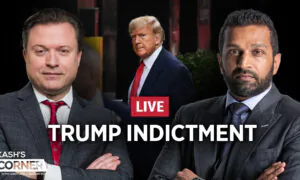
Why was the Manhattan grand jury unexpectedly delayed in the alleged Trump “hush money” case?
Did District Attorney Alvin Bragg withhold exculpatory evidence?
“As a prosecutor, you’re not allowed to withhold evidence of innocence or something that might be damaging to your case to the grand jury you’re presenting to. And that’s essentially what Costello said,” says Kash Patel, in reference to recent testimony by Michael Cohen’s former lawyer, Robert Costello.
We also take a look at the recent Saudi-Iran deal brokered by the Chinese Communist Party (CCP), and the CCP’s ambitions to replace the petrodollar with the yuan.
China has also offered a 12-point peace plan to end the Russia-Ukraine War. Vladimir Putin welcomed the proposal during a recent joint press conference with Xi Jinping.
“It’s a total farce for China to go in and say, we’re going to be the peace negotiators … They’re committing genocide in their own country,” Kash Patel says. “But just think about the messaging and the propaganda that the CCP gains from this. … They’re getting the narrative out there that China, the CCP, is the peace negotiators of the modern day, not the United States of America.”
FULL TRANSCRIPT
Kash Patel:
Hey, everybody and welcome back to Kash’s Corner. We’re finally returning from our break to kick off season seven, if you can believe it, with episode one here today. There’s so much going on in the mainstream media. Jan, what are we going to talk about?
Jan Jekielek:
What everyone’s been buzzing about this week is President Trump is going to be arrested by the Manhattan DA. It turns out actually that the grand jury has been canceled. That’s incredible. There’s this groundbreaking testimony from Robert Costello, the former Cohen attorney. We’re going to look at that. Also, there’s a lot happening overseas. We’ve got Xi Jinping meeting with Vladimir Putin and also seemingly brokering a neighborly deal with Saudi and Iran. Kind of unbelievable stuff going on.
Mr. Patel:
Yes, there’s a lot. It’s been an interesting couple of weeks since we’ve throttled off season six and got ready for season seven. It seems as if the news cycle was awaiting our return.
Let’s start in the wheelhouse that is law and order. Seems to be front and center now. Since we’ve been gone, this has risen to the level of a grand jury for the district attorney in New York City or Manhattan, this guy named Alvin Bragg. But let’s rewind the tape a little bit just to get everybody up to speed before we dive into what’s going on.
Remember, the crux of the matter is this district attorney is saying Trump violated the law by illegally using money through his lawyer to pay someone off. That’s essentially what they’re saying. The DOJ, at a federal level, looked at this investigation through their office in the Southern District of New York.
I mean Biden’s DOJ, not just any DOJ. They were presented with evidence that the gentleman you talked to, Robert Costello, and along with Michael Cohen, Trump’s former attorney, were presented with effectively the same evidence and they, the DOJ, decided not to bring a case because there was nothing to charge President Trump. That’s how the Department of Justice is supposed to operate.
Then, if you recall, the Attorney General for the state of New York, yet another layer in the legal system, not federal, not county, but state, Letitia James, campaigned on convicting Donald Trump of something. She literally didn’t say what it was. She just said, “We’ve got the man, now we’re going to find the crime,” essentially is what she said.
She reviewed the case as the state’s number one law enforcement officer and declined to prosecute. Now we’re down to Alvin Bragg at the Manhattan District Attorney level, which is the county prosecution for Manhattan, New York City, essentially. He’s saying or he’s leaked publicly that they’re going to indict Trump.
That’s where we are now. And just a reminder for our audience, we tape on Wednesdays, so we are not sure what’s going to happen Friday, but we’ll give it our best go. But what President Trump did over the weekend was basically put them on defense. I’m paraphrasing his posts on Truth Social for the last four or five days, but he said there was an unlawful leak from the grand jury that Alvin Bragg is convening along with his office about the status of the case.
What President Trump said was that information led him to believe that he’s going to be arrested and indicted this week, which tectonically altered the landscape for Alvin Bragg. It sent this thing that was already front and center into the stratosphere and made it the only thing people are literally talking about.
Mr. Jekielek:
I’ll just jump in. People think that this whole thing was actually a distraction from bigger things, some of which we’re going to talk about later.
Mr. Patel:
Exactly. I want to spend more time on those things and less on this, but we have to cover this because it involves the former and current candidate to be the next president of the United States. Looking at it from my background as a former public defender and prosecutor who’s been in front of grand juries and tried cases in state and federal court, I always say, evaluate the evidence and then look at the law. If there’s a charge you bring it, if there’s not, you don’t.
This case tragically shows that the politicization and weaponization of our law enforcement community, that we’ve talked about extensively, at the DOJ and FBI at the federal level that has made its way to the county and state level.But you’ve also seen a shift in the narrative that people who are not Trump supporters are out there vocally saying, “This is not a case that can be legally brought.”
What does that mean? Alright, so the crux of the matter is Alvin Bragg is saying this $130,000 that Michael Cohen, when Cohen was Trump’s attorney some years ago, paid Stormy Daniels that amount of money pursuant to some non-disclosure agreement to settle a private matter. I don’t know the details of that. That’s just what’s publicly reported.
Now, they’re saying, A, that’s a misdemeanor. If that’s the case, the statute of limitations on that misdemeanor charge is two years, so we’re well past that. What they have to do to even secure a charge that survives the statute of limitations is tie that misdemeanor to a felony. This is where it gets legally problematic from my understanding.
There’s no New York state felony they can tie it to. They’re attempting to tie it to a federal law felony, and you can’t do that. There are two different court systems for a reason, federal law on this side and state on that side.
Mr. Jekielek:
It sounds like those systems decided the system, and there’s nothing here.
Mr. Patel:
Two of them did. At the New York statewide level, they decided that, and at the federal DOJ level they decided that as well. Let’s put a pin in that for a second. If you recall, Hillary Clinton used campaign finance dollars to pay $1 million for the Steele dossier which she listed as a legal fee. Because Perkins Coie had taken that money and then paid Fusion GPS and Christopher Steele, the DOJ did not prosecute her.
Instead, the FEC ended up fining her some four or five years later for a monetary amount in a civil fine. If that’s the precedent, because the facts are analogous to that exact situation, Alvin Bragg is saying the money that Michael Cohen paid was hidden as a legal fee as payment to this person for X, Y, or Z.
If that’s the case, then there’s no crime. That’s why the DOJ didn’t bring a prosecution. That’s why Leticia James didn’t bring a prosecution. We’ll see what Alvin Bragg decides to do. But the evidence should be the focal point of this. Right now we have a two-tier system of justice, not just at the federal level, but now at the state level.
Mr. Jekielek:
Kash, we keep hearing this term as we talk about legal realities, grand jury. How does this actually work? What does it mean that this grand jury was canceled, at least temporarily? How is this going to play out?
Mr. Patel:
Yes, great point. It’s worth just quickly summarizing what this is. For me, it’s old hat because of my past. Grand juries, whether at the state or federal level, are convened. They’re larger than the juries you see at trial. If you think of a TV crime show where you see the lawyers standing up in a courtroom with a judge and the box over there with the jury, those are usually six to 12 people.
Grand juries are much larger, anywhere from 24 to about 36 people. And they convene for a lengthy period of time, but not every day. Remember this, this is the distinction that people forget. Alvin Bragg may be the district attorney, but the grand jury has to bring the charging document. The district attorney comes in and presents evidence through his prosecutors to the grand jury.
They say, “We think a crime has been committed. Here is the evidence.” Witnesses, documents, videotapes, and recordings. The standard in the grand jury is a preponderance of evidence. What does that mean? It has to be 51 percent to 49 percent, not that the defendant committed the crime, just that it was more possible than not that the crime was committed. That’s all the grand jury’s job is. That’s it.
They are not testifying or making a claim about guilt or innocence. They’re just saying there’s sufficient evidence to charge. Then those cases go to trial like we all see, and then the standard is guilt beyond a reasonable doubt, which it should be. It’s a constitutional standard.
What Alvin Bragg has been doing, for however many months, is convening this grand jury. Since they’re people in the community who are called in for months at a time, they can’t just come in at the drop of a dime. We as prosecutors schedule them ahead of time. We say, “This grand jury investigating this case needs to sit on Monday, Tuesday, and Thursday of this week, next week and the following week so that people can change their schedules and get in on time.”
What rarely happens is the schedule has been set and the grand jury, which this week was convened for Monday, Tuesday, and Wednesday, and then at the last minute the prosecutors come in and say, “You are canceled,” meaning we don’t need to convene today.
That means, in my opinion, that the prosecutors, Alvin Bragg and his team on this case involving Trump, don’t believe they have the evidentiary threshold met to submit the case to the grand jury for review. Essentially, they’re saying, “I think we’re short.” If the media reporting is accurate, they’re looking for another witness or new evidence or more evidence to maybe take on what Costello has put forth.
Michael Cohen’s credibility has been shot and defeated. I don’t know the details. Only the grand jury and the district attorney’s office is going to know that. But I know from a prosecutorial standpoint, if you have the goods and you present it to the grand jury, you go and ask the grand jury to return what’s called a bill of indictment, a true bill to indict and to formally charge a defendant.
There’s a saying from back in the New York jurisprudence days and some TV shows that you know could basically indict a ham sandwich. What does that mean? It means it doesn’t take much to meet that 51-49 threshold to say, “Something maybe wrong happened here.”
What does that show us on the outside? If they haven’t met that low threshold, then their case might have a serious evidentiary problem. They could salvage it, they could find new evidence, find another witness, or find another stack of papers. I don’t know. But right now it’s all on hold.
Mr. Jekielek:
We also have a former attorney for Cohen, basically saying that Trump knew nothing, according to Cohen’s own testimony. Trump didn’t know anything about this. Anyway, it was done on the side.
Mr. Patel:
It’s some pretty damning testimony. Normally you don’t hear from the internal workings of a grand jury because you’re not supposed to. Everybody knows who Michael Cohen is. He was convicted. Let’s go back to before that. Michael Cohen was president Trump’s personal attorney the first time President Trump ran for office. Then, they had a parting of ways.
Michael Cohen was eventually convicted in federal court and sentenced to three years in federal prison for crimes of lying, deceit and fraud amongst other things. That’s the star witness for Alvin Bragg in this case that we’re talking about. Obviously, he’s been before the grand jury. He’s been very public about it.
What I didn’t even know about was this other gentleman, Costello. Costello was Michael Cohen’s attorney in the past. This is a unique twist. It’s a little geeky, but I’m going to get into it anyway. As Michael Cohen’s attorney, Costello is not allowed under attorney-client privilege to talk about what he represented Michael Cohen on in the conversations.
Yet, surprisingly, I didn’t even know this either. Michael Cohen waived all of his attorney-client privileges with Costello, so Costello could talk to federal prosecutors, which he did. Costello said two years ago that he not only spoke to them, but he provided them with a ream of documentation from his engagements with Michael Cohen.
Then he went to the district attorney’s grand jury in New York City on Monday of this week and testified. Then, he walked out and gave an eight-minute recap of what happened. This grand jury has now heard from A, Michael Cohen, a convicted federal felon who is biased and animosity for the target of this investigation is well known, versus Costello, this career prosecutor, former federal prosecutor, now private attorney with an established record, no criminal history representing some of the most high profile clients in New York State criminal history, comes out swinging, literally saying the things that defeat any potential prosecution. I will summarize what Costello said; “He did this payment on his own. He did not notify President Trump about it, and he did it quietly to keep things quiet.”
Mr. Jekielek:
From Melania not knowing it, or at least those are Costello’s words?
Mr. Patel:
Costello provided documentation and emails to back that up. I’m guessing as a lawyer he took notes on his client and other matters. What was shocking to me was not just that bit of testimony that completely contradicts what Michael Cohen said, but that he held up a ream of paperwork that he said he gave to federal prosecutors and that he gave to this grand jury, and that Alvin Bragg only used-
Speaker 3:
Today after giving all those materials to the Manhattan District Attorney’s office. Out of 321 emails, they cherry-picked six emails to ask me about. And of course, they took them out of context. When they took them out of context. I told the grand jurors, I don’t know whether this will ultimately come to fruition or not. I told them to ask for the entire packet and I held it up. I said, there’s 321 emails. You need to see each and every email which follows in chronological fashion and give you the life history of Michael Cohen dealing with our firm.
Mr. Patel:
Some six pages of hundreds of pages of documentation. Now, let’s be clear, as a prosecutor, you are allowed to select your evidence. But as a prosecutor, you’re not allowed to withhold evidence of innocence or something that might be damaging to your case to the grand jury you’re presenting to. That’s essentially what Costello said.
He said, “Why have, you, the grand jury not seen all of this information that I’ve testified about? I have it recorded, it’s here for you to hold and read.” That to me proves that what actually happened is an abuse of prosecutorial powers, and Alvin Bragg has now put himself in the crosshairs. Because it’s New York, I don’t think anyone’s actually going to investigate him about prosecutor misconduct.
If you have information about a potential charge and you withhold it from the grand jury, that is illegal. Essentially, that’s what Costello has come out and said, “I had to go in there and testify. I had to set the record straight.” I don’t even know what his politics are. I have zero idea. He has the documentary evidence to completely contradict what Michael Cohen is saying.
Now we have a pause in the case, and if we’re to believe the public reporting, which I don’t know if we can, it says they’re looking for another witness. It’s tragic that our system has been politicized, but maybe we can use this as an example that breaks through to everyday America to say, “Look, we weren’t conspirators when we were talking about Russiagate.”
“We weren’t conspirators when we were talking about some of the harsh and undue treatments of some of the January 6 detainees.” This two-tier system of justice when it comes to things like Hunter Biden and the classified documents, it’s an unfortunate reality. It’s one that can be solved, but it’s going to require a lot of work.
Mr. Jekielek:
You mentioned Russiagate and I want to mention this as well. Recently, John Solomon is actually suing the National Archives. You and him were actually President Trump’s designated representatives to the National Archives. There are all these declassified documents that have been in limbo for a long time. A lot of our viewers are asking, “Where are these documents?” Can we finally get them?
Mr. Patel:
That’s the hope. John Solomon took a great step forward. He and I had been trying to engage with the National Archives as President Trump’s designated representatives to get the material that was declassified to the American public. John Solomon brilliantly took this case to federal court because we couldn’t get anywhere with the National Archives and DOJ and whatever else.
You will see in the court filings themselves, the comments directly from the National Archives. I’ll just summarize so they’re not attributed to me. It essentially has the number one lawyer at the National Archives saying, “The declassified binder of documents was sent to the DOJ.” Just pause on that for a second—the declassified. I’m not saying that, John Solomon’s not saying that, the head of the National Archives is saying the documents are declassified. How come two plus years later we don’t have them?
That’s the purpose of John’s suit. I don’t know how a judge rules against it. He was supposed to be granted access and the public was supposed to be shown these documents. To be continued. We’ll watch the case carefully, but hopefully it will move swiftly through the system and we have a binder of documents for the world to see.
Mr. Jekielek:
What is the timeframe in such a case?
Mr. Patel:
As we’ve talked about, once you’re in federal court, it can go fast as lightning, or it can go slower than slow. It’s up to the judge who gets the case and how fast he wants to move it. At this point, it’s going to be up to the DOJ to respond to John Solomon’s lawsuit and say, “We agree, we disagree, or we need more time. It’s never ending. All roads lead to Russiagate, and we never get away from it
.
Mr. Jekielek:
Let’s switch gears and let’s look at Xi Jinping and Communist China. There has been this journey to broker some agreement between Iran and Saudi Arabia, which is something that the U.S. might have been in the middle of, at some point, or preventing, but then later a trip to Russia with a lot of warm words being exchanged. Vladimir Putin is supporting the Chinese peace treaty, the CCP version of the peace treaty.
Mr. Patel:
And the promulgation that Joe Biden and his family received $1 million from CCP affiliates. But you’re right, while the United States of America under our current leadership have been looking left, and Russia and China have been going right. They teamed up, our two biggest adversaries.
We’ve said this on the show many times that our two biggest adversaries are China and Russia. Our biggest national security threat from a terrorism standpoint is Iran. They are the world’s number one state sponsor of terrorism. These three countries have gotten together, and it’s a horrific blow to global security, not just American national security.
Just think about this, Jan. Saudi Arabia and Iran who were at war literally last week, firing missiles into each other’s countries for years on end, blowing up infrastructure sites and oil rigging sites, and hurting and killing civilians while at war, have now brokered a peace deal.
Thanks to Xi Jinping and the CCP, Saudi and Iran have agreed to establish diplomatic ties. What does that mean? They are going to open embassies in each other’s country for the first time in forever. That means they will have diplomatic officials there. That means they will have law enforcement from their country there. That means they will have military personnel from their country there. That means they will have intelligence officers from their respective countries in each other’s countries in their embassies. That’s just the governmental aspect of it.
What does it mean from the private sector standpoint? Saudi Arabia is going to provide Iran with access to its financial system, banking infrastructure. It’s going to provide Iran with oil if it needs it, and it’s going to provide Iran access through the kingdom of Saudi Arabia to Europe and other people in the world to get materials, weapons, and other supplies that we don’t want Iran to have, specifically as it relates to their nuclear program.
One of Iran’s biggest threats that we’ve always tried to counter as the United States, whether you’re a Democrat or Republican, is we don’t want Iran to have a nuclear weapon. President Obama and President Trump took two drastically different approaches to that. Obama took the JCPOA, [Joint Comprehensive Plan of Action], the Iran nuclear deal, let’s call that avenue A. Donald Trump withdrew from that and issued heavy sanctions on Iran along with a number of other national security measures to suffocate their economy and preclude them from gaining the uranium and the ability to enrich it to nuclear weapons grade.
Not getting into the weeds with Obama and Trump, let’s just stay on Iran, Saudi Arabia, China and Russia. Now, they have access to some of the world’s superpowers who can fill the gaps that America had blocked Iran from obtaining. To me, That’s problematic just on the nuclear front, putting aside the economic and banking leverage, and everything else.
Then, we get to the terrorism front. Does Iran have access to Russia and Chinese arm supplies? That would be problematic for many, many, reasons. This deal that was brokered, and you’re right, the U.S. was nowhere to be found. No leadership from this administration was over there, not from the White House, State Department, or Pentagon that I can tell.
By the way, having worked on these matters, they don’t happen overnight. This is months and months of work, which means Xi Jinping and China, Vladimir Putin and Russia, MBS [Mohammed bin Salman] and Saudi Arabia, and the ayatollah and the leadership structure in Iran have been talking about this for a long, long time. And then, they convene this global summit. Now, we have Iran and Saudi Arabia as allies.
I’m not saying we shouldn’t help the civilian population of Iran. That’s never what I’m saying. The problem is, how do we help the civilian population, but also defeat the national security threat to America and the world? I don’t think this helps the United States.
Mr. Jekielek:
It’s hard to fathom. But the reality is that the U.S. still remains the main security partner for Saudi Arabia. This doesn’t change overnight?
Mr. Patel:
Well, yes and no. You’re right, it doesn’t change overnight.
Mr. Jekielek:
The other question is on energy. Obviously, Saudi’s providing a lot of oil, especially when the US has lowered its production dramatically. This is a complex situation.
Mr. Patel:
I agree. You’re totally right. Energy is a matter of national security. Remember we’re two-plus years into the Biden administration, and under his policies, the price of gas skyrocketed. Reminder for all, he went to Saudi Arabia to try to mend the fences with MBS and bring the oil prices down. That didn’t work. During that entire time, we now know Saudi has been meeting with the likes of Xi Jinping and Vladimir Putin and their counterparts in Iran, and forging a deal.
The biggest threat, outside of what we’ve talked about, is the petrodollar. Right now, the international oil reserves and the international oil trading system, for lack of a better word, work on the petrodollar. It’s a U.S. dollar-backed system. Just think about this. China has come in and basically said, “We’re going to switch. You, Saudi Arabia, don’t need the U.S. dollar anymore. We, China, will use the renminbi to come in and replace the petrodollar with the yuan.
Just think about if they succeed. I’m not saying they will succeed, but that’s the plan. They’ve been public about it. If they do that, America for the first time in modern history will not have the dollar backing the largest energy sector on planet Earth.
Mr. Jekielek:
I’ll just jump in. It would be a bit like Saudi committing suicide, because the yuan is completely at the whim of the Chinese. The value is completely at the whim of the Chinese Communist Party.
Mr. Patel:
You’re absolutely right.
Mr. Jekielek:
Some people would call it monopoly money.
Mr. Patel:
And one of President Trump’s hallmarks against China was talking about the Chinese manipulation of its currency when it suits them. They’ll just pull the lever because they don’t operate under the same rule of law that we do. They’ll make it cheaper if it benefits them, they’ll make it more expensive if it benefits them, and forget the rest of the world.
If they replace the dollar as the reserve currency in this oil industry, then truly, Saudi Arabia will not have to look to the United States for this energy relationship. It won’t need us. Remember, the United States of America, not Saudi Arabia, is the largest exporter of oil on planet earth. Saudi Arabia seems to be making a play to say, “Come on in, Xi Jinping and China, we’ll do business with you. If it’s a better deal for us, then maybe we won’t talk to the U.S. anymore.”
That would be shocking, Jan. Saudi Arabia is one of America’s greatest allies in the Middle East, but it just seems to me as if no one’s even talking to them right now. By no one, I mean our political leadership at the White House and elsewhere. They’re just out there making all these deals with Iran and having China broker them.
Then, they’re talking to China and Russia about access to their financial institutions, banking systems, securing weaponry and other supplies from the countries that they’re newly partnering with. They’re not looking at America anymore. It’s drastic. It’s hugely problematic to our national security interest.
Mr. Jekielek:
In February, you have the Chinese Communist Party coming in with this peace deal for Russia and Ukraine, basically saying, “We’re going to be the ones to broker this deal.” Vladimir Putin is behind it. Of course, it doesn’t require Russia to remove itself from Ukraine. And I want to remind our viewers that the Chinese Communist Party regime is currently pursuing three genocides. It’s just such a bizarre reality.
Mr. Patel:
I would say it’s laughable, but it’s so far beyond that, Jan. It’s truly detrimental to global security, not just American security. Think about this. The Chinese Communist Party and the CCP are brokering peace negotiations in Europe. Where is the United States of America? Last month, Joe Biden went to Eastern Europe and committed more blood and treasure to the Ukraine and didn’t host one meeting about a diplomatic resolution to the war in the Ukraine. Not one. Not one conversation that I saw, not one meeting that I heard about.
Just like Saudi Arabia is ignoring this leadership structure on the global stage when it comes to all things Ukraine, China and Russia are ignoring that old leadership structure, and they’re filling in the gaps that America would normally be leading on. Of course, it’s a total farce for China to go in and say, ‘We’re going to be the peace negotiators,” but just think about the messaging and the propaganda that the CCP gains from this.
They’re going out to the world and saying, “We’re asking for peace.” They know they couldn’t be bigger hypocrites, because they’re committing genocide in their own country. They’re not asking Russia to withdraw or do anything, but they’re getting the narrative out there that the CCP is the peace negotiator of the modern day, not the United States of America. They’re the ones that get to set the table and sit there, and decide what’s resolved, and how it’s resolved, if these talks continue.
They’ve already established the parameters, because the United States of America has done nothing to establish or work towards peace in the Ukraine, except commit more American dollars and more American manpower. That’s the difference. We are being outmaneuvered on the global stage by the Chinese Communist Party and Vladimir Putin when it comes to Ukraine. And this deal, this farce, is an example of it.
I’m not saying it has been successful or will succeed, but you have to look at it from this standpoint. Americans in the world got so used to the fact that America would be the global referee, the peace settler, and bringing people to the table. Now that we’re not even there, I don’t know that anyone knows how to react to that. They’re just like, “Oh, this can’t be real. It’s not something to pay attention to.” But look at what we’ve just covered in this episode. Saudi and Iran are now partners and allies brokered by the Chinese Communist Party and Xi Jinping.
Xi Jinping and Vladimir Putin have been meeting for three straight days in Russia, talking about ending global conflicts. We know they’re lying, but they’re having these discussions and telling the world, talking about bringing peace to Ukraine, talking about funding each other’s economies, propping up the renminbi, making the Yuan the petrodollar. All of these conversations are now happening on the world stage and America is nowhere to be found.
That is the biggest loss to American national security interests and that of our allies. Do you think France or England wants a nuclear-armed Iran? Do you think they want the Chinese Communist Party to be the leaders on their continent—where Russia and Ukraine is, after all—about peace negotiations? It’s absurd.
Mr. Jekielek:
The truth is, I don’t even know the answer to this question at this point.
Mr. Patel:
No one does. That’s the scary part. Normally, at least we are at the table, if not leading the conversation at the table with the people there, and engaging in security and peace talks. We’re not even there.
Mr. Jekielek:
We’re going to have to see how all this develops.
Mr. Patel:
Yes, we’ll cover it on our show.
Mr. Jekielek:
Absolutely. On an interesting note, as we finish up for today, you have been involved in this song that is on the digital song sales chart on Billboard. It’s actually the number one song, topping Miley Cyrus and many other singers.
Mr. Patel:
Jan, I haven’t really spoken about it, so I’m glad to give the backstory. The song is called Justice for All. I got a call from my friend Ed Henry, who’s in the news industry as well, and we started chatting. Whatever your positions are politically on January 6th, we’ve always talked about it on our show, and it’s been talked about elsewhere, lots of those defendants have been treated either unjustly or harshly or denied bail when they shouldn’t have. That has caused a financial problem for many families.
We thought, “What would be a way that we can raise awareness and money for them?” We came up with a song called Justice for All. I don’t think most American know this, but the defendants who are detained in the DC jail from January 6th, have sung the national anthem every night for something like 760 consecutive nights and running.
We found out about this, and we went and actually captured that audio. Through some wonderful friends in the music industry, we were able to digitize it. You have to do a master copy and all that. And then, we thought, “How do we make it a little more powerful?” President Trump is one of the biggest voices in America on this, and he agreed to record the Pledge Allegiance.
We took the national anthem and the Pledge Allegiance and interconnected them and added some music. The powerful thing about it is we also created a video that everyone can watch. But the powerful thing about it is the people who have been impacted the most are the ones raising awareness.
Did we think it was going to go number one for seven straight days on the iTunes chart last week? No, we didn’t think that. It’s the response of so much of the American public that this is on their minds front and center. The music industry, just like Hollywood, has been influencing certain sectors of the American public with their political views, rather than being professional.
It’s cool that we found a way to literally break through the music and Hollywood industry. As you said, we spent no money on this. When it was on iTunes, number one, and on Apple Music for a week, people thought it was unheard of that it was there for a day, let alone seven.
Then Billboard is the gold standard for music sales and computations and rankings, and they only put their charts out once a week. Yesterday, Justice For All was number one on the billboard chart you cited, which is unheard of.
Just think of the people that are on that chart, Miley Cyrus, Taylor Swift, Morgan Wallen, Rihanna, One Republic, these aren’t nobodies. It was a pretty cool project and I was blessed to be a part of it. Hopefully, it will be able to do some good for certain families and help a few folks out in the process.
Mr. Jekielek:
I’ll just highlight for people that this is the digital song sales chart. It’s astounding that there’s been this massive ground swell of interest in this piece. It’s very different from most of what’s on there.
Mr. Patel:
Besides what we’ve talked about, the hope is also that other entertainers, musicians, and artists can see that you don’t need to spend $500,000 creating a product. If you make something that resonates with the American people and you talk about it on the Epoch Times, or put it out on free speech platforms like Truth Social, it can grow fast. And that’s the ultimate goal.
Mr. Jekielek:
Kash, It’s time for our episode one, season seven shout out.
Mr. Patel:
I can’t believe it, Jan, we are back for season seven, episode one. The shoutout goes to Robert Gamir. Thanks so much for posting on our message board. Thanks to everybody who participates in our weekly live chats, we are having a great time there. We appreciate the audience coming back for season seven. Robert, we’re back for you and everybody else and we’ll see you all next week on Kash’s Corner.
This interview was edited for clarity and brevity.