Live chat
August 29, 2023
American Thought Leaders
Live chat
 Expand
Expand
 Expand
[FULL TRANSCRIPT BELOW] “There was a case where Dr. He in China did some genome edits on two children—on two babies. He made two CRISPR babies. That guy went to jail, all right? Suddenly, fast forward to today: we’re willing to take that risk on billions of people.”
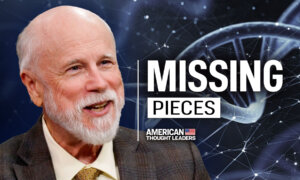
Kevin McKernan worked at the Human Genome Project at MIT as manager of research and development. Today, he is the chief scientific officer and founder of Medicinal Genomics, and is researching DNA contamination in the COVID-19 genetic vaccines.
“There are limits on how much DNA can be in a vaccine precisely because of the concern over DNA integration,” says Mr. McKernan. “What we do know is in both shots, there is residual DNA, and this DNA is either right above the regulatory limit or tenfold higher.”
How do the different mRNA vaccine components impact the body? What’s really going on with the SV40 monkey virus promoter that’s in them? Why should we be concerned about lipid nanoparticles and DNA open reading frames? And how is synthetic mRNA fundamentally different from naturally-occurring mRNA?
“Australia has different guidelines on what constitutes gene therapy, and it looks like these vaccines may, in fact, fall under that category, given the fact that there’s DNA in them and they’re using LNPs. And we now know that some of the DNA in there has been used and documented as a gene therapy tool,” says Mr. McKernan.
FULL TRANSCRIPT
Jan Jekielek:
Kevin McKernan, such a pleasure to have you on American Thought Leaders.
Kevin McKernan:
Thank you, Jan. I appreciate you having me on to discuss this. It’s a very important topic and I’m glad you’re giving it the coverage it needs.
Mr. Jekielek:
You have been doing some really remarkable work looking at what’s in these Covid genetic vaccines. Most recently there’s been a lot of chatter around SV40, the simian virus promoter. Why don’t we jump in there? This was so important that it warranted an AP [Associated Press] fact-check. AP’s assessment is that it’s false that there is a simian virus SV40 in the vaccines.
Public health officials and the lead researcher of a study cited in many of the social media posts say there’s no monkey virus DNA in the inoculations approved by the government regulators. Some Covid-19 vaccines utilize DNA molecules derived from simian virus 40, but that’s not the same as the virus itself and the molecules aren’t cancer-causing. What’s your reaction?
Mr. McKernan:
We did put a preprint on this, which never said that the entire virus was present in the vaccines. We said that the promoter and the enhancer and the origin was in there, along with the polyA signal. It seems as if the AP has erected a strawman argument where they are trying to debunk something that was never said. That’s my first comment.
My second comment is they are trying to make claims that this is not cancer-causing. There are guidelines that are written by Keith Peden at the FDA that govern how much DNA can be in a vaccine, and those are all based on DNA integration risks. The FDA has the answer for them, and they immediately need to go look at Keith Peden’s work. There are limits on how much DNA can be in a vaccine precisely because of the concern over DNA integration.
Now I will add that what the AP should probably look into here is the time period when Keith Peden evaluated how much DNA could be in these vaccines. It didn’t consider that the DNA could be in a lipid nanoparticle, which would make it a lot more effective at getting into the cell. It also didn’t consider if the DNA had particular sequences that might help it get to the nucleus of the cell.
Here are two additional things going on that mean the DNA in these vaccines is more likely to get to the nucleus and integrate into the genome than the information they had at that time. When they came to those regulations, they were assuming the previous DNA in the shots were host cell DNA, like maybe you grew the vaccine in some type of monkey kidney cell.
As a result of this, there’s background monkey DNA, or background human DNA, due to whatever host cell line they use. We have something very different going on here. We have a well-known promoter that’s used in gene therapy that’s inside the vaccines that’s getting injected through an LNP that makes it very effective at transecting cells. Then it has a signal in there that drives that DNA into the nucleus.
I don’t think Keith Peden had anticipated that when he came up with these 10 nanogram limits of DNA. I’d say the verdict is still out as to whether or not they can be cancer-causing, but the risk is certainly elevated from what the FDA’s guidelines have been constructed off of.
Mr. Jekielek:
I want to simplify what you said. How could something like that become cancer-causing? It’s because it can actually get into the cells in the first place. Please explain that process. What would make this cancer-causing? We are seeing this higher incidence of the so-called turbo cancers and rare cancers appearing in people who took these genetic vaccines. There’s a signal there that people are wondering about.
Mr. McKernan:
Bob Weinberg does a lot of work in this space. He’s written the book on viral integration into the genome-causing cancer. If you survey their sequence, in many tumors you’ll find a SV40 DNA sequence there from SV40 viruses and also from other viruses. Viruses are often known to integrate to your genome and disrupt your genome, which can lead to this genome instability that can then create a cell line that grows out of control.
The concern is if this DNA integrates the genome, one portion of the SSV40 sequence is an SV40 promoter, a very strong promoter, which means it drives transcription wherever it lands in the genome. If this happens to drop itself in front of a proto-oncogene and drives a lot of expression off of a gene that’s known, if you hyper-express it and turn the cell cancerous, then we have a concern that DNA is in fact doing that.
There are two concerns. There are promoters in this vaccine from SV40 and there’s an 72 ACE pair enhancer, which David Dean has shown is a very potent tool for moving DNA into the nucleus, and they’re right next to each other. If this DNA moves into the nucleus and it drags a promoter with it, and that integrates in front of a gene, it can disrupt gene regulation and potentially lead to the oncogenesis.
Now with that said, this may not be the only thing causing this turbo cancer effect that people are seeing right now. The cancers are certainly going up right now, and that’s a concern. People have tried to pin this on there being a reduction in cancer screening. However, the cancers that we’re seeing at greater frequency right now are not cancers that are traditionally screened for.
I don’t think that’s the answer, but we do have a risk of potential DNA integration. We also have a risk that we’ve seen in the Pfizer trial that there’s an induction of lymphocytopenia and neutropenia. Those are white blood cells. After vaccination, patients have lower white blood cells, which you need to clear out cells that are misbehaving, like cancer cells.
The third thing is that there has been some work in a few papers showing that the spike protein itself may get to the nucleus and disrupt regulation of p53 and BRCA1. People are probably familiar with BRCA1 because of breast cancer genes, but p53 is also another guardian of the genome.
These are genes that clean up genomes that have been broken or have integration events. They are the things that clean up these broken salt lines. If you have all three of those potentially increased integration risks happening, with white blood cell reduction and spike protein inhibiting the genes that are meant to clean up this type of problem, the combination of those things could certainly be tied to the rise in cancer that we’re currently seeing.
Mr. Jekielek:
Let’s briefly talk about the lipid nanoparticles. Aside from being incredibly good at getting through barriers that the body has set up, they’re also quite toxic. Could there be a role from the lipid nanoparticles?
Mr. McKernan:
That’s possible as well. Mark Gido does some very interesting work on looking at what transfection of the epithelium can do. If you overburden that process, you can create a lot of these leaky membranes, which can explain a lot of the adverse effects. What’s missing from both of the trials is that no one really ran a vehicle control, which will tell you what happens if you just transfect people with LNPs [lipid nanoparticles] without any mRNA at all. What happens to people in that case?
We don’t know the answer to that. It’s a very important point you’re hitting on here, because a year from now, there will be more of a scientific consensus that spike protein was a bad idea, and that maybe we should switch this to a different protein or maybe we should use this platform to hit RSV [Respiratory Syncytial Virus] or flu.
If we don’t know the toxicity of the LNPs alone, that might be just as dangerous of an approach. We really do need to understand if this transfection is a good way to fend off a respiratory virus. Many people have argued that this is a horrible way to thwart off a respiratory virus because you’re building immunity in the wrong compartment of the body. You really need immunity in the nasal mucosa, and you’re not going to get very effective nasal mucosa immunity through injection. You take on all of these injection risks where you’re sending LNPs through the entire body and it’s not very targeted.
We know from the buyer distribution study that some of these LNPs are getting to the ovaries, so that’s a huge concern. If 1 percent of these LNPs get to the ovaries, there’s 40 billion in each shot, we’re getting down to 400 million that go to the ovaries. Now you’re starting to really concern yourself. If there’s only 300,000 oocytes in each female, and there are 400 million LNPs down there, these numbers are worrisome. What are we doing to the germline in the future generation?
Mr. Jekielek:
Obviously, this is something that is very unknown at this time. Basically we’ve been told that these effects are impossible, otherwise they wouldn’t have rolled out this type of vaccine. Is that how you read it?
Mr. McKernan:
There were a lot of things they told us were impossible, which turned out not to be true. I would like to see more biodistribution studies. The biodistribution studies were not run with the mRNA that’s being injected. They ran it with a mock mRNA known as a luciferase mRNA that doesn’t necessarily give you the best signal to detect this over long periods of time.
They also ran those biodistribution studies over very short time windows. Of course, now we’re seeing mRNA in people’s plasma 28 days later, and we’re seeing it in breast milk. We’re seeing the spike protein in monocytes four months later. The biodistribution studies really didn’t track this long enough to know where it goes and for how long.
They also didn’t look at how much of it was excreted. When you do a biodistribution study, you put in X dose and you need to account for all of it, like if half of it was excreted through the urine and feces, and the rest moved through the tissues. They didn’t do that. They just looked at what they could find in a short period of time. We don’t have a full accountability of where all the molecules went.
Mr. Jekielek:
Let’s talk about what we know concretely. Please explain why you might have this SV40 promoter and enhancer in there in the first place.
Mr. McKernan:
It’s a common tool used in the biotech industry to drive very aggressive expression of a gene. In this case, Pfizer has it in front of a neomycin resistance gene, which drives resistance for neomycin. The reason they want it there is so that they can grow this plasmid in E.coli. E.coli doubles every 30 minutes, so you can grow E.coli overnight and get gobs of this DNA. You then have to purify it from E.coli to make RNA out of it.
There is some risk that if you don’t fully purify it from E.coli, you can leave behind what’s known as endotoxin or lipopolysaccharides, usually abbreviated as LPS. This is an additional risk that Pfizer took on. Moderna’s doing a very similar thing, although they don’t have SV40 in there. They are using E.coli to amplify their plasmid DNA, and it comes with some of this risk.
What we do know is there is residual DNA in both shots, and this DNA is either right above the regulatory limit or tenfold higher. Our data has shown it to be tenfold higher than the FDA’s standards. The EMA has a different standard that’s a ratio metric standard. When looking at RNA to DNA ratios, it’s even worse. The actual outcome is that there is more like a 17 to 80-fold gap from what is required in the regulations, as best we can tell.
I’ve only seen Pfizer’s documentation on this, but when they are measuring this and giving data to the regulators, they’re using two different tools to measure the RNA versus the DNA. That’s a mechanism for them to cook the books here.
They shouldn’t do that. There’s tools like qPCR that can measure both DNA and RNA, but instead they’re measuring the RNA with fluorescence like a qubit or a fluorometer, and they’re measuring the DNA with qPCR. That inflates the amount of RNA they get and depresses the amount of DNA they get so that they can squeak through these regulatory requirements without anyone really understanding what’s going on.
We know there’s DNA in there. We know there are SV40 components, but not the entire virus. It’s at or above the regulatory levels. The really crushing thing here is Pfizer never disclosed the SV40 information to the EMA [European Medicines Agency]. They gave them a plasmid map of what the plasmid consisted of, with all of the features labeled, with the exception of the SV40 site.
They did that because they know the SV40 region is a very controversial base in its history in the vaccine field. The polio vaccines were contaminated with the full virus, not just these little components, but the full virus. The full virus has over 5,000 bases. The components we have are about 466 bases of the virus, but they’re arguably the most functional aspects of the virus’s genome for replicating and for gene expression.
The fact that they hid that this is in there from the EMA is a concern. We know from David Dean’s work that it’s used as a gene therapy tool, so it would clearly classify the residual DNA in the vaccines under the gene therapy regulations that we have in many jurisdictions.
Mr. Jekielek:
This is a good opportunity to discuss the process of how these vaccines are made. We’re looking at DNA that is residual from the process of creating this synthetic RNA that we’re going to inject in the body. It’s not something that’s actually supposed to be there, but it’s something that is part of the process of creating it. Can you please explain that?
Mr. McKernan:
There is a really good paper on this topic. It’s only two pages, and I highly recommend everyone read it. It is from Retsef Levi and Josh [inaudible], and published in the BMJ. They laid out how this system is scaled up. Both companies started off with what is known as process one manufacturing. They used a PCR [Polymerase chain reaction] to amplify the piece of DNA that they wanted to turn into RNA.
Once you have a piece of DNA, you can use an enzyme like RNA polymerase to turn DNA into RNA. That’s how they were making all the RNA for the clinical trials. Now, that wouldn’t scale very well. They put that DNA into a plasmid, which is a circular piece of DNA that E.coli can replicate for you, instead of having to continually run PCR every week to fill your pipeline with DNA. They just brew E.coli.
But in order to get E.coli to perform the PCR reaction for you, you have to put in this antibiotic resistance gene and grow the E.coli in the presence of antibiotics so that only the E.coli that has the DNA that you care to amplify is getting replicated. This is known as a selection process where you use an antibiotic resistance gene in a plasmid to perform selection.
As a result, that piece of DNA has now grown from being 4,000 bases in the PCR process to something that is now twice as big. It’s now around 8,000 bases in the actual vaccines; 7,800 to be precise. That means there’s a lot of extra DNA in there.
There’s DNA from the SV40 components, as we mentioned before, and there’s this antibiotic resistance gene. There’s a T7 promoter, and there’s a couple other polyA signals in there, so now it’s a more complicated manufacturing process. However, they never ran the clinical trials on that material. Clinical trials were run on this PCR process, and then they switched to a new process after the clinical trials.
There’s a big bait and switch going on, and it’s really important for the users to understand this. The process of E.coli amplifying this DNA inherently brings in more risk, because you have to get that DNA out of E.coli. The process of getting it out can lead to this DNA contamination as we’re now seeing. It can also bring some of the endotoxin in from E.coli.
Endotoxin is something that when you inject it causes anaphylaxis. We saw lots of people dropping on camera after getting injected with these things. This should be a red flag for any regulator to see. You have a process change here that introduced endotoxin that was never in the trial, and now you have people taking these injections and fainting on TV. The VAERS [Vaccine Adverse Event Reporting System] system very clearly documents those events that were happening during that manufacturing change.
They did study this on 252 patients using process one and process two. To anyone who has a slight understanding of math, 252 isn’t a lot of people compared to the 44,000 that are out there. You’re not going to find an adverse event that occurs in less than one in 252 people with such a small study. This process one and process two is really important for people to understand, because we can’t let the regulators allow this in the future. They can’t just change things on the fly to a new manufacturing process that inherently has more risk, without running the whole trial again.
That’s kind of how they’re made. Once they have this DNA outside of the E.coli, hopefully they have cleaned out all the endotoxin. I suspect that they then have to run an RNA polymerase on that DNA to make the vaccine material. Once they have all that RNA, there’s still the DNA background they have to get rid of.
The way they typically get rid of the DNA background is to put an enzyme in there known as a nuclease or a DNAse, which chews up DNA. But the EMA had noted that when Pfizer gave them the results for this process, there was an 815-fold variance in how effectively they were destroying that DNA, and they just looked at 10 vials.
If you expand that to thousands of vials and many different lots, the variation is likely to be larger than that. Pfizer did asterisk one of the lots, saying they used a different DNA stock, and that’s why it was at 815 nanograms per milligram. But beyond that one asterisk, they had a 211-fold variance amongst the other lots.
It’s known that this step of removing the DNAse is variable. The EMA has actually cited them for it, saying that they need to better clarify the protocol for this, because it’s clearly a problem. I suspect that the methods they’re using to measure this and give the data to the EMA are cooking the books. They’re using a different assay to measure the RNA than they are to measure the DNA.
That’s done purposely to inflate the RNA values and depress the DNA values so that the EMA is handed a bunch of information that looks like everything’s kosher. If you go back and measure it the way we measured it, which was like 10 different ways; DNA sequencing, Oxford Nanopore, Illumina, qPCR, RT qPCR, Qubits, and UV spec. We used an Agile tape station when we tortured this thing. In fact, it’s over the limit by all methods, with the exception of this Fluorometer method.
This Fluorometer method exaggerates the material more than anything. That’s what they’re using to exaggerate the RNA. The qPCR measurement gives us the lowest answer of anything, and that’s what they’re using to measure the DNA. They’re cherry-picking the tools they use in order to cook the books and give it to a regulator who’s probably not aware of all the methods that are involved. They are just going along with the numbers and matching what the regulations say. But it’s important to know how it’s made and how it’s measured. There are critiques on both ends of how they’re making it. How they are measuring it is something that needs to be scrutinized more.
Mr. Jekielek:
Did you set out at the beginning to actually test these assays, these methods of measuring and found this result? Because basically you’re saying you tried all these different things, and they happen to be using the one that shows you the best possible results. Was that part of your plan at the beginning?
Mr. McKernan:
No, it wasn’t my plan. It was more that this was such a radioactive topic that I couldn’t leave any stone unturned. But when I first got data back from one method, it was really, really low. When we did Illumina sequencing, the number was very low, but we used a tool that does RNA sequencing, which doesn’t really favor sequencing DNA, so we got a biased view of it that way. We have a long Substack which is really productive, because there’s an ongoing peer review there. A lot of people gave critiques and said, “You should use something else like UV spec or a gel.” We did that and then the numbers came off the chart really high. We said, “Now, wait a minute. We have to use more tools. These are too disparate.” Then we started doing everything else.
What we learned through that process is that Pfizer has done everything else too. If you look through their data with the EMA, they have Illumina sequencing and they have RNA sequencing, but they didn’t give that to the regulators, because they probably saw what we saw, which was that there’s plasmid backbones in there. There’s even some language that we’ve extracted from their documentation to the EMA, that shows they verified the plasmid sequencing with RNA sequencing on Illumina.
That means they tried to sequence the vaccine’s RNA and the plasmid showed up and they were able to verify the plasmid sequence from their RNA sequencing. That means they could see this contamination, but they didn’t give that data to the EMA. They just mentioned they had done RNA sequencing. When we went to measure how much RNA was there, we decided to use this other method. They have all these methods probably under wraps as well, and they’re cherry-picking which ones give them the regulatory answer they need.
Mr. Jekielek:
How do they get rid of this endotoxin, which ends up in the brew that’s creating this RNA?
Mr. McKernan:
That’s a good question as to how they get rid of it, because when you’re trying to isolate either RNA or DNA, this stuff tends to come through. It contaminates a lot of DNA and RNA preparations. Getting rid of it is actually not an easy task. I would refer you to Jeffrey Payne, who’s on Twitter, who documents these different methods. It’s important to know how they’re purifying it and how they’re measuring it.
The way that they’re currently measuring it is not the most precise way to measure this, and I think that’s intentional. The way that people have traditionally measured this is with a horseshoe crab blood assay. It’s known as an LAL assay. They have to bleed horseshoe crabs to get a component in their blood that actually hyper clots under the presence of this endotoxin.
They can measure the agglutination of a horseshoe crab’s blood when there’s endotoxin there, and that gives them some estimate of how much is there. There are better ways to do this using mass spectrometry that have been published. That would be the more appropriate way to measure how much there is. There’s a second issue at hand that Jeff Payne often brings up, which is that spike protein has all this published literature on exaggerating the inflammation that comes from endotoxin.
The regulations we have in place for this were probably correct for people who weren’t being injected with spike protein, but now that we know that we’re injecting people with a protein that exaggerates the problem. We have to revisit how much is actually allowable in an injectable. I would encourage people to look at his work. He’s got a great Substack, and he’s dug into the endotoxin problem more than anybody.
But as a researcher who’s worked with plasma my whole life, the number one concern when an injectable comes through with plasma DNA, I’m not as worried about the plasma DNA, despite all the things we discussed, as I am about the endotoxin that often comes with it.
The endotoxin that comes with it is much more of an immediate threat in that it can give you an acute reaction, and it’s something that drives this type of anaphylaxis reaction that happens within 15 minutes. Anything that DNA is doing is not going to give you problems in 15 minutes. That is something that if it happens, it might maybe give you cancer. It shows up in a rare number of people or it happens over a long period of time, but it’s not something that would drive a massive reaction like that within 15 minutes.
There’s some evidence that DNA drives an interferon response when it’s injected. There are some papers out there showing it as prothrombotic, but that’s not something that’s going to make you drop in front of a camera while you’re being given this vaccine. The endotoxins fit that condition and those are often contaminating plasmid preparations.
Mr. Jekielek:
You can imagine varying amounts of this endotoxin among batches because of the rush production process. That is why some of these batches have been shown to be incredibly hot, whereas others are not at all.
Mr. McKernan:
Yes. I’m glad you brought that up because it’s important for folks to know the limitations of our data. The vials that we looked at are not any of the vials described by Schmeling et al. in a paper published a month or two ago that showed that type of lot disparity. As best we can tell, the lots that we have been surveying are not particularly notorious for having high adverse events.
It’s possible that if we start surveying those, we may either see more endotoxin or more DNA contamination or the wrong size LNPs. There’s a host of things that need to be measured here to understand what could be going on there. But to date, we have predominantly been sequencing lots that are sort of low on the How Bad is my Lot website.
Mr. Jekielek:
Some of the things you published were about plasmid DNA, and now we know where it comes from. You’ve said that it is fragments of plasmas that you’ve seen, although there may still be full plasmids. What is the difference between the fragments and the full plasmids? What would it mean if there was full plasmid DNA?
Mr. McKernan:
That’s an important point. Most of what we’re seeing today is in fact fragmented. In fact, yesterday we just live posted some Oxford Nanopore sequencing that we did on this. The plasmid is around 7,800 bases in size and they’re usually circular. If the DNA is still circular, there’s additional things that it could be doing. It could find its way into a bacteria in your body, in which case you’ve now introduced an antibiotic resistance gene into a bacteria, and that could be a whole other mess that goes on.
The second thing it can do is when they’re still circular, some of your mammalian cells can replicate them as an episome, which means that every time your cell divides, it thinks that piece of DNA is a chromosome and it just copies it as well, and it reintroduces a plasmid into every cell line thereafter.
When they’re fragmented, they’re less likely to do that, because they’re less functional. You don’t have complete open reading frames across all the genes because the things are broken up, but they’re more likely to integrate once they’re fragmented. When they’re fragmented there’s a different risk. They’re more prone to integrate, but they may not code for a full spike protein or for a full antibiotic resistance gene. They may only code for a piece of it.
With that said, there are things known as open reading frames. An open reading frame is a piece of DNA that has a start codon and a stop codon and codes a full gene. The Pfizer vaccine is quite unique in that it has two really large open reading frames, one that encodes a spike protein. If you read the spike protein in reverse, it also has a full 1,252 amino acid open reading frame.
That DNA, if it does integrate, is very likely to create open reading frames, even if it’s fragmented, because there aren’t any stop codons for half of the sequence that’s actually in these vaccines. They can in fact create bizarre peptides if they integrate. But the integration event alone is often the problem. If they integrate into a particular gene, it can break that gene or create problems in that gene. We’ve seen this in BRCA1. BRCA1 happens to have an Alu element integrated into one of its introns.
This is a repetitive element that is viral in origin that replicates throughout our genome. There are all types of literature on how that integration event plays and alters the way BRCA1 genetics behave in cancer. The integration risks are a serious concern. However, we do not have evidence of their frequency today, or if they’re happening.
This is what is lacking. We know the DNA is in there, and we know it’s in the LNPs. We know there’s a nuclear localization signal, but we have no data to prove whether it is integrating or not integrating. More sequencing work needs to be done on patients who are screened to be positive, perhaps with PCR, that they actually have these DNA fragments floating around. If we find patients that have that, their tissue should then be sequenced very deeply to see if any of that DNA has integrated into the genome.
Mr. Jekielek:
I want to do a 30,000-foot view here. Spike protein is an open reading frame, and then there’s the reverse protein of that, also an open reading frame. If that gets integrated somehow, you can produce these crazy long proteins that no one knows what they’re going to do, and they’re just going to gum up the system. Is that the idea?
Mr. McKernan:
Yes. The concern is that if a piece of DNA integrates into the human genome, you can integrate into a gene and break the human gene, and that’s its own problem. But let’s say you integrate into junk DNA. Does that matter? It only matters if you actually have a promoter and an open reading frame there that a genome will jump onto and make a protein out of. Then that could be a foreign protein and you can create all types of autoimmunity this way. We don’t want to have excess open reading frames inside the vaccine.
This is something that the codon optimization that they performed in the Warp Speed program missed. It’s actually quite amazing that they pulled off a codon optimization for the spike protein sequence, and that the reverse direction was also an open reading frame. That’s very hard to do. What you want to do in codon optimization is make sure that the latter thing never happens. If you’re going to change the codons, you want to scan to make sure you didn’t introduce new open reading frames on the other strand.
Mr. Jekielek:
Has anyone looked at what the reverse protein is actually doing?
Mr. McKernan:
I have not. I’ve tried to blast it. I can’t find a lot of information in NCBI [National Center for Biotechnology Information] and what the heck this thing is. Now, it doesn’t have a Kozak consensus sequence on it as best I can tell, but I’d encourage others to double check my work. Kozak consensus sequence is a ribosomal binding site that initiates the translation. But if for some reason this integrates next to a ribosomal binding site in the genome, then that’s been satisfied.
Then you have to be concerned about the open reading frames. Likewise, if it integrates in the middle of a gene, you introduce a new open reading frame as maybe another exon. You don’t necessarily need all the five-prime and three-prime stuff of genes to have this. It doesn’t have to be a complete gene for there to be a problem during integration.
We don’t know what this does. I don’t know why it’s there. It’s very bizarre. First of all, I wouldn’t have done codon optimization, because I am of the opinion that the virus already did that for us when it passed through the population. It figured out the right balance between how to replicate in the host and not kill the host.
When you start changing the codons, you change all the biochemistry and it can make a hell of a lot more protein inside of a patient. It can be such that you make a lot more toxic spike protein inside of someone who’s injected with these things. The virus figured out the right codons. Humans got involved and thought they were smarter and decided to optimize these things, and they didn’t do a very good job. They introduced all types of artifacts like this when they do such a thing in a Warp Speed program.
Mr. Jekielek:
Did I understand correctly that it’s actually difficult to get the open frame to exist in both directions? Do you think that’s by chance?
Mr. McKernan:
It would be extraordinarily lucky if they pulled it off this way. But in nature, when you look at overlapping open reading frames like this, they’re usually restricted to 100 amino acids at most. This is 1,252 amino acids in the other direction. For those that don’t know, the spike protein is 1,273.
With one strand, we’ve got 1,273 amino acids that are coded for. On the reverse strand, there’s 1,252 with no stop codon. Any piece of that DNA that gets integrated for about half of the DNA that’s in there because the spike protein is about half the vector that we found in the plasmid. Half that material has no stop codons in it, so it’s very prone to create open reading frames if it gets integrated.
Mr. Jekielek:
I wasn’t aware of this other protein that’s being created.
Mr. McKernan:
Yes. I should point you to the citation there, because someone did put out a paper on this. I’m just forgetting the first author’s name, but you might find it on James Lyons-Weiler’s Substack. He was the first person to really point it out to me. I verified it once we got the sequence from the vaccine back. A simple tool that does ORF [Open Reading Frame] finding will paint these two different ORFs on top of the vaccine. There’s a picture of it on my Twitter and on Substack.
Yes, it’s an overlooked thing. A lot of people wrote it off thinking, “If it makes single-stranded RNA, who cares? Because you don’t have the other strand around once you have single-stranded RNA.” But now we know we have double-stranded DNA in there, so the other strand is around in the injection. Our most recent Oxford Nanopore sequencing that we have is showing fragments of DNA. The average is like 214 bases in size, the library, but there are fragments in there that are 3,500 bases long that we can find in the vaccine.
We’re using a tool that preferentially sequences the small material. We’re not really sampling a lot of the big stuff with the tool we’re using. Odds are there are going to be fragments in there that are larger than 3,500 bases. There may even be full length plasmids if we sequence deep enough and sequence more vials.
That gets us back to your previous point on the vial heterogeneity here. We have not been able to get DNA to reproducibly transform, meaning that you could take this material, put it into E.coli, and get it to self-replicate in E.coli. We’ve tried that once we got colonies, and they didn’t sequence validate. We repeated it and didn’t see any colonies. Dr. Backhaus has tried doing this. He hasn’t gotten colonies. We’re not seeing plasmas that replicate in E.coli coming out of the few vials that we’ve looked at.
We are seeing DNA molecules that are almost half the length of the plasmid in the vials, which means there’s probably vials out there that have full length plasmid in them. We just haven’t necessarily hit upon them yet. This open reading frame thing is an issue that needs to be thought through. We now know that there’s double-stranded DNA in there. The reason it was dismissed early on is that everyone said, “It doesn’t matter. You’re injecting single-stranded RNA. The other strand isn’t around.” But now we know it is.
Mr. Jekielek:
A big issue is that DNA persists, obviously. But when we’re talking about RNA here, another thing that’s often overlooked is that the stuff in these genetic vaccines isn’t actually RNA. It’s a synthetic product with a pseudouridine. That has implications because the whole purpose of it is to make that RNA not ephemeral, to make it something that lasts longer and can be used again and again.
Mr. McKernan:
Pseudouridine and N1 methylpseudouridine are slightly different, but people sometimes use them interchangeably, just as shorthand. But these do occur naturally, but they’re at very low frequencies in RNA. They’re at less than 1 percent in most mammalian RNAs, and they’re mostly in snoRNAs and tRNAs. What we have now is an mRNA where 100 percent of the bases are changed out. Not like 1 percent of them, but all of them.
There’s about 800 of those pseudouridines inside the Pfizer vaccine. That means that RNAs can’t degrade it as quickly. They used it because they had a hard time injecting RNA and not having the immune system just tear it apart and degrade the RNAs and have no effect. They modify the RNA so that it would bypass those enzymes that typically clear it and destroy it so that they could get tons of spike protein production.
Then they turned around and said it disappears in 24 hours, even though they used these modifications to ensure that it doesn’t. There’s a double standard that’s going on there that doesn’t resonate. Now, we have the data that shows people can sequence this stuff out of people’s plasma 28 days later. A breast milk study as well shows it’s getting through breast milk.
There’s a lot of biochemistry there that we don’t know enough about, particularly the pathways we have inside the cell. There are all of these enzymes that will convert normal uracil, into pseudouridine, and into N1 methylpseudouridine. It’s like a three-step pathway where you have an enzyme known as a pseudouridine synthase that changes uracil into pseudouridine. Then there’s another enzyme that someone has found that methylates the pseudouridine into N1 methylpseudouridine.
We have not necessarily done a good job finding the enzymes that reverse this process. If you inject a cell with 1,000 of these mRNAs, which is approximately what is going on in each LNP, you then end up with 800,000 N1 methylpseudouridine that need to be recycled. We have not fully studied the pathway that recycles those, and what it does to the pseudouridine synthase pathway when you flood a cell with this much of a particular end product.
If you dig into the pseudouridine synthase knockouts that we see in mice, all types of havoc occurs if you take out these genes. Just tinkering around with this much modified uracil is unknown territory as to what that does. The second issue that this brings up is when you change the bases in these mRNAs, the ribosomes read them a little differently, because now you’re using a syllable.
You’re not really using the exact codon that it’s used to seeing. You’re using some synonymous codon that codes for the same thing, but has a different base in there. Sometimes the ribosomes kind of stutter on these things and they make more translational errors when they’re trying to read N1 methylpseudouridine. In particular, Fernandez et al. has some papers showing that it tends to read right through the stop codons. It’s called stop codon ablation.
When it’s supposed to stop making the gene, if that stop codon happens to have this N1 methylpseudouridine, it just skips over it, frame shifts, and keeps making more protein. That’s always been a concern of mine because the western blots that Pfizer has shown, which are these protein blots trying to demonstrate what their mRNA makes, the bands aren’t the right size on those gels. They’re longer than they should be, which means something’s bigger. It’s either glycosylated or it has more amino acids on it, and they’ve never shown the regulators what the amino acid product is coming off of their mRNAs.
They’ve managed to just show them a codon table saying, “We modified this, we codon optimized it, and you should just look at this codon table and believe us that it’s probably making this protein.” They really should have done protein sequencing and proven what happens in mammalian cells when you actually express their mRNAs in living tissue.
That’s missing from all the data that we have public today. We don’t know the translational fidelity of these modified mRNAs and whether it is making mutated peptides or not. We do have some evidence from Bruce Patterson’s lab where he’s picking up mutated spike proteins in vaccinated people, but not in long Covid patients. I have a feeling that what Bruce has stumbled upon is evidence that they have translational fidelity issues using these modified nucleotides.
Mr. Jekielek:
There’s so many places where we just don’t have good information, but we do know there’s a problem.
Mr. McKernan:
Yes. There seems to be a reversal of burden of proof, where everything is assumed to be safe without evidence. If you bring in evidence suggesting there might be some concern, it’s written off as well, and they say, “You haven’t put that through a clinical trial yet.” There is some asymmetry here.
Mr. Jekielek:
Why did they pick the spike in the first place, do you think?
Mr. McKernan:
It’s a good question as to why they all zeroed in on the same sequence. That has been a little bit baffling. It’s almost the identical amino acid sequence between Moderna and Pfizer, from the start codon to the stop codon. I was always shocked by that. Now they’re using different DNA sequences to encode for that actual protein sequence, but the actual protein sequence is the same. They both have these two prolene changes and it’s the same length.
In hindsight, it’s easy to criticize them, saying, “Look, the spike looks like it has all these problems, and so you made a huge mistake.” But what I think was perhaps a valid critique of their effort is that they never really knew how much you needed. Their dosage study looked at three doses. Why are we injecting 40 trillion of these things into people?
Why does the immune system need such a huge payload to build an immune response? The whole point of your immune system and of inoculation in general is you give a very, very small amount of something. The immune system sees it, recognizes it, and gets ready to amplify a response to a small amount of that pathogen. But we’re putting in truckloads of this material.
We’re doing it over and over and over again, and it’s not working. These are all signs that something is horribly wrong. There’s 30 trillion cells in your body, so there’s more than an RNA molecule for every single cell in your body. Why do you need that much to build an immune response to something? The second thing I’d add is the respiratory viruses we’re dealing with here have been exaggerated in terms of their mortality.
Is this even something that we should be considering for a respiratory pathogen like Omicron? When you look at a lot of the excess mortality throughout the pandemic, there’s a strong argument that a lot of it was manmade. It was changing treatment protocols willy-nilly, putting people on ventilators, ripping away antibiotics using Remdesivir. It was this iatrogenic death going on that was probably accounting for the vast majority of the mortality that was concentrated during the panic phase of the pandemic. After that, Omicron comes in, and we have what seems to be a common cold.
We’re taking enormous risks right now on these vaccines where we don’t understand all the long-term consequences. We are dealing with something that Johnny Ioannidis would say is something like the flu. We would have never considered this for the flu.
The final thing I’ll add on is that many years ago there was a case where Dr. He in China did some genome edits on two babies. He made two CRISPR [clustered regularly interspersed short palindromic repeats] babies. That guy went to jail. Fast-forward to today, we’re willing to take that risk on billions of people. Now granted, CRISPR is a lot more effective, and doing it on germline is obviously going to affect every cell in the kid’s body. We’re probably not going to get every cell in the kid’s body when we inject them with one of these vaccines.
But if we hit a stem cell or if we hit a germline cell with a vaccine and we get an integration event, it’s effectively what that guy did, and it put him in jail. The ethical decay that’s occurred in the last five years in the biomedical community is absolutely astonishing. I can only attribute that to the vast amount of money that’s on the table for these vaccines.
Mr. Jekielek:
How much evidence is there right now that this is getting into germlines? Because, of course, that is the huge question here.
Mr. McKernan:
We don’t have any of that now. The biodistribution studies have demonstrated these could get in there, and now it’s just a numbers game. Perhaps some sequencing work needs to get done to look for this. I would encourage pathologists to look at the primers we made public on our website. You can order those from IET [Institution of Engineering and Technology] or any other provider. If you need kits, we can perhaps help people get kits to do this.
You could start looking through tissues of long vax patients, and we could be looking at blood banks. We could be looking at semen banks and fertility clinics. We could be looking at monocytes, saliva, and all of these tissues in patients that have long vax. If you need to discern whether it’s really DNA coming from the virus or from the vaccine, we now have the tools to do that.
We can actually segregate those things with the genetics that we have sequenced. Traditionally, that has been a problem. It has been very hard to sort out long vax from long Covid, because they have assays that look for spike protein, and the spike proteins only differ by two prolenes. It’s hard to discern given most people who are vaccinated actually have had Covid. Unfortunately, that means you can’t always tell whether it’s long Covid or long vax unless you have an assay to split them.
Now, some researchers have been using the presence of nucleocapsid to indicate that it’s likely from the virus, not the vaccine. But there’s some challenges there. Nucleocapsid doesn’t seem to be in every tissue for some reason. It would be much easier if you could actually segregate this at the DNA level, because we can tell if both are there at the DNA level, whether you have the virus and the vaccine.
We can also identify which vaccine is present when you start working with the DNA. They all have different components. The Pfizer one has the SV40 components. Both Moderna and Pfizer have an origin of replication that we target. Then the Janssen one only has the spike.
We can actually discern whether it’s Janssen, Pfizer, or Moderna just from a quantitative PCR assay. That might help pathologists pin this down. Are you suffering from the vaccine or are you suffering from long Covid? We haven’t had good tools to analyze that yet. As a result of that, everyone is labeling things as long Covid when it’s probably long vax.
Mr. Jekielek:
Are you suggesting that you could also use the same tech now to see if some of this is making it into any germlines?
Mr. McKernan:
Yes. Germlines are a little bit difficult to do with oocytes, but with sperm, that’s a hell of a lot more disposable. People can test that. That’s one area that a few researchers have contacted us about saying that you can screen that to see if there’s any presence. Stem cells are another area people want to look at.
I’ll have to defer to other professionals who work with those and how to actually harvest stem cells and look for them and probably pull them out of blood if they can. But those would be some of the first places people will look. The other area people have brought up is there is a growing interest in people not being transfused with vaccinated blood. The blood banks may need to be looking for this. With the fertility clinics, I know of many people who’ve been trying to conceive and they’re afraid of getting any donor material that may in fact be vaccinated.
Mr. Jekielek:
There are just so many unknowns. It would be helpful if these pharma companies that made these things would open the books.
Mr. McKernan:
Warp Speed really made a dent in the confidence that the American public has in the healthcare system. It allowed for pharma to rush through medicine under mandates, and in retrospect, it doesn’t seem like it was justified. We have created a moral hazard with this pandemic.
We have created the precedent that under emergency circumstances we can bypass all manufacturing guidelines. What that means to a pharmaceutical company is that it will soon be cheaper to manufacture an emergency than it will be to manufacture a drug, and they’ll continue just to manufacture emergencies instead of manufacturing good drugs.
It’s very important that we take stock of what occurred and that we take a look at the regulatory oversight because certainly there seems to be some capture going on. We can’t make sense of what the regulatory agents are rubber-stamping right now. None of this makes any sense given that the adverse event rate that we’ve seen on this vaccine compared to previous ones is night and day. Something is off the rails and these liability waivers that we have in place are never going to redirect this and correct the problem that we have.
Mr. Jekielek:
You mentioned that John Ioannidis said we would never do this for the flu. From what I understand, we are actually setting up to do this for the flu as we speak. What do you make of that?
Mr. McKernan:
That speaks to the precedent that we set during the pandemic. Now the pharmaceutical companies have seen a signal. The signal is that you can get 100 billion dollars if you can amplify the fear in the public’s mind over respiratory pandemic such that you can get politicians on board to then mandate these things onto children, onto schools, and onto employment. All of them are lining up looking at RSV and flu as if it’s the next pandemic that they can scrape 100 billion off of the table with.
Clearly, we didn’t do this before with the flu, but now it’s suddenly being considered as one of these targets for these mRNA platforms. It has set a really horrible precedent of controlled, mandated medicine where you no longer have a physician-patient relationship, but you have a physician-politician relationship.
Mr. Jekielek:
The human cost of the last three years seems incalculable. Actually, it is calculable, and people are trying to measure it, but the scope of it is still unknown.
Mr. McKernan:
Right. I can only imagine the third world has been crushed by this more than we know. There’s no one paying attention to the poor, and the poor probably got wrecked by the lockdowns. Starvation was reported by many of the charities that oversee what goes on in third-world countries. There’s very much a laptop class oblivion going on.
We’ve got people who are thinking we can lock down the economy and they can just order their Starbucks online and have it delivered with DoorDash. They are not recognizing that mandating vaccines probably knocked a tremendous number of people out of the workforce that may never get back in.
In the process of all these lockdowns, we starved third world countries because we had all types of supply chain issues. Sadly, there is an ethos going on that is really one of privilege, that thinks that lockdowns have no consequences. I agree with you, we’re not going to know the cost of this for decades.
Jay Bhattacharya, co-author of The Barrington Declaration, is quite grounded on this. He views these things with that type of foresight. He knows that we never had these types of pandemic responses in the public health literature before for a reason. These were all things that were considered crazy to do, but somehow they became in vogue during the pandemic.
Mr. Jekielek:
How have the relevant regulatory agencies responded to your findings and the work that you have done?
Mr. McKernan:
It has been complete crickets. We did present this to the FDA, and we got about a four-minute slot there at the last VRBPAC [Vaccines and Related Biological Products] meeting. They quickly moved on to discussing the next variant they should chase with another vaccine that will be obsolete by the time the virus mutates. They’re obsessed with XB and whatever. XB 1.5 is their next variant that they’re trying to build another vaccine for that won’t work, and will probably wreck people’s immune systems and be late to the party.
We’ve had a little bit back and forth from Health Canada on this. They’ve acknowledged that there is DNA in the vaccine, and they know about this. They don’t think it’s a concern because they’ve been told it’s under the limit. But it’s not clear that they’ve actually tested it themselves, or if they’re just taking what Pfizer tells them is the case.
This is an important point that a lot of these regulators are overlooking. They are being given data generated by the manufacturers and just assuming it’s true and not actually testing it themselves. A Lot of that testing capacity, to the extent that they had it at the FDA, wasn’t necessarily occurring during the pandemic, because most people were working from home at those agencies, and you can’t exactly test these things from home.
They went on faith that a lot of these manufacturers were giving them true information. There is no historical precedent to believe that should be the case, given the private fines that have been handed out to some of these companies.
There are challenges. There is an ongoing lawsuit in Australia with the TGA [Therapeutic Goods Administration], because Australia has different guidelines on what constitutes gene therapy. It looks like these vaccines may in fact fall under that category, given the fact that there’s DNA in them and they’re using LNPs. We now know that some of the DNA in there has been used and documented as a gene therapy tool. We don’t know where that’s going to go, but hopefully that will have some progress in Australia.
Mr. Jekielek:
As we finish up, in the academic sphere and in the research sphere, are you seeing a change in perception around what these products are, and what we really know about them?
Mr. McKernan:
That’s a good question. When we first put data out, we put it on a preprint server and we had a lot of stones thrown at us saying it was irresponsible to put this kind of scary material out about the vaccines without it being thoroughly peer-reviewed. But we’ve all seen what happened to peer review through the course of the pandemic. Everything became very much like a “Church of the Science,” if you will. Only the narrative-approved stuff would get through peer review. Anything that contradicted it would get rejected.
We’re not very confident that process would treat our paper very favorably. More importantly, does the paper reproduce itself? Half the papers that get peer-reviewed don’t reproduce themselves. What’s happened since we’ve put out our preprint is that two other labs have verified the work. Dr. Sin Lee at Milford Molecular Diagnostics has verified this work.
He did it with Sanger sequencing, and I think you’re familiar with Sanger sequencing. You’ve run some in your lifetime. It’s the gold standard and that’s great work. We hadn’t run Sanger and that was a good way to compliment the data set that we put forward. He also managed to find a 363 base pair amplicon in there that he sequenced. That’s relevant because some of the guidelines they have on how much DNA can be a vaccine.
Some of them speak to it as being larger than 200 bases. I don’t necessarily agree with that cutoff, but that’s what is in some of the rules. But he found stuff that’s bigger. We’ve also since done this Oxford Nanopore sequencing and find that the average is bigger than that size as well. There’s even some 3000 base pair pieces in there.
Another gentleman down at University of South Carolina, Dr. Philip Backhaus, has done a lot of work on this. He replicated rPCR on his own vials. Now his vials were important to this equation, because we received ones that were sent anonymously, and we couldn’t vouch for the chain of custody. Other than that, they had tamper evident vials on them and there was no tampering, but we didn’t know who sent them to us.
He got them directly from a pharmacy that he had direct cold chain connection to. He could verify that these things were not adulterated in any way, and he sequenced directly out of those vials. He’s now since run quantitative PCR, he’s got numbers that are right on the line. He’s got numbers that are around 10 nanograms with his vials. They’re different lots. He’s also done some Oxford Nanopore sequencing on them and has some understanding of the fragment lengths that are in there. He’s getting complete coverage over the vaccine that we put public.
There’s now lots of evidence that the work that we put public into preprints has been replicated in other labs, and that has changed people’s opinion on this. I’ll refer your audience to a great write-up on this from Keith Robison who has run a 20-year genomics blog known as, “Omics! Omics!”
He works at Ginkgo Bioworks that makes mRNA for some of these companies. They may have a contract with Moderna to make some of these mRNAs. They have a large government grant for making mRNAs. Anyway, he’s a very astute bioinformatics person. Out of the gate, he looked at our data and said, “All right, this isn’t fake. These guys have something here. We should take this seriously.”
As much as Keith and I have differed over our positions on the pandemic, it was a very healthy discourse to have someone probably on the opposite side of this table looking at our data saying, “Yes, this is real.” He was one of the first people to actually come out and say that, which I’m impressed by. Since then others have jumped in and actually picked up pipettes. What we’re starting to see is many other cancer researchers are speaking up saying, “Yes, this is something we have to look at. We really do need to sequence some of these patients to understand what the integration frequencies are.”
I’ll forward you some links to some other cancer researchers. Wafik El-Deiry of Brown University has spoken up about this. He’s got probably 90,000 citations to his name as being well respected in the cancer field. He’s not discounting it. He’s saying, “Yes, this is probably a low frequency event, but we should know the frequency. We have the tools to measure it, so why aren’t we doing it?” That’s a very sound and rational approach.
Mr. Jekielek:
Seeing the study replicated in at least two separate labs is certainly a very strong indicator of its validity, much more valuable than peer review at this point, as you suggested.
Mr. McKernan:
Obviously the preprint has been polished up a bit more than what we put on Substack. The preprint was put out back in April. A lot more data has come out since then from our lab and other labs that haven’t quite graduated to that level of curation.
Mr. Jekielek:
People that are choosing to attack studies very often will erect strawman situations and attack those, saying that it’s a monkey virus, rather than a monkey virus promoter sequence. They will say, “There’s no monkey virus, none at all.” They miss the whole point. Please talk about that briefly as we finish.
Mr. McKernan:
It’s a clever tactic, perhaps by the pharmaceutical industry. Yes, in the case of the work that we put forward, instantly people started to say that there’s no SV40 virus in the vaccines, which we never stated inside of our paper. We said there was an SV40 promoter and some of the components. We were very clear about that, but it quickly got associated with, “These guys are claiming there’s something there that isn’t there.”
Then everyone missed the point that there are components of SV40 that are actually quite functional that we need to be concerned about. They are in these vaccines because they’ve been studied as being gene therapy tools by David Dean and others. They are perhaps not as frightening as what happened in the polio vaccine, which some people have attributed to causing some cancers in the past. It’s still a controversy in that field, but there’s still things that we need to know about.
I’ve seen that happen multiple times. When we did some work critiquing some of the earliest quantitative PCR kits that came to market, the Corman-Drosten ones never had internal controls and didn’t really understand what CT score they needed. They never sequence-validated all the amplicons they used, just the kind of things you would want to see happen before you rush a test out to market to define a pandemic. They rushed it through peer review in like 24 hours.
When we put all that together and said, “Wait a minute, PCR can do better than this. We’re not anti-PCR people. I do PCR every day. If you’re going to define a pandemic on a test where you don’t know the CT score of it, you could over-call the pandemic and create one of these false pandemics,” which is actually what happened.
They instantly associated us with a bunch of people who deny viruses exist, and then they try to flood the zone with a lot of odd media. When we put out this first paper back in April, you’ll see there’s a big spike in the news about graphene oxide. When we were saying, “There’s some contaminants in the vaccines,” suddenly there’s all this stuff on Twitter about graphene oxide to distract people from the fact that DNA is the thing we’re concerned about.
I don’t actually subscribe to the graphene oxide theory, and I don’t think it has been really nailed down yet. I don’t know if it ever will based on what I’ve seen. There does seem to be a tendency for them to either erect a strawman, or flood the zone with alternate information, so that an average person is just confused on what to believe, because there’s a mixture of messages coming through the media that are meant to drown out the real signal.
Mr. Jekielek:
Kevin, I really appreciate you working with me here to cut through the noise, so to speak. It’s such a pleasure to have you on the show.
Mr. McKernan:
Thank you. Yes, I appreciate it as well.
Mr. Jekielek:
Thank you all for joining Kevin McKernan and me on this episode of American Thought Leaders. I’m your host, Jan Jekielek.
This interview has been edited for clarity and brevity.