Live chat
January 18, 2024
American Thought Leaders
Live chat
 Expand
Expand
 Expand
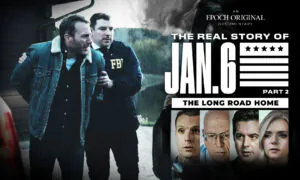
[FULL TRANSCRIPT BELOW]“We haven’t even begun to be told the full story, which means the truth about January 6,” said Sen. Ron Johnson (R-Wis.) at a screening of the new EpochTV documentary “The Real Story of January 6 Part 2: The Long Road Home” in the U.S. Capitol building on Jan. 9, 2024.
After the screening, I hosted a panel discussion with experts William Shipley, a 21-year DOJ prosecutor turned defense attorney who is representing a number of Jan. 6 defendants; national security expert and former national intelligence strategist Tom Speciale; Heritage Institute Oversight Project director Mike Howell; Sarah McAbee, the wife of a Jan. 6 detainee who’s been separated from her husband for years in the wake of his arrest; and Epoch Times senior investigative reporter Joseph Hanneman, host and writer of the documentary.
Views expressed in this video are opinions of the speakers and panelists, and do not necessarily reflect the views of The Epoch Times.
FULL TRANSCRIPT
Jan Jekielek:
Hello everyone. Welcome to the in-person world premiere of, “The Real Story of January 6: Part 2 – The Long Road Home.” I want to thank Senator Ron Johnson and his office for sponsoring this event and helping us host it here in the U.S. Capitol. It’s a highly appropriate place to do this.
The Epoch Times, mostly supported by paid subscribers, has now become the fourth-largest newspaper in the country. The type of reporting led by Joe Hanneman, who I will be introducing after the film along with a panel of key players from the documentary, has led us to this success.
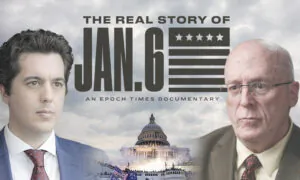
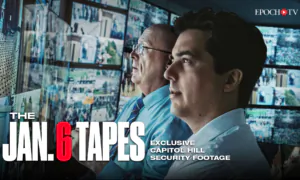
We started in July of 2022 with, “The Real Story of January 6: Part 1,” which has been our most popular documentary. We found a lot of original footage and we totally broke the conventional narrative around January 6th with that documentary. In August, we published the January 6th tapes. By the way, this is all Joe Hanneman leading with his reporting. Then we got exclusive access to the J6 footage and developed a deeper understanding of what actually happened on the ground.
This film has a different theme. January 6th fundamentally changed America in a lot of ways. In part two, we’re looking at what has happened to America. How has our relationship with law enforcement changed? The people who were on the site and committed misdemeanors, which was the vast majority of the people who were charged, how have they been treated by the system?
Senator Johnson has been one of the very few congressional members following this issue closely and following it publicly, which is of course greatly appreciated. He’s going to say a few words now.
Senator Ron Johnson:
Thank you, Jan. Thank all of you for attending. Thank you Epoch Times for being the kind of publication and the free press that our founders actually envisioned as being crucial to maintaining our freedom and our democracy.
Let me quickly read the words of the First Amendment, “Congress shall make no law respecting an establishment of religion or prohibiting the free exercise thereof.” That’s the first freedom in the First Amendment. But then right after that it says, “Abridging the freedom of speech.” The next listed is, “Or of the press, or of the right of the people to peaceably assemble and petition the government for a redress of grievances.” To me, the First Amendment is so applicable to January 6th.
We haven’t even started to hear the full story, which means getting to the truth about January 6th. They always say to the victor go the spoils, and the victor writes the history. Unfortunately, in November of 2020, Democrats had the full sweep, they had all the levers of power, and they wrote the history of January 6th. But there are so many questions that haven’t even been asked, much less answered, to get the full story, and to get the full truth.
I remember hearing the mantra of thousands of armed insurrections. At the hearing in February where we had FBI witness, Jill Sanborn, I said, ”We hear about thousands of armed insurrectionists.” Most Americans, when they think of arms, think of firearms. I know you can use other things as weapons, and they did, but most people think of arms as firearms. I asked the FBI, “If we had thousands of armed insurrectionists, how many firearms did the FBI confiscate on January 6th?” I had no idea what the answer would be, but it was a mic-drop moment when she said, “Zero.”
When you piece it all together, the first use of the term armed insurrection that we could find was from Nancy Pelosi on January 6th. That was followed by a press release by Senator Schumer quoting that again, “This was an armed insurrection.” Democrat Congressman Conor Lamb from Pennsylvania then talked about a briefing that stated 4,000 armed patriots potentially might disrupt the inauguration. That was on January 12th. On January 14th, Representative Jackie Speier, a Democrat from California, was the first person to say that President Trump engaged, organized, encouraged, baited, and unleashed thousands of armed insurrectionists who laid siege to our nation’s Capitol on January 6th.
There you go. Within eight days of January 6th, the narrative had been set. This was an armed insurrection. Later, on February 7th, Senator Schumer said, “There’s no debate to be had here. January 6th was an armed insurrection.” Unfortunately, we had Republicans parrot the exact same phrase. On February 8th, Leader McConnell said, “It was a violent insurrection.”
I was highly criticized shortly after January 6th for saying I was never afraid on January 6th. I was there. They sealed down the Senate Chamber for about 10 minutes, then Capitol Police came, God bless them. They ushered us out and I walked back to my office. Then on TV I witnessed the violence, and we all condemned it, by the way. None of us condoned the violence and we condemned it. We want to see those people prosecuted to the full extent of the law.
But I also saw on the TV screen these supposed insurrectionists stay within the rope lines. Now we’re seeing more and more videos that, unfortunately, the defense attorneys and defendants haven’t had access to in order to defend themselves. But again, the narrative was set that this was an armed insurrection. We’ve been battling that for three years now, and I would say nothing could be further from the truth.
One of the reasons I said that I wasn’t afraid on January 6th is that I knew who most of those people in the crowd were, not personally, of course. In Wisconsin, when campaigning around the state, I went to a number of Trump rallies. I knew that the people I saw attending Trump rallies, and the vast majority of people that came on January 6th, were patriots.
They are people that are God-fearing and country-loving. They fervently love this country and they respect law enforcement. They would never even contemplate committing a crime or engaging in acts of violence. The vast majority of people that came on January 6th fit that profile.
During the hearings I just mentioned, I was no longer chairman of that committee, so I couldn’t control them. I was just a member then. I asked the FBI witness about how many armed insurrectionists there were. But I also entered the written testimony of J. Michael Waller, who taught at the War College, a very trained observer, who had gone to January 6th to observe.
He wrote his 14-page testimony of observations without ever looking at any news media. I entered that into the record in our first dual-committee hearing. I was immediately called out and attacked by Senator Klobuchar as being a conspiracy theorist and having entered a conspiracy theory into the record.
That testimony by J. Michael Waller has pretty well stood the test of time. First of all, he talked about there being no police presence at all on the west side of the Capitol, none that he could see. He talked about four distinct groups that he called provocateurs, and I would call them agitators.
You’re going to see in the videos that Joe Hanneman has provided within this documentary, that is a pretty good description. There were people at the front who didn’t attend the speech at the Ellipse. They were there to agitate and to create violence. That’s the truth. We need to know more truth about January 6th.
To wrap this up, I talked about all the questions that haven’t even been asked yet, much less answered. I have a long list, I want to hit the key ones. First of all, why was there such a shocking lack of security? I’ve written about this in my oversight letters. Are there standard security postures for different events? I was there during the Brett Kavanaugh hearings, and we were briefed in terms of what to expect, where to go, and what security was going to be out there.
There was no briefing before January 6th, and yet there were estimates of potentially more than a million people attending, which was way more than people protesting the Brett Kavanaugh hearings. What was the security plan? We still don’t know to this day. What did Pelosi and McConnell know? The leaders in charge of the committees for security; Roy Blunt and Zoe Lofgren, what did they know? Have they ever been interviewed?
There are huge discrepancies in terms of the crowd size. Why is that? The Secret Service and the highly partisan January 6th Committee were saying it was 10 to 20,000. Yet, talking to Joe Hanneman, he’s talking about 250,000, maybe even more. That is a huge discrepancy. Why is that?
I would ask how many people actually committed acts of violence? What do we know? By the way, we now know exactly why they had this narrative of thousands of armed insurrectionists. We just saw President Biden use it in his first campaign speech of the year. He said, “Since that day, more than 1200 people have been charged with assault in the Capitol. Nearly 900 of them have been convicted or pleaded guilty. Collectively, to date, they have been sentenced for more than 840 years in prison.”
That sounds like a pretty serious event. Do those people really deserve 840 years in prison? Some of them deserve real prison time, but what is the justification for these SWAT [Special Weapons and Tactics] raid arrests?
Again, there are just so many unanswered questions.
I thank the Epoch Times for being those journalists that are utilizing our First Amendment rights of freedom of the press and freedom of speech, and being an honest broker in terms of exposing and telling the American people the truth. All I can ask of anybody here in the audience or listening to a later video is to please find out what the truth is. Discern it. Look up sites like Epoch Times, subscribe, learn the truth, and then spread the truth.
Be evangelists for the truth, because that’s the only thing that is going to save our nation from the radical Leftists that have infiltrated every institution of this country. They are the danger to democracy, not the vast majority of patriots that showed up to exercise their First Amendment rights on January 6th. Again, thank you Epoch Times.
Mr. Jekielek:
Hello everyone. You have just watched, “The Real Story of January 6: Part 2 – The Long Road Home.” I’m here with an incredible panel, many of whom were in the film. First is Joe Hanneman. When he started doing this reporting on January 6th, he had actually been looking at Covid, looking at vaccine injury, and various other human interest stories. He did not have his mind made up at all about what happened. He was inquisitive and saw that something wasn’t right. He says in the film, “We uncovered that most of what we know officially simply doesn’t make a lot of sense.” We’re going to talk about that here.
Next is Tom Speciale, a national security expert, former Senior Collection Strategist for Domestic Terrorism at the National Counterterrorism Center at ODNI [Office of the Director of National Intelligence].
We have Mike Howell, Director of the Heritage Oversight Project launched in January, 2022. This is the Heritage Foundation’s investigative and oversight arm, which I would actually like to know more about.
We have Sarah McAbee, whose husband is currently behind bars as part of this whole action that we just witnessed. Thank you for being here and speaking with us today.
Beside her, we have William Shipley, defense attorney, and 21-year federal prosecutor with the Department of Justice in California and Hawaii. He also has a very interesting and insightful Twitter account, ShipwreckedCrew, which we have been following for some time.
Let’s start with Joe Hanneman. Joe, there are many shocking things in these three documentaries that you have made. What was the most shocking thing for you? What was the biggest, “I can’t believe this happened” moment for you?
Joseph Hanneman:
It’s probably the widespread use of force by the federal government. The intense use of tactical squads going in, oftentimes on just misdemeanor charges, was unheard of previously, with them going in and acting like they were in danger. I heard that from many defendants that they looked in the eyes of the tactical agents that were coming in and they felt like they possibly were going to get shot and killed, and that they were the ones who were actually in danger.
In one of these homes, the mom’s oldest daughter had small children who were separated by the SWAT team and were not allowed to hug or hold each other’s hands. They were separated by a tactical officer while they watched their mother being handcuffed and led out of the house.
Interestingly, she looked over at her daughter and said , “It’s okay. I’m going to Washington to help President Trump catch all the bad guys.” That registered with her and she was satisfied with that answer.
The heavy use of SWAT raids in so many cases appears to be designed to frighten and intimidate. We just profiled a Minnesota family that was swatted twice, the second time with 60 agents. They actually were flying drones into the chicken coop. I understand no chickens were apprehended, but this is the length it has gone to. Even though there is more and more publicity on this, it is not slowing down. In fact, if anything, the more it is exposed, the worse it gets.
Mr. Jekielek:
I will be asking questions of the panel, and whoever wants to jump in is welcome to answer. But to Tom Speciale now, there is a theme here that the First Amendment is being endangered. What is your take on how the FBI is dealing with the First Amendment right now?
Tom Speciale:
First of all, thank you to Joe and to the Epoch Times because you are the champions of getting this message out. We really appreciate what you are doing. This is literally a direct assault on the First Amendment. As was shown in the documentary, the FBI knows that it cannot arrest people for their thoughts, but they want to.
They want to be able to arrest you for thinking certain things or saying certain things, but they can’t because of that pesky thing called the Constitution and the First Amendment. I heard this from FBI agents and senior agents that it stands in their way.
It is a direct assault to say that we need a federal domestic terrorism statute in Congress. That is what they are asking for, because with that then they can literally surveil anyone in the country they want at any time, supposedly to prevent someone from committing a crime. That would be the absolute destruction of the U.S. Constitution if they were to get a federal domestic terrorism statute that allows them to circumvent the entire Constitution, not just the First Amendment. Then they would be able to use it against everything. It’s an absolute direct assault against the U.S. Constitution to advocate for a federal domestic terrorism statute.
The truth of the matter is they did not expect to get caught doing all these things. The counterintelligence investigation into Donald Trump and the Trump campaign is a really glaring example of that, because that’s really what they did. They basically ignored the Constitution to try and get their man. They were willing to break every rule because they didn’t think he was going to win. Then when he did, that’s when all of the evil and the corruption was revealed. It’s a direct attack on our Constitution.
Mr. Jekielek:
Mike Howell, there has been an investigation by Congress into this whole Jan 6th issue. We’ve seen it on TV, and some huge amounts of money were put into it. How would you grade Congress’s investigation of what really happened on January 6th?
Mike Howell:
Not very well. If it was pass/fail, then it would be a fail across the board. Let me back up and say thanks for having me. Joe, that is an awesome documentary, and everyone should watch it. Going into this Congress, there is so much talk about doing what the Democratic House had done in the previous Congress. They established a massive, never seen before type of committee, the January 6th Committee, complete with TV producers on staff.
There were witnesses that flipped and changed their tune, working with the Department of Justice along the way, capturing the media narrative for years, with a lot of perjury along the way, in my estimation. That was the attitude going in when Republicans took the House and flipped it.
That did not happen. People were promised that a real investigation would take place, but nothing close to that has happened yet. The biggest example of this is the argument for the establishment of a Church-like committee, the famous 1970s super committee that investigated the intelligence agencies, which really captured the nation’s attention and led to a lot of reforms. That’s what people were talking about. Instead, they created a new subcommittee, not a regular committee. It was called the weaponization committee, and it really wasn’t even staffed out.
The expectation was that the House would have investigators pouring over the tapes, and combing through the records obtained by the previous Democrat-led committee. This just never materialized. Since then, we’ve seen a lot of patriots fill the void. We’re just now getting some videos released. Had it not been for the constant agitation of everyone in this audience and others up on Capitol Hill pushing, demanding, fighting, scheduling, being denied, then rescheduling and being denied again, that stuff would not even be coming out.
I do not credit any of the news that has broken to Capitol Hill, although there are some heroes like Senator Johnson or Representative Massie, who was here earlier. They have done great work. But there hasn’t been any formal effort at all. That’s a political decision, frankly. In fact, I know this for a fact, because I’ve been told this.
It’s just like many other things that people thought should have been investigated and focused on, like election fraud, the intelligence community’s abuse with the Russia Hoax, or January 6th. All those topics were put into a category that says, “We’re not going to talk about those things. We’re going to forget about them.”
There has been this disconnect from what people expected to happen and what has really happened. I’m just glad that patriots, including the team that made this documentary, stepped into that void and are actually answering questions for the American people.
Speaker 1:
Is Mike Johnson going to move this thing any faster? He’s only been there for a little while, but he’s still got a year to do something.
Mr. Howell:
Any faster is a relative term, so that’s an easy one to answer. You can’t go any slower, so that is my out. He is happy to pass the money bill, but not much else.
Mr. Jekielek:
Sarah, thank you for joining the panel at the last minute. Your husband, Ronald Colton, has been behind bars since August, 2021. You mentioned in the documentary that when you first tried to see him you weren’t even allowed to. What does that look like now? What is the state of affairs with him?
Sarah McAbee:
Thank you Epoch Times and Joe. He’s done a wonderful job of covering my husband’s case and a lot of the January 6th defendants’ cases, and just looking at the facts. My husband is still behind bars here in Washington DC. On October 11th, 2023, he was found guilty in front of a jury of not his peers, and he’s going to be sentenced February 29th.
It’s an everyday thing of getting up saying, “How am I going to get out of bed today and have the strength to get through today?” It was a year-and-a-half before I laid eyes on my husband again after he was apprehended by the FBI. It was all the legal things along the way that put them in this fight for their lives because of January 6th, but then you also have all these little battles that you have to fight along the way.
It’s only because of the general public putting pressure on congressional members, and also the Epoch Times and other media outlets getting this video evidence out. Within five minutes of his first bond hearing, the government had withheld exculpatory evidence. That’s a violation of our constitutional rights, but it doesn’t seem to matter here in Washington DC.
This fight is far from over. But I do feel like the tide is turning because now this video evidence is coming out proving that what the mockingbird media has called an insurrection, absolutely was not an insurrection. We have always had the truth on our side. I have never heard a January 6th defendant act like a victim, but they are the victims in this. We have to rally around them and promote the work that Joe has done to put out the true facts of what happened that day.
Mr. Jekielek:
Thank you. It’s almost like we’ve forgotten that things worked differently back in the day, both in the FBI and in the Justice Department. One of the shocking things in the film was when you said there never was anything like a SWAT team raid for a misdemeanor. That’s just crazy. In the Justice Department there is very creative use of legal statutes which haven’t been used in hundreds of years, in order to get a desired result. Can you speak to that shift?
William Shipley:
First, thank you for having me. Let me also add that when I’m given a microphone in front of a crowd, I generally don’t stop for about three hours. I once went 10 hours over two days, but I’m not planning on doing that tonight.
Somebody got off the hook here, Joe. The Department of Justice got off the hook for the sins of the FBI. When an indictment comes to a grand jury, information is signed by the prosecutor. When an indictment is returned by the magistrate judge, he asks the prosecutor, not the FBI, “Do you want a warrant or a penal summons?” A penal summons is a notice mailed to the defendant at their address giving the date and time they are to come to court an initial appearance to acknowledge that they have been charged.
It’s the prosecutor who tells the judge, “I want a warrant.” The warrant is a court order that the FBI does not have the discretion to ignore that tells the FBI or other law enforcement agencies to go get that person at their house, drag them out of bed after 6:00 A.M. and bring them directly to the court.
I joined the Department of Justice in July of 1992 and left in May of 2013. In my experience, not only in the cases I handled, but in all of the cases I knew about in the two offices that I worked at, you would never ask for an arrest warrant in a misdemeanor case. You just didn’t ask.
You send people a summons in the mail and tell them what day they’re supposed to come to court. Oftentimes in that kind of circumstance, you had already made some communication with the defendant and learned that they had a lawyer. Then the penal summons would often just go to the lawyer. That was ordinary business.
I began to see in these cases that the FBI was using tactical units to make dynamic entries for misdemeanors and even for some felonies. I routinely had penal summons issued for felonies, but it’s not automatic that a felony arrest requires a dynamic entry. That is generally reserved for defendants who are likely to flee or when there is a risk that they will not come peacefully.
This whole weaponization of the FBI and militarization of the FBI in connection with January 6th defendants, particularly misdemeanor defendants, in my view, is on the head of the prosecutors. Because if they don’t ask for the warrant, then you don’t get these doors kicked in and people being dragged out of bed in the morning.
In that sense, I’m not excusing the FBI. I’m telling you this is the way the system works. Once the prosecutor asks for the warrant, the wheels are set in motion, and the FBI doesn’t have a choice. So much has changed since I left ten-and-a-half years ago, but it actually doesn’t seem like that long ago.
As I’ve been doing these cases for 26 months now, I have had many opportunities to talk with former colleagues of mine, people my age who have also left the department and have gone on to other things or retired as FBI agents. I count among my circle friends, several former FBI supervisors up to the level of SAC [Special Agent in Charge]. They’re all deeply troubled by what they see the bureau doing now, which is so contrary to the way we did business in the 1990s and 2000s, even into the early 2010s. It’s just different, but there are reasons why it’s different.
There is also the question of a domestic terrorism law. Do you know why there has never been a need for a domestic terrorism law and why it’s always been brushed aside? It is because the existing statutes cover all of the crimes. You don’t need it. You can prosecute domestic terrorists for violations of other statutes because they’re doing things that are illegal. The domestic terrorism designation only exists now in the FBI’s coding of its cases. They code it 265 for domestic terrorism. That is a stat designed to get the FBI more money.
At the basic level, it’s all about getting more resources. It’s the same thing with the SWAT raid dynamic entries. They say, “We need more SWAT teams because last year our dynamic entries were up 47 percent over the year before.” These are all numerical metrics that the FBI uses to evaluate all of their field offices.
You know what those numerical metrics lead up to? This is so banal that it’s ridiculous. Those numerical metrics end up as bonuses and promotions for management. That’s it. That’s at the heart of all of this, bonuses and promotions for FBI management.
Mr. Jekielek:
I see this theme across many areas, with this bureaucracy taking over the operations of many departments, including the Department of Justice.
Here is another question. It’s becoming acceptable to make some group of people the so-called untouchables. In this case, as we watched in the film, anyone who was at J6 would be a candidate for that so-called ultra-MAGA group. We saw this with the unvaccinated, where it was okay to view them as morally repugnant. Do you have any thoughts on this broader phenomenon? Tom, would you like to handle this?
Mr. Speciale:
The best way to answer this is to say that on January 5th, I was in front of the Supreme Court and we were at a rally. Some women walked through our rally and they were sprinkling something on the ground. I was with Virginia Women for Trump, and I was also the national spokesman for Trump at the time. These women are sprinkling something on the ground, so the Capitol Police shut the rally down.
They pushed everybody back away from the stage so that they could investigate it for a biological weapon attack. That’s what they told everybody, “We’ve got to make sure this isn’t a biological weapon attack.” The crowd went nuts. The crowd is yelling and screaming and hollering in the face of these five police officers who are just trying to do their job.
I talked to the chief of the police that was standing there and said, “How much time do you need? What do you need?” He said, “I just need 20 minutes, and then we’ll get out of your way. We’ve got the people in custody.” I got in front of the crowd and said, “We don’t do this. Don’t fall for the trap. Don’t fall for the trap that the Left has set for us, because that’s what they want. They want you to fight the cops so that they can label you and brand you as an extremist.” I said that on January 5th.
To answer your question, potential threats of violence were known by the leadership of the Capitol Police and within the military. There were known threats. There were people on the Left and on the Right who hoped there might be violence. They didn’t plan violence, but they were prepared for violence.
Then you get the agitators and the instigators in there and they are the ones that create the violence. But who were those agitators and who were those instigators? Because those are the people that put up a noose on a gallows on the Capitol grounds and then disappeared. We don’t know who did it. They used it as a photo op to show that these people were putting up a noose on a gallows.
To a great extent, all of this was designed to defame conservatives. This was about the destruction of the conservative movement in the United States. That’s why there are these conversations saying that 50 percent of the American people are domestic extremists. We need this domestic terrorism federal statute so that they can go after and investigate and then SWAT conservatives. Because that’s what they want to do.
That’s why they use the mental health crisis, the gun violence argument, and the militia movement to argue for taking away your guns. There is a movement in the United States to disarm Americans so that the people are no longer in charge of their own destiny. They want to take power away from the American people. They want to limit freedom and they want to reduce freedom. I would argue that a lot of these SWAT raids and abuse of warrants are done on purpose to intimidate the American people.
I can prove it. During a hearing in 2020, the FBI actually said, “What if we get a domestic terrorism federal statute that we’re not going to actually enforce, but that we can use to get people to be silent and to basically intimidate them?” These SWAT raids, these arrests, and all these misdemeanor charges are done to intimidate you into silence and be fearful of expressing your freedom of speech in the United States against the Leftist ideology that ultimately has given birth to this cultural revolution that we’re facing in the United States. That’s the real root of all of this.
Mr. Jekielek:
These FBI agents doing the dynamic entries appear to be afraid of a confrontation, whereas, in every scenario it seems silly there would be one. Yet, they seem genuinely fearful. Does anyone have a sense of where that might come from? Is that correct, is it just a show, or what is this really all about? Bill Shipley is going to jump in here.
Mr. Shipley:
A lot of the agents are in fact unhappy doing a dynamic entry because it dramatically increases the risk. It’s sometimes unpopular when I point this out. The general public is not aware that in February 2021, two FBI agents were shot and killed through the front door of a home in Florida while attempting to serve a search warrant in a kiddie porn case. They went to the front door, knocked on the door, and identified themselves.
It was not a dynamic tactical entry. The individual who was the subject of the warrant had a security camera. He was able to see on his security camera exactly who was outside the door. Using a high-powered rifle, he shot four or five times through the front door, killing the two agents standing in the front door.
What I’ve been told is that the FBI changed many of its policies regarding dynamic entries at that point. Now, they ask, “Does the subject have a concealed weapon permit? Are we likely to find a firearm inside?” I know that one of my clients was subjected to a dynamic entry, and both he and his wife had concealed carry permits in the state of Ohio. That was reflected in the FBI’s investigation leading up to their search. They tracked down that information which went into their threat assessment.
That doesn’t explain all of it, because now they are doing these dynamic entries across the board. They’re not making an individualized determination anymore as to risk level. They’re just saying that the risk level every time we kick down a door is at level 11, so we’re going to react appropriately.
But these agents know that when you arrive at somebody’s doorstep when they’re still asleep or they’re in their underwear and they have a weapon inside, if you come in with guns drawn and kicking down doors, you are ratcheting up the likelihood of an adrenalized response. That adrenalized response is what creates a threat against the agent.
They know when they go in this way, they are actually increasing the risk to themselves. That’s why you see all the tactical gear, the police shields, and all of the things they do to take down that threat load. It’s like we know what we’re about to do could make things worse, so we’re going to plan for the worst in advance.
Mr. Jekielek:
Thank you, that explains a lot. Steve, do you want to follow up?
Mr. Howell:
That was a really interesting part of the movie, and I’ve been thinking it through. The one thing I’ve arrived at in addition to what Bill just said is that the average new FBI agent within the last five years is fundamentally different from the historical image of an FBI agent.
They’re not the G-men, the traditional, clean-cut, former military or law enforcement person that once went into the FBI. They are recruiting from a variety of professions. They’re meeting their DEI quotas and their fitness standards have gone out the window. In many cases, they don’t even have to comply with standards anymore. You do not have the grizzled, fearless types that once were in the FBI. If you were to meet your average new agent, you wouldn’t recognize them or you would be kind of surprised.
These are just not the alpha people that are used to being in these types of situations. We have a very unimpressive cast of characters that are populating the FBI. By the time I get to your age, I’m going to look around and not recognize any of the FBI as being these grizzled crime fighters.
Mr. Shipley:
Let me speak to that exact point, being grizzled. When I joined the Department of Justice in 1992, it was six months before Bill Clinton was elected. After Bill Clinton was elected, he had the peace dividend because of the collapse of the Soviet Union, so he hollowed out the military. In the aftermath of the Iraq war, George Bush did the same thing. You draw down the four sides.
One of the things that does is that a lot of young officers essentially lose their careers. There’s no place for them to promote anymore because the higher officer ranks are being shrunk. The FBI traditionally has recruited heavily from the military, state, and local law enforcement. That all stopped in 2010.
The Obama administration adopted an overt policy that the rank and file of the FBI needed to mirror the rank and file of society. It was no longer a question of having the best and brightest. It was no longer a question of finding experienced crime fighters to step into the federal role. They went to college campuses.
What did we find on the college campuses? It wasn’t that different 10 to 12 years ago, but today you have all of these new soft social science majors coming off of college campuses into the FBI. This has now been going on for 10 to 12 years. I know experienced FBI agents from this timeframe who watched this happen and they couldn’t believe their eyes. In their view, these new people who were recruited into the FBI had no business being in the job.
In the FBI, how do you get promoted up to first-level management? You raise your hand and volunteer. Okay, you have squad agents. The squad agents can have anywhere from one-year’s experience up to 25 year’s experience working in a squad. For first level management they ask, “Who wants to go to Washington and go through the 18-month management program?” You raise your hand, then you’re picked, and you go.
Who raises their hand, by and large? Lousy agents. It is the agents who don’t want to do the squad work, the agents who turn out to not be very good at interviewing people, and the agents that are looking for a way to stay in the bureau without having to actually be an agent. You become a paper pusher.
You put that dynamic at work over time and before long your quality squad agents are being supervised by your not-so-quality management agents. This creates within the bureau a dynamic of management vs. squad, which is what happens to Kyle Seraphin, Steve Friend and Gerard Oldworth. They became a threat to management by taking the steps they took, and as a result they got squashed.
Mr. Jekielek:
Sarah, I want to ask you a question from the perspective of the families. Right now, it’s January 2024. You presented a pretty dire scenario in the film. Obviously, you are speaking with other families. Has the outlook changed for them? What about the hope that Joe alluded to at the end of the film?
Ms. McAbee:
That’s a great question. With more stuff coming out, it gives families more hope, but the fact remains that their loved ones are still incarcerated. With McCarthy coming in as Speaker of the House and saying, “We’re going to take care of this,” everybody had hope. They thought, “Okay, things are going to turn around, the truth is going to be told, and there is no reason to keep these guys incarcerated anymore.” But that fell flat.
When Mike Johnson came in he said, “We’re going to release all the footage.” Now, it’s on hold, because they’re going to blur out people’s faces. But the fact remains that there are people that are truly innocent sitting behind bars. There are people that are overcharged and over-punished serving their time that fall into these categories where it doesn’t change for them. Every day there are children waking up without their fathers and spouses waking up without each other.
It really goes back to having a true investigation of what happened that day. Yes, with this stuff coming out, with these types of documentaries, and with the media changing its tune, it does give them hope. But they need action behind that hope. We all know what the truth is, but we can’t do anything about it. We need people that hold some power to go in and look at the facts of what truly happened that day and take all the emotion out of it.
Mr. Jekielek:
In terms of the next investigations, everybody up here might have thoughts about this. I’ll start with you, Joe. What are the key things that need to be investigated to complete this whole picture?
Mr. Hanneman:
A serious look needs to be taken at how many agents, informants, or agitators were there on sponsorship or by direction? How many were there on their own? We have a large number of suspicious actors, which is how we describe them, who committed vandalism of all sorts that was captured by cinematographers standing right there. The first breach of the Capitol building itself was with a 2×4 piece of lumber, launched like a javelin by a man we only know as a hashtag, RedonRedGlasses, that was wearing a MAGA shirt and red cap.
Now it is three years later, and nobody knows who RedonRedGlasses is. This was a guy who was all over the grounds causing trouble, and trying to kick in the doors of representatives and senators. He was in the hallway where Ashli Babbitt was shot, and he was standing right next to her when she fell. He didn’t even look down at her. He just stepped over her and disappeared.
There are a lot of those nicknames, like LemonyKickIt. But it’s serious in that they haven’t been identified. Now, the government knows who they are. They have done their facial recognition and due diligence, but why haven’t they been revealed? This is maybe the Ray Epps syndrome, but why has this gone on so long?
There were people that did worse than Epps, that were either inciting violence or committing real violence. We have video evidence of a metropolitan PDE under cover, inciting people and telling them to go into the Capitol, and helping them over barricades. These are the kinds of things if you’re a defendant that a judge would give you more time for doing, that they could ratchet you up for, and maybe even make you into a terrorist.
That’s where I see our investigations going. We are making efforts to try to find these people. It’s much more difficult when they blur the faces on the video. That’s a reckless act in my view. I’m hoping the Speaker changes his mind. He’s gotten very bad advice, or at least I hope that’s what it is. We had plans to use artificial intelligence, facial recognition to scan everything, by the man who actually holds the patents for it. This is something that quite frankly Congress should be doing, in order to look for those patterns and use geolocation like Dinesh D’Souza did for the film, “2000 Mules.”
Where did they come from before they got here? Where did they go afterwards? By the way, were they at any of the protests in the Summer of Love? Were they involved in any of those things? Those are key questions that have not been answered, but we’re determined to try to move the ball forward on those things.
Mr. Jekielek:
Does anyone else want to comment?
Mr. Speciale:
There are some really big questions about who built the gallows and who put the noose up. It was watched on video by the Capitol police and nobody even went down and bothered to ask them why they were building a gallows at 6:00 AM in the morning. That’s all on video.
In addition, as a professional intelligence analyst, it’s very strange to me that someone would place two very obvious pipe bombs out in the open. A person dropping a pipe bomb puts it in a paper sack, puts it in a backpack, hides it under a bush, or drops it among a crowd. They don’t leave it sitting by empty park benches at 8:00 o’clock at night with a 60-minute timer that apparently failed the night before anybody might even come by and sit on that bench. It’s way too contrived for me. It doesn’t look like anybody actually wanted a pipe bomb to go off and hurt anybody. The pipe bombs were put in front of both the DNC and the RNC.
The strange part to me is that the pipe bombs were reported to the Capitol police within minutes of the Ray Epps breach. That report to the Capitol Police at that very moment is strangely timed, because then they would have to pull Capitol Police away right at the moment when the first breach is taking place. Right now, the FBI does not know who built the gallows, and they don’t know who placed the pipe bombs.
We’ve been investigating pipe bombs for 25 years since 9/11, long before this incident. We are experts at this and we still can’t figure out who did this, even though they were placed in plain sight the night before, with facial recognition cameras operating close by. There’s something fishy about this. I’m not leveling accusations against anybody. I don’t know who did it, but clearly somebody did, and we need to know who that is. That needs to be right at the top of the investigations. because we’ve got to know who did those things. It’s too suspicious to me.
Mr. Howell:
Those are all great ideas. My suggestion is a little outside the immediate fact pattern of the day, but it focuses on the work I do in terms of lawsuits and investigations. For the Left and the weaponized agencies, however you want to term them, January 6th really provided the fulcrum event for the mass muscle movements of the government intelligence agents and law enforcement to reorganize and reorient the system towards their targeted audience. With the demand for domestic terrorists, especially those of white supremacist bent, there’s far much more demand than there is a supply.
What we see now, as Tom said in the documentary, is a fudging of the numbers and the invention of new categories. AGAAVE [anti-government, anti-authority, violent extremism] is the new one that the FBI is using. We uncovered an FBI counter-terror document that we put out there. It’s two pages from the counter-terrorism office saying, “Look out for these words these kids use on the internet like red-pilled or based, because that means they’re an incel. If they’re an incel, that means they’re probably a domestic terrorist.”
To follow up on the First Amendment discussion, they’re slapping a First Amendment caveat on all of these documents. Their lawyers are very aware of the fact that this clearly violates the First Amendment on its face, so the FBI just puts on the bottom of the document, “Nothing in this document is meant to constitute an attack on the First Amendment.”
The legal system, the targets of focus, and the messaging from the White House on down in the media are all shifting the system. Their prime justification is pointing at January 6th as the evidence. They say, “We have to go full bore against these people because that could happen again. That thing could happen again. We have to focus on any speech that could turn into another January 6th.”
These are the documents they turn out day after day. It’s all throughout the different agencies with anyone who holds a gun in the federal government. It’s trickling down to the states because there’s so much interconnectedness in the system now where local police departments are working on these joint task forces. Then you have the interconnectedness with the Leftist NGO system, the ADL, Anti-Defamation League, or the Southern Poverty Law Center. They are just pumping the system with stuff that is then used as a predicate for investigative activity. They have basically conquered the apparatus.
A lot of the excesses we’re seeing are because of the Left. They’ve got all the keys to the kingdom right now, and they’re figuring out how to use these toys for the first time. You’re seeing a lot of deep-seated ideological projection happening where there needs to be another group of bad guys. It’s going to be a really hard thing for this country to grapple with, but I hope we do.
Ms. McAbee:
The excessive use of force that day by both the Metropolitan police officers and the Capitol police needs to be looked into. You saw the woman standing there who was shoved by either Metropolitan police or the Capitol police off the stairs for simply standing there, but she was not a threat to them. Why are they allowed to get away with that? January 6th proves that the United States Capitol has no security at all.
You have these untrained police officers that are roaming the streets. Those police officers that were police officers on January 6th are still police officers still to this day. Lila Morris and Michael Byrd, these officers that used excessive force, they need to be held accountable for it.
Mr. Jekielek:
Any final words, Bill?
Mr. Shipley:
I don’t even know what the final word should be. When I was a prosecutor, I didn’t send out a grand jury subpoena that got the cell phone records that showed 1200 signal channels and 400,000 separate messages like I faced in the Oath Keepers trial. That goes to your point, the ability of the federal government now through tech companies to mine data and to generate so much more information at their fingertips than has historically ever been possible.
You can turn that ability onto the political opposition. I maintain that the Department of Justice, in large measure, is creating a narrative. I’ve said this in courtrooms to juries and judges. They’re not trying facts, they are trying a narrative. They are getting away with bending a lot of rules in terms of the rules of evidence and the way you can present evidence.
They’re doing this to criminalize a portion of the political opposition through the next election. In the last three months, the government has ramped up the pace of arrests and new charges. For about eight months it really slacked off, and that was because the court system was in effect saturated, and couldn’t take anymore. But since then, several hundred cases have been resolved. Starting back in about September, and I track this stuff pretty closely because I’ve got 40 clients, we started to see 6, 8, and 10 arrests a week. That pace has been maintained all the way up to the present.
The purpose is transparent. Matt Graves came out and said, “We’re going to start arresting people who just were on the ground, even if they didn’t go inside, even if they didn’t engage with police. That’s what we’re dipping into now.” The purpose is to continue to have charges, indictments, arrests, trials, guilty pleas and sentencings from now through November continuously. They want to keep up this picture for the electorate at large that this segment of the political opposition is really a criminal element and can’t be tolerated or allowed back into power in DC.
Mr. Jekielek:
With that very disturbing commentary, we’re going to finish up. Joe, as the writer and researcher of this documentary, can you offer a final thought?
Mr. Hanneman:
On the 13th of December, 2023, when the Supreme Court agreed to take up a challenge to the obstruction of an official proceeding, the novel use of a corporate fraud statute, someone on Twitter posted, “The tide has turned.” I looked at that, and I think that is correct, but I’m going to predict how the court might rule on that.
But that was the most often charged felony, with more than 330. There are other charges that I believe will be challenged in appeals, including seditious conspiracy, which many attorneys believe is unconstitutional. You start knocking some of those out on top of instances of perjured testimony in the Oath Keepers trial, there’s got to be a comeuppance for that stuff at some point. That should generate some hope that things are not going to remain static, and that things are going to move forward. This year is going to see a lot of explosive revelations and hopefully we’ll be in the front row to document it all.
Mr. Jekielek:
We still have some time for audience questions.
Speaker 2:
Hello. I have a multi-part question about the mystery surrounding these so-called agitators and instigators. Today is obviously a significant day with the sentencing of Ray Epps. There was a lot of buildup to this sentencing that he might get some actual prison time, but in the end he did not. That said, it seems as though a lot of these intel agencies are insulating themselves behind the idea of not revealing sources and methods.
What is a way around that? Can Congress do something even in a classified setting to really get to the bottom of it? As you mentioned earlier, can they potentially use that AI, facial recognition software used in a classified setting to find out who these people are? Attorney Shipley, do you think that that story might actually change a lot of these cases? Is it worth going through those hoops?
Mr. Shipley:
I have said that I would be shocked if there weren’t 100 or more undercover law enforcement officers in that crowd. There are undercover FBI agents at the Super Bowl. You don’t know about that. You don’t know who they are, and you don’t see them. I’ve walked in PGA galleries with FBI agents who were there for security purposes. With any kind of large event like that, it goes with the territory.
The Washington field office of the FBI was going to have people in that crowd. That’s a different question from whether or not there were individuals in that crowd not connected to law enforcement, who were there to cause trouble, whether that be Antifa, BLM, or just people who get their kicks doing that.
I’m not going to identify anyone specifically. I represented certain defendants and looked at their criminal histories. I then concluded, “These guys came looking for a fight.” One client who had already spent 18 years in Texas prisons didn’t come to January 6th because he suddenly discovered the Constitution. He didn’t come because he was concerned about the Electoral Vote Act.
He came because he figured there was going to be a fight. There was a small minority, but in terms of numbers, not a small number, who came thinking that they were going to be able to engage in fisticuffs with BLM or Antifa, and who thought they would be there.
In fact, a couple of individuals were the ones that skipped the rally and went to the Capitol. They were looking for trouble and they started a lot of the trouble. That trouble grew exponentially as the police reacted in ways that were ill-advised and contrary to policy. You had a great use-of-force expert in the first documentary. That gentleman’s explanations of the unlawful use of force were dead on.
I was a prosecutor, and I prosecuted unlawful use-of-force cases as violations of federal law. What the guy was talking about I had been through many times. I’m not sure the answers to the questions about who some of these people were lead to some of the conclusions that are popular opinion. I’ve never been convinced that it’s going to trace back to some nefarious conspiracy by three-letter agencies. To me, they’re not that good at that kind of stuff. They can’t keep those kinds of secrets because of the number of people that would be involved. They just don’t.
Even within the FBI now, there is a cross-section of political opinion. If this kind of nefarious conduct was at the heart of the events of January 6th, it would have already leaked out. But there were a lot of guys that showed up there with bad intentions and looking for a fight. There were also some counter-protesters who showed up dressed as Trump supporters and did their thing in an effort to speed the process along.
Mr. Speciale:
Let me add a little bit of granularity to that. I’m an intel officer, and I recruit sources. We vet our sources. In the intelligence community, what the FBI does with regard to their Confidential Human Source Program is an absolute dumpster fire. If you look at the evaluations of the Confidential Human Source Program by the Inspector General, you’ll find that they do not properly vet their confidential human sources. They run their confidential human sources too long, and they have personal relationships with their confidential human sources.
Their confidential human source program is not actually an intelligence program, but they pretend like it is. From the intelligence community standpoint, and I can tell you from experience, the CIA does not like to work with the FBI with regard to confidential human sources because of how poorly they manage their CHS program.
The same thing is true of the Defense Intelligence Agency, they don’t like to work with the FBI because they are dealing with American citizens who are voluntary sources. The case agents get a week or two of training in how to manage a confidential human source. To manage a confidential human source in the CIA or in the Department of Defense, you go through months of training on how to vet your source and make sure your source is not compromised and is not working against you. There’s a whole section in my report on the broken Confidential Human Source Program at the FBI.
It has been recently reported that 200 or more undercover FBI agents were in the crowd. I also know for a fact, because I have personal friends who are in other agencies, that there were federal marshals, the Department of Defense, and other law enforcement agencies there. We know that there were undercover officers among the Metro PD and the Capitol Police. There were potentially 500 confidential or undercover officers in the crowd.
This is the thing that is most concerning to me. If you have fifty-some FBI offices all around the country, and it’s a requirement that they all have to cultivate confidential human sources as part of the agent program, then they are required to cultivate confidential human sources within the community that they are policing.
If these 50 offices are deliberately recruiting confidential human sources within every militia group in the entire United States, the confidential human source contacts his handler at the FBI and he says, “Hey, my group is planning on going to the Capitol on January 6th.” The agent says, “Are you guys planning on any violence?” The guy says, “No, so he replies, “Okay, just keep me informed.”
But the FBI agents are running maybe half of the militia guys. The most concerning thing is that if he’s a militia guy from Texas, and I’m a militia guy from Georgia, and he’s a militia guy from Tennessee, we are all looking for extremists in the crowd. I’m asking Joe here, “Are you an extremist? He says, “Yeah, I’m an extremist. Are you an extremist?”
Then potentially, we all radicalize each other, because we’re all looking for the most extreme person, so we can call our handler and report them. I call it the largest militia, live-action, role-playing game in American history. Potentially, thousands of confidential human sources from one caliber or another went to January 6th, all looking for the extremists.
They couldn’t tell who’s who in the zoo because in the Department of Defense and in the intelligence community, we de-conflict our sources. We don’t put our sources in the same places. But the FBI didn’t do that. They put them all in the same place, all at the same time, all looking for extremists, and they didn’t de-conflict in any way.
Even among themselves, they radicalized themselves on the ground that day when they were being pepper-balled and CS-gassed and shot with rubber bullets. That’s some additional granularity from an intelligence officer that recruits sources. I am looking at this problem of the FBI bringing them all to DC for a special occasion. You then have a recipe for disaster and potentially, a very dangerous black swan.
Mr. Jekielek:
Thank you for that. This is the end of our panel, and let’s give them another big round of applause.
This panel discussion has been edited for clarity and brevity.