Live chat
March 1, 2024
Fallout
Live chat
 Expand
Expand
 Expand
[FULL TRANSCRIPT BELOW] Since medically assisted suicide was first legalized in Canada in 2016, it has become the sixth leading cause of death in Canada as of 2022.
At first, it was restricted to people suffering from serious illnesses or disabilities and whose natural deaths were “reasonably foreseeable.” But in 2021, Canada lifted the requirement of a “reasonably foreseeable” death.
In 2022, medical assistance in dying (MAiD) constituted 4.1 percent of all deaths in Canada.
The obvious elephant in the room is the government’s conflicts of interest.
For example, if people with long-term illnesses or disabilities or mental health diagnoses who are financially dependent on the government choose to receive MAiD, it could alleviate a massive financial burden on the government.
Is that why we’re hearing a push for minors with terminal illnesses or disabilities to also have access to MAiD?
Here in America, 10 states allow for medically assisted suicide, and 18 states are considering similar proposals.
Where is all of this headed?
Views expressed in this video are opinions of the hosts, and do not necessarily reflect the views of The Epoch Times.
FULL TRANSCRIPT
Robert Malone:
Jan, what do you think about when you hear the word euthanasia?
Jan Jekielek:
I think of putting animals to death in shelters.
When it comes to human beings, I think about Nazi experimentation.
Mr. Malone:
What if I used the term physician-assisted suicide?
Mr. Jekielek:
I think of people in extreme pain, perhaps elderly people, who are on the edge of passing away, and they’re suffering greatly.
They just want to ease their suffering at the end of life.
Mr. Malone:
That’s often what we talk about and think about when we hear physician-assisted suicide. But now, on our northern border, we have something else going on. In Canada, we have Supreme Court actions and legislative actions since 2015 that have opened up a whole new horizon of state-funded, assisted suicide.
Speaker A:
There’s new hope tonight for Canadians suffering with intolerable pain. A bill expanding access to assisted death has received royal assent. Those who aren’t near their natural death now have the right to seek medical assistance in dying.
Mr. Malone:
They’ve come up with a term for this, MAID [Medical Assistance in Dying], another acronym. We’re not supposed to use the term suicide or even physician-assisted suicide, let alone euthanasia. This has really taken off as a major cause of death in Canada. The reason I’d like to talk about it today is because in my home state in Virginia, we currently have legislation pending to make this medically-assisted suicide legal. We have 10 states that have already approved this, and there’s another 18 states that are considering this legislation. They are trying to allow the state to functionally kill people.
Mr. Jekielek:
In my home country of Canada, this act was passed in 2015. The idea was that people who were expected to die might find a solution to their pain quicker through this. But that quickly escalated, and this law was amended to say that it’s no longer just for these types of people. Basically, anybody who can make a case that they are ready to die can receive this.
Mr. Malone:
Then there was legislation put in place to support this and provide a budget from the national government to support these advocacy groups
for the rights of patients to participate in MAID. These groups then became the operators, the groups that actually provide this service.
We had a strange situation where there was basically an advocacy group that decided that this was an issue that needed to be brought up. The national legislature acted on it, allocated a budget, and then that same group became engaged in actually operating that program for the state.
What’s interesting is that there aren’t physicians associated with this. In fact, the American Medical Association has come out yet again with a very clear and unambiguous statement that physicians should not be involved in terminating people’s lives and providing this kind of assistance. But in Canada, we’ve had this lobbying organization that’s advocated for patients’ rights, and it doesn’t involve physicians. It’s all been done in a kind of parallel, non-medical provider world led by an advocacy group.
Mr. Jekielek:
Medical doctors and also nurse practitioners are doing this. To make a point, Canada is the only place in the world where nurse practitioners can do this medically assisted suicide. Usually, it’s only physicians. But this has grown and it has been rising every year. In the last year that we have data, 2022, it was 13,500-odd people. Overall, it’s about 31,000 young people from ages 18 to 45. That number has been growing substantially every year.
Mr. Malone:
There is a very broad range of categories. We are seeing a slippery slope develop in Canada where there are efforts to expand this population of eligibility. They are now attempting to broaden it out to youth, to drug abusers, to people who are depressed, and to people who have become financially indigent. They just don’t have the money, so they want state assistance to take their own lives. It’s a very odd situation.
Speaker B:
Amir Farsood has applied for medically assisted dying, known as MAID. He lives in constant agony due to a back injury, but has started the process because his rooming house is up for sale and he can’t find anywhere else to live that he can afford. He barely survives on Ontario disability support payments, which are just over $1,200 a month. He doesn’t want to die, but being homeless is not an option.
Mr. Malone:
This has an intrinsic conflict of interest where technically it’s saving money for the state by having these people participate in what’s essentially state-assisted suicide.
Mr. Jekielek:
Indeed, that’s actually reflected in state reports. One of them was saying $70 million a year in savings, and another one $100 million in potential savings. In Canada, someone who was Covid vaccine injured was offered MAID as a treatment for that injury. In other countries that have this medically-assisted suicide, there are safeguards. Also, you cannot advocate for this in certain states. You can’t be a medical practitioner who says, “Here’s your series of treatment options, and death is one of them.”
Mr. Malone:
But that is happening in Canada. People are being offered this medically-assisted death as an option when they come into the emergency room. Whereas in Belgium, there is a monthly review board. They treat each of these cases as exceptional, requiring oversight and review. Those that participate in it have to have counseling. There are checks and balances for the physicians that are involved.
In Belgium, each of these medically-assisted suicide cases has a dossier associated with it, because they’re very concerned about the bioethical considerations and these conflicts of interest. But in Canada, it seems to be a situation where anything goes. It doesn’t have to be that someone is facing imminent death. The inclusion criteria for accessing these federal funds for assisted death or assisted suicide are quite broad.
Mr. Jekielek:
There’s one example that comes to mind and it’s a terrible, terrible situation. A person has hearing loss, that’s the symptom. He’s not getting treatment or taking drugs. He doesn’t have any sort of hearing aid or implant. He’s basically dead within a month after applying for it.
Mr. Malone:
He essentially says, “I have hearing loss. That’s an inconvenience. I no longer want to live anymore. I don’t want to use any of the available technology to mitigate my hearing loss. I just want to die, so I’m going to fill out the form.” The state has no problem with that and it goes straight through. A month later, like you say, he’s dead.
It’s so convenient for the state and for other interested parties to allow a citizen to terminate their life with state assistance. What do you think about euthanasia? In physician-assisted suicide, you were thinking about people that are chronically ill, in severe pain, and near end of life. That’s what most of us would think about. These people that are in that position are often not mentally competent to give informed consent.
Technically, in Canada, they’re not allowed to participate in the program.
The paradox is that you have to be mentally competent to give informed consent, unlike with the jab, in order to participate in the program and allow the state to kill you. If you are in a coma or otherwise compromised, then you can’t give informed consent and the state can’t activate the program.
The other thing that bothers me about it is when I was trained,
we were taught that if the patient presents to the physician or presents in the emergency room and they are determined to be suicidal, then they are, by definition, mentally compromised. There must be intervention. That was a justification for institutionalization and for treatment of their depression and suicidal ideation.
Now, they’ve cut all that away and saved a bunch of money, at least they have in Canada right now. Apparently, they want to do it in my own state of Virginia. They’re just going to say, “Take this injection, take this pill, and it will be all over. By the way, you’ll no longer be a financial burden to the state, to the hospital system, or to your insurer.”
The only contradiction I can see here with a lot of these other trends
is that the pharmaceutical industrial complex is going to be deprived of the opportunity to treat these people chronically for a long period of time with all the revenue that that generates. We haven’t heard yet from big pharma about what they think concerning these medically-assisted suicide shortcuts for people that have chronic disease.
Mr. Jekielek:
On the gender-affirming care side, the WHO and the UN are pushing hard for that particular model, which is frankly-
Mr. Malone:
Immoral.
Mr. Jekielek:
Thank you, doctor, exactly. But on the other hand, the UN is actually advocating against assisted suicide. This is a very dark world that we’re imagining here, where lobbyists from these big pharma companies that benefit from chronic disease argue against this because their profit would be harmed.
Mr. Malone:
Yes, this is a really complex landscape, and we can both agree on that. If all that wasn’t over the top, I’ve also learned that there is a German euthanasia association that manages these euthanasia clinics in Germany. During the Covid crisis, apparently they had a policy that if you weren’t vaccinated and if you didn’t have your vaccine passport, you weren’t allowed to use the euthanasia facilities to take your own life. You had to be vaccinated in order to kill yourself.
Mr. Jekielek:
That’s a mind warp. People are also increasingly living in a virtual reality, especially young people. It’s a lot harder for them to see the consequences of their actions because of this virtual reality they live in. They don’t have to face things-
Mr. Malone:
Or turn them around. They are living in this virtual reality construct and wedded to their cell phone. What they are seeing on TikTok is driving them towards a lot of these dysfunctional, psychological behaviors and self-images. This is probably part of what’s behind the transgender movement. Young people perceive the new norm to be what’s happening in the social media they are interacting with.
They’re saying to themselves, “I’m not as beautiful. I’m not as good. I don’t have all the advantages of these people that I’m exposed to on a daily basis. If I can’t be like them, why should I continue living?” They’re living this quasi-virtual existence, with unreal expectations, disconnected from the people around them, and disconnected from their family.
Suddenly, they have some traumatic event and they’re left with no resources, no connectivity, and no resilience. Then the state says, “Just fill out this form and we can end your pain and take care of your problem.” This has developed a whole culture, both in reality and online, that supports this MAID initiative in Canada and worldwide.
There’s a website associated with this where you can find death cafes and participate online with others discussing this kind of assisted suicide. According to the website, there are over 1,400 of these in Canada, and over 17,000 worldwide of these virtual and physical associations that congregate in various locations to talk about committing suicide.
Speaker C:
Last breaths are sacred. When I imagine my final days, I see bubbles.
I see the ocean. I see music. Even now, as I seek help to end my life,
there is still so much beauty. You just have to be brave enough to see it.
Mr. Malone:
It’s very much cult behavior. This is really symptomatic of the disassociation that is happening within the broader culture right now, to the extent that people are actively talking about how they can commit suicide and celebrating it by having these websites, meetups, contact groups, and support groups. This is all wrapped around this legislation in Canada, which apparently has become the worldwide hub for state-assisted suicide.
Mr. Jekielek:
These are not just virtual meetups, but actually in some cases they are physical meetups. There is a Canadian psychiatrist who is very pro-medically assisted suicide. He says that it provides everyone with dignity and that people have a right to choose to die. Furthermore, he never agreed to sign the Hippocratic Oath. It makes sense all of that would go together. But it doesn’t sound like the practice of medicine to me.
Mr. Malone:
This is another thread that bothers me a lot. There are people in the bioethics space that can and will justify almost anything if they have some vested interest in it. It’s part of this new reality where there is no objective truth. We’ve rejected that there is objective truth.
We’ve rejected any objective assessment of morality. Everything becomes subjective and is based on what you feel at the time. That psychiatrist actually uses that kind of language, that this is what these people are feeling, and therefore they should have these rights.
The other problem that will be recognized by our audience is that there is an interest in population control. This is going to play straight into that narrative, because this is absolutely allowing the government of Canada to facilitate a reduction of key cohorts that are less desirable for one reason or another.
They’re a burden to the state because of their medical care. They’re a burden to the state because they’re indigent. They’re a burden to the state because they’re depressed. They’re not contributing to the economic activity and the growth in the GDP. All these people can basically be taken off the payroll and are no longer the responsibility of the socialist government of Canada. It’s all just too convenient.
Mr. Jekielek:
If this slippery slope continues, it will be a very dystopian future. There have been stories in the U.S. and Canadian press involving parents trying to stop their children from making this happen in their life. I find that promising. There’s a pause on young people being allowed to use this program. Maybe things are going to turn around, but it will take a lot of work.
Mr. Malone:
I agree. There are signs of average people in Canada waking up to these new social trends and resisting them. In particular, parents feel that they have been taken out of the loop and supplanted by the state. This is really another one of those stories where the state has interjected itself into the family in the most egregious way by getting involved in the death decision, one of the most key decisions that any family member is going to make.
There is also a strong theological or religious component to this. The state is injecting itself into an area that historically has been linked to the church and to the role of the church in supporting the family and supporting the death question and the transition from life to death.
Now, we have this impersonal state structure being interjected into that where you don’t have any of that learning and transition. People forget that death is not only involving the person who will become deceased but it involves the whole extended family and all those around them. How a person dies has all kinds of impacts on the surrounding society. We’re making it as if that’s trivial and it can just be short-circuited by filling out a form and having a bureaucrat approve an injection.
Mr. Jekielek:
Over 60 percent of these MAID cases are people who have some kind of cancer. But there are all sorts of methods of treating cancer that have been recently discovered. There was the combination double-blind RCT study, randomized control trial. We’ve got vitamin D, omega-3 fatty acids, and exercise that will lower your likelihood of contracting cancer by 60 percent. There are a lot of people who don’t need to get cancer in the first place.
Mr. Malone:
Yes. This is another instance where we’re going straight to the pharmaceutical closet for a solution to a broader social crisis. We’re offering these people a quick out by taking a drug. They say, “Just take this drug and you’ll clock out. You’ll have no more stress or pain. It’ll resolve all your problems.” This is another case of substituting pharmaceuticals for a variety of other options that can improve people’s lives. It’s a paradox.
Mr. Jekielek:
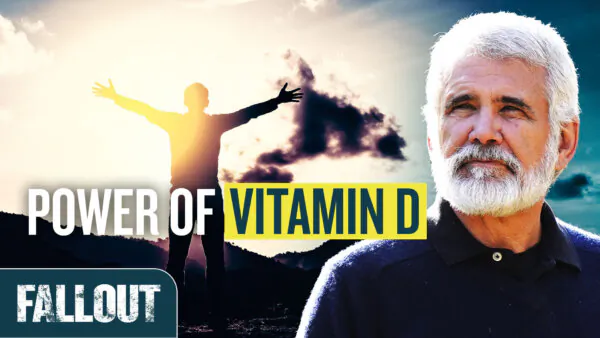
Robert, this is a good time to pivot. We’ve had some great discussions on your farm, one in particular about supplements and vitamin D. Let’s jump to that.
Mr. Malone:
Yes, let’s talk about supplements that extend your life instead of cutting it short.
Speaker D:
Herbal and dietary supplements can be enormously beneficial for us, particularly as we age and our gut doesn’t absorb nutrients as well. Although we’re lucky in that our supplement market is not regulated very heavily by the FDA, it means that we as consumers have to be careful and make sure that we’re getting supplements that are high quality and made in America.
Mr. Jekielek:
How do I know that a product is safe?
Speaker D:
Third-party verification.
Mr. Malone:
What’s most important is that it’s not the manufacturer that’s doing the certification. It’s some separate party. The two that are most commonly used in the United States are U.S. Pharmacopeia [USP], and the National Sanitary Foundation [NSF]. You should look for NSF or USP on the label to ensure they are not adulterated, meaning they don’t have contaminants, they’re pure, they have the labeled amount of ingredient, they’re potent, and that the product is active.
Speaker D:
The other thing that’s really important is dosing, because there is no government organization that’s going to tell you the correct dose. You have to figure it out yourself, and that means doing some research. It means going to PubMed.gov, which is the site of peer-reviewed literature. Be careful with the dosing, because it’s easy to overdose.
Mr. Jekielek:
What is a young man like me supposed to be taking then?
Mr. Malone:
We have four main buckets that we think about with supplements. Things that help you with brain health, cardiac health, joint health, and most importantly, your immune system.
Mr. Jekielek:
This whole industry in the U.S. has enjoyed this deregulation, which has allowed for a lot of innovation. I’ve heard that Big Pharma is looking to get in on the action. That’s the way it looks.
Mr. Malone:
This all started in 1994. There was a congressional act that opened up the industry for supplements and nutraceuticals. It told the FDA to stay out of this business, except in the case of where something is clearly toxic. What has happened more recently as this industry has exploded is that Pharma wants to get a piece of the action, because right now it’s unregulated. There are a whole lot of small business innovators and they’re driving amazing improvements in the technologies associated with supplements.
But now Pharma is trying to act through various congresspeople to get the act amended to put more regulations back in, because that’s what Pharma knows how to do—work within a highly regulated environment. In many ways, it’s anti-competitive, but that’s how they run their business.
Mr. Jekielek:
Robert, that’s all the time we have for this week.
Mr. Malone:
See you next week on Fallout.
This interview has been edited for clarity and brevity.