Live chat
November 19, 2024
American Thought Leaders
Live chat
 Expand
Expand
 Expand
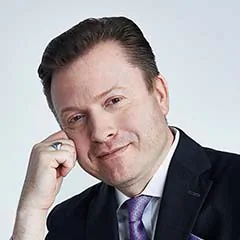
[RUSH TRANSCRIPT BELOW] Greg Scarlatoiu is the new president of the Committee for Human Rights in North Korea and a longtime expert on the Korean peninsula.
In this episode, he breaks down why North Korea has sent troops to fight in Ukraine, North Korea’s long history of involvement in foreign conflicts, what the current situation in this communist nation looks like, and what America’s long-term North Korea strategy should be.
Views expressed in this video are opinions of the host and the guest, and do not necessarily reflect the views of The Epoch Times.
*Big thanks to our sponsor for this episode Patriot Gold Group. Check them out here: https://ept.ms/3sr5LhH
RUSH TRANSCRIPT
Jan Jekielek:
Greg Scarlatoiu, such a pleasure to have you on American Thought Leaders.
Greg Scarlatoiu:
Jan, the pleasure is all mine. Outstanding Romanian pronunciation, by the way.
Mr. Jekielek:
Okay, listen, but we’re here to talk about North Korea, okay? And it’s very interesting. Recently, we’ve been alerted to the fact that there’s North Korean soldiers in Ukraine at the front. And also that apparently some of them are hooked on porn. Maybe that’s like a secondary thing. But it’s almost like this is a bit of a foil to try to understand what North Korea is up to. So tell me a little bit about these soldiers.
Mr. Scarlatoiu:
This is a money-making operation. In April, Putin and Kim Jong-un entered into a mutual defense arrangement. Basically, Kim Jong-un is making a lot of cold, hard cash out of the war in Ukraine. He has been exporting
millions of artillery shells to Russia. Half of the artillery shells the Russians have fired over the past year have been North Korean artillery shells. The Russian military-industrial complex is still having trouble keeping up with the demand of artillery shells on the Ukrainian front.
Now, thanks to the North Koreans, they have been able to out-shell the Ukrainians five to one. The Russians have been firing 10,000 artillery shells every day, while the Ukrainians have only fired 2,000. Of course, they’ve also sold the KN-23 solid fuel ballistic missile to the Russians. It’s been deployed and launched against the Ukrainians. This is a solid fuel ballistic missile based on a Russian, a Soviet missile, the Iskander missile.
Now we’re talking about troops. I see the view that these troops are just cannon fodder. They’ll get slaughtered by the dozens, the hundreds, and the thousands. I disagree. These are special forces belonging to the 11th Army Corps, the 11th Corps of the KPA, the Korean People’s Army. So under the 11th Corps, they have about 100,000 special forces. The folks in the 11th Corps are the best trained, best fed, best disciplined, best indoctrinated soldiers that North Korea has.
Kim Jong-un is sending his best soldiers to the Ukrainian front. Why? Again, the bottom line is money. The Russians are paying about $2,000 per month per soldier. In the case of North Korean civilians, workers officially dispatched by the North Korean regime, 90 percent of their salary is confiscated by the regime. In this case, it’s supposed that they’re left with a couple hundred dollars in their pocket every month. I don’t think so. These are soldiers. In uniform, perhaps the entire pay is confiscated by the regime.
Now, what about the porn story? I don’t buy into the porn story. In the North Korean military, there are three lines of command and control. One is the military. The other one is the security agency. North Korea’s Gestapo, the Ministry of State Security, the MSS, and also the military security agency, the Military Security Command. So there is a military chain of command and control, there is a security agency chain of command and control, and of course there is a party chain of command and control, a Korean workers’ party chain of command and control.
These soldiers will be under extraordinarily tight surveillance. They have been deployed to a foreign country, to the front lines fighting for Putin, Kim Jong-un’s great ally, per the direct order of the Supreme Commander of the North Korean Armed Forces. No mistakes are allowed. Their relatives are held hostage at home. North Korea applies a system of guilt by association called Yeonja-je. Up to three generations of the same family are punished, tortured, imprisoned, even executed if they don’t do what they need to do, and if they bring shame or embarrassment to the Supreme Leader. And this could be one such instance.
We hear stories about North Korean soldiers who may have deserted. They may have defected. Of course, these things happen in war. But again, if you get caught attempting to desert, you will be killed on the spot. Remember what Stalin used to say about the Soviet Red Army. In the Soviet Red Army, it takes more courage to retreat than it takes to advance. Why? Because the commissars were watching you. They were behind you. And if you took one step back, you’re basically killed by your own commissars. The North Koreans are not very different.
Mr. Jekielek:
So you raise a whole bunch of issues here. And as I mentioned, this is kind of a bit of a foil to try to understand a little bit about how the North Korean military operates, how North Korea functions. I mean, this whole guilt by association system. I’ve spoken with people who have actually been born in these camps, right? And even one person who gave up their mother essentially only to have her executed, not realizing what he had done because of that level of indoctrination that he had been subjected to. Before I go there, how do you know that this is the elite force, out of curiosity, and not this so-called cannon fodder, as some have described?
Mr. Scarlatoiu:
Because these are soldiers often referred to as light infantry brigades. They’re North Korea’s special forces under the 11th Corps. They are trained in the use of all accessible small arms. They jump trained. They’re trained in martial arts. They’re the special forces of North Korea, trained to infiltrate behind enemy lines, go after supply lines, cover the retreat of their own forces, destroy infrastructure, and blow up bridges. Now, of course, there are some questions to ask, and we don’t really know the answers yet.
Only time will tell is language a problem are they able to communicate in Russian do they fight as North Korean units or are the the North Korean fighters embedded into Russian units are they used as special forces as commando units that’s what they’ve been trained to do so, they are capable of engaging in combined arms operations, combining artillery, drones, and infantry. We don’t have the answers to those questions yet, but I do know 100 percent for sure that they’re highly trained, highly disciplined, very well fed, and highly indoctrinated. Plus, their families are held hostage at home. So there are a lot of incentives to be Kim Jong-un’s best warfighter.
Mr. Jekielek:
The thing I’m trying to understand is, does North Korea ever deploy these lower level cannon fodder type infantry, or is it always these superior fighting forces that you’re describing?
Mr. Scarlatoiu:
It’s always the superior fighting force. A few examples. They sent pilots to fight alongside the Syrians in 1967. They flew against Israel in the Six-Day War. They took heavy casualties. In 1973, they flew alongside Egyptian pilots, again, against Israel in the Yom Kippur War. Again, they took casualties. In Vietnam, they dispatched North Korean pilots to the Vietnam War to fly missions against us, the United States. They lost 16 planes. Their performance was abysmal. They used adequate tactics from the Korean War. The North Vietnamese were so exasperated that they lost 16 planes because of North Korean pilots that they told them, well thank you, that’s great, but please go home now.
In 1983, Robert Mugabe’s 5th Brigade committed an atrocity, the Matabeleland Massacre. They killed 20,000 civilians. Those Zimbabwean troops had been trained by North Korean special forces. After Eritrea seceded from Ethiopia, there was the Ethiopian-Eritrean War in the late 1990s. As recently as the Syrian civil war, they had special forces fighting alongside Assad’s troops. I was in Geneva at the UN in a closed door meeting with a bunch of human rights defenders from all over the world. A group of Syrian human rights defenders took me aside and said, do you realize that there are North Korean special forces fighting on Assad’s side. I said, no, I had no idea.
They said, yes, the name of the units is Cheollima, Cheollima 1 and Cheollima 2. That’s when I knew that they were telling the truth, because in the Korean language, Cheollima means Pegasus. This is the winged horse that flies a thousand leagues. This is also the name of Kim Il-sung’s most prominent public mobilization campaign. Kim Il-sung was, of course, the founder of North Korea and the grandfather of the current leader, Kim Jong-un. So, Cheollima1 and Cheollima 2. Later, I think I heard about Cheollima1 and Cheollima 7, but anyway, they were on the ground.
They were building a nuclear reactor for Assad in Syria when the Australian Air Force bombed the reactor in 2007. Assad didn’t go to the UN to complain. They brought in bulldozers. They razed the whole place. It was gone. Of course, they’ve been proliferating instability and violence to the Middle East, to Iran and Iran’s terrorist proxies, Hezbollah, Hamas, the Houthi rebels in Yemen. All of this proliferation of instability and violence has been directed at our greatest ally and only ally in the Middle East, the state of Israel. So there is a very long history of North Korean involvement in foreign conflicts. And when it came down to dispatching troops, they didn’t send cannon fodder. They sent their best troops, generally special forces.
Mr. Jekielek:
Indeed, you know, speaking of the Israel-Hezbollah conflict now, you know, in Lebanon, these tunnels, as I understand it, that they’re systematically blowing up sections of, were actually built by North Koreans. That was an astonishing thing for me to learn.
Mr. Scarlatoiu:
Affirmative. The North Koreans built tunnels for both Hamas in Gaza and for Hezbollah in Lebanon. Why are they so good at tunneling? Because there’s a lot of stuff underground in North Korea. There are a lot of tunnels in underground facilities in North Korea. They’re very good at tunneling. This is one of their specialties, and they have proliferated this tunneling expertise to the Middle East, to the enemies of Israel.
Mr. Jekielek:
You don’t think about commonly North Korean troops being, you know, engaged in all these conflicts. Of course, you know, you’ve kind of laid out that they are, but it’s just not something that it almost seemed out of the blue to learn for many people,
Mr. Scarlatoiu:
I think they’re at the front. To those who have been students of North Korean affairs for a while, I would say it came as no surprise. Kim Jong-un is taking great advantage of these conflicts. Remember, North Korea is under sanctions. There are applicable UN Security Council sanctions, US sanctions, and other sanctions meant to do away with North Korea’s production and proliferation of nuclear weapons and ballistic missiles. Kim Jong-un had his idea of implementing his policy of Byungjin, which means the simultaneous development of nuclear weapons and the economy.
What we’ve been telling him is that what we need is CVID, complete verifiable irreversible denuclearization, also known as FFVD, full final verifiable denuclearization of North Korea. Look, Kim Jong-un, you cannot have both. If you keep developing a nuclear program, you’ll be under sanctions. Your economy will not develop. Well, what Kim Jong-un is doing now is to prove that his Pyongjin policy is actually working. Because he’s in possession of his nuclear deterrent, he’s able to deploy conventional forces, also to export ammunition, weapons, and ballistic missiles to troubled regions, to the Ukrainian front, to the Middle East. This is his version of Pyongjin. He’s in possession of nuclear weapons. He has the capability to deploy his conventional means, his conventional capabilities, and thus the longer the Russian aggression, the Russian war in Ukraine continues, the more money Kim Jong-un will make.
Mr. Jekielek:
Give me a picture of this guilt by association system.
Mr. Scarlatoiu:
North Korea’s guilt by association system can be traced back to the feudal days in Korea. This is how it used to be. Up to three generations of the same family used to be punished for the perceived wrongdoings
of one individual. North Korea also uses a system called songbun. This is a loyalty-based social classification system. They have a core class, about 20 to 25 percent of the population, a wavering class, 40 to 60 percent of the population, and a hostile class, 20 to 25 percent of the population. Many in the hostile class end up in rundown regions in the Northeast or in detention facilities, political prison camps, or re-education through labor camps.
Basically, this is a way of holding people hostage. Who is classified as loyal? Well, if you trace your lineage back to the people who fought alongside Kim Il-sung against the Japanese colonial occupation, then you’re the very core of the core, the most loyal. Who is perceived to be a hostile class? Those who had ancestors who were landowners, entrepreneurs, those who were government officials during the Japanese imperial colonial administration, those who have a religion, those who have relatives suspected of being religious followers. If you get caught in possession of a smuggled religious book like the Bible, you’re in very big trouble in North Korea.
Even an orthodox Marxist might be in trouble in North Korea if the orthodox Marxist realizes that Marxism is against heredity, and this regime of the Kim family has passed on power from the grandfather to the son in July 1994, and from the son to the grandson in December 2011. So perceived wrongdoers, wrong thinkers, those suspected of having engaged in wrong associations punished, classified as disloyal, hostile class. And this multi-generational punishment is one of elements, one of the factors that have maintained the Kim regime in power for so long, since 1948, if not 1945, when Kim Il-sung arrived in North Korea in a Soviet Red Army officer’s uniform.
Mr. Jekielek:
Before we continue, you know, and I really want to understand how this Kim family dynasty intersects with the fact that it’s a communist society, right? Before we go there, tell me a little bit about yourself and your background.
Mr. Scarlatoiu:
Jan, I’m a naturalized American. I was born and raised in communist Romania. Romania was the one Eastern European country most similar to Kim Il-sung’s North Korea. Why? Because in 1971, the Romanian dictator Nicolae Ceausescu visited Pyongyang, North Korea, for the first time. He met with Kim Il-sung, and he absolutely fell in love with the North Korean cult of personality. Thousands upon thousands of people gathered to worship the great and supreme leader, and he literally wanted to transform Romania into the North Korea of Eastern Europe. The 1980s were terrible.
Just like Kim Il-sung, he tried to forcibly industrialize the country. He borrowed immense amounts, enormous amounts of money from overseas. He had this ambition of becoming self-reliant, just like the North Koreans, just like Kim Il-sung. So he exploited and oppressed the people of Romania to pay back the foreign debt. So this country, as you recall, used to be known as the breadbasket of Europe. But then people were standing in food lines, electricity, power would be cut off, water, running water would be cut off. The 80s in particular, were very bleak years.
So in December 1989, we had an anti-communist revolution. We lost quite a few people, people in my generation. I was a freshman at Bucharest University studying English, language, and literature at the time, and I was right in the midst of it on the streets with other young people. Then as soon as the country opened up, I saw an opportunity on the bulletin board to take exams for scholarships overseas. I wrote my essays. One of them I had been reading quite avidly about developmental models, and one of these developmental models was the Han River Miracle, South Korea’s astounding economic development over just a few decades. They went from rags to riches, from one of the world’s poorest countries to an economic powerhouse. I wrote one of my essays on the Han River Miracle.
The Romanians had had relations only with the North Koreans since 1949. In March 1990, they established relations with the South Koreans. So the newly established South Korean embassy was given my exam paper, and they said, well, I would like this young man to be the first Romanian ever to
study in South Korea on a South Korean government scholarship so I went to South Korea my first time outside the country. Remember, unlike even Poland or Hungary or other countries in Eastern Europe, Romania was completely isolated. It was extraordinarily difficult to get out of the country.
I landed in South Korea and did a one-year language training at Seoul National University. Then I got my BA and MA in international relations at Seoul National University. I worked there in media broadcasting for a while, then came here. I went to the Fletcher School of Law and Diplomacy at Tufts University in Massachusetts. I’ve spent the past 22 years in D.C. working in international development for six-plus years, Korea Economic Institute for three-plus years, and then the U.S. Committee for Human Rights in North Korea [HRNK] since July 2013. So my commitment to human rights in North Korea comes from my background. I was born and raised in the one Eastern European country that was most similar to Kim Il-sung’s North Korea. And I spent a decade, 10 years, studying, working,
living on a divided Korean peninsula in South Korea. So it’s a very personal map, to say.
Mr. Jekielek:
Well, so explain to me how this works. You know, you’ve got this hereditary progression of the supreme leaders. And at the same time, you know, you’ve got this history of communist principles being applied, you know, and even, you know, much as they may not be applied directly, they’re still operational, as I understand it.
Mr. Scarlatoiu:
This is a natural progression of communism, it always ends like this, in a dystopian kleptocratic dynasty. If Eastern European countries hadn’t been brave enough or lucky enough to get rid of communism in 1989, who knows what we might be witnessing today. North Korea, the Democratic People’s Republic of Korea [DPRK], was established by the Soviets with Soviet assistance. Kim Il-sung learned how to run political prison camps. He learned how to set up his own gulag from the
Soviets. Of course, he gave it his own personal touch. Then he decided that power was a great thing. He was going to keep power to himself and he was going to pass it on to his offspring.
Again, North Korean people are subjected to an absolutely overwhelming ideological bombardment day in and day out, at least once a week, depending on their job. They have to engage in self-criticism and ideological indoctrination sessions. You engage in self-criticism and say, comrades, I’ve done this and this and that wrong, and I pledge to recite the 10 principles of monolithic ideology, the TPMI, a hundred times and become a better person. Then you pick on somebody else in
the audience. You criticize that person. That person engages in self-criticism. It goes on and on and on and on.
Colloquially, these are called struggle sessions, right? You can also call them struggle sessions, yes. But, you know, okay, you hear that younger people kind of fake it and they prearrange it. This has been part of the life of North Koreans for so long. And basically, this ideology has been used and abused and perverted to the point where, although North Korea has a constitution, believe it or not, and by the way, we have even posted their constitution, an English translation, on our webpage, hrnk.org.
Their constitution includes wording on freedom of the press, freedom of expression. They have labor legislation. They’ve acceded to international human rights treaties. They’re bound by the UN Universal Declaration of Human Rights, having become a UN member state together with the ROK, the Republic of South Korea, in 1991. They’ve ratified the two covenants, the International Covenant on Civil and Political Rights, the International Covenant on Economic, Social, and Cultural Rights, the Women’s Convention, the Children’s Convention, the Convention on the Rights of People with Disabilities. None of this matters. The North Korean people have zero access to these documents. They have zero access to these documents. They have zero access to their constitution.
All they’re taught is the 10 principles of monolithic ideology, which are the 10 fundamental tenets, the 10 commandments of the Kim family regime, the overarching messages, obey, obey, obey. People are not taught to debate. They don’t debate what they’re taught. If they debated Kim Il-sung thought, Kim Il-sungism, the Juche ideology of self-reliance, any element of North Korean ideology would collapse in an instant if somebody applied logic, coherent logic, to analyzing this ideology. But it’s not about coherence. It’s not about debates. It’s all about memorization, recitation, brainwashing, indoctrination. That’s how North Korea has worked.
Of course, there have been some changes in recent years. After a great famine that killed up to three million North Koreans who died of starvation and starvation-induced disease markets. Informal markets have developed as a coping mechanism because people can no longer rely on the public distribution system. Through these informal supply lines leading from the large wholesale markets close to the border with China to wholesale markets in the provinces to retail markets, information has been traveled. There are radio stations, Radio Free Asia, Voice of America, stations based in South Korea that broadcast into North Korea.
Through these markets, initially VHS tapes, then CD-ROMs, DVDs, USBs, these days micro-SD cards have been smuggled in. More North Koreans are familiar with the Hallyu, the Korean wave, K-pop, K-drama, K-music, you name it, K-drama, K-movies. There is an increasing trend among the young people of North Korea to dress and act like young people in South Korea. And this is all because of these imported elements of South Korean culture that’s so popular all over the world. BTS is not only a K-pop band, it’s a global cultural phenomenon. 200 million followers worldwide. It’s very interesting. Young North Koreans are even using South Korean dialects, some of them at least.
One example, one very senior former North Korean was telling us about, he was showing us pictures from a wedding. So the name, the last name to us is Lee. In South Korea, it’s Lee. In North Korea, it has an R. It’s Lee. But this young lady’s name, the bride’s name, was written in South Korean style, not Lee, but Lee. And it was in plain sight. We’ve had reports of cops who stop people on the street if they overhear them using South Korean dialect. So because he’s so terrified of South Korean culture, Kim Jong-un has decided to make some fundamental ideological changes for two reasons, actually.
Reason number one, because he fears South Korean cultural imports. He knows that North Korean people, young people, are becoming addicted to South Korean culture. Number two, he wants to forge his own cult of personality. So what is he doing? He’s doing away with some of the fundamental tenets of his grandfather’s ideology. Unification is one of them.
To Kim Il-sung, unification was a very big deal. To Kim Il-sung, language was a very big deal. He states something along the lines of, even if you share the same national space, you’re not the same nation unless you speak the same language. Now, Kim Jong-un has made statements over and over and over again that this is not the same nation anymore. These are two countries at war. So he’s walking away from his grandfather’s notion of unification.
The most important holiday in North Korea is the Day of the Sun, Taeyangjul, April the 15th. This is Kim Il-sung’s birthday. This year, for the first time ever, it was mentioned only once in the Rodung Sinmun, the party’s official newspaper, as Taeyangjol, the day of the sun.
Everywhere else, April the 15th. Why? He’s trying to tone down the grandfather’s personality to elevate his own. Is he going to be successful? We don’t know. Is he making a strategic mistake?
In a highly ideological totalitarian regime, he is diminishing the ideological factor,creating a vacuum. What can we do about it? Fill in that vacuum with information from the outside world, empower the people of North Korea, try to induce peaceful transformation by means of telling them the story of their own human rights violations, the story of the outside world, in particular free, prosperous, democratic South Korea, tell them the story of the corruption, the abysmal corruption of their regime, in particular the inner core of the Kim family. Tell them the story of their own right to self-determination and tell them the story of Korean unification. This is not a matter of choice, it’s a matter of destiny.
For 1,000 years prior to their separation they shared the same language, the same culture, the same civilization and lived, most importantly, under the same political system for 1,000 years. I always tell my young Korean friends in South Korea that, you know, this is not a matter of choice. It’s really a matter of destiny. So we’ll see how it goes. I think that the people of South and North Korea should have our full support to accomplish, to reach the ultimate resolution of the North Korean conundrum, combining human rights violations, crimes against humanity, nuclear weapons, and ballistic missiles. That unique resolution, the one and only resolution of this conundrum, is unification under a free, prosperous, democratic, economic powerhouse, Republic of Korea, a staunch friend, ally, and partner of the United States of America.
Mr. Jekielek:
When you’re describing the situation currently in North Korea, it makes me think of how my mother talked about the situation in Poland. What I mean is, it seems like that the utter and complete isolation, the near-complete
the isolation that exists there is lighter. It’s somewhere along the way. And I remember my mother telling me how much she looked forward to these broadcasts from Radio Free Europe and others always looking for basically something foreign, clothing, styles, whatever it was. So is that analogous? Is this something like Europe now in the 80s or, you know, late 70s? Is
that what North Korea is beginning to look like?
Mr. Scarlatoiu:
Jan, it is very interesting that you’re asking that question. I often think that North Korea and Kim Jong-un today are beginning to look like Eastern Europe in the late 70s and early 80s. I remember listening to the radio, one of those big bulky radios, with my maternal grandfather listening to Radio Free Europe, Voice of America, Deutsche Welle, the BBC. That’s how we got our credible information. We didn’t trust official propaganda. We only trusted foreign radio stations, radio stations from the West, basically. North Korea, I sense, is somehow in a similar place.
Half the population of North Korea is under 35 years of age, so 35 and under. In particular, young people in the urban areas, in particular, the sons and daughters of the North Korean elites who have the means to access information from the outside world. They have the devices, they have the players or the phones. By the way, they do have a cell phone system, but it cannot make international calls. It only works inside North Korea. So young men and women of means do have a certain degree of access to this information smuggled in from the outside world.
Even if they’re in government, even if they work for the regime, they’re in obviously junior, lower positions. However, 10, 15 years from now, many of them will be in key positions. Would I make a prediction? I know a few North Korean senior escapees, former diplomats, including Mr. Taeyong Ho, who was a national assemblyman in South Korea, who was DCM at the North Korean embassy in London when he defected, now he’s Secretary General of the peaceful unification advisory council he also agrees that somewhere between 15 and 20 years from now we could be certain that there will be some type of transformation in North Korea. No dictatorship lasts forever and this one will not last forever. Change might come sooner in Eastern Europe. How many could have anticipated and here talking, Sovietologists and experts in the region. How many anticipated that these regimes would fall in 1989? Almost nobody.
Mr. Jekielek:
Actually, that’s something that Professor Arthur Waldron of the University of Pennsylvania has actually talked about when it comes to the Soviet Union. It was pretty much only the dissidents who were saying, you know, it actually looks like it’s going to fall, but the Sovietologists didn’t want to listen to them. There’s kind of much less of an interest in listening to the dissidents than it is to the experts.
Mr. Scarlatoiu:
In our case, I think that one of the greatest developments over the past 25 years has been that the voices of North Korean escape of the mid to late 1990s, just a handful of North Koreans had escaped. However, ever since, about 34,000 North Koreans managed to escape and resettle in South Korea. Others here in the United States, we have somewhere in the range of 250, 60 right now, not too many in Canada, in the UK, in Germany, and other places.
Many of them have written memoirs, books. Many of them have testified before the UN Commission of Inquiry that published a landmark report in February of 2014, finding that crimes against humanity were being perpetrated pursuant to policies established at the highest levels of the regime. By the way, the same UN COI report warned Chinese authorities that through their policy of forcibly repatriating North Korean refugees in direct violation of the 1951 UN Refugee Convention and the 1967 Additional Protocol, China was aiding and abetting a regime committing crimes against humanity. North Korean escapees played an absolutely critical role in informing the UN like-minded governments, the United States, the European Union, on the atrocities perpetrated by the North Korean regime.
In South Korea today, under the government of President Yoon Suk Yeol, several former North Koreans hold key positions. For example, Professor Ko Young-hwan, who defected from Francophone Africa in the 1990s, he was a diplomat, is now the president of the National Unification Education Institute. Tae Yong-ho, who was again DCM at the embassy in London, the North Korean embassy in London, was a member of the South Korean National Assembly. Now he’s Secretary General of the Peaceful Unification Advisory council of South Korea. That’s a ministerial position.
Of course, Ji Seong-ho, who participated in the State of the Union Address during the first Trump administration, Trump 45, in 2018 was a member of the South Korean National Assembly. Now he’s a governor in the shadow government that the South Koreans are running in the South, the North Korean shadow government. By the way, Ji Seong-ho went from a street child in North Korea to a member of the National Assembly in South Korea. That’s all I have to say about the differences between dictatorial communist North Korea, vassal, stooge, ally of China, and free, democratic, prosperous South Korea, staunch friend, ally, and partner of the United States of America. Well, so there’s a few things you just mentioned.
Mr. Jekielek:
Actually, I absolutely do want to talk about what the Trump 47 administration might look like when it comes to North Korea or some of your hopes in terms of North Korea policy for that administration. But before we go there, you described a few elements of the complicated relationship between Korea and China. I’ve heard from many experts that essentially if Chinese material support for North Korea ended, it just evaporated, the North Korean regime might collapse within weeks. I’m curious what your view of that is.
Because on the one hand, we have this huge money-making operation through weapons, through soldiers, and so forth. You’re arguing this is part of his economic engine. On the other hand, there’s this significant, and I’m going to tell you how significant, dependency on Chinese money. And the argument is, the Chinese Communist Party basically gets to say, well, look, look at this pariah regime, look at the terrible things we do. We’re much better than them. I mean, or something like that. Your thoughts?
Mr. Scarlatoiu:
To China, North Korea continues to be a vassal, an ally, a vassal, a buffer zone between South Korea, a friend and ally of the United States and China, and also bargaining chips. There have been ups and downs in the relationship between China and North Korea. China has sometimes been extraordinarily annoyed with North Korea. Even nowadays, when Kim Jong-un and Xi Jinping met in China, Kim Jong-un pledged to consult with China when it came to important strategic decisions. Apparently, he didn’t consult with China prior to launching the so-called satellite, and he didn’t
consult with China properly prior to providing ammunition, artillery shells, ballistic missiles, and even troops to Russia.
Now, is this a deal-breaker? Absolutely not. It’s just like the nasty boy who goes to school and does some nasty things. North Korea and the principal calls the parents to come to school, this is China. The kid might get a might get slapped around a little bit get a little bit of a spanking but fundamentally he’s still their kid so this is not going to be a deal breaker for this close relationship that during the good times was described as the lips and teeth, a very very close relationship between China and North Korea will continue.
After all, to the south, North and South Korea are separated by the DMZ, the demilitarized zone. North Korea’s northern border with Russia is just 17 kilometers long. Most of their northern border is with China. Prior to COVID, I would have agreed that China doesn’t have the capability to transform North Korea. China has the capability to shut down Korea. However, during COVID, Kim Jong-un shut down his border. This created great disruptions within North Korea, great humanitarian disruptions in terms of access to food, since they limited the amount of imports coming in from China. North Korea continues to be very dependent on China.
However, there’s an added element right now. Despite applicable UN, US, and other sanctions, North Korea is exporting massive amounts of ammunition to Russia, a permanent member of the UN Security Council. The UN sanctions regime is in deep, deep trouble. Kim Il-sung, Kim Jong-un’s grandfather, used to be very good at playing this game, playing mommy against daddy, PRC, communist China against the Soviet Union, while extracting maximum benefits from both. Perhaps Kim Jong-un is engaged in playing a similar game.
North Korea continues to be very dependent on China. I fully agree that China continues to protect North Korea. I run into the Chinese at the UN all the time. They’re their great protectors. The Cubans are their coaches, but that’s a different story. China continues to forcibly repatriate North Korean refugees, falsely claiming that they’re illegal economic migrants. They’re not. The standard is a credible fear of persecution. If you face a credible fear of persecution upon return to the home country, you qualify to gain access to the process leading to acquiring political refugee status.
We have thoroughly documented this, my organization, through satellite imagery, escapee testimony. These people, if returned to China, are tortured, beaten, harshly interrogated, imprisoned, even killed. Returned to North Korea? To North Korea, right. In the case of women, North Korean women who became pregnant with Chinese men, we have had multiple, multiple reports of horrendous treatment, including forced abortions and infanticide. Of course, these North Koreans should receive political refugee status.
So China continues to aid and abet this regime, even when they’re annoyed with them. Are they still heavily dependent on China? Yes. Can China still shut them down? Yes. Now they have a little bit of an escape valve. They’re making tremendous amounts of money out of exporting instability and violence, weapons, ammunition, and even soldiers’ conflict zones to Ukraine in particular, and also to Iran and its terrorist proxies.
Mr. Jekielek:
What do you make of Trump 45’s relationship with Kim Jong-un?
Mr. Scarlatoiu:
Multiple U.S. presidential administrations have attempted to engage the North Koreans, to engage in diplomatic dialogue with the North Koreans. All of these attempts have failed. I would not blame us, the United States. I will blame the North Korean regime for having zero credibility, for having breached each and every promise they made through a negotiated deal.
During the Clinton administration, there was the 1994 Geneva Agreed Framework. They developed a clandestine uranium enrichment program that fell apart.
During the Bush administration, we had six-party talks. They breached the terms of the agreement. It fell apart. In 2012, there was the agreement by Ambassador Glyn Davies, former special envoy for North Korea policy with the North Korean Vice Minister of Foreign Affairs at the time, Kim Kye-gwan, saying no more nukes, no more tests, no more ballistic missile launches. Two weeks later, they announced a so-called satellite launch. They proceeded with the launch just ahead of the centennial anniversary of Kim II Sung’s birthday on the 15th of April 2012. The launch happened two days before that. They failed then, they succeeded later.
President Trump tried something new. President Trump experimented with a tool in the diplomatic toolkit that had not been employed before the summit meeting. It makes good logical sense. If this is a top-down system with a supreme leader at the top, what else can we try? A summit meeting between the two leaders, after all, during Trump 45, we applied all four elements of national power, all four elements of the dime, diplomatic, information, military, and economic power.
How? Diplomatically through the summit meetings in Hanoi, Vietnam, in Singapore, and then in Hanoi, and very briefly, in Panmunjom on the Korean Peninsula, we applied information to a certain extent through information campaigns, information sent into North Korea through funding organizations endeavoring to do that. Military power, of course, through strengthening the U.S.-South Korea alliance and the U.S.-Japan alliance and economic through sanctions. So this was part of that. In my view, perhaps for President Trump, this is still unfinished business. Perhaps there will be some way to try once again to solve, let’s say, one of the most serious security threats facing the United States and our allies.
I talked to a lot of members of the European Parliament. My organization and I have built a lot of great transatlantic bridges. The Europeans are very worried. You know, we’ve been talking about nukes and missiles and human rights violations. Of course, they care. This issue is somehow remote. They’re no longer remote. The North Korean threat has arrived on the doorstep of Europe. There are troops in Ukraine. Everybody realizes the urgency of this matter.
While this is difficult, the greatest difficulty is the following. When we go to school and study our conflict resolution, we learn about the ZOPA, the zone of possible agreement. We learn about BATNA, the best alternative to a negotiated agreement. The North Koreans don’t go to the school of ZOPA or BATNA. The North Koreans go to the school of the zero-sum game. Your loss is my gain. They want the so-called denuclearization of the entire Korean Peninsula. There have been no nuclear weapons in South Korea since 1991-1992. The tactical nuclear weapons in South Korea were removed at that time. What they mean by this is the removal of South Korea from the protection of the U.S. nuclear umbrella, the dismantlement of the U.S.-South Korea strategic alliance.
What do we want? We want CVID, complete, verifiable, irreversible denuclearization. Where’s the middle ground? There’s no middle ground. There is no ZOPA. There is no zone of possible agreement. Where does human rights fall into this? There were some very high points during Trump 45, for example, and I had a hand in this. I’m the one who selected, recruited, and brought Ji Seong-ho over to participate in the State of the Union address. So we had a North Korean, disabled North Korean human rights activist, a former North Korean, a defector, participating in the State of the Union Address, meeting with the president in the Oval Office together with seven others. I recruited those seven others, good friends and colleagues.
President Trump gave a great speech on the 7th of November 2017 before the South Korean National Assembly. He had a very accurate statement. He made a very accurate statement on the state of North Korean human rights and the human rights security nexus. Of course, later on, as we were engaging the North Koreans in summer diplomacy, he was criticized, for example, for not having appointed a U.S. special envoy on North Korean human rights issues. I agree that perhaps we had and perhaps we still have too many special envoys, but this position is one that we really need. It’s a position that we need. It’s a position that needs full support.
Mr. Jekielek:
Is that what you’re hoping for in this future administration?
Mr. Scarlatoiu:
That’s what I’m hoping for, yes. And of course, the UN is no silver bullet. The UN has severe limitations. And yet there are some good things done through the UN at the time. Trump 45, the first Trump administration, was somehow reluctant to place the North Korean human rights issue on the agenda of the UN Security Council for a few years, presumably because we were engaging them through summer diplomacy. But no empty promises were made. There was no arrangement bringing any kind of damage to U.S. national security or to the peace and security of the Northeast Asia region or South Korea. So we’ll have to see.
Fundamentally, over the long run, we’ll have to keep doing what we’ve been doing, basically ensuring deterrence. Deterrence is very important and, of course, extended deterrence. And the presence of U.S. troops on the Korean Peninsula in South Korea is very important. South Koreans are great soldiers, great warfighters. Presence of our armed forces, the presence of U.S. forces in South Korea is important because it provides a very powerful deterrent. It’s not about fighting a war. It’s about preventing a war. And that’s the very important role played by the U.S.-South Korea alliance.
So we’ll have to continue to deter and contain North Korea. They have developed tremendous, I have to say, long-range ballistic missile capabilities. By now, we are certain that they can reach the continental United States. According to the RAND Corporation, by the year 2025, which is upon us, they’ll be in possession of 200 nuclear warheads. That’s an arsenal compared to Great Britain’s and France’s. And France and Great Britain are no longer building nuclear weapons. So, of course, we’ll have to work on improving our own missile defenses as well. In the meantime, we will have to concentrate on the human rights security nexus and, again, concentrate on very meaningful and effective information campaigns meant to empower the people of North Korea through information from the outside world, meant to induce eventual peaceful transformation of North Korea.
Mr. Jekielek:
You’re speaking here about public diplomacy, basically communicating with the people as opposed to with the government or in different ways with both.
Mr. Scarlatoiu:
One could see it as a version of public diplomacy. Of course, usually when we use this term, public diplomacy, this is perfectly fine with the host government. It’s perfectly fine for the embassy of the United States in a given country to organize a book festival, a film festival, to feature some music bands, whatever it is that you want to do. Feature some authors, some actors and actresses. In this case, the North Korean regime is adamantly opposed to foreign influences entering the country. They’ve come up with new legislation, harsh punishment. They’ve executed teenagers for having watched South Korean material. So this is very serious business.
Of course, in a way, this is public diplomacy. This is information sent into North Korea, inserted into North Korea, for the consumption of ordinary North Korean people or even the elites but without the approval of the regime and against the regime’s adamant opposition. And explain to me what you mean by security human rights nexus. There is a strong connection between North Korea’s human rights violations and the threats it poses to international peace and security. Why? In order to stay in power, the Kim family regime needs to do two things.
Number one, develop its nuclear weapons and ballistic missiles. The regime regards its nuclear weapons and ballistic missiles as essential to its survival. Number two, the regime procure the hard currency it needs to keep the elites happy and produce nuclear weapons and ballistic missiles? By oppressing and exploiting its own people at home and abroad. Prior to COVID, there were about 100,000 North Korean workers officially dispatched by the North Korean regime to about 40 countries all over the world, primarily China, the Russian Far East, and the Middle East. Construction workers, textile workers, loggers in the Russian Far East. There is a core of about 3,000 North Korean hackers who work day jobs in China, Singapore, Malaysia, and other places.
Much of their salary is confiscated by the North Korean regime. At night they work as hackers for the North Korean regime so cybercrime is a very serious issue. Crypto theft is another serious issue. They’re very good at this. It’s not a large core. It’s a relatively small core but highly trained and highly loyal to the Kim family regime. These 3,000 hackers are people who are in a position to experience the outside world. They know very well what’s going on.
On the other hand, their songbun, loyalty-based, background check was likely perfect. They still have relatives at home. Their families are still home. Spouses, children, parents, other relatives, if they decide to defect, their entire family will be punished, pursuant to the system of guilt-by-association, going up to three generations of the same family.
Generally, most of the workers sent overseas are men, except for women who are sent abroad as waitresses, working at North Korean restaurants, textile workers, or seafood processors.
They’re sent mostly to Chinese seafood processing plants, but it’s mostly men, married men. They must have at least one child at home, if not two children. So this is the regime’s way of keeping the family hostage in order to ensure the loyalty of those who are officially dispatched overseas, in order to ensure that they don’t defect. Every time somebody defects, this creates great embarrassment for the Kim family regime.
Mr. Jekielek:
And so bringing back to this human rights security nexus, essentially it’s the exploitation of these people that’s funding all of the regime’s activities and creating the security problem in the first place.
That’s what you’re arguing.
Mr. Scarlatoiu:
There are multiple layers to the human rights security nexus. system. Throughout North Korea’s political prison camps, re-education through labor camps, or Kwalliso, the gulag, the political prison camp, the kyo-hwa-so, re-education through labor camp, other detention facilities, forced labor is part of daily life. This is slave labor. This is slave labor that fuels North Korea’s extractive industry, its coal extraction in particular, but all kinds of extractive operations. The regime pretty much relies on slave labor, prison labor, forced labor in order to extract the resources it needs to develop its weapons, its tools of death. Those sent overseas are basically shipped overseas as merchandise in order to procure hard currency for the regime.
My organization has also documented a very interesting situation at Camp 16. This is a political prison camp that’s very close to the Punggye-ri nuclear testing facility. If you go around the mountain, you go along a rather long road, but there is a shortcut, a switchback, leading directly from the political prison camp to the nuclear testing facility. There are, of course, multiple explanations as to why this switchback was built and dug into the mountain. One of these possible explanations is that they use forced labor, prison labor, slave labor from the camp at these nuclear testing facilities.
There are reports that have been drafted and published in South Korea documenting the impact that the nuclear program has on the health and human rights of North Koreans, my organization submitted to the UPR, the Universal Periodic Review. This year, our submission related to the negative side effects of the nuclear weapons program on the health and human rights of North Korean women. The people of North Korea are paying a very heavy price for the regime’s development of nukes and ballistic missiles.
Mr. Jekielek:
You know, on your point of, you know, this, I guess, extraction of money for the Russia-Ukraine war, President Trump has promised to try to finish that war in one way or another as quickly as possible. So it’s likely that that cash stream will run out. Greg, this has been a fascinating conversation. Any final thoughts as we finish?
Mr. Scarlatoiu:
It is very important to remember that North Korea is no longer just a Korean peninsula issue. North Korea is no longer just a security threat to the Northeast Asia region, to the Asia-Pacific region. The North Korean proliferation of instability and violence, North Korean weapons, ammunition,
even soldiers have been deployed against our allies in Israel. They’ve been deployed against Ukraine. They’ve proliferated to state sponsors of terror.
Of course, they’re a state sponsor of terror themselves. They proliferated to terrorist groups that are attacking, invading, killing, assassinating our own friends and allies.
North Korea has become a global threat. North Korea has become an increasingly important member of the axis of tyranny. Russia, China, Iran, North Korea and their allies, these are basically powers that are trying very hard to go against the status quo. They’re trying to dismantle the international order as we know it, their revisionist powers. We must pay very close attention to the security threats that North Korea poses. We must understand that there is an inextricable connection between North Korea’s human rights violations and crimes against humanity and the grave security threat it poses to international peace and security.
Mr. Jekielek:
Greg Scarlatoiu, such a pleasure to have you on the show.
Mr. Scarlatoiu:
Jan, the pleasure has been all mine. Thank you.