Live chat
May 8, 2025
American Thought Leaders
Live chat
 Expand
Expand
 Expand
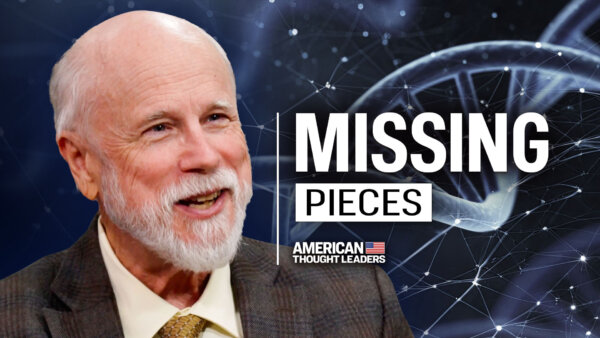
[FULL TRANSCRIPT BELOW] Dr. Paul Marik is a pulmonary and critical care specialist and a founding member of the Independent Medical Alliance, formerly known as the Front Line COVID-19 Critical Care Alliance.
“Our healthcare system is completely and utterly broken. From the top to the bottom, it’s a broken, dysfunctional system,” says Marik. “If you do an experiment, it should be reproducible. And I think that’s the most important qualifier of good science; the results are reproducible, because then, it’s likely to be true.”
Best known for his revolutionary, lifesaving protocol for Sepsis and for being the second most published critical care physician in the world, Marik is now focusing his efforts on the treatment and prevention of cancer.
“Intermittent fasting, in which the body was designed to eat for a while and then to starve for a while, is not a difficult concept. The human body wasn’t designed to snack and eat all the time, which is what people seem to do. And that has serious metabolic consequences, with high insulin levels and insulin resistance,” says Dr. Marik. “Vitamin D is effective in preventing cancer, but it’s also very effective in the treatment of cancer.”
Views expressed in this video are those of the host and the guest and do not necessarily reflect the views of The Epoch Times.
FULL TRANSCRIPT
Jan Jekielek:
Dr. Paul Marik, such a pleasure to have you back on American Thought Leaders.
Dr. Paul Marik:
Thank you, Jan. It’s always a pleasure.
Mr. Jekielek:
Since our last interview, I’ve implemented intermittent fasting in my diet, and it has made huge changes. I know that intermittent fasting can also help in preventing cancer. Let’s talk about cancer treatment in general and cancer prevention.
Dr. Marik:
Obviously, cancer is likely caused by multiple factors. We don’t really understand all of it, but it seems like obesity plays a really important role in generating cancer, particularly insulin resistance. Insulin stimulates cell growth. Part of the metabolic syndrome and diabetes is this problem of insulin resistance. The most effective way of dealing with insulin resistance, the metabolic syndrome, is really twofold.
First is intermittent fasting, which is the way the body was designed to eat for a while and then to starve for a while. It’s not a difficult concept. The human body wasn’t designed to snack and eat all the time, which is what people seem to do. That has serious metabolic consequences with high insulin levels and insulin resistance.
The second is to eat real food, not highly processed food. Americans are addicted to highly processed foods, which really causes the blood sugar to spike. These are foods that have very little nutrition. They’re not nutrient dense. Then they are contaminated with all kinds of additives, preservatives and chemicals. It’s getting back to the way our body was designed.
With our forefathers, there wasn’t a 7-Eleven up the road from the cave that you lived in. You ate when there was food and when there was no food you didn’t eat. You ate natural food substances not processed food, and that goes a long way to dealing with insulin resistance. The key point here is that obesity is a spectrum. Obesity metabolic syndrome insulin resistance creates this metabolic milieu, which allows cells to replicate uncontrolled.
It’s one of the more important causes of cancer. Then you add environmental toxins on top of that. It creates the conditions likely conducive to develop cancer.
Mr. Jekielek:
And in some cases, genetic predispositions.
Dr. Marik:
Yes, in about 5 to 8 percent of cancers, there is a genetic predisposition. Sometimes it’s a very clear-cut genetic predisposition, people with a BRCA1 or BRCA2 gene, or people with familial polyposis coli or Lynch syndrome. These are specific genetic mutations. But often it’s more polygenic in that there’s a strong family history of cancer, but no specific gene or gene mutation. But clearly, genetics play an important role.
Mr. Jekielek:
In your talk today you said that half the people in the room are likely to get cancer sometime in their lives.
Dr. Marik:
Yes. It’s a frightening thought. We know the incidence of cancer is going up. Data from the American Cancer Association shows in the last 10 years, the incidence has gone up 17 percent. The mortality rate has gone up 5 percent. A recent paper showed, which is most disturbing, that pre-Covid there were about 18 different tumors in which the incidence was increasing predominantly in younger people. This is the scary part.
There are young people in their 30s and 40s developing very aggressive cancers. This is pre-Covid. Essentially, cancer is a disease of the elderly above 60-years-old, just because of the cumulative effect of risk factors. But it seems that pre-Covid there was a tendency towards younger people getting cancer. Obviously, post-Covid and particularly with the post-Covid jabs, there has been a further spike in the incidence of cancers, particularly turbo cancers
Mr. Jekielek:
Turbo cancer is the quickly manifesting cancer.
Dr. Marik:
Yes, turbo cancer refers to cancers that are aggressive, cancers that happen unexpectedly, and cancers that present at a late stage. It seems that this concept of turbo cancer is strongly linked to the use of the Covid vaccines, particularly after the second shot after the primary series.
Mr. Jekielek:
Recently in an interview with Tucker Carlson, Dr. Soon-Shiong has been talking about this, describing it as an oncogenic virus in play. Can you explain that to me? What do you make of that?
Dr. Marik:
I watched the interview, and he’s a very intelligent man. He knows a lot about the topic, particularly natural killer cells killing cancer, and the SARS-CoV-2 virus link with cancer. But I think he got it a little bit wrong, to be honest. Clearly, there is a link between SARS-CoV-2 and cancer, but it’s mainly from the Covid vaccination.
As far as I understand, he was postulating that patients get chronic infection with the virus, and then the virus becomes an oncogenic virus. The data that patients have long-term viable Covid-replicative virus is not that strong. What they do have, which is shocking, is persistent spike protein after the Covid vaccination, so that’s the problem.
The recent Yale study looked at this, and they looked at a number of factors. In this study, the longest person in this study that was reported was over 700 days. After the vaccine, patients still had circulating spike protein. Therefore, it’s spike protein, not the virus, in the monocytes. But there was a patient who was in that study that they excluded for a number of reasons, which are obvious. This patient had circulating spike for 1400 days.
We were told you get shot in the arm, the vaccine stays in the arm and then goes away in two days. Obviously, both of those were lies because it distributes out the whole body. It seems that in a certain segment of the population, it may stay there forever. This poor patient is severely vaccine injured with 1400 days of circulating spike protein. But it’s not clear how to get rid of the spike protein. Therefore, it’s important to emphasize that it’s not a circulating replicator virus—it’s spike protein.
Mr. Jekielek:
You offered a very simple intervention for people that are concerned about getting cancer in the future. At some level, all of us should be, if the incidence rate is really 50 percent. I’ve summarized it as sun, salmon, and steps. Please tell us about that study. Have you found any other interventions that can help reduce cancer?
Dr. Marik:
Yes, so sun, salmon, and steps is a really good start. Now, I’m working with Dr. Justice Hope, which is his pen name. He has written a book on cancer. He got the idea of using AI to answer some of these questions. We have been using AI to figure out the best prophylactic protocols to prevent cancer in people of low risk, moderate risk, and high risk, and we’re putting this together as a document.
For breast cancer, you can decide to take this protocol, which has a 40 percent reduction, or this other protocol, which has a 90 percent reduction. The higher the risk reduction, the more nutraceuticals and drugs you need to take, which would also depend upon your risk. If you’re particularly low risk, maybe you’ll take route three, route four, or route five. But if you have a BRCA gene, you take route nine, which has more extensive medications and nutraceuticals.
We’re busy working on this, and it should be available on our website soon. We’ve used AI to help us stratify which are the most effective drugs. AI can calculate the risk reduction for different cancers. Surprisingly, the most effective nutraceutical is green tea, which contains EGCG [epigallocatechin gallate]. It is very effective in preventing cancer, primarily because of its effect on cancer cells, but also the tumor microenvironment. Then we have tumeric, which acts on multiple biological pathways. We have vitamin D, because there is a very strong association between vitamin D deficiency and cancer. Then number four is omega-3 fatty acids, which was in that original study.
Our basic protocol, route four, are these four drugs, which are reasonably cheap, safe, and have no side effects. People over the age of 60, even if you’re healthy, should consider taking these drugs, because it will significantly reduce your risk of developing cancer. Obviously, it won’t completely eliminate it. But think how cost-effective this is, because we know the cost of treating a patient with cancer with conventional chemotherapy and checkpoint inhibitors runs into the millions of dollars, let alone the lost work time and lack of productivity.
It’s a highly cost-effective approach. You would imagine that it would be an approach that public health would be interested in, because it’s public health. We should be preventing diabetes, obesity, and cancer. These are very simple interventions that need to be aggressively pursued.
Mr. Jekielek:
In that study it was vitamin D, plus omega-3s, plus exercise that led to a 60 percent reduction in the likelihood of getting cancer.
Dr. Marik:
That’s right.
Mr. Jekielek:
But if you add turmeric and green tea, that could reduce it even further. By what percentage?
Dr. Marik:
What’s really interesting is that AI can stratify it, because some cancers, like pancreatic cancer, are really bad cancers. What this protocol does is stratify it according to each cancer. You can decide what your risk tolerance is and how many drugs you want to take to reduce your risk. It varies anywhere between 40 to 70 percent depending on the particular tumor. I was a little bit skeptical about AI doing this, but it seems to be very sound scientifically. It’s very difficult to integrate this without the use of artificial intelligence.
Mr. Jekielek:
How do you decide which studies to include? Because AI is only as good as the material that it has to work with.
Dr. Marik:
AI does it on its own and I don’t know how it selects. They’re obviously algorithms. It goes through the entire world literature of over 38 million papers in two or three minutes, and it comes up with the answer. We repeat the question with different AI machines, and we get similar answers. So we want to make sure it’s reproducible. So when we do this over and over again, and we’ve done it over and over again, with the same AI database, as well as with others, we get the same thing, green tea, turmeric, vitamin D, and omega-3s.
It seems to be reproducible and it’s supported by the basic papers, because they give you the references. In the beginning, I was concerned that Big Pharma and other nasty people may be trying to influence the outcome, because that would be to their benefit. But it seems at this point, it’s good science.
Mr. Jekielek:
You looked at the outcome and thought it was a very reasonable conclusion based on the references.
Dr. Marik:
Yes.
Mr. Jekielek:
There is a crisis in reproducibility. Many of the papers right now aren’t reproducible. Would that figure into this kind of analysis?
Dr. Marik:
Absolutely. One has to be really careful about single studies that make outrageous claims. I’ve always said if an observation is valid, it will be valid in New York, in San Francisco, in Bangkok, or in Tel Aviv. If you do an experiment, it should be reproducible. The most important qualifier of good science is that it’s reproducible.
If the results are reproducible, then it’s likely to be true. We find that these results and these studies are reproducible. With just one study, one has to be very careful. If you look at green tea or vitamin D, there are multiple studies showing the benefit. If it is just one study, one has to be very careful about it.
Mr. Jekielek:
With AI, it’s all about the prompts. You’ll probably share those prompts with us when you share the outcomes, then we’ll be able to try it ourselves.
Dr. Marik:
Yes. You have to ask the right question in the right way, using the right language. I was surprised at how reproducible it was, and then it does give you the references. You can cross check it and make sure that the references are correct. It’s quite a phenomenal tool.
Mr. Jekielek:
An expert prompt designer said that these models are wired to give you a result that it thinks you are looking for. You have to be aware of this. But if you tell it not to lie, it will become a lot more accurate in its response.
Dr. Marik:
You can ask AI some really interesting questions. Sometimes it won’t give you an answer, so it’s being censored. You can ask, “AI, are you not giving me an answer because you’re censoring me?” It will then say, “Yes.” It seems to be reasonably honest in the answer it gives. We’ve explored various avenues. The one that is least reliable is questions on SARS-CoV-2. That may be partly because the literature is so biased. When you ask really controversial and penetrating questions, it tends to avoid giving you an answer.
Mr. Jekielek:
What do you think of Dr. Soon-Shing’s BioShield approach to cancer?
Dr. Marik:
His general approach is that you need your immune system and your natural killer cells and your T cells to get rid of the cancer. It is an absolutely fundamental concept that you have this kind of balance between the immune system and cancer suppression. He’s absolutely correct that you need to have active T cells and natural killer cells, which kill the tumor.
The tumor is in a microenvironment where you have myeloid depressive cells, regulatory T cells, and macrophages. These are all different types of cells within the microenvironment of the tumor, so the tumor is not alone. It has a lot of company. You want the company to be hostile to the tumor and kill them rather than be friendly and allow the tumor to proliferate.
Chemotherapy knocks out your natural killer cells, your T8 cells, and your T4 cells. It doesn’t make any sense that chemotherapy suppresses the immune system allowing the tumor to proliferate. In addition, chemotherapy preserves the cancer stem cell. The cancer stem cell is the root which drives the tumor. The tumor proliferates from the stem cell and divides indefinitely and reproduces indefinitely and mutates and divides. You can’t cure the patient unless you get rid of the cancer stem cell. Interestingly, chemotherapy doesn’t kill the stem cell.
In fact, there’s some chemotherapeutic drugs which stimulate the stem cell, so it really doesn’t make sense. You have to have a more holistic approach rather than this burn and cut approach which traditional oncology uses. They use this usually high dose chemotherapy which kills the rapidly dividing cells. It kills the immune system, but then it allows the stem cells to grow back and it really weakens the immune system.
Mr. Jekielek:
Clearly, it does work and it’s a therapy used by so many doctors. A number of people have recovered from cancer using chemotherapy.
Dr. Marik:
Yes, it does work on cancer. It can take seven, eight, or ten years. Once you have cancer, you’re never cured. You’re in remission, or you have no current, detectable disease. People don’t like to use the word cure because I’m not sure if you’re ever cured. But it depends upon the type of tumor.
If it has rapidly dividing cells with a low percentage of cancer stem cells, then you’re more likely to be cured or go into long-term remission with chemotherapy. In some cancers, you can appear to be in remission. Ten years later, the cancer comes back again just because you haven’t dealt with the stem cells, so cure is always a relative term.
Mr. Jekielek:
Many people have never even heard about cancer stem cells. Please explain to us what a cancer stem cell is, what its role in the disease is, and why we don’t know much about it.
Dr. Marik:
Yes, most doctors don’t know what it is, and most oncologists aren’t very familiar with cancer stem cells. I really had not heard about them until I started this path of investigation. And so these are really very important cells. The first thing is that cancer is not homogeneous. The somatic mutation theory, which is the current theory in which a treatment is based, posits that you have a mutation in a single cell, and that gives rise to a whole population of cells that look the same and have the same mutation.
But the Cancer Genome Atlas has shown that that theory is completely wrong, and the cancer cells are very heterogeneous. They’re made up of very different populations of cells with different mutations. One of the populations is the cancer stem cell, so it’s a subpopulation of the cancer. These are generally slow growing, but they are distinct in that they have the ability to divide indefinitely and grow indefinitely, and change their characteristics. Basically, if you get rid of the fast-dividing cells, which is the cancer, you’re left with the stem cells, which then become the roots, which grow back to form the tumor. Those are the cancer stem cells.
In molecular biology, they have certain receptors on their surface, so you can stain for them. You can distinguish a cancer stem cell from a regular cancer cell, and their properties are somewhat different. Now, the proportion of stem cells can vary from 2 percent of the population to 70 to 80 percent, so the ones with a low percentage of stem cells are more likely to be cured by chemotherapy. Obviously, the more stem cells there are, you need more agents that can get rid of the stem cells.
Conventional chemotherapy does not get rid of stem cells, and radiotherapy is even worse because it stimulates their growth. The stem cells are the cells that propagate to form the cancer. It’s a really interesting concept. You don’t have a homogeneous set of cells. You have many different subpopulations of cells, one of which is the cancer stem cell.
Mr. Jekielek:
Chemotherapy could get rid of the immediate danger to your life by eliminating these fast proliferating things. Meanwhile, these stem cells continue doing their thing over a longer period of time and bring back the same cancer or a different cancer.
Dr. Marik:
Yes, exactly. It may be somewhat genetically different, but it would be somewhat the same cell type. The stem cells, which are left alone, will proliferate and develop the tumor. But one has to realize that for a tumor to be palpable, it has to be something like a million, million cells.
It takes a while for this tumor to grow.
It’s not like it happens overnight—it takes three, four, or five years. If you have a tumor cell, it takes that long to manifest. Obviously, the doubling time differs from different tumors, but generally, it takes a lot of cell divisions before you get a palpable detectable tumor.
Mr. Jekielek:
How do you get rid of the stem cells?
Dr. Marik:
There are a number of repurposed drugs that will do that. This has been well-established in the scientific medical literature. People are going to think that this is hocus-pocus. But there’s been a lot of research in stem cells. There’s been a lot of research in oncology journals on stem cells. One of the most effective treatments for knocking out the stem cell is the famous horse deworming medicine, ivermectin.
Mr. Jekielek:
Really? At the most recent IMA conference a surgeon saw some anecdotal cases where ivermectin was helping people recover from cancer and she wanted to do more research in this area. What do we know about ivermectin?
Dr. Marik:
People think that it acts on cancer because it’s an anti-parasitic drug and that the cancer is a parasite. But that’s not how it works. There are different biochemical pathways. Ivermectin kills the parasite by targeting certain pathways in terms of neurotransmission in the parasite, but it acts on a whole host of other biochemical pathways. It acts on a pathway called Wnt, there’s a pathway called Notch, and there’s a pathway called IkB.
For reasons that are truly astonishing, ivermectin acts on a whole host of biological pathways, distinct from the pathways where it acts on parasites. In that way, it interferes with the proliferation of cancer cells. It seems that it’s very effective for dealing with stem cells, because these stem cells have primitive pathways which evolve from embryonic development. These pathways are particularly targeted, especially Wnt and Notch and Hedgehog.
Mr. Jekielek:
These pathways are targeted by ivermectin. Is this already in the scientific literature?
Dr. Marik:
Absolutely.
Mr. Jekielek:
For how long?
Dr. Marik:
There’s a reluctance in the oncology world to accept this. They have to admit that they’re not completely correct and that they would have to use repurposed cheap drugs, which goes against their mantra. As a doctor that sees things differently now, I would say it’s medical malpractice not to give one of these drugs to a patient who has cancer. It’s fine to give your chemotherapy. Use it in tolerable doses that doesn’t wipe out bone marrow.
But at the same time, you need to use a drug which knocks out the cancer stem cell. But that’s a concept which most oncologists have not heard of. The literature is out there, no question about it. We know from previous research that it takes about 18 years for a major medical discovery to get into clinical practice. That is just not acceptable.
Mr. Jekielek:
Is there any research showing that there are no negative effects using ivermectin along with chemotherapy?
Dr. Marik:
Most of the data shows that these drugs act synergistically or additively. There’s no downside. Just make sure the patient has a good diet. Avoid foods with a high glycemic index. Avoid high glycemic index, avoid carbohydrates, make sure they get good sleep and exercise, and give them ivermectin. It’s not a difficult concept. You may want to throw in some turmeric and a few other nutraceuticals that target the stem cell.
Mr. Jekielek:
Say that someone has cancer and they’re going through the conventional treatment process. Typically, they’re not told much about diet or these augmentative therapies that don’t have negative side effects. But these are things they could choose to do themselves.
Dr. Marik:
Absolutely. The common story is that we hear a patient ask the oncologist, “What should I eat? The oncologist says, “It doesn’t matter. You can eat whatever you want to and eat as much ice cream as you want.”
We know from their own literature that that’s completely false, that good glycemic control, that’s intake of sugar and carbohydrate, has a profound effect on the tumor.
You have to have a more holistic approach in terms of glucose control, sleep, exercise, and then these repurposed drugs. We’re not saying don’t take the chemotherapy. But if you use this approach as adjunctive therapy, it becomes much more powerful and the likelihood of going into a remission is much higher.
Mr. Jekielek:
Are you saying that these prophylactic approaches like green tea and turmeric should also be used for treatment, not just prophylaxis?
Dr. Marik:
Yes. Obviously, if a nutraceutical or drug prevents cancer, the likelihood is that because of the biochemical pathways it acts on, it will be active in the tumor. Vitamin D is effective in preventing cancer, but it’s also very effective in the treatment of cancer. It’s the same thing for green tea, turmeric, omega-3 fatty acids, berberine, and sulforaphane.
Recently, we have tried to rank them in terms of those that are most effective. In a test tube or in vitro, there are about 300 drugs or nutraceuticals that have anti-cancer activity, but you obviously cannot take all 300 of them. You want to prioritize those that are most effective.
Mr. Jekielek:
Nutramax makes a number of nutraceuticals, mostly for veterinary purposes, but also for humans. One of them is a very high-quality sulforaphane. Please tell us about this, because it’s relatively new and a lot of people are excited about it.
Dr. Marik:
Sulforaphane is a little bit more complicated than other nutraceuticals. If you have turmeric or green tea, it’s the actual extract. With sulforaphane, there’s a precursor compound which needs to be activated to form the sulforaphane. It gets activated at the time you eat the broccoli. If you don’t compound or formulate the broccoli correctly, you’re not going to get the active ingredient. Also, the other thing is if you cook it at high temperatures, it kills the enzyme, so it won’t activate the compound. It becomes a little bit more complicated, but you can get capsules that actually have the activated sulforaphane.
Mr. Jekielek:
It is known to be a very good antioxidant.
Dr. Marik:
Yes, most of these things are antioxidants. They act on cell cycles. They act on cell apoptosis. They act on multiple biological pathways. It’s a product of nature. Nature has all of these things. It’s not something that is designed in a lab. This is through natural evolution that plants have developed these compounds which protect themselves and other plants from oxidative injury and damage. It’s a plant product, mainly from broccoli or broccolini.
Mr. Jekielek:
You gave us the top cancer prevention nutraceuticals, foods, and compounds. What about cancer treatment based on your AI work?
Dr. Marik:
Yes. We asked AI to rank them in terms of tumor overall, as well as targeting the stem cell. Number one was ivermectin. Number two was mebendazole. Number three was fenbendazole. Number four was turmeric. This was a reproducible finding. Largely, it has to do with the effect of those compounds on the stem cell. It kills the cancer cell, but it also kills the stem cell as well.
Mr. Jekielek:
Turmeric is a popular spice used in cooking, but most people don’t realize that it has a profound effect on cancer.
Dr. Marik:
These are ancient Eastern European, Chinese, and Indian herbs that people discovered had medicinal powers. They weren’t able to isolate exactly what they were, but they’ve been around for hundreds of years.
Mr. Jekielek:
A while back, you were stripped of some of your board certifications. Can you talk about that?
Dr. Marik:
Medicine is a highly punitive, highly financially driven private organization that has a monopoly on the certification of doctors in this country. Dr. Kory, Dr. Sibley and myself had our board certification removed because they charged us with being misinformationists. We were spreading misinformation, which was harmful for physicians and harmful for patients.
We will be vindicated in time because we were telling the truth. But according to the American Board of Internal Medicine, we are premier misinformationists. We are promoting misinformation and therefore, we need to be targeted.
Mr. Jekielek:
Your vitamin C protocol for sepsis had come under attack but then ultimately was vindicated. The journal researched it in depth and found there were no problems with your protocol. How are things going with that particular treatment?
Dr. Marik:
The paper was published five years later down the road, mysteriously during the Covid era, and I was accused of falsifying the data. They, whoever they are, wanted to approach the journal and the medical school to get the paper retracted. I gave the journal the paper and the data.
They spent a year going through the paper, and finally determined that the paper was fine. There were two minor mistakes we had made, which we accepted. They were relatively minor, so we got off unscathed.
But still, once you accuse someone of something, that stigma still carries weight. We were considered snake oil doctors for treating patients with vitamin C. But there are a lot of people who believe it and understand it. It hasn’t gained a lot of traction just because it’s not a money winner.
Mr. Jekielek:
That would make a lot of sense in places where there isn’t a lot of money for medical treatment. In those places sepsis is even a much bigger problem than it is in American hospitals.
Dr. Marik:
Yes. Many of the repurposed drugs that I talk about are cheap. Ivermectin costs the WHO two cents. You would imagine these drugs would be used much more widely. But it seems like the regulatory agencies are in cahoots with Big Pharma to direct the national or global agenda. It’s a global issue of suppression of data.
Mr. Jekielek:
How did you come up with using high dosage vitamin C to treat sepsis? How does that actually work?
Dr. Marik:
It wasn’t my brilliant idea. Linus Pauling had used it for a number of conditions and for cancer. There was a clinician, Dr. Fowler at VCU School of Medicine in Richmond, who had done some work on vitamin C.
I just stuck it in the back of my head. Then I had this patient who was dying of overwhelming sepsis. I just remembered reading his paper and decided to try it, so that’s how it all started.
Vitamin C is a stress hormone. You really need it when you’re stressed. For a human being who’s stressed, and this can be academic stress, it can be emotional stress, it can be physical stress, if you give them vitamin C, it helps them overcome the stress process. It’s just part of the evolutionary response. Humans have lost the ability to make vitamin C, but they need vitamin C when they’re stressed. It has a whole host of biochemical effects that are really important for dealing with stress. Humans and guinea pigs can’t make vitamin C, for whatever reason.
Mr. Jekielek:
Do you miss teaching?
Dr. Marik:
Yes. It’s a wonderful environment when you are teaching, particularly at the bedside, because you learn as much from the students as they learn from you. It’s very interactive. It’s very dynamic and it’s what keeps you on your toes. I find it highly stimulating, so I do miss bedside teaching.
Mr. Jekielek:
What’s coming up next for you?
Dr. Marik:
I’m working on the third edition of the cancer monograph. It’s ongoing, and you can never know everything. We have this new tool called AI, which is really helping us frame what we do. I will continue working on different aspects of cancer care.
Mr. Jekielek:
Please tell us about the third edition of the cancer monograph.
Dr. Marik:
We have the second edition, which was banned by Amazon because it was obviously contaminating the literature and threatening Big Pharma. Then it got unbanned. Eventually, we’ll have a third edition, which will have a lot of the stuff that I’m working on now incorporated into it.
Mr. Jekielek:
It’s a bestseller by any measure. It’s a compendium of not just what people think might work, but what actually does work. That’s your criteria, correct?
Dr. Marik:
Yes, so I’ll continue on this path. It’s evolving because the knowledge is evolving. Maybe people are paying attention to the fact that there may be repurposed drugs that do have a role in the treatment of cancer and other conditions. It’s very dynamic, because science is never fixed. It’s not decided. It’s ongoing and it will evolve as the science evolves.
Mr. Jekielek:
Are there any studies that you’re involved in or planning related to this?
Dr. Marik:
I am doing a study with Dr. Kory in his practice. It’s an observational study looking at the use of repurposed drugs in patients with cancer. It’s observational, but it will give us some useful data to look at trends. We’re not going to make outrageous claims. We’re just going to look for trends.
Mr. Jekielek:
Are you trying the ones that you already know work or are you trying new things?
Dr. Marik:
We’re using the ones we already know work; ivermectin, turmeric, and benznidazole. It’s a very difficult area to study because the patient is on multiple drugs. The end point usually is survival and so it takes the patients a while to die. It’s a terrible thing to say. The model that’s used most commonly is glioblastoma.
The metric study would look at four repurposed drugs in glioblastoma. They chose glioblastoma because the median survival is about 12 to 14 months. These patients die pretty quickly. If you have a protocol which changes the trajectory of the deaths, it becomes obvious pretty soon. There are a few studies of repurposed drugs in glioblastoma, so that’s been done.
There’s the metric study, which used four drugs. There’s a study called CUSP9, which has nine repurposed drugs in glioblastoma. We’re basically looking at all comers. It’s not going to give the most robust data, but data is data. It gives you trends, and it can always help us be informed.
Mr. Jekielek:
What do you make of the appointments and changes at HHS today?
Dr. Marik:
It’s going to be interesting is the bottom line, because clearly the agencies were controlled by Big Pharma. There’s no question about it that the press and media are controlled by Big Pharma. The messaging is completely distorted. I’m hopeful that there will be a cleaning out, but it may be so entrenched and Big Pharma may still have such an influence, it could be unclear what the outcome is.
It seems to be going in the correct direction, but I think it’s still early to see exactly what the final outcome will be. This may be the beginning of a process. Hopefully, it’s the beginning of a process of change. There needs to be transparency and there needs to be true science. This idea that the science is fixed and finite is nonsense. It’s never fixed and finite because it keeps on evolving.
Mr. Jekielek:
Secretary Kennedy brought together the top food executives asking them to change how they do things and has received some positive response. Could there be an opportunity for that with Big Pharma as well?
Dr. Marik:
Yes. The collaborative model is probably the best model. He could have told the big food companies that this is what you need to do, so they had no option, or he could work collaboratively with them to solve the issue of foreign chemicals and dyes in food. He could likewise work with Big Pharma, which will be somewhat difficult.
But I think if he changes the rules somewhat, he may get them to collaborate with them. I think the biggest problem is that Big Pharma controls the narrative. They control the misinformation. They control the false information that is being perpetuated, so that needs to change.
Mr. Jekielek:
Any final thoughts as we finish up?
Dr. Marik:
These are interesting times. We are at a fork in the road, and hopefully we’ll go in the right direction. This may work out for everyone’s best interest,
because our healthcare system is completely and utterly broken. From the top to the bottom, it’s a broken dysfunctional system that does not provide healthcare. Hopefully, we can develop a system that actually promotes healthcare and rehabilitates this completely broken system.
Mr. Jekielek:
Dr. Paul Marik, it’s such a pleasure to have you on the show.
Dr. Marik:
Thank you, Jan.
This interview has been edited for clarity and brevity.