
November 18, 2025
The Upgrade
The Man Who Lived Without a Brain

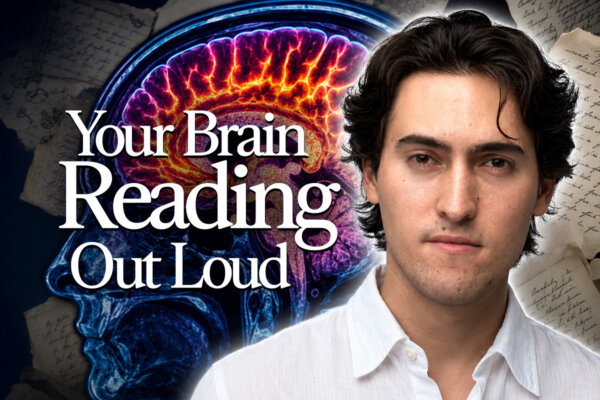
A man lived 44 years virtually without a brain, and with just fluid where most of the organ’s mass should be. Yet his mind, his memories, and his entire identity remained intact. Cases like his challenge everything neuroscience thought it knew about consciousness.
In this video, we explore the mystery of people living everyday lives with paper-thin brains, why single-celled organisms can learn without neurons, and the theory suggesting your brain might serve as an antenna rather than as the source of consciousness itself.
If the brain doesn’t create your mind, but merely receives it, then where does consciousness really come from—and where does it go?
📖 Sources:
🖋️ Can Consciousness Exist Without a Brain?
https://ept.ms/ConsciousnessWithoutBrain
🖋️ French Man Without a Brain
https://ept.ms/ManWithNoBrain
🖋️ The Hard Problem of Consciousness
https://ept.ms/TheHardProblem
🖋️ Is Your Brain Really Necessary? – Hydrocephalus Cases
https://ept.ms/JohnLorberCases
🖋️ Paramecium
https://ept.ms/ParameciumNeuroscience
🖋️ Orchestrated Objective Reduction
https://ept.ms/OrchOR
🖋️ Function of Microtubules
https://ept.ms/MicrotublesFunction
🖋️ Neuron Oscillations
https://ept.ms/NeuronOscillation
🖋️ Microtubule Oscillations
https://ept.ms/MicrotubuleOscillations
Read More


Related Videos

The Upgrade

The Upgrade

The Upgrade






The Upgrade

The Upgrade

The Upgrade


The Upgrade

The Upgrade