
April 27, 2024
American Thought Leaders
Edward Dowd Breaks Down Findings on Excess Death, Disability, and Injury Statistics
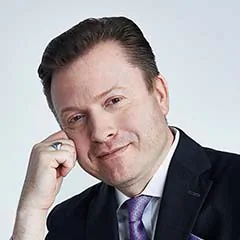
[FULL TRANSCRIPT BELOW] “Every regulator, every health authority, every government should be screaming from the top of their lungs: ‘This is a problem. This is a national [and] global crisis. We should look into it.’ But there’s silence on it, and I believe they’re silent because they know the answer.”
Edward Dowd was a Wall Street executive working as a growth portfolio manager for BlackRock. Utilizing his skills in recognizing fraud and interpreting statistics, he started compiling and analyzing data on injury and death associated with the COVID-19 genetic vaccines.
“We applied what we did in finance to what we’re seeing in the populations across the globe in disability. So, we’re just measuring using our statistical tools to figure out when trends change. We saw excess death trend up in ‘21 and ‘22 and ‘23, and disabilities just really take off in ‘21,” says Mr. Dowd.
He recently testified in the Senate about his findings, which are documented in his book, ‘“Cause Unknown:” The Epidemic of Sudden Deaths in 2021 & 2022.’
“If you look at the the stock prices of Pfizer and Moderna … they’re at critical junctures in their technical stock prices,” says Mr. Dowd. “In fact, Pfizer, I think, is now below its pre-COVID price.”
How have the number of excess deaths and disabilities changed given the low booster uptake in America today? What about in other countries?
“The booster uptake in the U.S. is quite low now. So, the good news is there seems to be a declining trend in excess mortality—not [in] disability so much, unfortunately,” says Mr. Dowd.
Views expressed in this video are opinions of the host and the guest, and do not necessarily reflect the views of The Epoch Times.
FULL TRANSCRIPT
Jan Jekielek:
Edward Dowd, such a pleasure to have you back on American Thought Leaders.
Edward Dowd:
Jan, great to be here, thank you.
Mr. Jekielek:
You were on the show about a year-and-a-half ago, and we talked about some astonishing data that you had put together around the rise in excess mortality, and a number of other related issues. You were just recently testifying in Congress. What’s the bottom line of what you’ve found now?
Mr. Dowd:
The bottom line is this. There were a tremendous amount of excess deaths that really peaked in 2021, then started coming down again in 22 and 23. The excess death toll since the vaccination is that about 1.1 million Americans excessively died, and 300,000 of those were between the ages of 15 and 64. That compares to 2020, where 458,000 people died and that was mostly older Americans. Only 27 percent were between the ages of 15 and 64. That shifted in 2021 to about 47 percent.
In fact, the absolute number in 2020 was 124,000 between the ages of 15 and 64. That went up to 215,000, a 74 percent increase from 2020 to 2021. That’s striking to me, because we were told the virus mostly killed older Americans with comorbidities. Why then was there a mix shift in 2021? Because an equal amount of Americans died excessively each year, but we then shifted to almost half of those Americans being of working age.
Mr. Jekielek:
We would be expecting that these people would be protected in 2021, 2022, and the years onward.
Mr. Dowd:
If I was to measure the effectiveness of the vaccine just based on that alone, it’s an epic fail.
Mr. Jekielek:
We know that these vaccine products cause injury. They cause it more often than many past vaccines, but we don’t know the exact numbers. There have been some attempts to estimate this, but there’s also the effect of the lockdowns themselves.
For example, cancers were not being screened for because people didn’t go to the hospital to get their regular screenings. There are all these effects that you would expect to start manifesting later. Have you included that in your analysis?
Mr. Dowd:
As time rolled on, we got access to more data. We did some studies in the UK where we examined excess cancer deaths between ages 15 and 44. We found that in 2020, there was no signal vs. the previous year. There was actually a slight decrease in 2020 in cancer between 15 and 44. Then in 2021, there was a rise, and then in 2022, an even greater rise. The standard deviation that was signaled was 16 times, so a 16 standard deviation.
Just to give your audience an idea of what a three standard deviation event is, that happens 0.3 percent of the time. A 3.8 standard deviation event is 0.3 percent of the time. The standard deviation of a cancer event is the chance of lightning hitting you at least once in your lifetime. The further up you go, the more improbable it becomes.
On Wall Street and in medicine and science, when you get 16 standard deviations above trend, we call that a signal. There’s a signal of cancer which started in the UK after 2020. Fairly shortly, we’re going to be releasing a similar study done in the U.S. using CDC data. We’ll talk about that once we release it. We’re finding that it’s corroborating what we saw in the UK, especially among younger people where cancers are not supposed to happen.
Mr. Jekielek:
There are things that happened in 2020 with the economy being shut down. The way people behaved changed dramatically and there are all these different new variables that were introduced in the process, and some of those will only manifest two or three years later. We know there’s some effect by these shots and that has been demonstrated. Is there a way to determine those things in the methodology you’re using?
Mr. Dowd:
At Finance Technologies where I’m a co-founder, we do research on the vaccines. We do agree there are cofactors and not necessarily every excess death is attributable to the vaccine. But there’s enough evidence to suggest that a lot of the damage we saw is correlated to the vaccine. Excess deaths are just one small part of the equation.
There are three categories we are tracking; excess deaths, disabilities, and injuries. Disabilities are in far greater population numbers and easier to analyze. In 2020, there were no excess disabilities. Disabilities started to rise starting around February of 2021. If we ran the correlation vs. the vaccine uptake in the U.S., it was 0.92.
Now, they will say correlation is not causation, but at the very least, and as I said in my testimony today, in order to prove it’s not the vaccine, we need to undertake studies of vaccinated vs. unvaccinated. The authorities have no interest in that or are boasting about the pandemic scorecard, which is quite grim. I told you that about 500,000 people died in 2021. Total excess deaths as of the end of 2023 are 1.1 million, a total of 300,000 ages 15 to 64, and about 800,000 ages 65-plus.
Mr. Jekielek:
Just to be clear, are there any of those attributable to Covid itself, or is this outside of that?
Mr. Dowd:
It’s just excess above the trend line. Obviously, there are some cofactors, but we think the majority of the excess deaths are caused by the vaccine. Clearly, there are cofactors; lockdowns, maybe a slight increase in suicides, maybe some fentanyl, and maybe some Covid, but not the numbers we’re seeing that seem to be correlated with the vaccination program, especially in disabilities. There were no disability increases in 2020.
Mr. Jekielek:
How is disability defined?
Mr. Dowd:
This is from the Bureau of Labor Statistics [BLS]. This is a household survey that is done every month. It’s the same folks who deliver the employment numbers. They also ask you in the survey, “Are you disabled? If so, are you unable to work?” For those numbers, we’re running around 29 to 30 million for the prior five years. They started to rise at a 45 degree angle at the beginning of February, 2021.
Now, we have about 34 million disabled Americans, so we gained about 4 million disabled Americans in a very short time. The rate of change that took off in 2021 correlated with the vaccine uptake. It was a three standard deviation event, meaning the rate of change was so out of the norm it was about four standard deviations above the trend in 2021.
The good news is the rate of growth in disabilities has slowed. But we did have a step up in June of 2023 when we added another million. It rose into September of 2022 with about 3 million, went sideways for several months, but then jumped up again about a million. It has come back down since then, but it’s still showing that the trend is not broken.
Mr. Jekielek:
The moment the next booster is introduced, there’s another jump in excess death. We need very fine-grained data to see this. If you see the effect is introduced and then you see a jump in excess death or disability, that is one of the steps that can be used to establish causation when you’re looking at correlations. Have you seen any of that?
Mr. Dowd:
At our firm and on our website, we’ve tracked excess mortality in many different countries; UK, all of Europe, Australia, Ireland, Germany, but not Canada because their death data seems to be lagging quite a bit. But in country after country where excess deaths occurred, it was very well correlated to vaccination uptake. There seems to be a pattern. Let’s put aside the fact that it is the vaccine, because that’s controversial.
Every regulator, every health authority, and every government should be screaming from the top of their lungs, “This is a problem. This is a national global crisis. “We should look into it.” But there is silence on it, and I believe there is silence because they already know the answer.
Mr. Jekielek:
These jumps in excess death, disability, and your third factor are very unusual.
Mr. Dowd:
Yes. Standard deviation is a measurement around averages. There’s a normal distribution curve. There’s an average trend line or event or population characteristic, and then there are the tail events, and one or two
standard deviations are within the realm of normal. Once you get to three and above, it’s called a tail event or a signal, and it happens 0.3 percent of the time.
To give people an idea of what that means, as I said earlier, 3.8 standard deviations is the chance of lightning hitting you at least once in your lifetime. Five standard deviations is the chance of you giving birth to a child that grows up to be a seven foot human, and 10 standard deviations is the probability of you giving birth to a future nine-foot giant, the same height as Thanos in the Marvel movies. It’s a billions-to-one type of thing.
Mr. Jekielek:
There is something happening that’s having a profound effect.
Mr. Dowd:
That’s it. There’s a signal indicating that something has happened. At the very least, it needs to be investigated, and it should send alarm bells throughout the health world.
Mr. Jekielek:
What about the insurance companies? You would think that insurance companies would be very concerned about this because they’re going to be impacted, obviously.
Mr. Dowd:
Yes. At the end of 2021, going into 2022, Scott Davison, the CEO of One America, highlighted something that the whole industry saw. He was the first to say it. They were experiencing 40 percent excess mortality in their group life policies, which are policies given to those employees in Fortune 500, medium-sized companies. It’s a benefit you get when you sign on to these companies, and it’s one or two times your salary. It’s not underwritten.
What that means is you don’t go to a doctor, they just give it to you, because they have very good statistics on people with these types of jobs and the rate at which they die. It’s very profitable for them. The industry experienced 40 percent excess mortality in that age group, 25 through 44, which is profound.
He said 10 percent would be a once in a 200-year flood event, which is a three-standard deviation event. A three-standard deviation event is rare. He said that 40 percent is off the charts and he didn’t even want to put a number on it.
As we roll forward through time, the insurance companies have raised prices on group life policies, so they’re not losing the money like they used to. Some people in the industry that are behind the scenes, I call them whistleblowers, tell me that excess mortality is continuing, especially amongst the 25 through 44 category, depending on the quarter, at between 13 percent and 25 percent.
Mr. Jekielek:
What data would help you understand these phenomena better?
Mr. Dowd:
The insurance industry definitely wants access to the vaccination data, but they won’t be able to get it, and they know that. If we had access to that, we could solve this problem pretty quickly. But that data is not forthcoming, the vaccination status vs. disabilities and excess deaths.
Mr. Jekielek:
What does vaccination status actually mean when there are all these multiple boosters? Presumably, at some point, it will run out. How does that work?
Mr. Dowd:
The easiest way would be doing studies on those who are unvaccinated vs. anybody who got the two original doses. That would be the cleanest way to do it. Obviously, there would be an add-on study that looks at the number of boosters you got to see if there’s any other effect going on there.
Mr. Jekielek:
You also said that recently, excess mortality is starting to come down. How do you explain that?
Mr. Dowd:
The booster uptake in the U.S. is quite low now. The good news is there seems to be a declining trend in excess mortality, but not for disabilities so much, unfortunately. Countries that have continued on with the booster program are experiencing not as good results as the U.S. For instance, the U.K. has seen a rise in excess deaths ages 15 to 44. It actually hit new highs in 2023 of around 20 percent.
Mr. Jekielek:
You’re getting different trends in different places.
Mr. Dowd:
In different countries there are different trends, depending on the booster uptake. We haven’t done a study on that yet, but people tended to booster themselves more in the U.K. than the U.S. The booster uptake in the U.S., as we heard today in the testimony, was an abysmal 3.4 percent for the last recommended booster dose.
Mr. Jekielek:
Another thing we learned recently is that in Romania, the vaccine uptake was actually quite low. Have you looked at that data?
Mr. Dowd:
We have to be careful when we talk about Romania, because most of the Eastern European countries did not get Covid in 2020. Covid hit their populations in 2021 concurrently with the vaccine uptake. They saw excess mortality, even though the vaccine uptake was lower. But as we roll through time, they now have negative excess mortality, as you saw today in the testimony. Again, we have to be careful. You are comparing apples to oranges, because Covid didn’t really hit them until 2021.
Mr. Jekielek:
The challenge is to figure out what other factors might be influencing things.
Mr. Dowd:
We are analyzing just excess deaths, counting zeros and ones; dead or not dead. Excess mortality means all-cause mortality. Clearly, we can’t attribute 100 percent of that excess mortality to the vaccine, if that’s our thesis, which it is. There are cofactors.
But there seems to be high correlation with the disability data to the vaccine. In our research, the disability numbers are, for every one excess death, there’s about four to five disabilities in these populations. The numbers correlate more closely with the vaccination uptake for the disabilities, because there’s just more data to analyze.
Mr. Jekielek:
What about the injury data?
Mr. Dowd:
The injury data manifests in lost work time, which shot up incredibly in 2020, obviously, from the lockdowns. It then continued into 2021 at about the same rate, but then took off again in 2022. It has come back down in 2023, but it’s still a standard deviation from the 20-year trend line, which had been trending down over time.
We came up with a figure of about 28 million people currently injured, and we get that number from the Pfizer clinical trials with the incidence of non-severe adverse events. We combined the work time lost with the Pfizer clinical trials to come up with an estimate of the injured in the U.S., and we come up with about 28 million.
Mr. Jekielek:
Is that for any sort of injury, from tinnitus to other things?
Mr. Dowd:
Yes, it could be tinnitus or anything that might cause you to miss work more than you normally would have, had you not taken the vaccine. Work time lost in 2022 was 16 standard deviations above trend, and 67 percent above the trend in 2019. It just took off in 2020, went up a little bit in 21, and then it just shot up in 22. There seems to be a lagging effect and a downstream effect. As we heard in the testimony today, some doctors are saying that it suppresses the immune system, which could cause chronic illness and absences.
Mr. Jekielek:
It is unusual to have an event that has 16 standard deviations. It’s almost sort of a miracle, isn’t it?
Mr. Dowd:
Yes, it’s very rare. In finance and Wall Street, when we see what we call in the financial markets three standard deviation events, that’s getting close to a black swan event. It doesn’t happen all that often. When it does, we take note, because it might signal a trend change and violent price moves.
For instance, let’s say the U.S. dollar goes up 1.5 percent in one day. That is more than a three standard deviation event. Currencies don’t move that quickly. That’s a signal for us to take a look at what’s going on. Has something changed? We applied what we did in finance to what we’re seeing in the populations across the globe and in disability. We’re just measuring and using our statistical tools to figure out when trends change. We saw excess death trend up in 2021 and 2022.
Mr. Jekielek:
Are you using this data for your clients as well?
Mr. Dowd:
We have been doing this research for free. We are going to have clients, eventually. We’re in the process of raising capital for a hedge fund. The vaccine work we do will be implemented into our economic analysis. In some of our research, we’re already on record saying that the Federal Reserve is making a policy error by keeping interest rates too high
for too long.
One of the metrics they look at is employment numbers. If there are a lot of disabled people, it makes the denominator smaller. We think the 3.8 percent unemployment number currently being headlined is underestimated by 1.5 percent. The real unemployment number is 5 percent. If it’s at 5 percent, the Fed still thinks the economy is super strong, but it’s not, because there are fewer workers in the labor pool.
Mr. Jekielek:
They are not seeing the same numbers that you are?
Mr. Dowd:
No, they don’t analyze disabilities. We’re making an adjustment to the unemployment rate. This is not calculated into the unemployment rate that the BLS does.
Mr. Jekielek:
That’s fascinating. Hold the presses. Shouldn’t this be a headline?
Mr. Dowd:
No, not really, because a lot of people have been questioning the job numbers for quite some time over the last year. We’ve put out a jobs report number for the month of January, and then several months later, they’ll revise it down. Other people have done analysis in 2020 through the last 12 employment reports. It has been revised downward to the tune of a million jobs that really didn’t exist. The headline looked good, but if you look at the revisions, they’re down.
Mr. Jekielek:
Except you’re postulating a cause here, for at least part of that error.
Mr. Dowd:
Yes, for part of that error. We’re saying that the Federal Reserve and other economists aren’t taking into account the newly disabled, which is a lot of people. The civilian labor force is 164 million people. There’s probably about 100 million full-time jobs. If you add 2 million people, because let’s say half of the 4 million are employed, which is what the numbers show, 2 million U.S. citizens are either not working or working half-time.
That makes the unemployment number look way better than it should, because it lowers the denominator of the equation, so the employment rate is biased lower. We think the Fed is probably making a policy error. These things not only have health issue impact, they have economic impact as well.
Mr. Jekielek:
Absolutely. Please tell us about your background. I would like our audience to understand where you’re coming from.
Mr. Dowd:
My career has been on Wall Street. I started off at HSBC, which is a Hong Kong/Shanghai bank. I was an institutional fixed income salesperson, so I learned all about the credit markets, the interest rate markets, currency markets, derivatives, you name it. I also learned about macroeconomic analysis.
I went back to business school and got my MBA. I then went on to
Wall Street at Donaldson, Lufkin, & Jenrette, which was an investment bank that did equity research. I became an electric utility equity analyst.
I was there from 1997 to 1999 and saw the dot-com fraud. That fraud was perpetrated within the investment banks. They used to do due diligence and they were supposed to only issue new companies that had revenues and cash flow. They just disregarded that, and if you remember back then, a lot of companies just used eyeballs for the metrics.
Mr. Jekielek:
I remember because I suffered from that particular bubble.
Mr. Dowd:
After that, 12 to 15 months later, we saw corporate fraud like Enron and WorldCom. I saw a lot of fraud early on in my Wall Street career, so I know what that looks like. The fraud back with Enron and WorldCom and other other companies was called classification fraud. They were reclassifying expenses which should have hit their cash flow as capital expenses, which you can amortize over time, so it made their cash flow look way higher than it was supposed to. That’s called classification fraud and they fooled debt investors and equity investors until it was exposed.
Eventually, I went to Blackrock and became a growth portfolio manager investing for our clients. We grew the portfolio from $2 billion to $14 billion. I saw the great financial crisis when I was at Blackrock, and that was from banking fraud. The fraud just seemed to be getting bigger and bigger. Moving forward to the Covid fraud, I’m just applying the skill sets I used back then to see the big picture. We can’t prove it, but we think there’s been a lot of reclassification of death codes at the CDC. When our CDC report comes out we’ll show you why we think that.
Mr. Jekielek:
I don’t see too many ex-Black blackrock portfolio managers talking about these things. Why do you think you’re the only one?
Mr. Dowd:
I left Blackrock in 2012 when Blackrock underwent a fundamental shift. In their early days they were called active investors where human beings pick the portfolios. Then through acquisition they acquired Barclays which was a quantitative ETF [Exchange-traded fund] creation shop, so they started creating passive investment vehicles. Most of their assets under management, valued at about six or seven trillion, are passive, so there’s not a lot of people like me analyzing the assets under management.
It’s not going to be a lot of fun to work with Blackrock anymore. I don’t know anybody that’s been advertising stocks anymore at Blackrock. A lot of my colleagues that I used to work with are no longer there, so I don’t know anybody at Blackrock anymore.
Mr. Jekielek:
You’re a rare person to be talking about this publicly.
Mr. Dowd:
That’s just my nature. When I see fraud, I speak about it. I saw it early on and everyone thought I was crazy. But as time rolls on we’re getting proven to be right more and more. There’s a saying on Wall Street, “Be right, be early, be loud.” That’s what I have been doing.
Mr. Jekielek:
Do you think there are people looking to financially benefit from what is happening?
Mr. Dowd:
I’m pretty sure there are, because if you look at the stock prices of Pfizer and Moderna, they are hitting 52-week lows. They’re at critical junctures in their technical stock prices. If Pfizer doesn’t hold its current price level and breaks down below 20 or 21, it breaks a long-term trend line. We’re getting close to very big problems for Pfizer and Moderna, technically. They have retraced a lot of their Covid gains. In fact, Pfizer is now below its pre-Covid price.
Mr. Jekielek:
But they’re doing massive acquisitions, like with this cancer research company.
Mr. Dowd:
They paid a huge premium for that cancer research company. They’re now marketing that in their annual reports and in their earnings reports as one of their big growth engines. If you want to be very cynical, you could say they had insider information, and they know that cancer will be a growth opportunity.
The other interesting thing is that ever since 2021, dollars spent on cancer treatments has grown 14 percent ex-inflation and inflected up. More people are getting cancer, more people are getting treated, and it’s reflected in the dollars being spent. Money talks, BS walks.
Mr. Jekielek:
Have you looked at the age groups where this is happening? Is it in the so-called expected groups?
Mr. Dowd:
It has accelerated in all groups. The older people are still getting hit hard by this, and there’s some excess going on there. But cancers are not supposed to occur between age 44 and 50 in general, where there is just an off-the-charts increase. That’s what we saw in the UK.
Mr. Jekielek:
Do you follow the Ethical Skeptic account at all?
Mr. Dowd:
Yes. We don’t work together, but his results corroborate ours. He and I have been in contact on Twitter. He has his own ways of doing things, and we have our own ways. For the pandemic scorecard, I came up with about 1.6 million dead, including year 2020. He came up with almost the same number using his own methodology.
Mr. Jekielek:
What exactly is this pandemic scorecard?
Mr. Dowd:
We should really measure how well the authorities did. If it was a success and the vaccines worked, excess mortality should have really started coming down in 2021 and continued down in 2022. Disabilities, which only started in 21, should never exist at all. By coming up with a scorecard, we’re just measuring the policymakers and asking, “How did they do with the policies they implemented?”
Today, I testified that it was an epic fail. Since 2021, including the years 21, 22, and 23, 1.1 million Americans perished above and beyond the normal rate. If you include Covid, about 1.55 million people died in the U.S., with the combined Covid lockdowns and vaccination solutions. That’s not a good scorecard. There were about three-and-a-half million excess disabilities, all of them starting in 2020. The pandemic scorecard is a fail. More people died with the measures than didn’t.
Mr. Jekielek:
There are some adjustments being made to how these numbers are being calculated. Please tell us about that.
Mr. Dowd:
In September of 2022, Carlos and Yuri and I decided that we should publish some methodology papers and how we calculate excess deaths so it’s transparent. We have three different methodologies. You can use a simple average. You can adjust for population. There’s another method that escapes me at the moment, but we have all three on our website.
You can go into any country and use our different methodologies and see the differences in excess mortality. We like to adjust for population because that makes other countries comparable. You can compare a fast-growing population country versus a declining one. You can see what is really going on.
Recently, the ONS [Office for National Statistics] in the UK decided to change the methodology on how they calculate excess deaths. Apparently, it’s bringing those excess death numbers down. Whatever methodology they’re using is probably a combination of including post-pandemic years and doing some other things.
Our cutoff is 2019 and we think they’re doing something else. That’s why we publish those papers in order to make it a level playing field. Other independent people out there in the world are coming up with similar results to us.
Mr. Jekielek:
Edward, any final thoughts as we finish up?
Mr. Dowd:
As I stated at the end of the testimony today, let’s put aside the controversial and let’s pretend it’s not the vaccine. These numbers are real and they are abysmal. They show a chronic health problem that results in death, disability, and injury to the tune of about 33 million Americans since 2021.
Regardless of the cause, as a nation, our political leaders and all the health authorities should be interested in this. Everyone should want to know why it’s happening. Now, we believe it’s the vaccine. But regardless of that, this still should be investigated.
Mr. Jekielek:
Edward Dowd, it’s such a pleasure to have you on the show.
Mr. Dowd:
Thank you, Jan. Good to be here.
Mr. Jekielek:
Thank you all for joining Edward Dowd and me on this episode of American Thought Leaders. I’m your host, Jan Jekielek.
This interview has been edited for clarity and brevity.
Read More
Popular



Related Videos

American Thought Leaders
American Thought Leaders

American Thought Leaders
American Thought Leaders

American Thought Leaders
American Thought Leaders
American Thought Leaders

American Thought Leaders

American Thought Leaders
American Thought Leaders
American Thought Leaders

American Thought Leaders

American Thought Leaders

American Thought Leaders